
Homemade Eggnog is a classic holiday treat that’s creamy, rich, and full of warm spices like cinnamon and nutmeg. Made with fresh eggs, milk, cream, and just a splash of vanilla, it has that perfect balance of smooth texture and festive flavor that makes it stand out during the season.
I love making this eggnog from scratch because it tastes so fresh and comforting compared to store-bought versions. One of my favorite parts is whisking everything together—it’s like mixing up a little holiday magic right in the kitchen. I usually add a pinch of extra nutmeg on top because it gives just the right cozy touch.
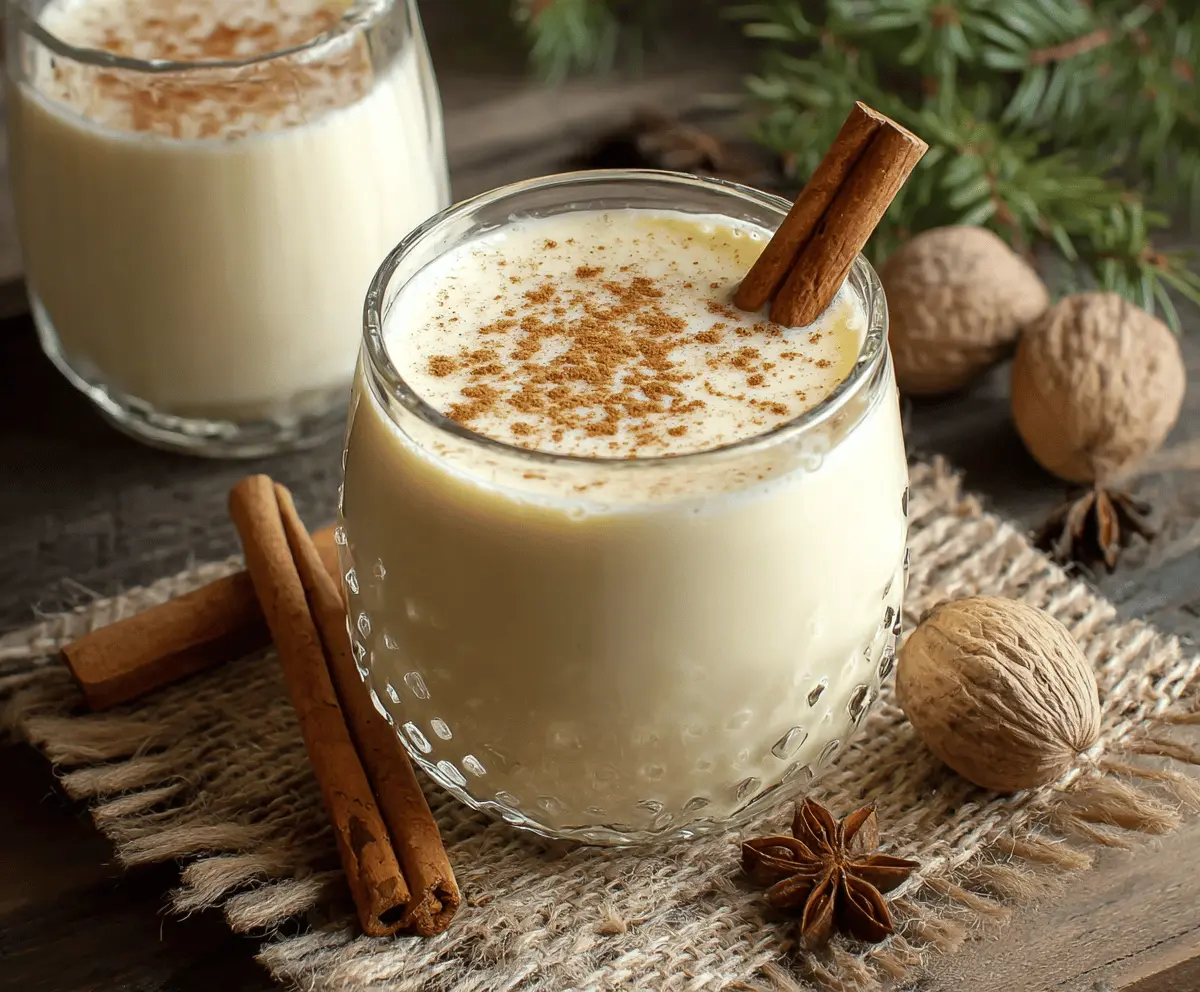
Serving it chilled in a festive glass with a cinnamon stick or a sprinkle of grated nutmeg makes it feel extra special when guests come over. I find that sharing this homemade eggnog brings smiles all around the table and sparks those warm, happy holiday memories we all love.
Key Ingredients & Substitutions
Eggs: Fresh, large eggs help make the eggnog rich and creamy. If you’re wary of using raw eggs, make sure to cook the mixture gently to reach 160°F, which makes it safe while keeping it smooth.
Milk & Cream: Whole milk and heavy cream give that classic creamy texture. For a lighter option, swap heavy cream with half-and-half or use a plant-based milk like oat milk, though the texture will be less rich.
Alcohol: Bourbon, rum, or brandy add warmth and depth. You can skip alcohol altogether if you want a kid-friendly or alcohol-free version — the spices and vanilla still make it delicious.
Spices: Cinnamon and nutmeg are key for that holiday flavor. Freshly grated nutmeg tastes best—save a little for garnishing your glass for a pretty, aromatic finish.
How Do You Make Sure the Eggnog Is Smooth and Safe?
Tempering and gently cooking the egg mixture is the key. Here’s how to do it smoothly:
- Whisk eggs and sugar until creamy before adding warm dairy to avoid lumps.
- Add a small amount of warm milk mixture to eggs slowly while whisking. This warms the eggs gently.
- Return everything to the pot and cook on low heat, stirring constantly to prevent curdling.
- Check temperature with a food thermometer; stop heating once it hits 160°F to kill bacteria but keep it smooth.
This technique keeps your eggnog silky and safe. Take it slow, and don’t rush cooking—it’ll pay off in taste and texture every time.
Equipment You’ll Need
- Medium saucepan – perfect for gently heating the milk and cream without boiling.
- Whisk – helps you mix eggs and sugar smoothly and keep the eggnog creamy.
- Mixing bowl – sturdy and large enough to hold your egg and sugar mixture easily.
- Wooden spoon or heatproof spatula – great for stirring the mixture continuously while cooking.
- Food thermometer – useful to check the temperature to keep the eggnog safe and silky.
- Measuring cups and spoons – to get your spices and liquids just right every time.
Flavor Variations & Add-Ins
- Try using maple syrup instead of sugar for a rich, natural sweetness and a hint of fall flavor.
- Add a pinch of ground cloves or cardamom for a spicier, more aromatic eggnog experience.
- Use coconut milk and coconut cream for a dairy-free version with a tropical twist.
- Mix in some espresso or strong coffee to turn it into a festive mochatnog, perfect for coffee lovers.
Homemade Eggnog Recipe
Ingredients You’ll Need:
- 4 large eggs
- 3/4 cup granulated sugar
- 2 cups whole milk
- 1 cup heavy cream
- 1/2 to 1 cup bourbon, rum, or brandy (optional)
- 1 teaspoon pure vanilla extract
- 1/2 teaspoon ground cinnamon
- 1/4 teaspoon ground nutmeg, plus more for garnish
- Cinnamon sticks, for garnish
How Much Time Will You Need?
This eggnog recipe takes about 15 minutes of active preparation time. After cooking and mixing, you’ll want to chill the eggnog in the refrigerator for at least 2 hours so it thickens and the flavors blend well. So, plan for about 2 hours and 15 minutes total.
Step-by-Step Instructions:
1. Whisk the Eggs and Sugar:
In a large bowl, beat together the eggs and sugar until the mixture is smooth and creamy. This helps dissolve the sugar and incorporate air for a light texture.
2. Heat the Milk and Spices:
In a medium saucepan, mix the whole milk, heavy cream, ground cinnamon, and ground nutmeg. Warm the mixture over medium heat until it’s hot but not boiling—about 170°F. This creates the base for your eggnog flavor.
3. Temper the Eggs:
Slowly add about half a cup of the hot milk mixture into the egg mixture, whisking constantly to gently heat the eggs without scrambling them. Then pour this combined mixture back into the saucepan with the remaining milk.
4. Cook and Thicken the Eggnog:
Cook over medium-low heat, stirring continuously with a wooden spoon or heatproof spatula. Watch the temperature until it reaches about 160°F and thickens slightly. Avoid boiling to keep the texture smooth.
5. Add Vanilla and Alcohol:
Remove the saucepan from heat. Stir in the vanilla extract. If you want, add bourbon, rum, or brandy now and mix well to combine.
6. Chill the Eggnog:
Let the eggnog cool to room temperature. Then cover and place it in the refrigerator for at least 2 hours. This chilling step thickens the eggnog and lets the flavors come together.
7. Serve and Garnish:
Before serving, stir the eggnog well. Pour it into glasses and sprinkle a little nutmeg on top. Add a cinnamon stick for a cozy, festive touch.
Enjoy!
This homemade eggnog is creamy, rich, and perfect for holiday celebrations. Cheers!
Can I Use Pasteurized Eggs Instead of Fresh Eggs?
Yes! Pasteurized eggs work great and reduce any risk since they’re gently heat-treated but still retain the creamy texture needed for eggnog.
How Do I Store Leftover Eggnog?
Keep leftover eggnog in an airtight container in the fridge for up to 3 days. Give it a good stir before serving again as some separation may occur.
Can I Make Eggnog Without Alcohol?
Absolutely! Simply leave out the bourbon, rum, or brandy. The spices and vanilla still provide plenty of festive flavor for a delicious non-alcoholic version.
Can I Use Different Milk or Cream?
Yes, you can substitute with lighter dairy like half-and-half or non-dairy options such as coconut milk or almond milk, but the texture will be less rich and creamy.
