
Amish Pumpkin Bread bakes up with a soft, tender crumb, a deep pumpkin color, and that old-fashioned spice smell that fills the kitchen before you even open the oven door. The loaf stays moist for days without turning heavy, and the flavor gets better after it rests overnight. Sliced thick and eaten plain or with a little butter, it’s the kind of quick bread that disappears fast because it tastes like it came from a well-worn recipe box.
What makes this version work is the balance. Pumpkin purée brings moisture and body, while applesauce keeps the crumb soft without making the bread greasy. Brown sugar adds a little molasses depth, and the cinnamon, nutmeg, cloves, and ginger give the bread that warm bakery-style flavor without overpowering the pumpkin. The batter is intentionally simple, but the method matters: mix just until the flour disappears and the loaf stays tender instead of tough.
Below, I’ll walk through the trick that keeps pumpkin bread from sinking in the middle, the ingredient swaps that still give you a good loaf, and the storage details that matter if you want clean slices the next day.
The loaves baked up with a perfect dome and stayed moist for days. I loved that the spices were warm but not overwhelming, and the crumb sliced cleanly after cooling overnight.
Save this Amish Pumpkin Bread for a tender, spice-filled loaf that stays moist for days.
The Moisture Trick That Keeps This Pumpkin Bread from Turning Heavy
Most pumpkin breads fail in one of two ways: they bake up dense from too much mixing, or they turn gummy because the batter has too much moisture with nowhere to go. This version avoids both problems by using applesauce as a quiet helper instead of piling on more fat. The pumpkin brings body, the oil keeps the loaf soft, and the applesauce adds tenderness without making the crumb clingy or wet.
The other mistake happens in the oven. Pumpkin bread needs enough time for the center to set, but too much heat on top will darken the crust before the middle is done. That’s why it helps to check the loaves toward the end and cover them loosely with foil if the tops are getting too dark. You want a loaf that springs back gently and leaves a few moist crumbs on the tester, not a raw center or a dry edge.
What Each Ingredient Is Actually Doing in This Amish Pumpkin Bread
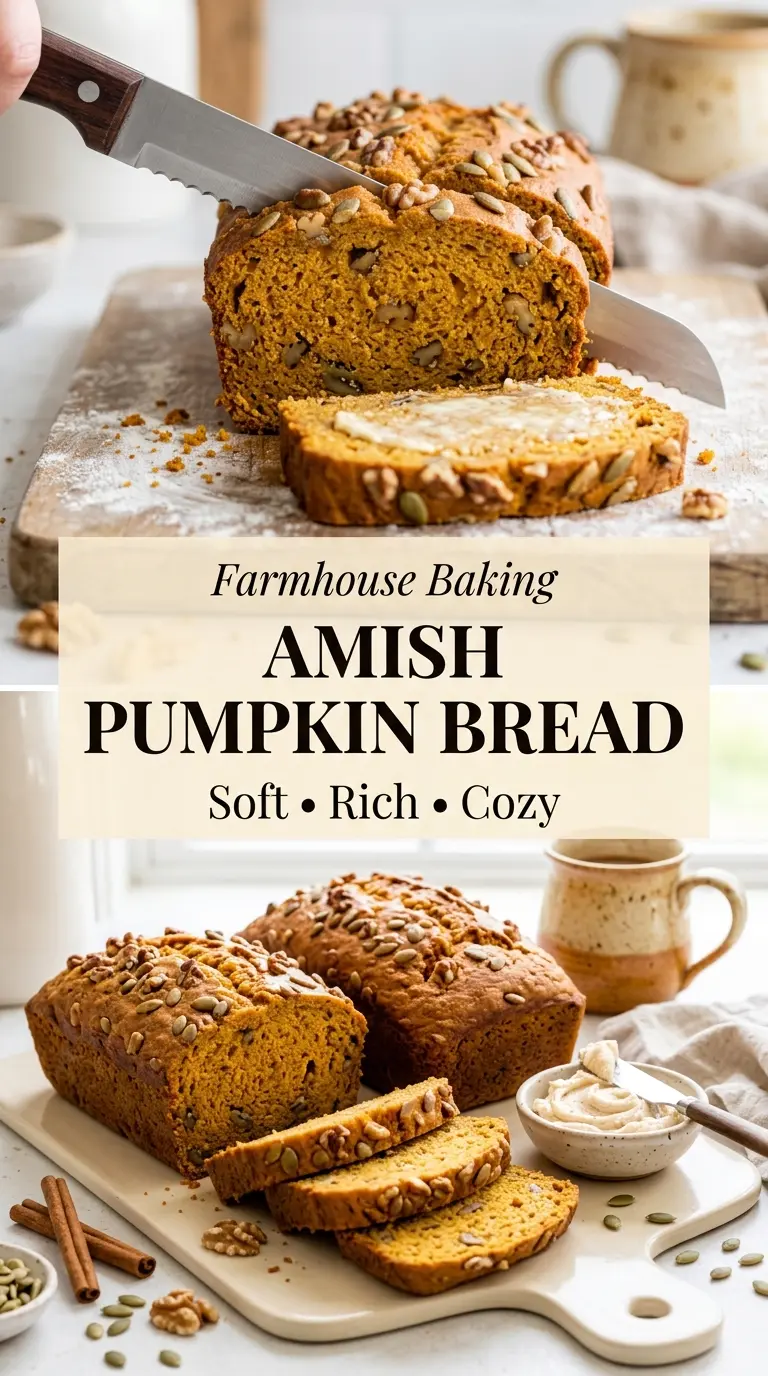
- Pumpkin purée — Use plain pumpkin purée, not pumpkin pie filling. The canned version gives you consistent moisture and flavor, and it’s what keeps the crumb soft for days.
- Applesauce — This is the ingredient that keeps the bread plush without making it greasy. Unsweetened applesauce works best; if yours is sweetened, the loaf will still work, but the finished bread will lean sweeter.
- Brown sugar and granulated sugar — The combination gives you both sweetness and a little depth. Brown sugar brings that soft caramel note that makes the loaf taste old-fashioned, while the granulated sugar helps the crumb bake up cleanly.
- Vegetable oil — Oil keeps quick bread moist longer than butter does. Melted butter can be used in a pinch, but the loaf won’t stay as soft on day two.
- Warm spices — Cinnamon carries the flavor, nutmeg and cloves add the classic bakery edge, and ginger keeps the loaf from tasting flat. If you only have pumpkin pie spice, use 2 tablespoons total and skip the individual spices.
- All-purpose flour — Standard all-purpose flour gives the loaf enough structure to rise without feeling tight. If you use a heavy whole-wheat blend, expect a denser, heartier bread.
The Mixing Order That Gives You a Tender Loaf, Not a Tough One
Start with the dry bowl
Whisk the flour, leaveners, spices, and salt together until everything looks evenly speckled. That step matters more than it seems, because cinnamon and nutmeg tend to clump, and uneven spice distribution shows up in the finished slices. If you skip the whisking and dump everything together, you get pockets of baking soda or streaks of spice instead of a balanced loaf.
Build the wet mixture until it looks smooth
In a separate bowl, whisk the pumpkin, eggs, sugars, oil, applesauce, and vanilla until the mixture looks glossy and uniform. The sugars won’t dissolve completely, and that’s fine. You’re looking for a smooth batter base with no streaks of egg white or thick pockets of oil, because those little pockets can leave greasy spots in the baked bread.
Fold, don’t beat
Add the dry ingredients to the wet mixture in stages and stir only until the flour disappears. The batter will be thick, and that’s exactly what you want. If you keep stirring after the flour is hydrated, the loaf tightens up and bakes with tunnels. Divide the batter between the pans as soon as it comes together so it doesn’t keep developing while you’re waiting.
Bake for a set center and a soft top
Bake until a tester comes out clean or with a few moist crumbs, not wet batter. If the tops are browning too quickly before the middle is done, tent them loosely with foil for the last stretch of baking. Let the loaves rest in the pans for 15 minutes before moving them to a rack; if you turn them out too early, the sides can tear while the crumb is still delicate.
Three Ways to Make This Amish Pumpkin Bread Fit What You Need
Gluten-Free Version
Use a good 1:1 gluten-free flour blend that includes xanthan gum. The loaf will still be moist, but it may bake a little more fragile, so let it cool completely before slicing or the center can crumble.
Dairy-Free as Written
The base recipe already skips butter and milk, which makes this a natural fit for dairy-free baking. Just watch your serving add-ons; butter and cream cheese on the side can change that quickly.
Add Nuts for More Crunch
Walnuts or pecans on top give the loaf a nice toasted finish and a little texture against the soft crumb. If you want the nuts throughout the bread instead, fold up to 1 cup into the batter at the very end.
Bake as Mini Loaves or Muffins
Mini loaves and muffins bake faster and are easier to gift. Start checking muffins around 20 to 24 minutes and mini loaves around 30 to 35 minutes, since the smaller size dries out if they stay in too long.
Storage and Reheating
- Refrigerator: Store tightly wrapped for up to 4 days. The crumb stays soft, but the spices mellow a little after the first day.
- Freezer: This bread freezes well. Wrap individual slices or whole loaves tightly in plastic, then foil, and freeze for up to 3 months.
- Reheating: Thaw at room temperature, then warm slices in a toaster oven or low oven. Microwaving too long makes the crumb rubbery, so use short bursts if that’s the only option.
Answers to the Questions Worth Asking
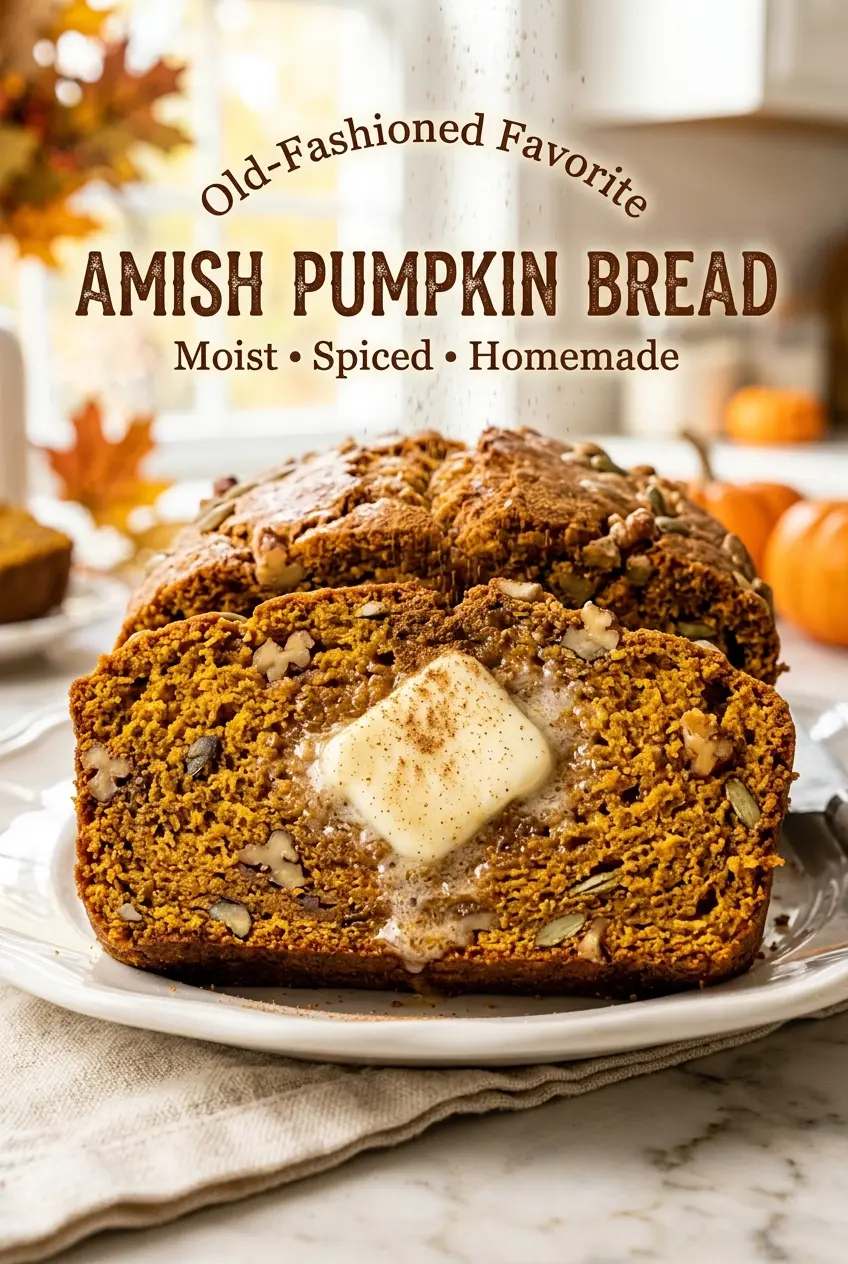
Amish Pumpkin Bread
Ingredients
Equipment
Method
- Preheat the oven to 350°F (175°C). Grease two 9×5-inch loaf pans and line them with parchment paper.
- Whisk together the all-purpose flour, baking soda, baking powder, ground cinnamon, ground nutmeg, ground cloves, ground ginger, and kosher salt until well combined.
- Whisk the pumpkin purée, large eggs, granulated sugar, packed light brown sugar, vegetable oil, applesauce, and pure vanilla extract until smooth and creamy.
- Gradually fold the dry ingredients into the wet ingredients until just incorporated, taking care not to overmix.
- Divide the batter evenly between the prepared loaf pans, then sprinkle with chopped walnuts or pecans, pumpkin seeds, and coarse sanding sugar if desired.
- Bake at 350°F (175°C) for 55–65 minutes, until a toothpick inserted into the center comes out clean or with a few moist crumbs attached.
- If the tops are browning too quickly, loosely cover the loaves with foil during the last 15 minutes.
- Cool the loaves in the pans for 15 minutes.
- Transfer to a wire rack and cool completely before slicing.
- Serve with butter, maple butter, apple butter, or cream cheese, then store tightly wrapped for up to 4 days.
