
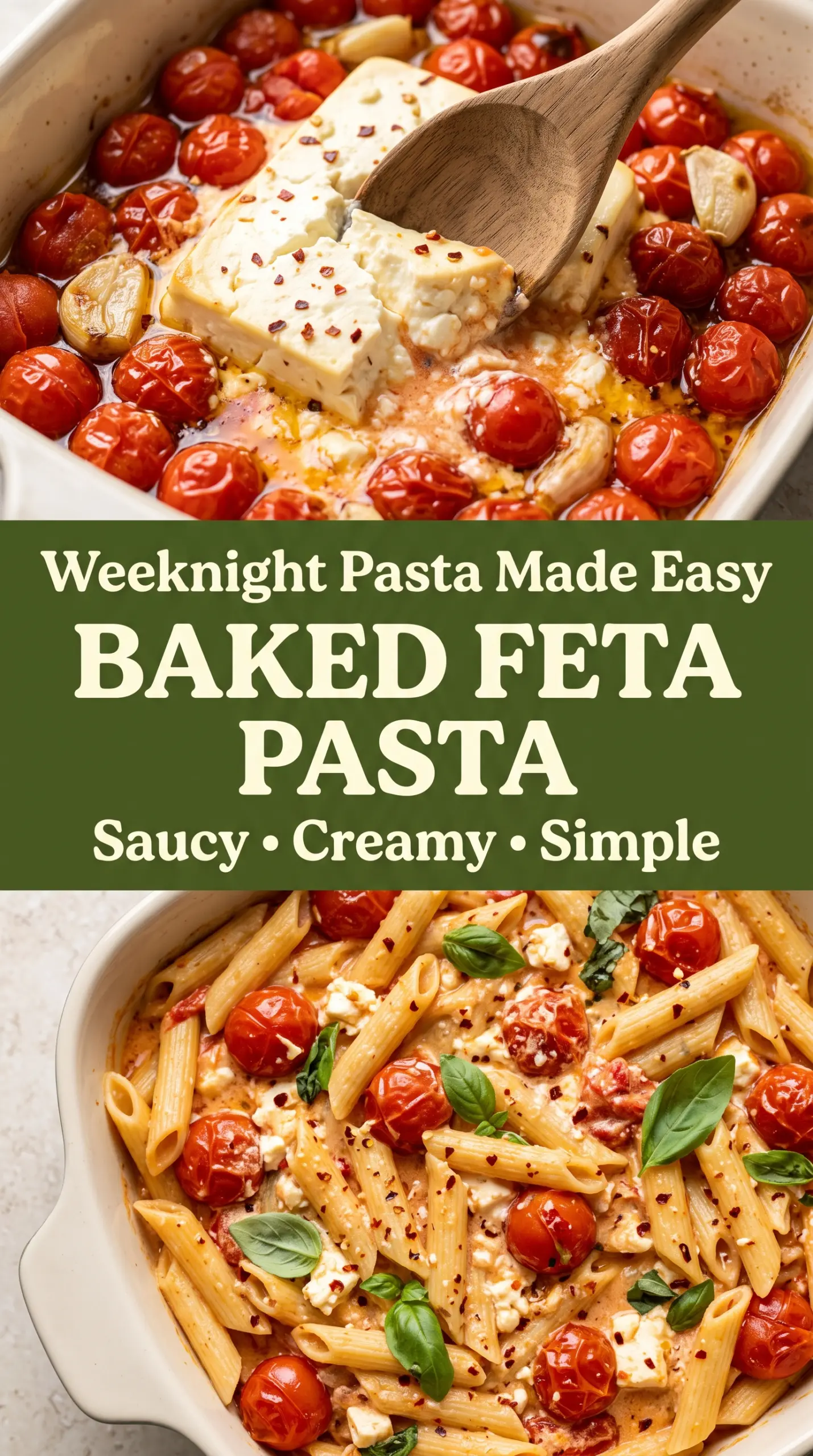
Juicy roasted cherry tomatoes and softened feta turn into a tangy, creamy sauce that clings to every piece of pasta. The oven does the heavy lifting here: the tomatoes collapse, the feta turns spreadable, and the garlic mellows into the background instead of taking over. What you end up with is a pan sauce that tastes like it took much more work than it did.
The trick is giving the tomatoes enough room to burst and enough oil to gloss the whole dish, then baking the feta until it goes soft at the center with a little color on the edges. If the tomatoes are crowded, they steam instead of roast and the sauce tastes flat. If the feta gets too dry, it won’t mash into that silky, spoonable texture you want. A splash of pasta water at the end pulls everything together and helps the sauce coat the noodles instead of sitting in the bottom of the pan.
Below, I’ve included the small details that keep this dish from turning watery or grainy, plus a few swaps if you want to adjust the heat, the pasta, or the dairy.
The tomatoes broke down into this jammy sauce and the feta stayed creamy instead of clumpy. I added a little extra pasta water at the end and it coated the penne perfectly.
Save this Baked Feta Pasta for the nights when you want a creamy tomato sauce with almost no stirring.
The Reason the Tomatoes Need Space to Burst, Not Crowd
In this dish, the oven isn’t just cooking the ingredients — it’s building the sauce. Cherry tomatoes need direct heat and a little breathing room so their skins split and their juices concentrate instead of pooling and steaming. That’s what gives the finished pasta a rich, sweet-tart base instead of something watery and dull.
The feta also needs that open space in the center of the pan. It softens best when it’s surrounded by hot oil and tomato juices, not buried under the tomatoes. If you’ve ever ended up with feta that stayed dry and crumbly, the pan was probably too packed or the cheese went in too early and never had a chance to warm through properly.
What the Feta, Tomatoes, and Pasta Water Are Each Doing Here
- Cherry tomatoes — These are the backbone of the sauce. Use ripe, sweet tomatoes if you can, because they break down into a better balance of acid and natural sweetness. Larger tomatoes can work, but you’ll need to chop them and they won’t give you quite the same jammy texture.
- Block feta — Block feta softens more evenly than pre-crumbled feta, which is usually drier and coated to keep it from clumping. A sheep’s milk or sheep-and-goat blend gives the best tang and creaminess. If all you have is crumbled feta, it’ll still work, but expect a less lush sauce.
- Olive oil — This is part of the sauce, not just a pan lubricant. It helps the tomatoes roast and gives the feta something to loosen into when you mash everything together. Use a decent extra-virgin oil here because its flavor stays in the finished dish.
- Pasta water — The starch in the reserved water helps emulsify the sauce so it clings to the penne. Add it gradually. Too much at once can turn the sauce loose and thin before you realize it.
- Fresh basil — Basil goes in at the end so it stays fragrant and bright. Dried basil won’t give the same finish here; it reads dusty against the creamy tomato sauce.
The Few Minutes That Turn Roast Pan Ingredients Into Sauce
Building the Tomato Base
Spread the cherry tomatoes and garlic in a 9 x 13-inch baking dish, then coat them with olive oil, salt, pepper, and red pepper flakes. You want every tomato glossy, but you don’t need a thick puddle of oil. If the tomatoes look dry going into the oven, they’ll roast unevenly and the sauce won’t have enough richness once everything comes together.
Roasting Until the Tomatoes Collapse
Bake at 400°F until the tomatoes burst and the feta looks very soft with a little browning around the edges. That usually takes 30 to 35 minutes, depending on how full the pan is and how hot your oven runs. If the tomatoes are still holding their shape, give them more time; the sauce should mash easily with a spoon. Pulling the pan too early is the fastest way to end up with a chunky, underdeveloped sauce.
Combining Pasta and Sauce
Cook the penne until al dente so it still has enough structure to stand up to the sauce. Reserve the pasta water before draining, then mash the tomatoes and feta straight in the baking dish until creamy and rustic. Add the pasta and toss hard enough to get sauce into the ridges and hollow spaces. If it looks tight, loosen it with a splash of pasta water instead of more oil; that keeps the sauce glossy instead of greasy.
Finishing With Basil
Fold in the torn basil off the heat so it stays fresh and peppery. If you add it while the pan is still scorching hot, the leaves can wilt into nothing and lose the lift they’re meant to bring. Serve the pasta right away while the sauce is still silky and the feta is at its creamiest.
Three Ways to Adjust Baked Feta Pasta Without Losing What Makes It Good
Make It Gluten-Free
Use a sturdy gluten-free penne or rigatoni that holds its shape after tossing. Cook it just to the edge of done, because gluten-free pasta can go soft fast once it sits in sauce. The flavor stays the same, but the texture gets a little more delicate, so serve it immediately.
Make It Dairy-Free
Swap the feta for a dairy-free feta-style block that softens under heat, not a crumbly shelf-stable version. Some plant-based cheeses melt better than others, so look for one that becomes spreadable rather than oily. The result will be less tangy than the original, so add a little extra salt and a squeeze of lemon if it needs brightness.
Turn Up the Heat
Add more red pepper flakes or a pinch of chili crisp after baking. I’d rather keep the tomatoes mild in the oven and build heat at the end, because spicy oil can distract from the creamy tomato-feta balance if it cooks too long. This keeps the heat bright instead of muddy.
Use a Different Pasta Shape
Penne is reliable, but rigatoni, fusilli, or shells all work because they catch the sauce in different ways. Long noodles can be used, but they’re harder to coat evenly with a chunky sauce like this. Short pasta gives you the best payoff for the least fuss.
Storage and Reheating
- Refrigerator: Store leftovers in an airtight container for up to 4 days. The pasta will absorb some of the sauce as it sits, so it thickens up in the fridge.
- Freezer: This freezes better than people expect, though the sauce won’t stay quite as silky after thawing. Freeze in portions for up to 2 months and thaw overnight in the fridge.
- Reheating: Warm it gently on the stove or in the microwave with a splash of water to loosen the sauce. High heat can make the feta look grainy, so reheat slowly and stir once or twice as it warms.
The Questions Worth Asking Before You Bake This Pasta
Baked Feta Pasta
Ingredients
Equipment
Method
- Preheat the oven to 400°F.
- Place the cherry tomatoes and garlic in a 9 × 13-inch baking dish.
- Drizzle the olive oil over the cherry tomatoes.
- Add the kosher salt, black pepper, and red pepper flakes, then toss until evenly coated with a glossy coating visible on the tomatoes.
- Place the block feta cheese in the center of the baking dish and turn it once in the seasoned olive oil so its surface is lightly coated.
- Bake for 30–35 minutes, until the cherry tomatoes burst and the feta is very soft with lightly golden edges.
- Boil the penne pasta according to package directions until al dente, then reserve ½ cup pasta water before draining.
- Mash the baked feta and roasted cherry tomatoes directly in the baking dish until they form a creamy, rustic tomato-feta sauce.
- Add the drained penne pasta and toss thoroughly, adding the reserved pasta water gradually until the sauce looks silky and clings to the pasta.
- Fold in the fresh basil leaves and serve immediately while the pasta stays creamy, with basil speckling the surface.
