
Baked orzo turns creamy in the oven without needing a separate sauce, and that’s what makes this one-pan dinner feel bigger than the sum of its parts. The tomatoes soften into the broth, the artichokes add little briny pops, and the halloumi gives you those salty, golden edges that hold up against the tender pasta. It lands in that sweet spot between comforting and bright.
The trick is treating the baking dish like a covered casserole for most of the cook, then uncovering it at the end so the orzo can finish absorbing the liquid without going mushy. Halloumi is doing a different job than mozzarella or feta here; it keeps its shape and browns instead of melting into the dish. A squeeze of lemon at the end wakes everything up and keeps the tomato from tasting flat.
Below, I’ve laid out the parts that matter most: why the broth amount is right for baked orzo, what to expect from halloumi in the oven, and the small timing detail that keeps the top from drying out before the center is tender.
The orzo came out creamy without getting gluey, and the halloumi got those crispy little edges on top. I loved the lemon at the end because it kept the tomatoes and artichokes tasting fresh instead of heavy.
Save this baked orzo with artichokes, tomato, and halloumi for a one-pan dinner with creamy pasta and golden cheese.
The Reason the Orzo Stays Creamy Instead of Turning Sticky
Baked orzo can go one of two ways: loose and saucy, or thick and clumpy. The difference usually comes down to liquid ratio and when you stir. This version starts covered, which traps steam and helps the pasta cook evenly before the top has a chance to dry out. If you uncover it too early, the exposed orzo will tighten up before the center is tender.
The other thing that matters here is the broth and tomato balance. Diced tomatoes bring moisture, but they also bring acidity, and the broth keeps the dish tasting rounded instead of sharp. Once the orzo is almost done, the uncovered finish lets excess liquid evaporate just enough for the starch to thicken the pan naturally.
- Covered baking first — This traps moisture and cooks the orzo through without needing constant stirring.
- Broth instead of water — Water will cook the pasta, but broth gives the base a fuller, more savory finish.
- Halloumi on top — It browns instead of disappearing into the dish, which adds texture and salt in every bite.
- Lemon at the end — It sharpens the tomatoes and cuts through the richness of the cheese.
What Each Ingredient Is Actually Doing in This Dish
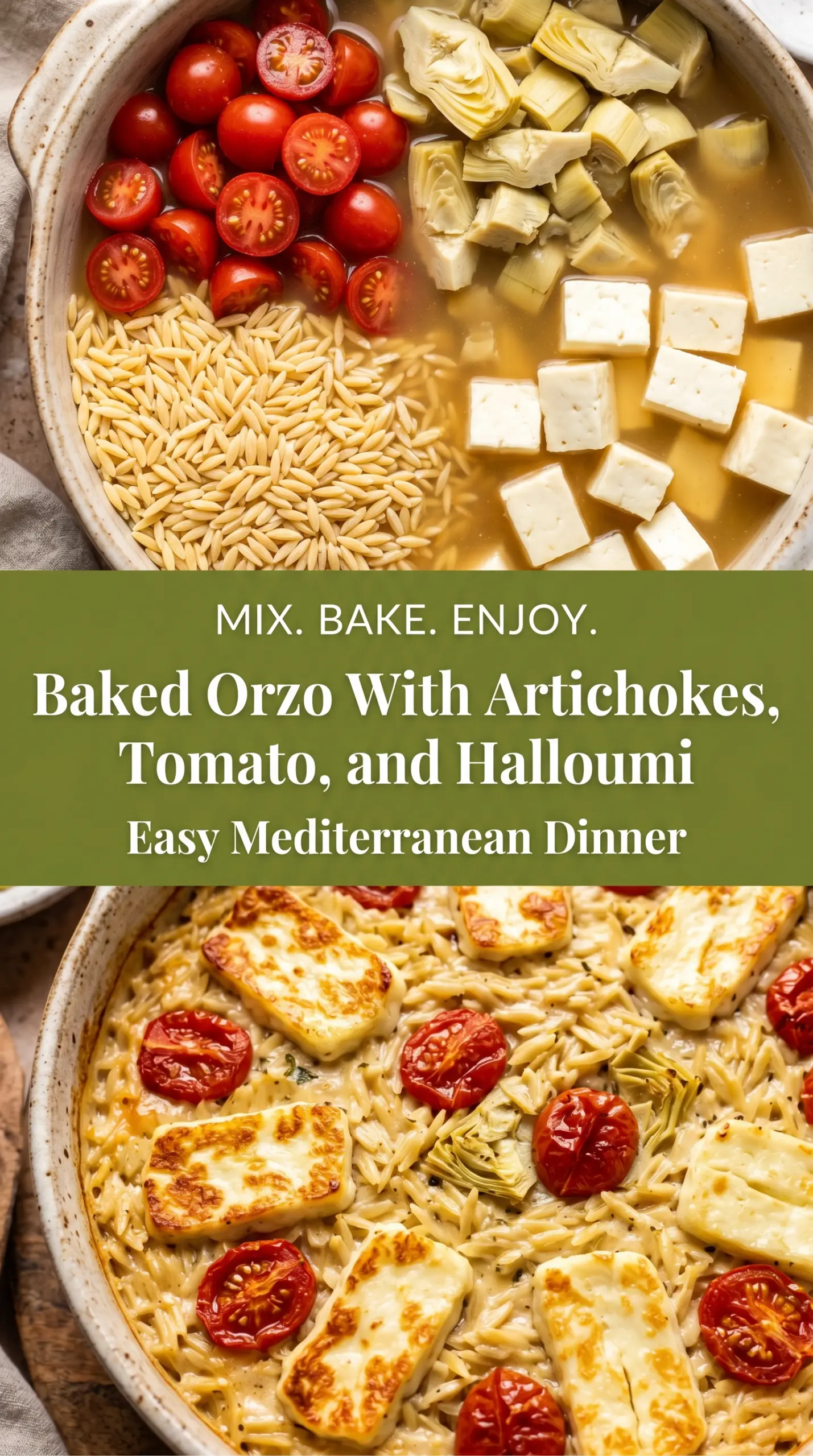
Orzo is the backbone here. It acts like tiny pasta and a little bit like rice, soaking up the broth and tomato juices while still keeping a tender bite. Any small pasta shape can work in a pinch, but orzo gives the creamiest result because the starch releases evenly in the bake.
Marinated artichoke hearts bring both texture and seasoning. Drain them well so the dish doesn’t turn oily, but don’t rinse away all the flavor. If you only have plain artichokes, add an extra drizzle of olive oil and a pinch more salt.
Halloumi is the ingredient that makes this feel different from a basic baked pasta. It holds its shape and turns golden on top, so you get chewy, salty bites instead of a melted blanket. If you swap it for feta, expect a softer, crumblier finish rather than browned cubes.
Diced tomatoes and vegetable broth build the sauce as the orzo cooks. Use a broth you’d actually drink, because it seasons the whole pan. The tomatoes can be canned plain diced tomatoes; no need to hunt down a special version.
Red onion, garlic, oregano, and basil are there to round out the Mediterranean feel without overpowering the cheese. Dice the onion fairly small so it softens by the time the orzo is done. If you want a milder onion flavor, slice it thin instead of leaving big chunks.
How to Bake It So the Orzo Cooks Through and the Halloumi Browns
Building the Pan
Start with a lightly greased baking dish and add the orzo, tomatoes, artichokes, garlic, onion, herbs, salt, and pepper. Stir in the broth and olive oil until the dry pasta is evenly distributed and nothing is sticking out in a dry layer. The whole pan should look loose and soupy at this point; that’s correct. If the pasta sits in clumps on top, those pieces can bake up unevenly.
The Covered Bake
Cover the dish tightly with foil and bake it until the liquid is hot and the orzo has started to soften. The foil matters because it traps steam, which is what cooks the pasta from the inside out. If the cover is loose, the edges will dry before the center is ready. By the end of this stage, you should see the liquid bubbling around the edges and the orzo looking swollen but still a little firm.
Uncovering for the Finish
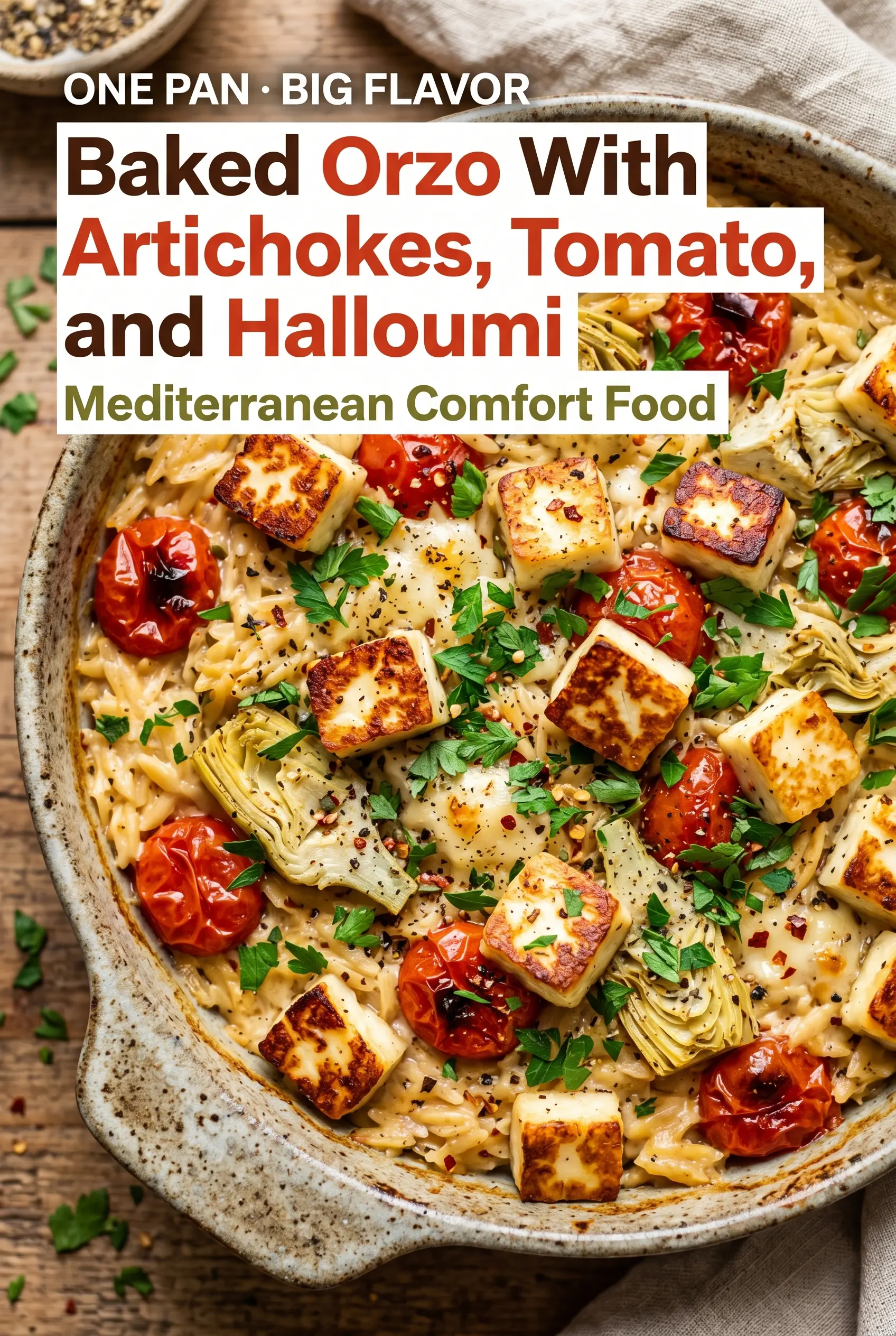
Remove the foil and stir gently so the cooked and less-cooked pasta are redistributed. Then bake it uncovered long enough for the top to take on a little texture and the sauce to thicken around the grains. This is the point where the halloumi turns from pale cubes into golden ones. If the pan still looks watery after the uncovered time, give it five more minutes before adding the lemon and parsley.
The Bright Finish
Stir in the lemon juice after the bake, not before. Acid can dull the way the herbs taste if it cooks too long, and it doesn’t need the oven to do its job. Finish with parsley and serve while the halloumi is still warm and the edges are crisping. Once it sits too long, the cheese softens, which is fine, but you lose that contrast.
Three Ways to Work This Dinner Into What You Already Have
Make it dairy-free
Skip the halloumi and add a can of drained chickpeas or a handful of olives for protein and salt. You lose the browned cheese top, but the dish still eats like a full meal because the orzo carries the sauce so well.
Swap in a different cheese
Feta gives you a saltier, more crumbly finish, while cubed mozzarella melts softer and less distinctly than halloumi. If you use feta, add it near the end so it softens without disappearing into the sauce.
Make it gluten-free
Use a gluten-free small pasta that can hold up to baking, and watch it closely because some versions soften faster than traditional orzo. You may need a little less broth and a shorter uncovered finish, since gluten-free pasta can move from tender to soft quickly.
Add more vegetables
Zucchini, spinach, or chopped roasted red peppers all fit here without changing the method. Stir delicate greens in at the end so they wilt instead of disappearing into the bake, and keep watery vegetables to a modest amount so the sauce doesn’t thin out.
Storage and Reheating
- Refrigerator: Keep leftovers covered for up to 4 days. The orzo will absorb more liquid as it sits, so expect a thicker texture the next day.
- Freezer: It freezes fairly well in airtight containers for up to 2 months, though the halloumi will lose some of its crisp edges. Thaw overnight in the fridge before reheating.
- Reheating: Reheat gently on the stove or in the microwave with a splash of broth or water. The common mistake is blasting it on high heat, which dries the pasta before the center gets hot.
Answers to the Questions Worth Asking
Baked Orzo With Artichokes, Tomato, and Halloumi
Ingredients
Equipment
Method
- Preheat the oven to 400°F (200°C).
- Lightly grease a baking dish.
- Add orzo, diced tomatoes, chopped artichoke hearts, minced garlic, diced onion, dried oregano, dried basil, salt, and black pepper to the baking dish.
- Pour in vegetable broth and olive oil, then stir until evenly combined.
- Scatter halloumi cubes evenly over the top.
- Cover the baking dish with foil and bake for 25 minutes at 400°F (200°C), until the orzo is starting to soften.
- Remove the foil and stir gently.
- Bake uncovered for 10–15 minutes more at 400°F (200°C), until the halloumi turns lightly golden.
- Stir in lemon juice.
- Garnish with fresh parsley and serve warm.
