
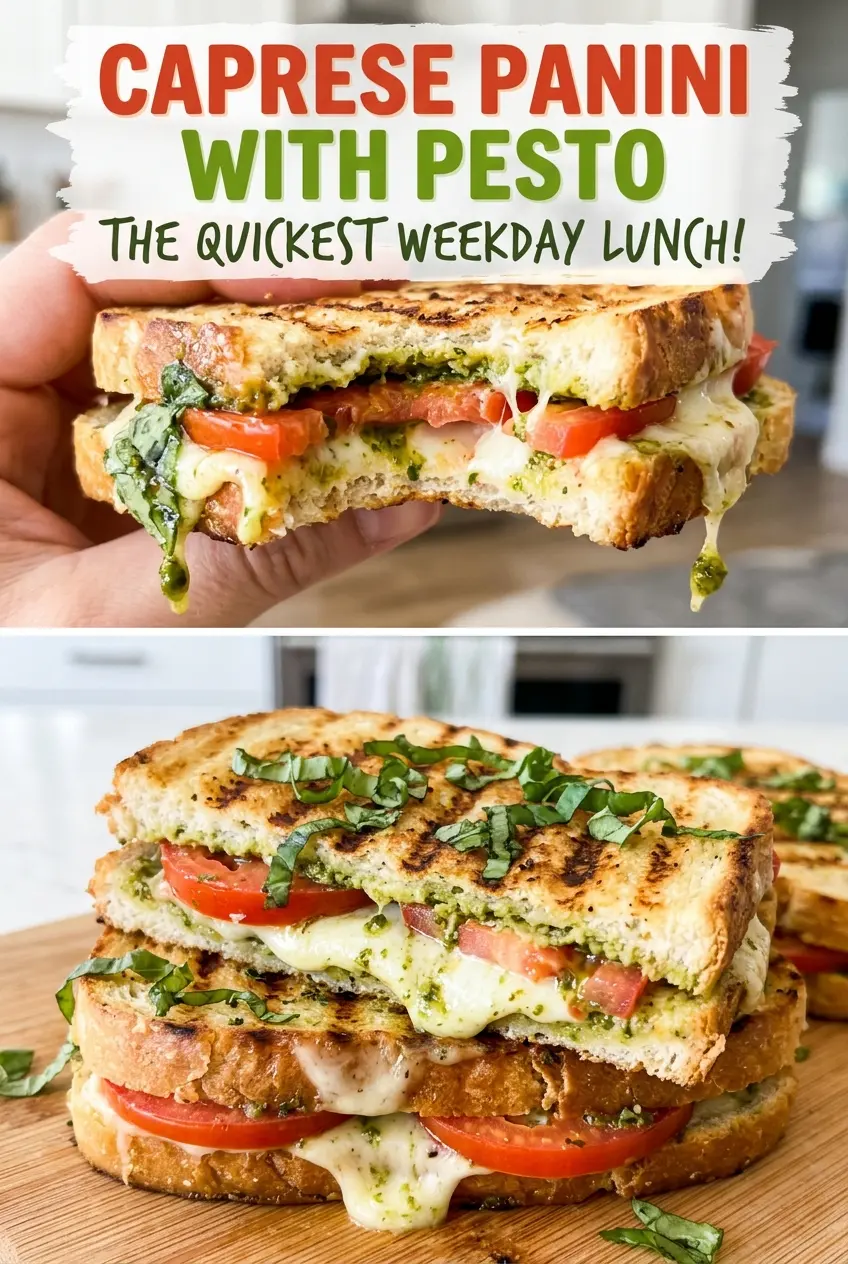
When the press closes, the ciabatta compresses just enough for the mozzarella and tomato to settle into the pesto. A few minutes later, the outside is golden and crisp, and the cheese has gone soft without turning the bread into a messy stack. That balance is what makes this Caprese Panini with Pesto such a satisfying lunch.
Individual ciabatta rolls make the sandwiches easy to handle, and every bite gets the same combination of basil pesto, fresh mozzarella, tomato, and basil leaves. I brush the outside lightly with olive oil rather than pouring it on; a thin coating helps the bread brown without feeling greasy. The finished panini has a crisp edge, a creamy center, and fresh basil flavor tucked through the filling.
Kitchen Note
Give the panini its full 2-minute rest before cutting. I used to slice into them as soon as they came off the press, and the hot mozzarella pulled out with the knife instead of staying neatly in the sandwich.
Save this Caprese Panini with Pesto for a crisp-edged lunch with melted mozzarella and bright basil flavor.
Why the Tomato Needs a Dry Surface Before It Hits the Bread
A juicy tomato brings the fresh, tangy part of a Caprese sandwich, but its extra liquid has nowhere to go once the rolls are closed. It can soak into the cut ciabatta while the sandwiches cook, leaving you with a soft middle instead of a crisp bite. Patting the slices dry takes only a moment, and it gives the press a better chance to brown the bread before the filling gets too wet.
Choose a tomato that tastes ripe but still holds its shape when sliced. Very soft slices are harder to handle and can release more juice as you build the sandwiches. There’s no need to remove the seeds or peel the tomato; just pat the slices dry and layer them with the other fillings. That little bit of attention keeps the tomato’s fresh flavor in the sandwich instead of letting it run into the bread.
This is also why I keep the sandwich filling balanced rather than piling it high. The ciabatta needs to make contact with the hot press, and a crowded center takes longer to warm through. With the tomato dried and the fillings divided evenly among the rolls, the bread can turn golden while the mozzarella melts.
What Each Caprese Panini Ingredient Brings to the Press

- Ciabatta rolls — Their sturdy crumb holds the filling and crisps well under pressure. Fresh bakery rolls are lovely, but grocery-store ciabatta works just fine. A sturdy sourdough roll is the most useful swap; it brings a tangier taste and a firmer chew.
- Basil pesto — Pesto gives the sandwich its concentrated basil, garlic, and oil flavor, so choose one you enjoy tasting on its own. A good jarred pesto is perfectly practical here. Sun-dried tomato pesto is a workable change, though it makes the sandwich sweeter and less traditionally basil-forward.
- Fresh mozzarella — This cheese has a tender, milky texture that suits the fresh tomato and basil. There’s no need to seek out an expensive brand; choose a fresh ball or package that looks clean and smells pleasantly milky. Provolone melts well in its place, but gives the panini a firmer, saltier finish.
- Tomato — A ripe, sliceable tomato supplies the juicy, tart counterpoint to the cheese. Roasted red pepper is a useful swap when you want a sweeter, less sharp sandwich; use strips that are well drained.
- Fresh basil leaves — Whole leaves add a fragrant, leafy note that stays distinct from the pesto. Pick leaves that look fresh and green; baby spinach can stand in for a milder, less aromatic filling.
- Olive oil — A light brush helps the outside of the ciabatta brown. Everyday olive oil is all you need for brushing, while neutral oil works if that’s what you have, with less of the olive’s fruity aroma.
How to Build and Press the Panini Without Losing the Filling
Get the Press Hot Before You Assemble
Preheat the panini press to medium-high, about 375°F. Starting with a hot press gives the bread a chance to brown as the cheese softens. Split the ciabatta rolls horizontally while the press heats. If the press isn’t ready yet, finish assembling once it has reached temperature so the sandwiches aren’t waiting around.
Spread Pesto and Layer the Caprese Filling
Spread the pesto over the cut sides of the rolls so each bite has a little on both pieces of bread. Divide the mozzarella, tomato, and basil among the four rolls, keeping the filling reasonably even from end to end. Close each sandwich before brushing the outside. If one roll gets more filling than the others, redistribute it now rather than trying to fix a lopsided sandwich in the press.
Brush, Press, and Let the Cheese Settle
Brush the outsides lightly with olive oil, then cook the sandwiches in batches. Press for 4 to 6 minutes, until the bread is golden and crisp and the mozzarella has melted. If the bread looks pale, give it a little longer; if it’s already crisp, check that the cheese has softened before taking the sandwich out. Rest the panini for 2 minutes, then cut each one in half and serve.
Three Ways to Adapt These Caprese Panini
Use gluten-free ciabatta-style rolls
Choose sturdy gluten-free rolls made for sandwiches and use them in place of the ciabatta. Their texture may be a little more delicate under pressure, so handle them gently when closing the press; the pesto, mozzarella, tomato, and basil still make a familiar Caprese filling.
Make a dairy-free version
Use plant-based mozzarella and a dairy-free basil pesto in place of the regular cheese and pesto. The result keeps the basil-and-tomato character, though the cheese may melt less smoothly and won’t have the same creamy flavor as fresh mozzarella.
Turn up the fresh basil
Add extra fresh basil leaves to the filling for a greener, more aromatic sandwich. The leaves soften against the warm cheese, and their fresh herbal flavor stands out more clearly against the pesto.
Storage and Reheating
- Refrigerator: Refrigerate leftovers within 2 hours, wrapped airtight, and eat within 3 to 4 days. The bread softens as it sits.
- Freezer: Freezing isn’t recommended; the tomato and fresh mozzarella can turn watery after thawing.
- Reheating: Reheat in the panini press until the center reaches 165°F. Avoid the microwave if you want crisp bread, since it softens the crust.
Caprese Panini Questions About Pressing and Prep
Caprese Panini with Pesto
Ingredients
Equipment
Method
- Preheat a panini press to medium-high, about 375°F.
- Split the ciabatta rolls horizontally and spread the pesto over the cut sides.
- Divide the mozzarella, tomato, and basil among the rolls, then close them.
- Brush the outsides of the sandwiches lightly with the olive oil.
- Cook the sandwiches in batches in the press for 4 to 6 minutes, until the bread is golden and crisp and the mozzarella is melted.
- Rest the sandwiches for 2 minutes.
- Cut the sandwiches in half and serve.
