
Cheesy beef & macaroni casserole is the kind of dinner that lands on the table looking humble and disappears like it took hours. The macaroni holds onto a rich tomato-beef sauce, the cheddar melts into the noodles instead of sitting on top in a greasy layer, and the mozzarella gives you those stretchy, browned edges everybody fights over. It eats like classic comfort food, but it still feels balanced because the sauce is cooked down until it clings instead of pooling at the bottom of the pan.
The difference here is in the order. The pasta gets cooked just shy of done, the beef mixture simmers long enough for the tomato paste and Worcestershire sauce to deepen, and the cheese goes into the filling as well as the top so every bite tastes finished. If you’ve ever had a baked pasta come out dry or bland, it usually needed more seasoning in the sauce and less time in the oven. This version fixes both.
Below, I’ve included the small details that keep the casserole creamy instead of heavy, plus a few swaps that still work when you need to use what’s already in the pantry.
The sauce thickened up beautifully and the pasta stayed tender without getting mushy. I made it on a Tuesday and my husband went back for seconds before I even sat down.
Save this cheesy beef & macaroni casserole for a baked pasta dinner with a saucy center, melty cheddar, and crisp golden edges.
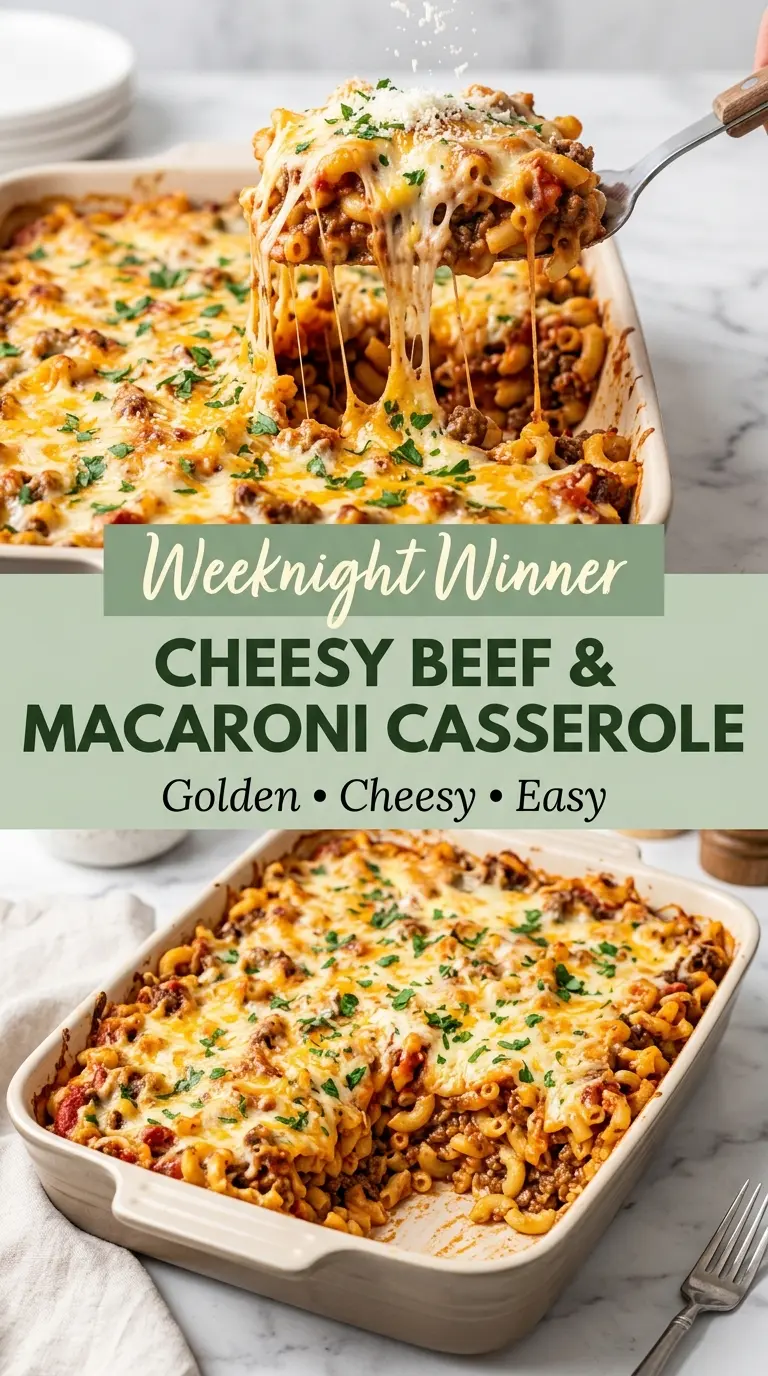
The Part That Keeps This Casserole From Going Dry
The biggest mistake with baked macaroni casseroles is treating the oven like the place where everything finishes cooking from scratch. By the time a pasta casserole comes out dry, the noodles have usually absorbed too much sauce in the pan or spent too long baking uncovered. Here, the sauce gets simmered until it lightly coats a spoon, then the macaroni goes in while the mixture is still loose enough to settle into the baking dish without tightening up.
The other piece that matters is the cheese distribution. A lot of casseroles put all the cheese on top, which gives you a pretty crust but not much creaminess inside. Folding cheddar, mozzarella, and Parmesan into the beef and pasta means the filling stays rich and cohesive even after it rests.
- Elbow macaroni — The curved shape traps the sauce in every bite. If you swap in another short pasta, use something with ridges or pockets like rotini or shells so the sauce doesn’t slide off.
- Lean ground beef — Lean beef gives you a hearty base without leaving the casserole greasy. If your beef has a higher fat content, drain it well after browning so the final dish doesn’t turn oily at the edges.
- Tomato paste — This is what gives the sauce depth and body, not just tomato flavor. Let it cook for a minute with the beef and onion before adding the liquids so it loses that raw, sharp taste.
- Sharp cheddar and mozzarella — Cheddar brings the punch; mozzarella brings the melt. Pre-shredded cheese works, but freshly shredded melts more smoothly because it doesn’t have the anti-caking coating.
- Parmesan — This adds saltiness and a little nutty finish inside the casserole. It doesn’t need to be fancy, but it should be a real hard cheese, not the shelf-stable powder, if you want that savory lift.
How to Build the Sauce So It Bakes Up Rich, Not Watery
Cooking the Pasta Just Short of Done
Boil the macaroni until it still has a little bite in the center. It should be tender enough to eat but not fully soft, because it keeps cooking once it hits the hot sauce and again in the oven. If you take it all the way to soft in the pot, the casserole turns mushy instead of creamy. Drain it well so extra water doesn’t thin out the sauce.
Getting the Beef and Onion Browned
Cook the onion with the beef until the meat loses its pink color and the onion turns translucent with a few browned edges. Those browned bits at the bottom of the skillet are part of the flavor, so don’t rush to move everything around constantly. If liquid starts pooling, keep cooking until it evaporates before adding the garlic. Garlic burns fast, and burned garlic makes the whole sauce taste bitter.
Simmering the Tomato Base Until It Clings
Add the tomato sauce, diced tomatoes, paste, and seasonings, then let the mixture simmer until it looks thicker and less glossy. This is where the casserole gets its backbone. The sauce should mound slightly on a spoon instead of running off like soup. If it still looks thin after 10 minutes, give it a few more minutes on low heat before stirring in the cheese.
Folding and Baking Without Overdoing It
Stir the pasta, beef mixture, and part of the cheese together until every noodle is coated. Transfer it to the baking dish and top with the remaining cheese. Bake just until the cheese is melted and the edges are bubbling; the goal is a hot casserole, not a long bake. Let it rest for five minutes so the sauce settles and each scoop holds together.
Three Ways to Make This Casserole Fit What You Need Tonight
Dairy-Free Version
Use a good melting dairy-free cheese for the top and inside, but expect a softer melt and a less stretchy finish. The casserole still works because the tomato-beef sauce carries the flavor, and the Parmesan can be replaced with a dairy-free hard cheese or left out entirely. Add a little extra salt at the end since many dairy-free cheeses run mild.
Gluten-Free Swap
Use your favorite gluten-free elbow pasta and cook it one minute under the package time so it holds up in the oven. Check the Worcestershire sauce too, since some brands contain gluten. The texture will be a little more delicate than the classic version, but the flavor stays right on track.
Make It Ahead for a Busy Night
Assemble the casserole up to a day ahead, cover it, and refrigerate it unbaked. Let it sit at room temperature for about 20 minutes before baking so the center doesn’t stay cold while the top browns. If it goes into the oven straight from the fridge, add a few extra minutes and keep an eye on the edges.
Use What You Have for the Cheese
If you don’t have mozzarella, use Monterey Jack or provolone for a similar melt. If cheddar is all you have, keep it — the casserole will still be rich, just a little sharper. The one thing to avoid is loading it up with too much pre-shredded cheese from different bags, because the starch coating can make the sauce feel grainy.
Storage and Reheating
- Refrigerator: Store covered for up to 4 days. The pasta will absorb more sauce as it sits, so the casserole gets a little firmer after chilling.
- Freezer: Freezes well for up to 2 months. Cool it completely, wrap it tightly, and freeze in portions or as a whole baked dish. The texture of the pasta softens slightly after thawing, but the flavor holds up.
- Reheating: Reheat covered in a 325°F oven with a splash of water or tomato sauce to keep the edges from drying out. The most common mistake is blasting it in the microwave until the cheese turns greasy and the pasta toughens around the edges.
Questions I Get Asked About This Casserole
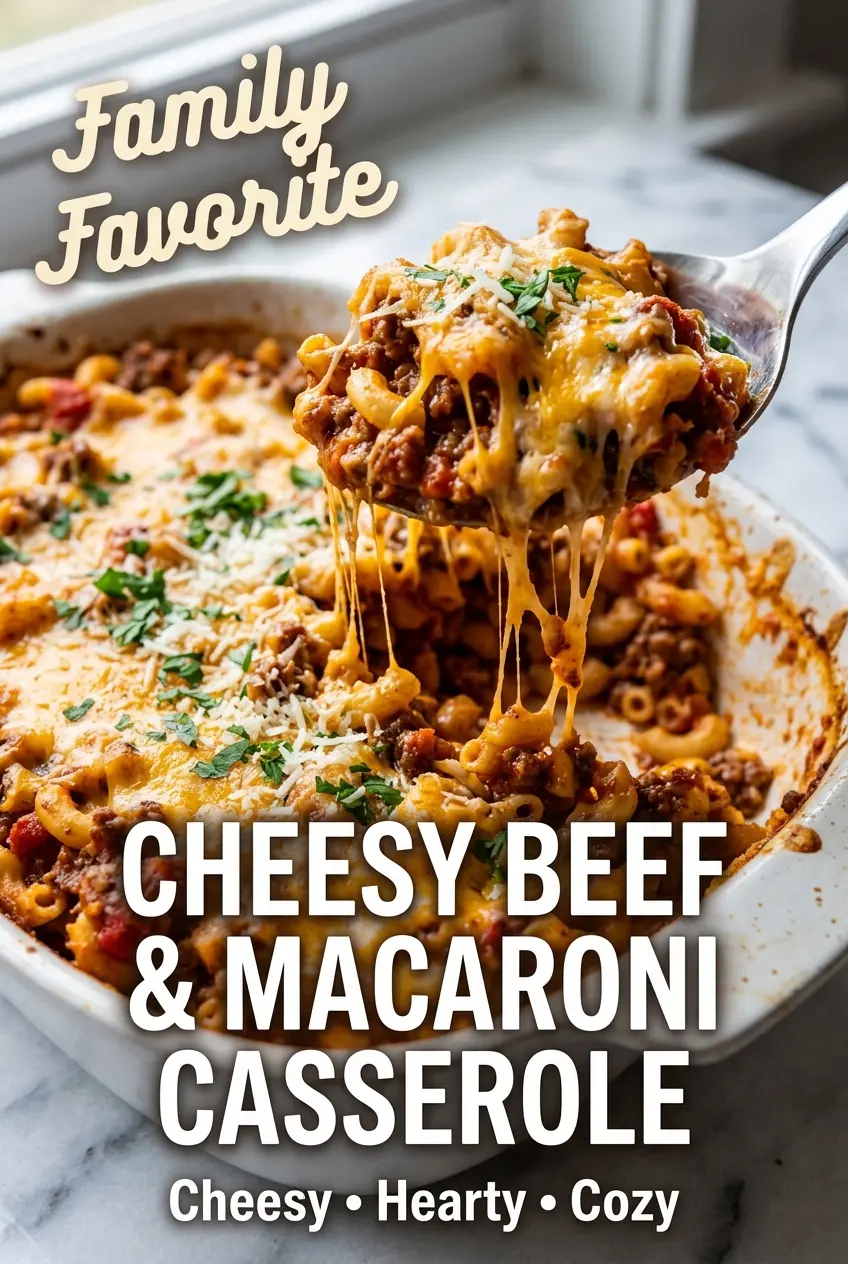
Cheesy Beef & Macaroni Casserole
Ingredients
Equipment
Method
- Bring a large pot of salted water to a boil, then add elbow macaroni. Cook until al dente, about 7–8 minutes, with a tender center and firm bite.
- Drain the elbow macaroni and set it aside so it doesn’t keep cooking. Keep it ready for mixing once the beef sauce is done.
- Preheat the oven to 375°F before assembling. This ensures it’s ready when the casserole is layered.
- Heat olive oil in a large skillet over medium-high heat, then add lean ground beef and yellow onion. Cook for 6–8 minutes, until the beef is browned and no pink remains.
- Drain excess grease from the skillet after browning. The beef mixture should look drier before you add the sauce.
- Add garlic cloves to the skillet and cook for 30 seconds until fragrant. Stir so the garlic doesn’t brown.
- Stir in tomato sauce, diced tomatoes, tomato paste, Worcestershire sauce, Italian seasoning, smoked paprika, garlic powder, kosher salt, and black pepper. Mix until everything is combined.
- Simmer the sauce for 8–10 minutes until slightly thickened. Watch for a more cohesive, spoon-coating texture.
- In a large bowl, combine cooked elbow macaroni, beef mixture, 1½ cups shredded sharp cheddar cheese, half of the shredded mozzarella cheese, and grated Parmesan cheese. Stir until evenly coated for consistent cheesy coverage.
- Transfer the mixture to a greased 9×13-inch baking dish. Spread it level so the top bakes evenly.
- Sprinkle the remaining shredded sharp cheddar cheese and remaining shredded mozzarella cheese over the top. Cover the entire surface for a bubbly layer.
- Bake uncovered for 20–25 minutes at 375°F until the cheese is melted, bubbling, and lightly golden around the edges. The casserole should look hot and set in the center.
- Rest the casserole for 5 minutes before serving. This helps the layers firm up for clean scooping.
- Garnish with chopped fresh parsley and extra grated Parmesan cheese. Finish right before serving for the best color contrast.
