
Chicken Parmesan Casserole hits the table with everything people love about chicken parm, but without the separate breading, frying, and stacking. You get tender bites of chicken, pasta that holds onto the sauce, and a cheesy top that bakes into a bubbling, golden crust. It’s the kind of pan of dinner that disappears fast because every spoonful has a little bit of everything.
What makes this version work is the order of operations. The chicken is seasoned and browned first so it brings real flavor to the casserole instead of tasting boiled in sauce, and the garlic goes into the hot skillet long enough to bloom without turning bitter. The panko topping is mixed with melted butter before it hits the oven, which is what gives you those crisp, bronzed crumbs instead of a soft, soggy blanket.
Below, I’ll walk through the small details that keep the pasta from overcooking and the cheese from turning greasy. There’s also a simple way to make it ahead without losing that fresh-from-the-oven texture.
The pasta stayed tender, the sauce didn’t dry out in the oven, and the breadcrumb topping came out crisp instead of mushy. My kids asked if I could make the same casserole again next week.
Chicken Parmesan Casserole with crispy panko, saucy pasta, and that baked mozzarella-and-Parmesan top
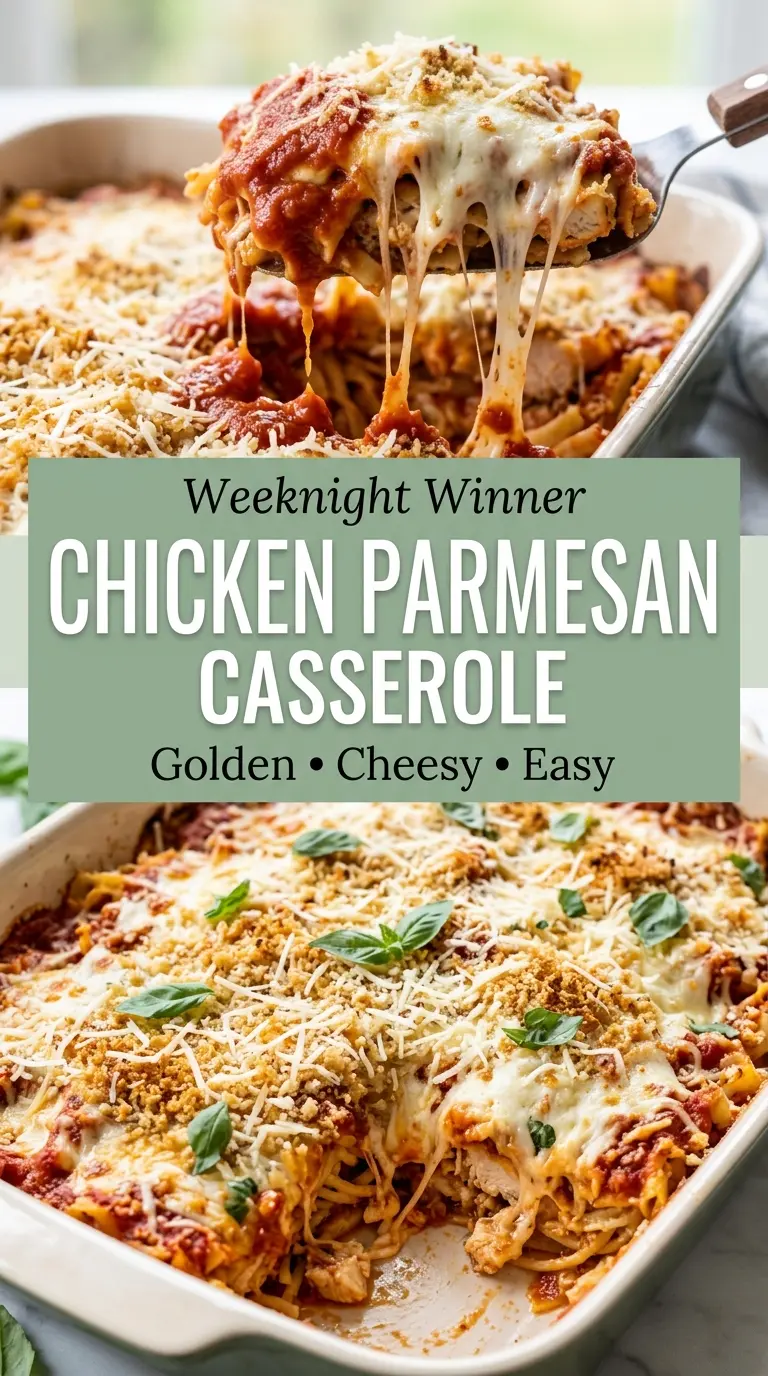
The Secret to Chicken Parmesan Casserole That Stays Saucy, Not Dry
The usual trap with baked pasta casseroles is that they start out glossy and end up looking thirsty after twenty minutes in the oven. That happens when the pasta absorbs too much sauce before baking or when the dish is assembled with chicken that hasn’t been seasoned on its own. Here, the chicken gets flavor in the skillet first, then the marinara finishes the job with enough liquid to coat the penne without turning it soupy.
The other detail that matters is the pasta itself. Pull it when it’s still properly al dente, because it’s going back into the oven and will keep cooking as the cheese melts. If you cook it until soft at the stove, it turns bloated and the casserole loses that nice forkful texture instead of holding its shape.
- Penne — The ridges catch sauce and the tube shape holds up under baking. Short pasta with some structure matters here; long noodles tend to clump and break apart when you stir everything together.
- Chicken breasts — Bite-sized pieces cook quickly and stay easy to serve. Thighs can work if that’s what you have, but they bring a little more richness and need a similar cut so they finish in the same window.
- Marinara sauce — Use one you’d happily eat on its own, because this is the backbone of the casserole. A thicker jarred sauce is a little safer than a thin one, since it clings to the pasta instead of pooling at the bottom of the dish.
- Panko breadcrumbs — These give the top its crunch. Regular breadcrumbs work in a pinch, but panko stays lighter and browns with a better shattering texture once the butter hits it.
- Mozzarella and Parmesan — Mozzarella brings the melt, Parmesan brings the salty edge. Freshly grated Parmesan gives you the cleanest flavor and melts more evenly than the dusty pre-shredded stuff.
Building the Layers So the Casserole Bakes Evenly
Cooking the Pasta Just Short of Done
Boil the penne in salted water until it still has a little bite in the center. Drain it well, because extra water on the pasta thins the sauce and makes the casserole looser than it should be. If the pasta tastes fully cooked at this stage, it will be overcooked after baking.
Seasoning and Browning the Chicken
Cook the chicken in a hot skillet until it picks up some color on the outside. That browned surface gives the casserole more depth than chicken that was only simmered in sauce. If the pan looks crowded, work in batches so the pieces sear instead of steam.
Letting the Garlic and Marinara Work Together
Add the garlic to the hot pan only long enough for it to smell fragrant, then pour in the marinara. Garlic burns fast once it’s minced, and burnt garlic makes the whole dish taste sharp. A short simmer takes the raw edge off the sauce and lets it coat the pasta more cleanly.
Finishing with Cheese and a Buttered Crumb Top
Stir the pasta, chicken, sauce, and some of the cheese together before it goes into the baking dish. That gives you flavor all the way through instead of a plain layer underneath and a heavy cheese lid on top. Sprinkle the panko mixture evenly over the surface so the top browns in patches, which is what makes the finished casserole look and taste homemade.
Three Smart Ways to Adapt This Chicken Parmesan Casserole
Gluten-Free Version
Swap in your favorite gluten-free penne and use gluten-free breadcrumbs for the topping. Cook the pasta just to al dente, because some gluten-free shapes soften faster once they sit in the sauce. The casserole still bakes up creamy and satisfying, just with a slightly softer texture.
Dairy-Free Adjustment
Use a dairy-free mozzarella-style shred and skip the Parmesan, or replace it with a dairy-free Parmesan alternative if you like a sharper finish. The top won’t brown and stretch quite the same way, but the sauce, chicken, and pasta still carry the dish. A little extra garlic in the sauce helps replace some of the lost richness.
Make It with Thighs Instead of Breasts
Boneless chicken thighs work well if you want a juicier result. Cut them into the same bite-sized pieces and cook until they’re browned and just done; thighs can take a minute or two longer, but they won’t dry out as fast if you get distracted. The casserole ends up a little richer and more forgiving.
Make-Ahead for a Busy Night
Assemble the casserole up to a day ahead, but hold the breadcrumb topping until right before baking so it stays crisp. If you’re baking it straight from the fridge, add a few extra minutes in the oven and watch for the sauce bubbling at the edges. That bubbling edge is your cue that the center is hot too.
Storage and Reheating
- Refrigerator: Store leftovers covered for up to 4 days. The pasta will absorb a little more sauce as it sits, which is normal.
- Freezer: It freezes well if you want to portion it after baking. Cool completely, wrap tightly, and freeze for up to 2 months; the breadcrumb topping softens, but the flavor holds up.
- Reheating: Reheat covered in a 350°F oven until hot in the center, then uncover for the last few minutes to re-crisp the top. The microwave works for a bowlful, but it softens the crumb topping and can make the cheese greasy if you blast it too hard.
Answers to the Questions Worth Asking
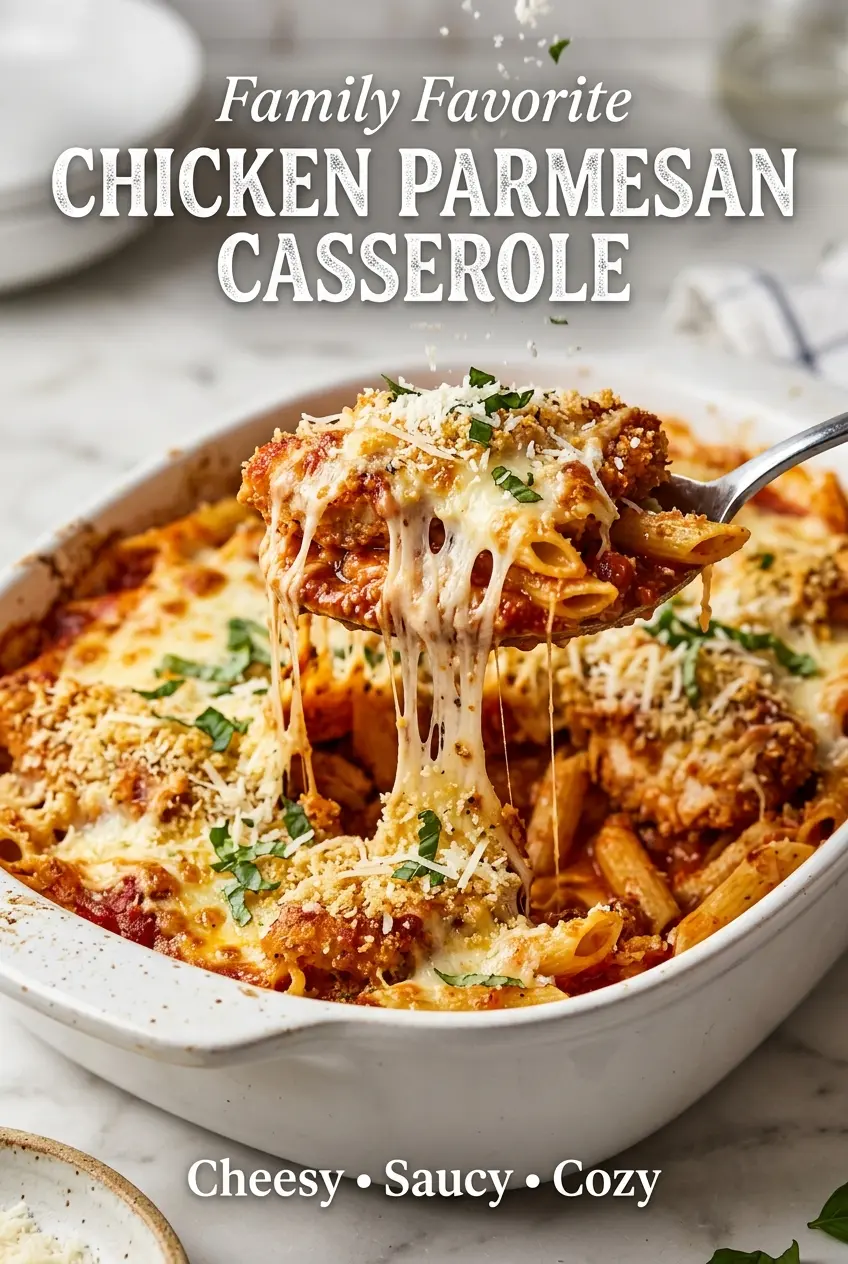
Chicken Parmesan Casserole
Ingredients
Equipment
Method
- Bring a large pot of salted water to a boil. Cook the penne until al dente, about 9–10 minutes, then drain and set aside.
- Preheat the oven to 375°F. Heat olive oil in a large skillet over medium-high heat and cook the seasoned chicken for 6–8 minutes until golden and the chicken reaches an internal temperature of 165°F.
- Reduce the heat to medium, then cook the minced garlic for 30 seconds until fragrant. Stir in the marinara sauce and simmer for 3–4 minutes.
- In a large bowl, combine the cooked pasta, chicken, marinara sauce, 1 cup mozzarella cheese, and 1/4 cup Parmesan cheese, stirring until evenly coated. Transfer the mixture to a greased 9×13-inch baking dish.
- Mix the panko breadcrumbs with the melted butter until evenly moistened. Sprinkle the remaining mozzarella and Parmesan over the casserole, then top with the buttered breadcrumbs.
- Bake uncovered for 20–25 minutes at 375°F, until the cheese is melted, the breadcrumbs are golden brown, and the sauce is bubbling around the edges.
- Allow the casserole to rest for 5 minutes. Garnish with chopped parsley, fresh basil, and extra Parmesan before serving.
