
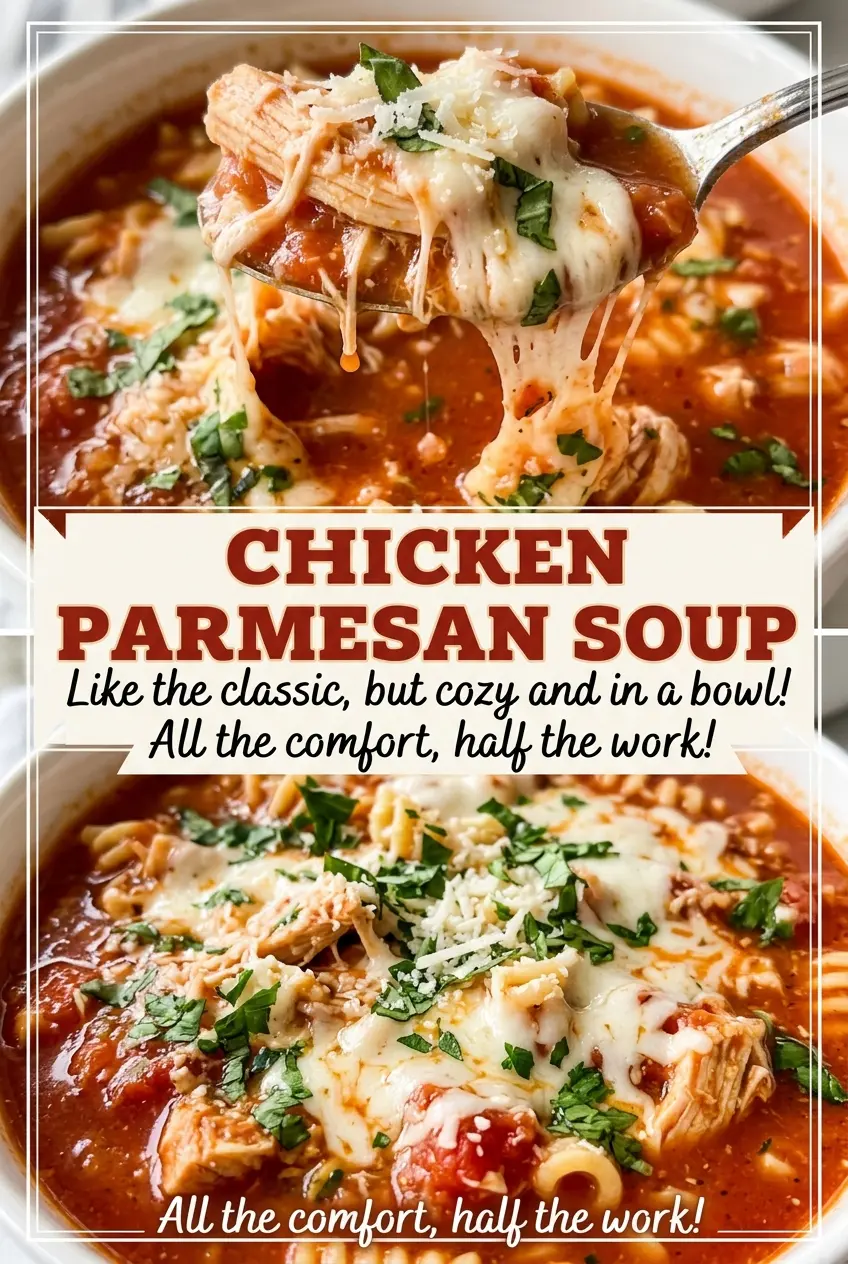
When the chicken first hits the hot Dutch oven, it should sizzle and start to color instead of sitting in a pool of liquid. That quick sear gives this Chicken Parmesan Soup a savory start, and the browned bits left behind turn into part of the tomato broth.
I like that the chicken cooks in the soup before the pasta goes in, then comes out while the noodles simmer. That keeps the chicken from sitting in the pot longer than it needs to, and the ditalini has room to cook until al dente. Each bowl gets mozzarella, finely grated Parmesan, and fresh basil right at the end, so you get that familiar chicken Parmesan finish in a spoonable tomato soup.
Kitchen Note
Finely grated Parmesan spreads across the hot soup instead of falling into a few dense clumps. I add the cheeses to individual bowls, not the Dutch oven, so the mozzarella softens on top without turning the whole pot stringy.
Save this Chicken Parmesan Soup for a cozy bowl of tomato broth, tender chicken, and a cheesy basil finish.
Why Browning the Chicken Before the Marinara Changes the Whole Pot
Chicken simmered from the start in tomato sauce cooks, but it misses the deeper flavor that comes from a little color on the surface. Browning the pieces first gives the soup a savory base before the marinara and broth go in. The chicken doesn’t need a dark crust; lightly browned is the cue, and it finishes cooking later in the simmer.
Those browned bits on the bottom of the pot matter, too. When the broth and marinara go in, scrape the bottom as you stir so the bits loosen into the liquid instead of staying stuck to the Dutch oven. The soup gets the benefit of that first step without needing a separate sauce or another pan to wash.
There’s a good balance here between tomato sauce and broth. Marinara brings seasoned tomato flavor, while broth keeps the soup loose enough to simmer the chicken and cook the pasta. Tomato paste cooked briefly with the onion and seasonings gives that base extra depth before the liquids are added.
What the Marinara, Small Pasta, and Finishing Cheese Each Bring
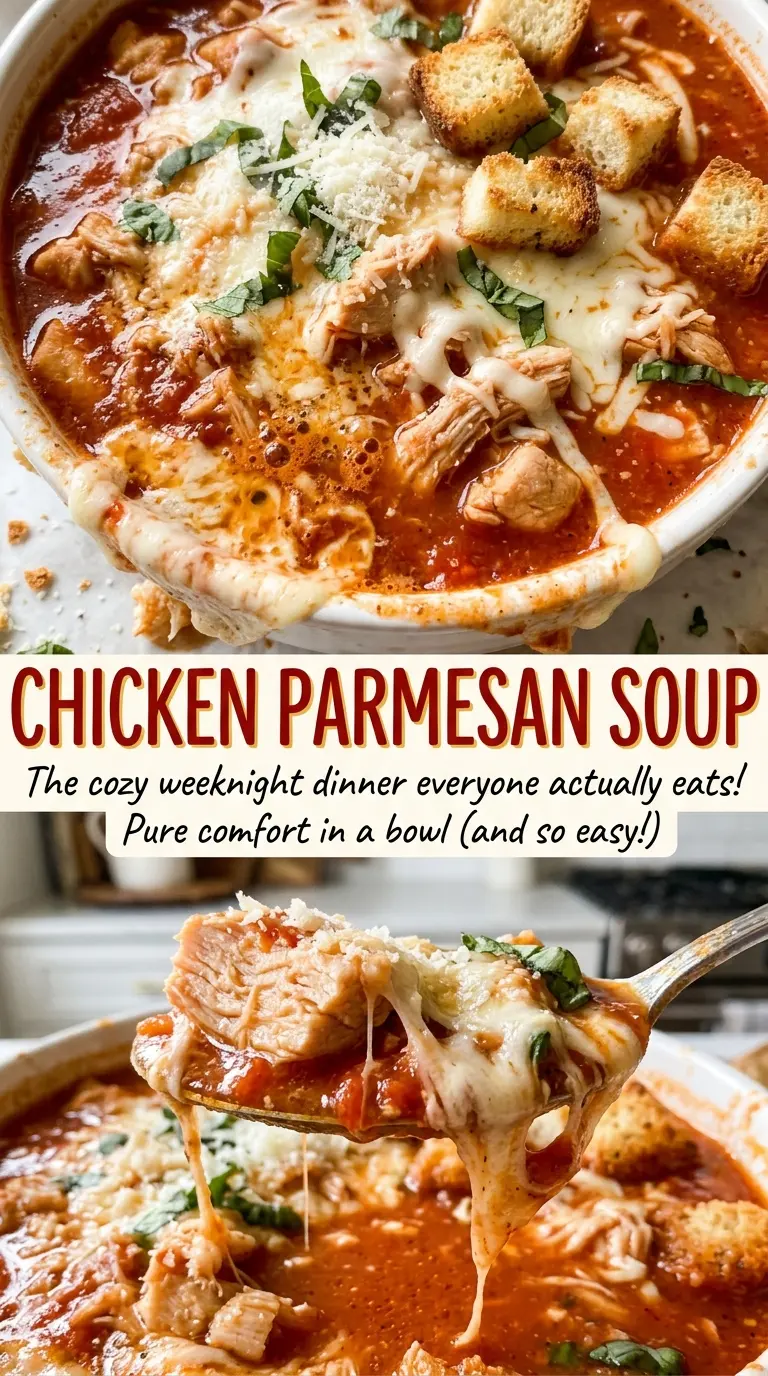
- Chicken breasts — Boneless, skinless breasts are lean and easy to cut into evenly sized pieces, which helps them cook at a similar pace. Cut them into 1-inch pieces so they brown quickly and fit neatly on a soup spoon. The brief sear adds flavor, while the later simmer finishes the pieces.
- Marinara and tomato paste — The jarred marinara supplies seasoned tomato flavor without needing to build a sauce from scratch. A brand you enjoy eating on its own is a good choice; smooth or slightly chunky marinara both work. Tomato paste adds a more concentrated tomato note, so it earns its short cook with the onion and seasonings before the broth is poured in.
- Ditalini or another small pasta — Small shapes are easy to scoop up with the chicken and broth. Ditalini is a natural fit, but another small pasta works; use its package timing and stop when it’s al dente. Larger shapes change the feel of a spoonful, and gluten-free pasta can soften more quickly, so check it as it cooks.
- Mozzarella and Parmesan — Mozzarella brings the soft, stretchy finish associated with chicken Parmesan, while finely grated Parmesan adds a salty, savory bite. Freshly grated Parmesan disperses well, but pre-grated cheese is convenient for the topping. Add both after ladling so they stay distinct from the soup base.
- Fresh basil — Chopped basil gives each bowl a fresh, herbal finish that dried basil won’t quite reproduce as a garnish. It’s worth using fresh here because it goes on at the end, rather than simmering in the broth.
Build the Soup in Stages, Then Cook the Pasta Last
Give the Chicken a Quick Sear
Season the chicken pieces with kosher salt and black pepper. Heat the olive oil in a 6-quart Dutch oven over medium-high heat, then arrange the chicken in a single layer. Cook for 3 to 4 minutes, turning once, until lightly browned; transfer the pieces to a plate rather than waiting for them to cook through in the pot.
Soften the Onion and Wake Up the Seasonings
Add the diced onion and cook over medium heat for 4 to 5 minutes, stirring occasionally, until softened. Stir in the minced garlic, tomato paste, Italian seasoning, and crushed red pepper flakes. Cook for 1 minute, stirring so the tomato paste and seasonings mingle with the onion rather than catching on the bottom.
Simmer the Chicken in the Tomato Broth
Pour in the chicken broth and marinara, scraping up the browned bits as you stir. Return the chicken and any juices on the plate, bring the soup to a boil, then reduce the heat and simmer uncovered for 5 to 8 minutes. Check the thickest chicken pieces with a thermometer; they should reach 165°F. Lift the chicken back onto the plate once it’s cooked.
Cook the Pasta and Finish Each Bowl
Add the pasta to the uncovered soup and simmer for the time listed on its package, stirring occasionally so the small shapes don’t settle and stick. Taste a piece near the end of the package range; it should be al dente, not soft or split. Return the chicken to the pot and simmer for 1 minute to heat it through. Ladle into bowls and finish each with mozzarella, Parmesan, and chopped fresh basil.
Three Easy Ways to Adapt Chicken Parmesan Soup
Make It Gluten-Free
Replace the ditalini with a gluten-free small pasta. Follow that pasta’s package timing and begin checking for tenderness before the listed time is up, since gluten-free shapes can go from firm to soft quickly. The soup keeps its tomato, chicken, and cheese character, though the pasta texture may be a little different.
Turn Up the Heat
Use a spicier marinara or add more crushed red pepper flakes with the seasonings. A spicy marinara changes the heat throughout the broth, while extra flakes give you more control over how pronounced the pepper tastes. Choose one adjustment at a time if you want the tomato flavor to stay front and center.
Make a Vegetarian Version
Use vegetable broth instead of chicken broth and replace the chicken with drained canned chickpeas. Skip the chicken-searing step; add the chickpeas with the broth and marinara, then continue with the soup and pasta. Choose mozzarella and Parmesan made with vegetarian-friendly ingredients if that matters for your diet. The result is less meaty, with chickpeas adding a softer, creamy bite.
Storage and Reheating
- Refrigerator: Store leftovers in an airtight container for 3 to 4 days. The pasta will continue to absorb broth, so the soup thickens as it sits.
- Freezer: The chicken and tomato broth freeze better without the pasta. Cool and freeze the soup base in airtight containers for up to 3 months; thaw it in the refrigerator, then cook fresh pasta in the reheated soup for the best texture.
- Reheating: Warm leftovers on the stovetop over medium heat, stirring gently until steaming throughout. Add a splash of chicken broth if the pasta has absorbed more liquid than you’d like, and avoid a hard boil that can make the pasta too soft.
Questions That Come Up When Making Chicken Parmesan Soup
Chicken Parmesan Soup
Ingredients
Equipment
Method
- Season the chicken with the salt and black pepper.
- Heat the olive oil in a 6-quart Dutch oven over medium-high heat. Add the chicken in a single layer and cook for 3 to 4 minutes, turning once, until lightly browned.
- Transfer the chicken to a plate.
- Add the onion to the pot and cook over medium heat for 4 to 5 minutes, stirring occasionally, until softened.
- Stir in the garlic, tomato paste, Italian seasoning, and red pepper flakes, and cook for 1 minute.
- Stir in the broth and marinara sauce, scraping up any browned bits.
- Return the chicken and its juices to the pot, bring to a boil, then reduce the heat and simmer uncovered for 5 to 8 minutes, until the chicken reaches 165°F in the thickest pieces.
- Transfer the chicken to a plate.
- Add the pasta to the pot and simmer uncovered for the time on the package directions, stirring occasionally, until al dente.
- Return the chicken to the soup and simmer for 1 minute to heat through.
- Ladle the soup into bowls and top each serving with mozzarella, Parmesan, and fresh basil.
