
Chicken shawarma bowls hit that sweet spot between bold and practical: juicy, deeply spiced chicken over fragrant turmeric rice, plus cool cucumber, tomatoes, hummus, and a garlic tahini sauce that pulls everything together. The bowl looks like a lot on the plate, but every part earns its place. You get heat, acidity, creaminess, and crunch in one bite, which is why this meal never feels heavy even when it’s generous.
The key is treating each component like it matters. The chicken needs time with lemon and spices so the surface seasons all the way through, and a hot skillet gives you those browned edges that taste like they came off a grill. The rice is worth rinsing and resting; that’s what keeps it fluffy instead of sticky. And the tahini sauce needs cold water added gradually so it turns smooth instead of seizing into a thick paste.
Below, I’ll walk through the small details that make these bowls work on a weeknight and still hold up for meal prep. There’s also a short section on swaps, because this one is easy to adapt once you understand the rhythm of it.
The chicken was unbelievably tender and the tahini sauce turned out silky instead of thick and paste-like. I packed the leftovers for lunch and the rice reheated perfectly the next day.
Save these chicken shawarma bowls for a dinner that gives you spiced chicken, fluffy turmeric rice, and garlicky tahini in one satisfying meal.
The Trick to Shawarma Chicken That Browns Before It Sticks
Shawarma-style chicken needs direct heat, not a crowded pan and a little patience. The most common mistake is moving it too soon. When chicken thighs hit a hot skillet, the surface has to dry and caramelize before it releases cleanly. If you try to flip while it’s still pale and glued to the pan, you tear off the best part of the crust and end up steaming the meat instead of searing it.
This version leans on thighs for a reason. They stay juicy through the longer cook time needed for those warm spices to bloom on the surface. The lemon juice helps the marinade taste bright, but it also means the chicken benefits from a relatively short marinating window. Thirty minutes gives you good flavor; much longer and the acid starts to tighten the texture instead of improving it.
- Chicken thighs — Thighs give you the forgiving, juicy result shawarma bowls need. Breasts can work, but they dry out faster and need less time in the pan, which makes the sear harder to manage.
- Turmeric — Use it in both the chicken and the rice so the dish tastes cohesive, not like separate parts. Fresh turmeric isn’t necessary here; ground turmeric does the job well and gives the rice that warm color.
- Basmati rice — This is the right rice for fluffy, distinct grains. If you swap in jasmine, the texture gets a little softer and stickier, which is fine, but not quite as clean under the toppings.
- Tahini — The quality matters because this sauce is built around it. A bitter or dry tahini makes the sauce harder to smooth out; if that’s what you have, add the water slowly and extra lemon juice to balance it.
Building the Bowls Without Soft, Soggy Layers
Marinating for Surface Flavor
Combine the chicken with the oil, lemon juice, garlic, and spices until every piece is coated, then let it sit long enough for the seasoning to cling. Thirty minutes is enough to get the surface loaded with flavor without pushing the texture too far. If you marinate much longer than that, the lemon starts to change the bite of the meat in a way that feels firm instead of juicy.
Cooking the Rice So It Stays Fluffy
Rinse the basmati until the water looks mostly clear, then cook it covered and let it rest off the heat. That resting time matters just as much as the simmering, because the grains finish steaming without breaking apart. If your rice turns gummy, it usually means it wasn’t rinsed enough or the lid came off too early.
Getting the Chicken Deeply Browned
Heat the skillet before the chicken goes in, then leave the pieces alone until the first side has a real crust. You want deep color at the edges and an internal temperature of 165°F. If the pan is crowded, the chicken gives off liquid and starts braising in its own juices, which flattens the shawarma flavor and keeps the spices from caramelizing.
Whisking the Sauce Until It Turns Silky
Start with tahini, lemon juice, garlic, and salt, then drizzle in cold water a little at a time. The sauce will thicken and seize before it loosens up; that’s normal. Keep whisking and adding water slowly until it turns glossy and pourable. If you dump in too much water at once, it can break into a thin, uneven sauce that won’t cling to the bowls.
Ways to Adapt These Chicken Shawarma Bowls Without Losing the Point
Make it gluten-free without changing the structure
This bowl is naturally gluten-free as written, so the main job is checking your broth and hummus labels. Use a broth that’s clearly gluten-free, and the rest of the bowl stays exactly the same. That keeps the rice fluffy, the chicken spiced, and the sauce unchanged.
Swap in chicken breasts for a leaner bowl
Chicken breasts work, but they need less time and more attention. Slice them into cutlets or smaller pieces so they cook through before the outside dries out. You’ll lose a little of the rich, juicy texture that thighs bring, but the shawarma spices still carry the dish.
Turn it dairy-free and meal-prep friendly
This recipe is already dairy-free, which is part of why it holds up so well in lunch containers. Keep the sauce in a separate container and add the vegetables just before serving if you want the cucumber and tomatoes to stay crisp. The hummus helps keep the bowl satisfying even when it’s eaten cold.
Use cauliflower rice for a lower-carb bowl
Cauliflower rice works if you want the same toppings with a lighter base. Cook it just until tender and still a little dry in the pan, or it turns watery under the chicken and sauce. You’ll get a fresher, sharper bowl, though it won’t have the same fragrant backbone as basmati.
Storage and Reheating
- Refrigerator: Store the chicken, rice, vegetables, hummus, and sauce separately for up to 4 days. The cucumber and tomatoes lose a little snap after day 2, but the meal still holds together well.
- Freezer: The chicken and rice freeze well for up to 2 months. Skip freezing the fresh vegetables and tahini sauce; the cucumbers turn watery and the sauce can separate.
- Reheating: Warm the chicken and rice gently in the microwave with a splash of water over the rice, or in a covered skillet over low heat. The common mistake is blasting everything on high, which dries out the chicken and makes the rice tough at the edges.
Questions I Get Asked About This Recipe
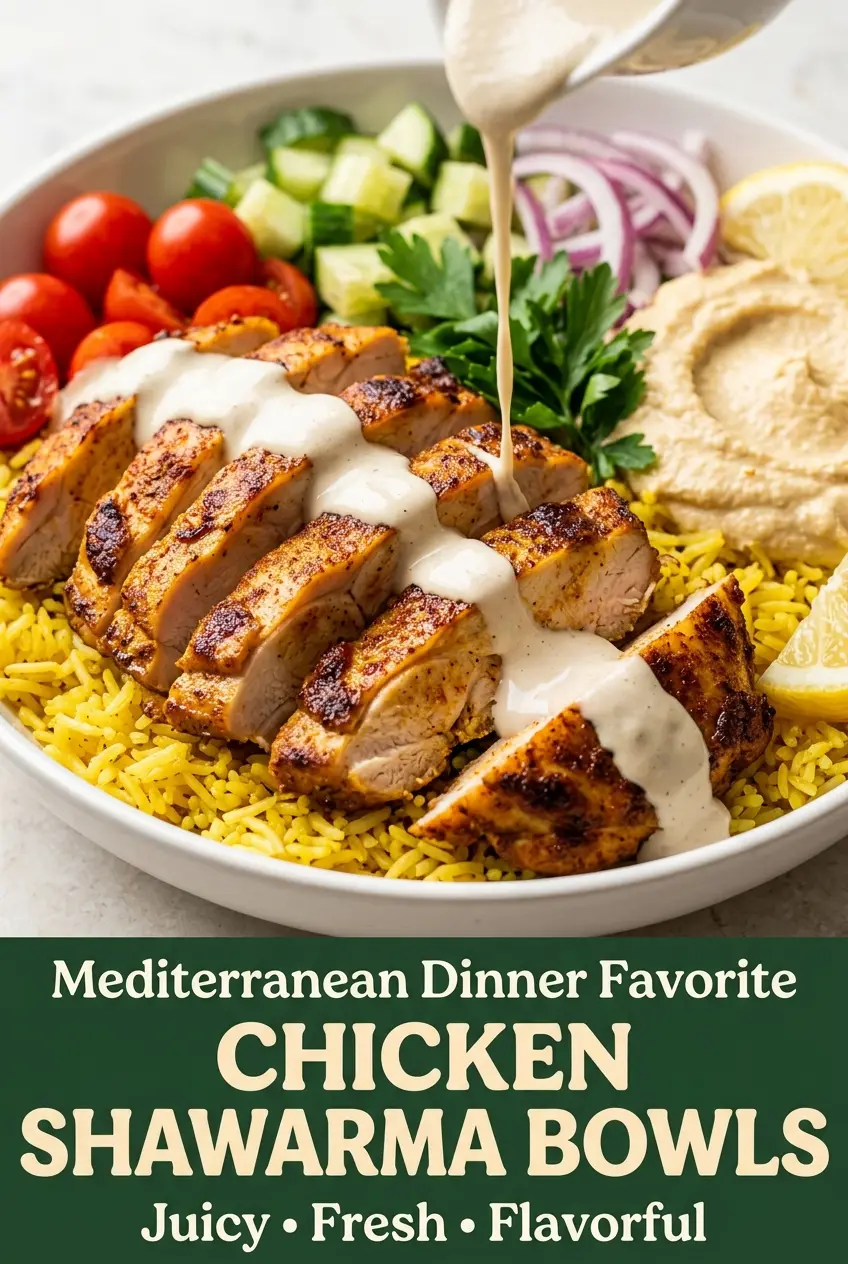
Chicken Shawarma Bowls
Ingredients
Equipment
Method
- In a bowl, mix olive oil, fresh lemon juice, garlic, ground cumin, paprika, ground coriander, ground turmeric, ground cinnamon, salt, and black pepper until the chicken thighs are evenly coated.
- Refrigerate the chicken thighs for at least 30 minutes so the flavors penetrate.
- Rinse basmati rice under cold water until the water runs mostly clear, then drain.
- Add the rinsed rice to a saucepan with chicken broth, olive oil, ground turmeric, and salt.
- Bring the rice to a boil over high heat.
- Cover, reduce the heat to low, and cook for 15 minutes.
- Remove from the heat and rest, covered, for 10 minutes.
- Fluff the turmeric rice with a fork and keep it covered until serving.
- Heat a large skillet over medium-high heat until hot.
- Add the marinated chicken thighs in a single layer and cook for 5–7 minutes per side until deeply golden at the edges and the chicken reaches 165°F.
- Rest the chicken for 5 minutes, then slice it into thick strips against the grain.
- Whisk tahini, fresh lemon juice, garlic, and salt until smooth.
- Gradually whisk in cold water (about 1/4–1/3 cup) until the sauce becomes smooth and pourable.
- Divide turmeric rice among serving bowls.
- Top with sliced shawarma chicken, cherry tomatoes, cucumber, and red onion.
- Add hummus and sprinkle with chopped fresh parsley.
- Drizzle generously with garlic tahini sauce and serve with lemon wedges on the side.
