
The onions need a few minutes to soften before anything else goes into the skillet. I used to rush that part, then the sauce had little firm bits of onion instead of a mellow, savory base. Letting them cook until soft gives the garlic, ginger, and spices something fragrant to settle into, and it makes this Chickpea Tikka Masala taste far more rounded than the short ingredient list suggests.
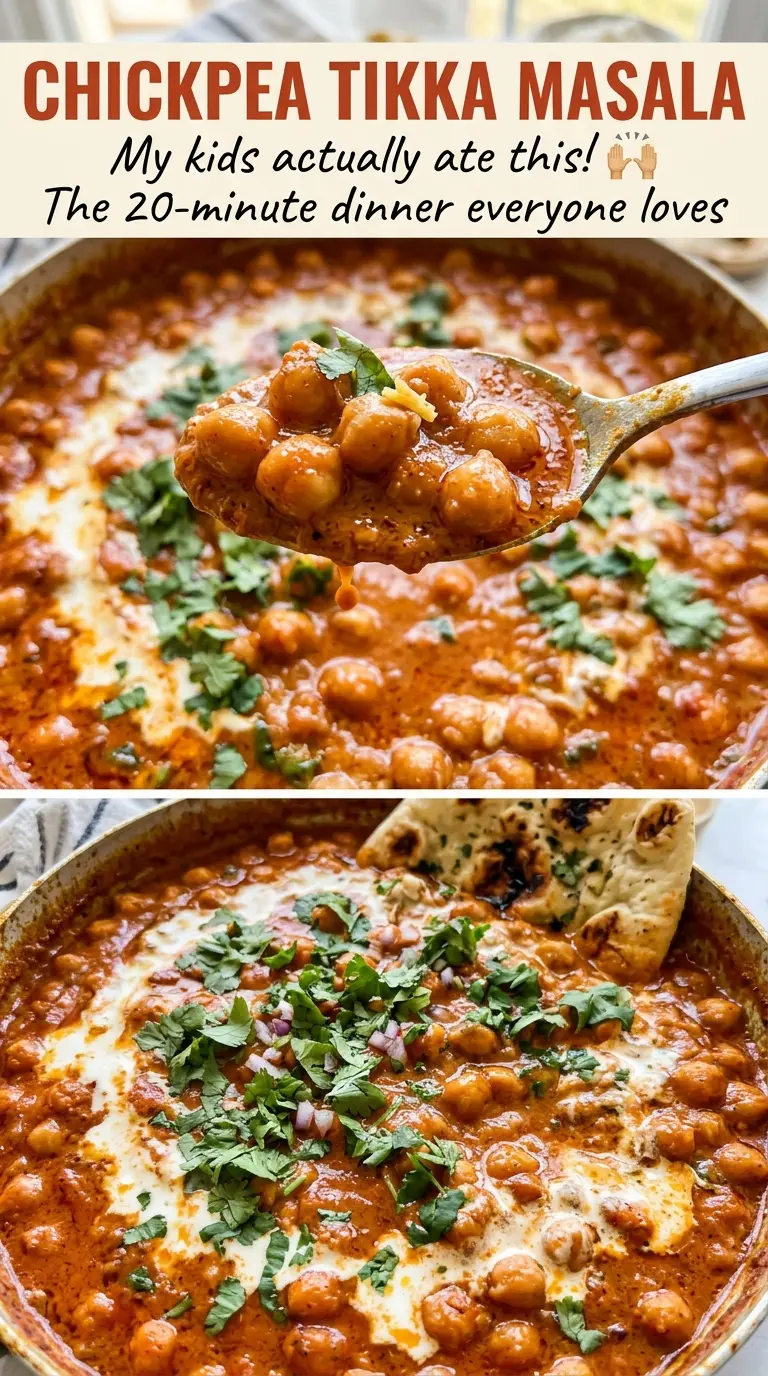
The order matters just as much as the ingredients. The spices get a minute in the pan with the tomato paste, then the tomatoes simmer on their own before the chickpeas join them. That gives the sauce time to lose its raw edge without asking the chickpeas to cook for too long. Finish with cream and cilantro, and you have a thick, warmly spiced tomato sauce clinging to tender chickpeas.

Kitchen Note
A 12-inch skillet gives the sauce enough open surface to simmer uncovered while the chickpeas heat through. In a narrower pan, the sauce sits deeper and takes longer to reduce, so use the wide skillet if you have one.
Save this Chickpea Tikka Masala for a cozy meal with tender chickpeas, warming spices, and a creamy tomato sauce.
Why the Chickpeas Go In After the Tomato Sauce Simmer
Canned chickpeas are already cooked, so they don’t need a long stretch in the pan to become tender. The crushed tomatoes, on the other hand, benefit from a simmer before the chickpeas go in. Those 10 to 12 uncovered minutes soften the sharp, just-opened-can taste and let the tomato paste and spices meld into a cohesive sauce.
Adding chickpeas too early can leave them simmering longer than they need to, especially while you’re waiting for the sauce to thicken. They can start to break apart as you stir, and the finished dish loses the contrast between whole chickpeas and silky sauce. Keep the first simmer focused on the tomato base, then give the chickpeas their own 8 to 10 minutes to warm through. The sauce only needs to thicken slightly; it should still be generous enough to coat every chickpea.
What the Tomatoes, Spices, and Cream Each Bring
- Onion, garlic, and ginger — Finely chopped onion softens into the base instead of leaving large, firm pieces. Freshly grated ginger has a bright, clean bite; peel it first so the tough skin doesn’t end up in the sauce. Minced garlic and ginger cook briefly, so have both ready before they hit the hot oil.
- Tomato paste and crushed tomatoes — Tomato paste adds concentrated savory depth, while crushed tomatoes make the body of the sauce. The paste gets cooked with the spices, not stirred in at the end; that brief time in the skillet takes away its raw taste. Crushed tomatoes are a good pantry staple here, and there’s no need to pay extra for a specialty brand.
- Garam masala and ground spices — Garam masala brings the recognizable warm, layered aroma, while coriander, cumin, paprika, turmeric, and cayenne round it out. Fresh spices smell noticeably more fragrant when you open the jar; if yours have been sitting for years, the finished sauce may taste muted. Measure everything before cooking so you can stir continuously once the spices go into the skillet.
- Canned chickpeas — Canned chickpeas keep the cooking time practical and hold their shape through a short simmer. Drain and rinse them well before adding them, so the canning liquid doesn’t carry into the sauce. Choose cans with chickpeas that look intact rather than heavily broken up.
- Heavy cream and cilantro — Heavy cream rounds off the acidity of the tomatoes and gives the sauce its creamy finish. Fresh cilantro adds a clean herbal lift at the end; dried cilantro won’t bring the same freshness. Chop it shortly before stirring it in.
The Pan-to-Sauce Sequence That Builds the Masala
Soften the Onion Before Adding the Aromatics
Heat the neutral oil in a 12-inch skillet over medium heat, then stir in the finely chopped onion. Cook for 5 to 7 minutes, stirring occasionally, until the pieces are soft rather than crisp at the edges. If they still feel firm when you press one with the spoon, give them the full cooking time before moving on. A little patience here keeps the onion from tasting raw in the finished sauce.
Cook the Tomato Paste and Spices Until Fragrant
Stir in the minced garlic and grated ginger and cook for 30 seconds. Add the tomato paste, garam masala, coriander, cumin, paprika, turmeric, and cayenne, then stir constantly for 1 minute. The mixture should smell aromatic and look evenly coated, with the tomato paste darkening slightly. Keep it moving across the pan; spices left in one spot can catch on the skillet.
Give the Tomatoes Their Own Simmer
Pour in the crushed tomatoes and stir in the kosher salt, scraping the bottom of the skillet as the sauce comes together. Bring it to a simmer, then cook uncovered over medium-low heat for 10 to 12 minutes, stirring occasionally. Look for steady, gentle bubbles rather than a hard boil. The sauce will reduce and thicken a little, but it shouldn’t turn into a paste.
Warm the Chickpeas, Then Finish Gently
Stir in the drained and rinsed chickpeas and simmer for 8 to 10 minutes, stirring occasionally, until they’re heated through and the sauce has thickened slightly. Once the chickpeas are hot, stir in the heavy cream and chopped cilantro. Heat gently for 1 to 2 minutes without letting the sauce boil. The finished masala should look creamy and cling to the chickpeas, not separate into oily and watery patches.
Three Small Changes That Give This Masala a Different Feel
A Dairy-Free, Tomato-Forward Bowl
Leave out the heavy cream for a dairy-free version. The sauce will be less mellow and won’t have the same velvety finish, but the chickpeas and tomato-spice base still make a satisfying masala. Stir in the cilantro at the end as usual.
A Milder Masala Without Cayenne
Omit the cayenne if you prefer the warmth of garam masala without its extra heat. The other spices still give the sauce depth, though you’ll lose the sharper, lingering warmth that cayenne brings.
A Thicker Sauce with Some Mashed Chickpeas
For a heartier, less saucy texture, press a few of the chickpeas against the side of the skillet after they’ve warmed through. They break down into the tomato base and thicken it naturally, while the rest stay whole. Mash just a small portion so the dish still has plenty of chickpea texture.
Storage and Reheating
- Refrigerator: Store leftovers in a covered container for up to 4 days. The sauce thickens as it chills, and the chickpeas absorb some of its moisture.
- Freezer: Freeze in an airtight container for up to 2 months. The cream may look slightly separated after thawing, but stirring as it reheats brings the sauce back together.
- Reheating: Warm it in a saucepan over low heat, stirring often, until hot throughout. Avoid high heat or a hard boil, which can make the cream sauce look uneven.
Questions That Come Up When Cooking Chickpea Tikka Masala
Chickpea Tikka Masala
Ingredients
Equipment
Method
- Heat the oil in a 12-inch skillet over medium heat.
- Add the onion and cook for 5–7 minutes, stirring occasionally, until softened.
- Stir in the garlic and ginger and cook for 30 seconds.
- Add the tomato paste, garam masala, coriander, cumin, paprika, turmeric, and cayenne and cook for 1 minute, stirring constantly.
- Stir in the crushed tomatoes and salt, bring to a simmer, and cook uncovered over medium-low heat for 10–12 minutes, stirring occasionally.
- Add the chickpeas and simmer for 8–10 minutes, stirring occasionally, until heated through and the sauce has thickened slightly.
- Stir in the heavy cream and cilantro, heat gently for 1–2 minutes without boiling, and serve.
