
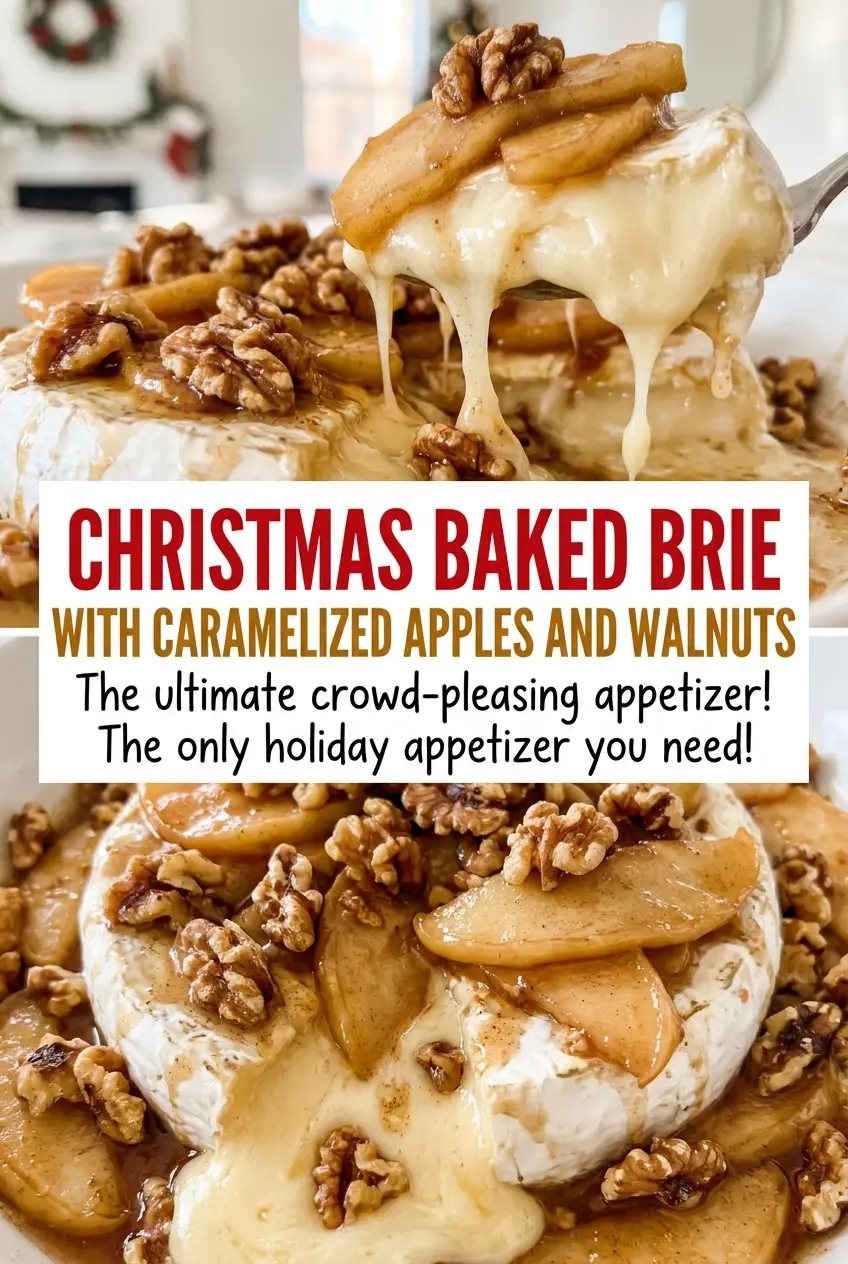
The butter foams around the apple pieces, then the brown sugar melts into a shiny coating that clings to their edges. That skillet moment is what makes Christmas Baked Brie with Caramelized Apples and Walnuts feel special without turning it into a complicated appetizer. The apples soften but keep their shape, and the walnuts pick up the warm cinnamon glaze just before the topping goes onto the cheese.
I bake the Brie on its own, then spoon the topping over it while both are warm. That keeps the apple mixture glossy instead of letting it dry out in the oven, and the cheese stays soft enough to scoop. Set the baking dish out with a small knife and sturdy crackers or sliced bread, and bring it to the table while the center is still creamy.
Kitchen Note
Don’t skip the five-minute rest after baking. The cheese is at its loosest right out of the oven; resting gives it a moment to settle before you spoon the apples over the top.
Save this Christmas Baked Brie with Caramelized Apples and Walnuts for a warm, cinnamon-glazed appetizer with a soft, scoopable center.
Why the Topping Gets Cooked Before the Brie Goes Into the Oven
The apple topping needs direct time in the skillet to become soft and glazed. Butter coats the pieces, while brown sugar melts around them; the cinnamon and salt season that coating rather than disappearing into the cheese. Baking the Brie separately lets you control each part instead of asking the apples and cheese to finish at the same pace.
The timing matters for the walnuts, too. They go into the skillet only after the apples have softened, so they warm in the buttery glaze without spending the whole cooking time over the heat. Then the topping waits off the burner while the Brie bakes. Spoon it on at the end, and you get distinct apple pieces, walnuts with some bite, and a warm layer of glaze over the cheese.
This also makes the final assembly easy to judge. If the apples look dry in the skillet, they haven’t picked up enough of the melted sugar and butter yet; if they’re glossy and softened, they’re ready to come off the heat. The topping doesn’t need to bake on the Brie to belong there—the warm cheese is all the landing place it needs.
Why a Firm Apple and Whole Brie Wheel Matter Here
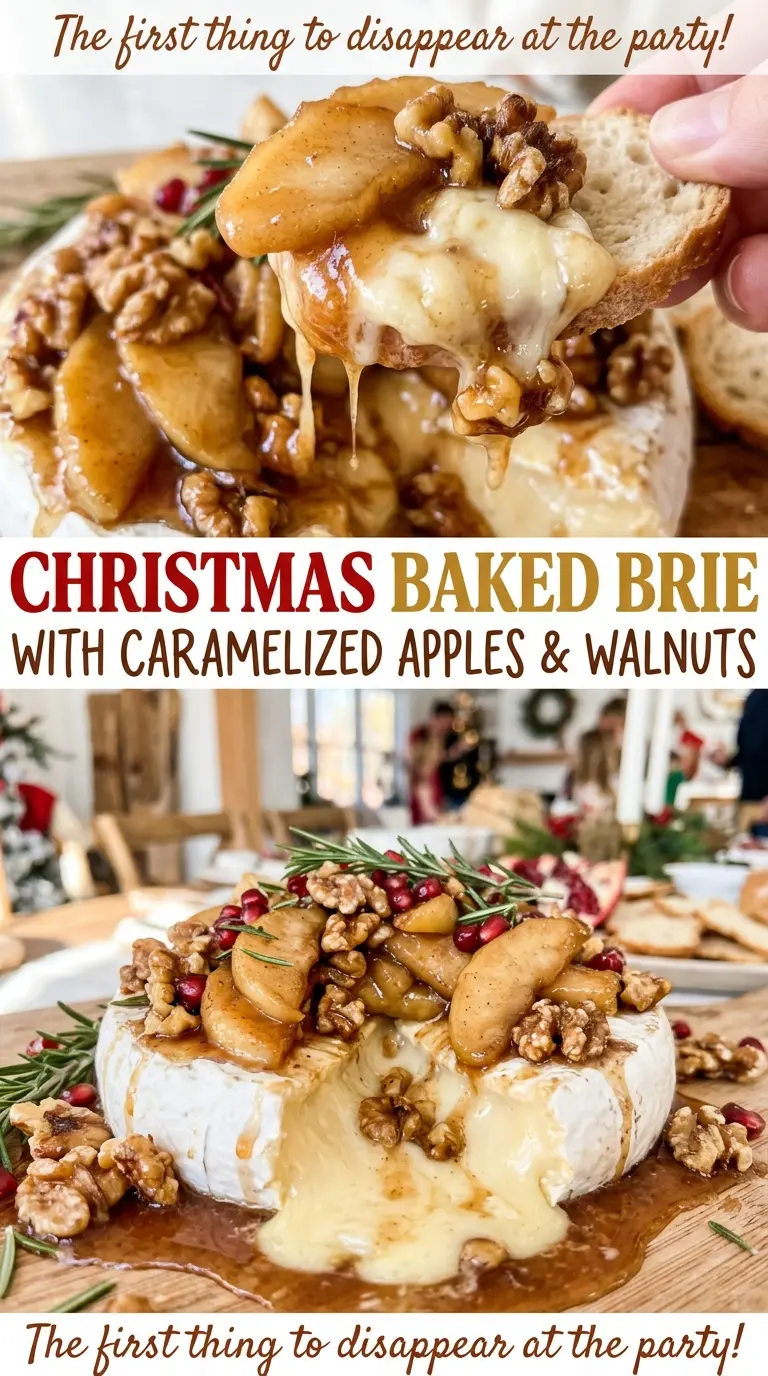
- Apple — A firm apple holds its shape as it softens in the skillet, giving the topping recognizable pieces rather than a loose puree. Cut it into even 1/2-inch pieces so they cook at a similar pace. A standard grocery-store apple works well; choose a tart variety for more contrast or a sweeter one for a gentler topping.
- Unsalted butter — Butter gives the brown sugar something to melt into and carries the cinnamon over the apple. A regular grocery-store butter is fine here; the topping doesn’t depend on a specialty brand. If you use salted butter, reduce the added kosher salt to keep the topping balanced.
- Light brown sugar — Its moisture and mild molasses flavor help create the glaze that coats the fruit. Dark brown sugar can stand in, though it brings a deeper molasses note. White sugar will sweeten the apples but won’t give quite the same rounded, glazed result.
- Ground cinnamon — Cinnamon adds warmth without taking over the apple and cheese. Fresh, fragrant cinnamon makes the most difference; if the jar has been open for ages and smells faint, the topping will taste flatter.
- Chopped walnuts — Their earthy flavor and crunch keep the topping from being all soft fruit and cheese. Buy walnut pieces if they’re fresh and smell clean; chop larger pieces so they’re easy to spoon onto each serving. Pecans are the closest swap, with a sweeter, more buttery taste.
- Brie — An 8-ounce wheel gives the topping a creamy base without making the cheese-to-fruit balance feel skimpy. A familiar grocery-store Brie works; a costly specialty wheel isn’t necessary. Keep the rind on the wheel as it bakes, since it helps the cheese hold its shape.
Building the Apple-Walnut Topping Before the Brie Bakes
Soften the Apples in the Butter
Heat the oven to 350°F, then melt the butter in a 10-inch skillet over medium heat. Add the apple pieces, brown sugar, cinnamon, and kosher salt, stirring occasionally as they cook for 6 to 8 minutes. Watch for softened apple with a glossy coating; the pieces should still look like pieces, not collapse into a sauce. If the sugar starts sticking before the apples soften, keep the heat at medium and stir to help the butter and glaze coat them.
Warm the Walnuts in the Glaze
Stir in the chopped walnuts once the apples are softened and glazed. Cook for 1 to 2 minutes, stirring so the pieces pick up the buttery coating. The walnuts should be warm and evenly mixed through the apples, not left cooking while you prepare the Brie. Take the skillet off the heat when that short cook is done.
Bake the Brie and Finish While Warm
Set the 8-ounce Brie wheel in a 6-inch oven-safe baking dish and bake for 12 to 15 minutes. Check the middle with a gentle press; it should feel soft. Let the wheel rest for 5 minutes, then spoon the warm apple-walnut topping over it. Serve it warm from the baking dish so the cheese stays easy to scoop.
Easy Swaps That Keep the Warm Apple Topping in Balance
Choose a tarter apple
Use a firm, tart apple when you’d like a sharper contrast with the creamy Brie and brown-sugar glaze. The topping will taste brighter, while a sweeter apple makes it rounder and softer in flavor; keep the same piece size so it cooks evenly.
Trade walnuts for pecans
Use an equal volume of chopped pecans in place of the walnuts and stir them in at the same point. Pecans make the topping sweeter and more buttery, with a slightly softer crunch.
Make it nut-free
Leave out the walnuts for a nut-free topping. The glazed apples still pair nicely with Brie, but you’ll lose the crunchy contrast, so serve the topping soon after cooking while the apple pieces are warm and distinct.
Storage and Reheating
- Refrigerator: Refrigerate leftovers in a covered container within 2 hours and use within 3 to 4 days. The Brie will firm up when cold.
- Freezer: Freezing isn’t a good fit; Brie can turn crumbly after thawing, and the apple topping loses its pleasant texture.
- Reheating: Rewarm the Brie in its oven-safe dish at 350°F just until the center softens, then serve. Don’t leave it in until the cheese liquefies, since it can spread and become difficult to scoop.
The Small Questions That Come Up Before Serving Baked Brie
Christmas Baked Brie with Caramelized Apples and Walnuts
Ingredients
Equipment
Method
- Preheat the oven to 350°F.
- Melt the butter in a 10-inch skillet over medium heat.
- Add the apple, brown sugar, cinnamon, and salt; cook, stirring occasionally, for 6 to 8 minutes until the apple is softened and glazed.
- Stir in the walnuts and cook for 1 to 2 minutes.
- Remove the skillet from the heat.
- Place the Brie in a 6-inch oven-safe baking dish and bake for 12 to 15 minutes, until the center feels soft when gently pressed.
- Rest the Brie for 5 minutes.
- Spoon the warm apple-walnut topping over the Brie.
- Serve warm.
