
The apple slices are what decide whether these roses roll neatly or crack at the edges. When they’re too firm, the peel splits as you curl the pastry; when they turn floppy, they slump instead of sitting in overlapping petals. These Christmas Cinnamon Apple Puff Pastry Roses solve that little pastry-project problem with a short microwave softening before assembly. I like that the apples stay unpeeled, so their red edges make the rose shape visible without extra decorating.
The pastry is rolled while still cold, then wrapped around softened apples in narrow strips, which keeps the layers distinct instead of making one thick coil. A thin layer of apricot preserves gives the fruit a glossy base, and cinnamon sugar settles across the exposed slices. After baking, the edges turn golden and crisp around tender apple centers, with each spiral nestled in its own muffin cup.

Kitchen Note
Drain the apples well, then pat the slices dry before they touch the pastry. Even a little surface moisture can make the strips slippery, and the petals are harder to keep in place when they slide as you roll.
Save these Christmas Cinnamon Apple Puff Pastry Roses for a festive bake with crisp pastry petals and cinnamon-sweet apples.
Why the muffin cups help each rose keep its shape
A puff pastry spiral is delicate before it bakes. The pastry softens in the oven before its layers have fully puffed, and the fruit adds weight along one side. A standard muffin cup gives the coil a boundary while that happens, so the rose is less likely to spread into a flat, lopsided pastry.
The shape also comes from the way the apples sit above the folded strip. Their red peel edges remain visible, creating the petal outline while the pastry anchors the lower half. You don’t need every slice to line up perfectly; a slight overlap makes a fuller-looking rose. Keep the pastry end pinched against the roll, and set each spiral upright in its own well. That combination of a visible apple edge and a supported base gives you a defined flower shape without extra decorating.
What the apples, preserves, and pastry each bring
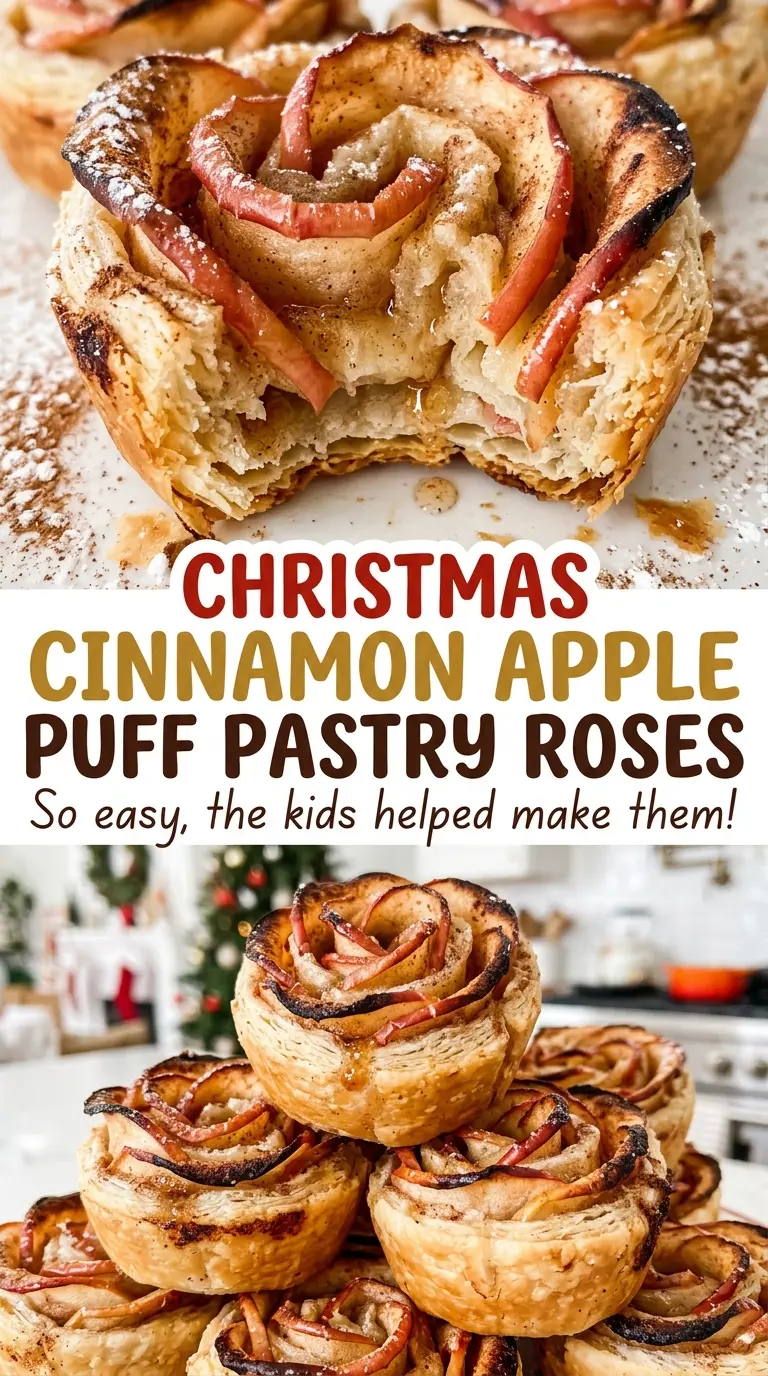
- Red apples — Their unpeeled skins provide the color that makes the rolled slices look like petals. Choose firm apples that slice cleanly; a firm tart apple works too, though the rose edges won’t have the same red color.
- Frozen puff pastry — The separate layers create the flaky structure around the fruit. A standard store-bought package works well; what matters most is thawing the sheets until they can be rolled while keeping them cold enough to handle cleanly.
- Apricot preserves — The thin coating adds a fruity layer between pastry and apple and helps the cinnamon sugar cling. A smooth preserve spreads more easily than one with large fruit pieces, and an inexpensive jar is fine here.
- Granulated sugar and cinnamon — Mixing them together first gives you an even dusting instead of little pockets of cinnamon. Granulated sugar is the right choice for a light, dry coating on the exposed fruit.
- Beaten egg — Brushing it over the exposed pastry helps the baked edges turn a deeper golden color. If you leave it off, the roses will still bake, but the pastry won’t have the same glossy finish.
- Butter and flour — The softened butter greases the muffin cups, while a light dusting of flour keeps the pastry from sticking to the work surface. Use only enough flour to roll and cut without tugging at the dough.
How to shape the apple slices into flaky pastry roses
Soften the apple slices without letting them collapse
Heat the oven to 375°F and grease the cups of a standard 12-cup muffin pan with the softened butter. Toss the thin apple slices with lemon juice in a large microwave-safe bowl, cover, and microwave on HIGH for 2 minutes. Toss again, then continue in 30-second increments until the slices are pliable but still hold their shape; the total time is 2 1/2 to 4 minutes. Drain and pat the slices dry before assembling.
Roll and cut the cold pastry
Lightly flour your work surface, then roll each thawed-but-cold pastry sheet into a 10×12-inch rectangle. If the dough sticks, dust the surface lightly rather than burying the pastry in extra flour. Cut each rectangle into six strips, each 2×10 inches. Keeping the strips even gives the roses a consistent size and makes them easier to roll.
Layer the apples and roll each rose
Spread a thin layer of apricot preserves over each strip, dividing the preserves evenly. Arrange overlapping apple slices along one long edge, with the peel extending about 1/2 inch beyond the pastry. Stir the sugar and cinnamon together, sprinkle it over the apples, then fold the bottom half of each strip over the fruit. Roll from one short end into a spiral and pinch the pastry end to secure it.
Bake until the pastry is deeply golden
Set the roses in the greased muffin cups and brush the exposed pastry with beaten egg. Bake at 375°F for 40 to 45 minutes, until the pastry is deep golden and cooked through. If the apples brown before the pastry is ready, tent the pan loosely with foil so the pastry can finish baking without the fruit darkening further. Cool the roses in the pan for 5 minutes, then carefully remove and serve warm.
Easy ways to adapt the roses without losing their shape
Use peach preserves for a softer fruit note
Replace the apricot preserves with the same amount of peach preserves and spread it just as thinly over the pastry. The roses keep their fruity base, with a milder peach flavor under the cinnamon.
Choose tart green apples instead
Firm green apples make a sharper contrast with the sweet preserves and cinnamon. Leave the peel on for the same layered edge, knowing the finished roses will look less red than those made with red apples.
Make a gluten-free version
Use gluten-free puff pastry and gluten-free flour for dusting. Choose pastry sheets that can be rolled to the same rectangle size; gluten-free dough is often more fragile, so handle the strips gently and expect a slightly different rise.
Storage and Reheating
- Refrigerator: Store cooled roses in an airtight container for up to 3 days. The pastry softens as it sits beside the apples.
- Freezer: Freeze the baked, cooled roses in a single layer until firm, then transfer them to an airtight freezer container for up to 2 months. Thaw in the refrigerator before reheating.
- Reheating: Warm them on a baking sheet at 350°F until heated through, about 8 to 10 minutes. The microwave warms them quickly but makes the pastry soft rather than crisp.
Questions that come up when baking apple pastry roses
Christmas Cinnamon Apple Puff Pastry Roses
Ingredients
Equipment
Method
- Heat the oven to 375°F and grease the cups of a standard 12-cup muffin pan with the softened butter.
- Toss the apple slices with the lemon juice in a large microwave-safe bowl.
- Cover the bowl and microwave on HIGH for 2 minutes.
- Toss the apples, then microwave in 30-second increments until the slices are pliable but not falling apart, 2 1/2 to 4 minutes total.
- Drain the apples and pat them dry.
- Lightly flour a work surface and roll each puff pastry sheet into a 10x12-inch rectangle.
- Cut each rectangle into six 2x10-inch strips.
- Spread a thin layer of apricot preserves over each pastry strip, dividing the preserves evenly.
- Arrange apple slices along one long edge of each strip, overlapping them and letting the peel edges extend about 1/2 inch beyond the pastry.
- Stir the sugar and cinnamon together, then sprinkle evenly over the apples.
- Fold the bottom half of each strip over the apples.
- Roll each strip from one short end into a spiral and pinch the pastry end to secure it.
- Set the roses in the prepared muffin cups and brush the exposed pastry with the beaten egg.
- Bake at 375°F for 40 to 45 minutes, until the pastry is deep golden and cooked through; tent loosely with foil if the apples brown before the pastry is done.
- Cool in the pan for 5 minutes.
- Carefully remove the roses and serve warm.
