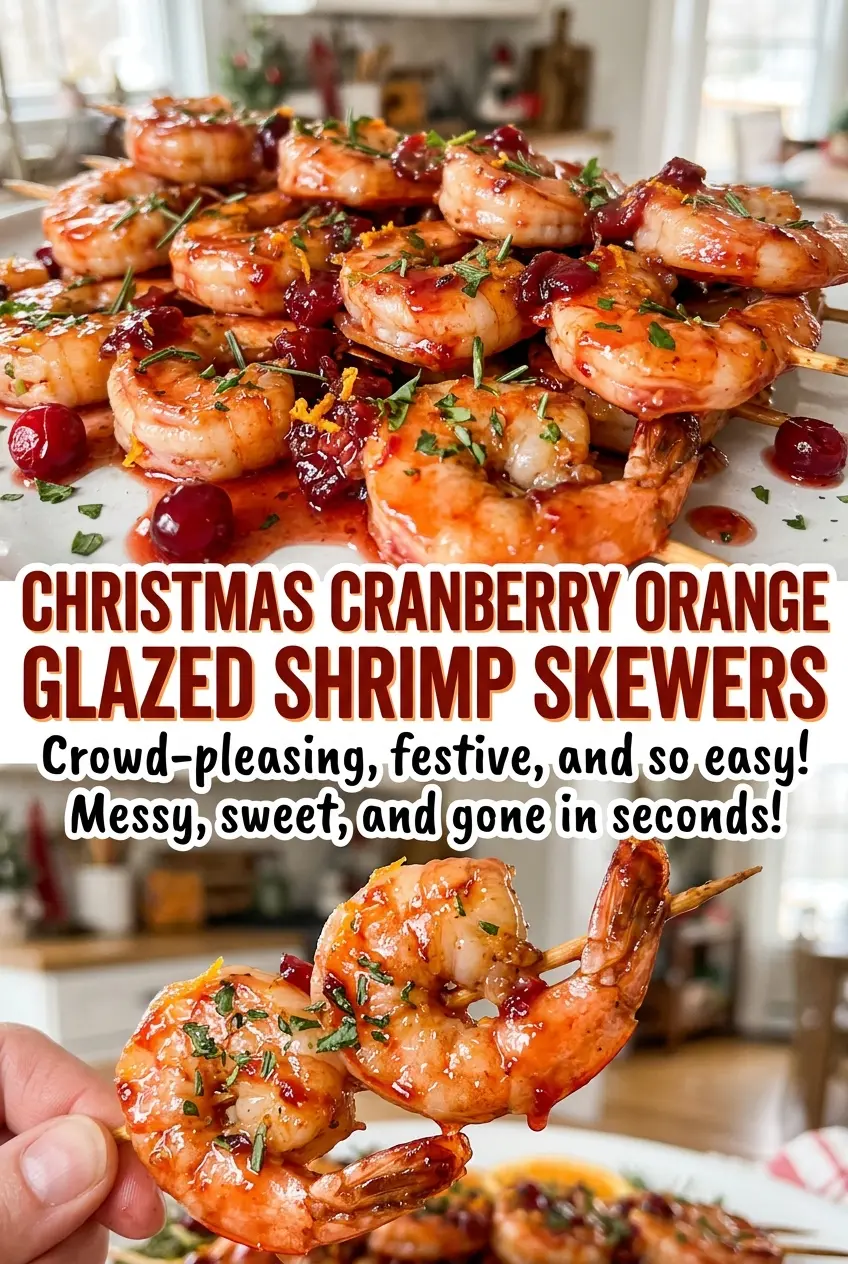
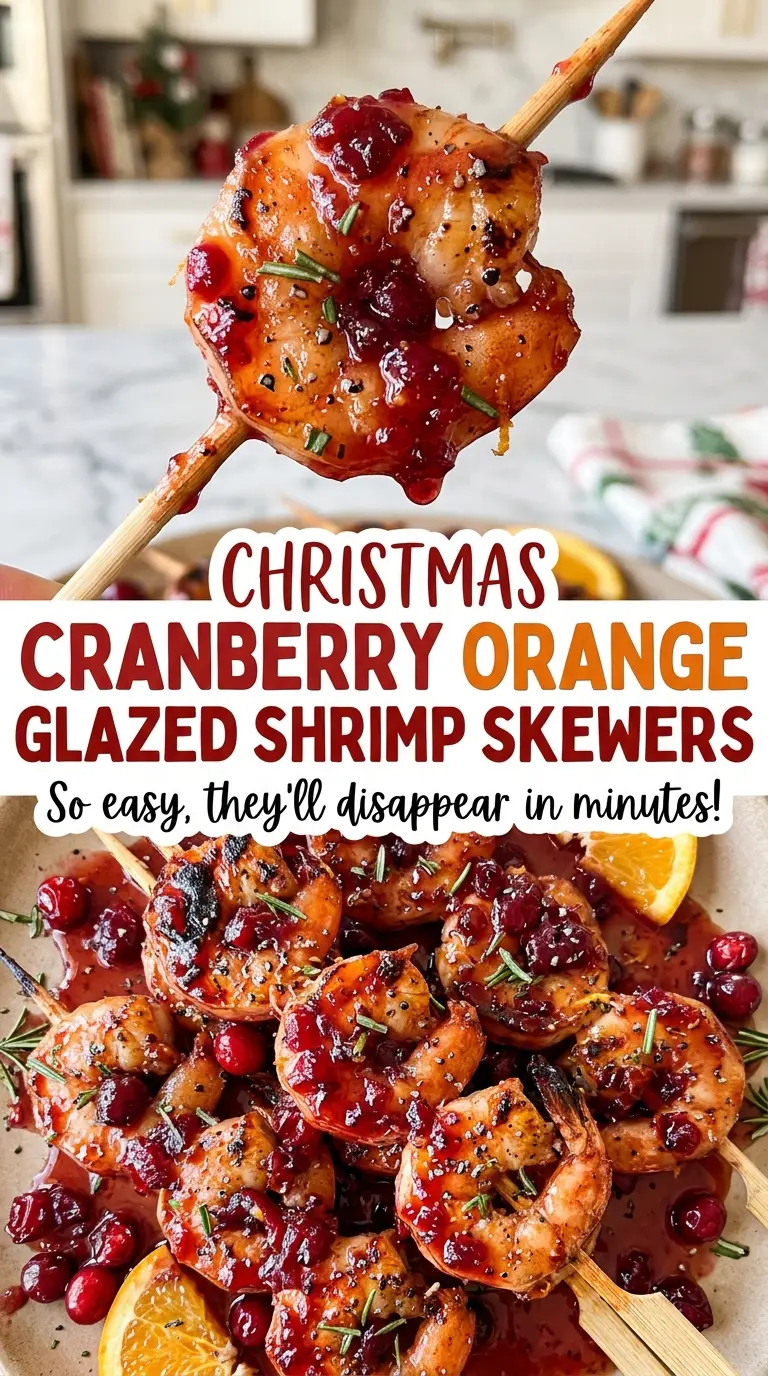
The cranberries start popping against the saucepan as they soften, and their sharp, bright smell gets a little rounder once the orange juice and honey warm through. That’s the point when I know this Christmas cranberry orange glazed shrimp is headed somewhere good: the glaze has enough tartness to cut through the sweetness, while Dijon keeps it from tasting like fruit sauce.
I like that the glaze comes together before the grill is hot, so there’s no rushing to mix a sauce while the shrimp cook quickly. Blending it smooth gives the skewers an even coating, and a little more goes on the table for dipping. The finished shrimp are glossy, lightly sweet-tart, and still firm rather than rubbery.
Kitchen Note
Wait until after you flip the shrimp to brush on the glaze. Honey can darken quickly over a hot grill, and those last minutes give the coating time to cling without spending the whole cook over the flames.
Save these Christmas cranberry orange glazed shrimp skewers for a bright, sweet-tart glaze and a quick finish on the grill.
Why the Serving Glaze Needs to Be Set Aside Before Grilling
There’s a small but useful distinction between the glaze that goes on the shrimp and the glaze you serve at the table. Once a brush has touched cooked shrimp, that portion belongs with the cooking process. Setting aside a clean portion beforehand means you can offer extra glaze for dipping without bringing the brush back to it.
That separation also makes the meal easier to serve. The shrimp can come straight off the grill and onto a platter, while the reserved sauce is ready for anyone who wants a little more cranberry-orange flavor. It’s a simple habit that keeps the dipping sauce separate and gives you control over how much glaze lands on each skewer. The honeyed cranberry mixture is assertive enough to coat the shrimp, so you don’t need to brush on a heavy layer.
Think of the glaze as two portions with different jobs: one gives the shrimp their glossy finish, and the other stays untouched for serving. Measure and separate them before the grill work begins, not while the shrimp are cooking.
What Cranberries, Orange, and Dijon Each Bring to the Glaze
- Cranberries — Fresh or frozen both work here. They supply the tart, fruity base and thicken as they cook; blending after they burst turns that soft fruit into a smooth coating. Choose either form based on what you have, rather than buying a different berry that would change the balance.
- Orange zest and juice — The juice brings citrus acidity and moisture, while the finely grated zest adds fragrant orange oils that juice alone can’t provide. Use a fresh orange so you get both. Grate the zest finely, avoiding the bitter white pith beneath the peel.
- Honey — Honey sweetens the sharp cranberries and helps the glaze feel rounded rather than puckery. It also browns quickly over high heat, which is why the glaze goes on near the end of grilling. Maple syrup is a workable one-for-one swap, with a deeper, less floral sweetness.
- Dijon mustard — Dijon adds a quiet savory tang that keeps the glaze from reading as jam. Its smooth texture blends in cleanly; for a gluten-free table, use gluten-free Dijon in its place. Yellow mustard has a different, more vinegary taste, so it won’t give the same balanced result.
- Large shrimp — Shrimp in the 16–20-per-pound range are substantial enough to thread onto skewers and grill briefly without drying out as quickly as smaller shrimp. Peeled and deveined shrimp save prep time, and leaving the tails on gives you a convenient place to hold each one.
- Neutral oil — A light coating helps the shrimp meet the grill without adding a competing flavor. A neutral-tasting cooking oil is the right fit; a strongly flavored oil would distract from the cranberry and orange.
Build the Glaze First, Then Grill the Shrimp Fast
Simmer Until the Cranberries Give Way
Combine the cranberries, orange zest and juice, honey, and Dijon in a small saucepan. Bring the mixture to a simmer over medium heat, then cook for 10–12 minutes, stirring often. Most of the berries should burst, and the liquid should look thicker instead of watery. If the cranberries are still mostly whole at the end, give them the full simmer rather than blending too early.
Blend Smooth and Divide the Sauce
Take the saucepan off the heat before blending the glaze smooth with an immersion blender. Keep the blender head submerged so the hot mixture doesn’t splatter. Measure out 1/3 cup for serving and set it aside, then let the remaining glaze cool slightly. If you’re using wooden skewers, soak four 10-inch skewers in water for at least 30 minutes while the glaze cools.
Heat the Grill and Thread the Shrimp
Preheat the grill to medium-high, 400–450°F, and clean the grates. Toss the shrimp with the neutral oil, kosher salt, and black pepper so each one has a light coating. Thread the shrimp onto the skewers, keeping them secure enough to flip without sliding around. Have the glaze and a brush close by before the shrimp go on; the grilling window is short.
Grill, Flip, and Glaze Near the Finish
Grill the skewers for 2 minutes, then flip them and brush the cooked side with the remaining glaze. Grill for 1–2 minutes more, until the shrimp are opaque and firm. Check a thick shrimp with an instant-read thermometer; it should read 145°F. Transfer the skewers to a platter and serve with the reserved glaze.
Two Easy Ways to Adapt the Glaze
Use Maple Syrup Instead of Honey
Replace the honey with the same amount of maple syrup. The glaze will still thicken and coat the shrimp, but its sweetness will taste a little deeper and less floral. Keep the same simmer and grill sequence.
Make It Gluten-Free with Gluten-Free Dijon
Use gluten-free Dijon in place of the regular Dijon, keeping the same amount. The glaze stays smooth and savory, so this small swap won’t change how it cooks or coats the shrimp.
Storage and Reheating
- Refrigerator: Refrigerate cooked shrimp and leftover glaze separately in covered containers for up to 3 days. The shrimp will lose a little of their just-grilled firmness.
- Freezer: Cooked shrimp can be frozen in an airtight container for up to 2 months, though the texture may be softer after thawing. Freeze the glaze separately and thaw both overnight in the refrigerator.
- Reheating: Warm the shrimp gently in a covered skillet over low heat until they reach 165°F, then serve with warmed glaze. High heat or a long reheat will make shrimp tough.
Questions That Come Up While Making These Shrimp Skewers
Christmas Cranberry Orange Glazed Shrimp Skewers
Ingredients
Equipment
Method
- In a small saucepan, combine the cranberries, orange zest and juice, honey, and Dijon.
- Bring the mixture to a simmer over medium heat.
- Cook, stirring often, for 10–12 minutes, until most cranberries burst and the mixture thickens.
- Remove the pan from the heat and blend the glaze smooth with an immersion blender.
- Measure out 1/3 cup for serving and set aside; let the remaining glaze cool slightly.
- If using wooden skewers, soak 4 (10-inch) skewers in water for at least 30 minutes while the glaze cools.
- Preheat a grill to medium-high, 400–450°F.
- Clean the grates.
- Toss the shrimp with the oil, salt, and pepper.
- Thread the shrimp onto the skewers.
- Grill the skewers for 2 minutes.
- Flip the skewers and brush the cooked side with the remaining glaze.
- Grill for 1–2 minutes more, until the shrimp are opaque and firm and an instant-read thermometer inserted into a thick shrimp reads 145°F.
- Transfer the skewers to a platter and serve with the reserved glaze.
