
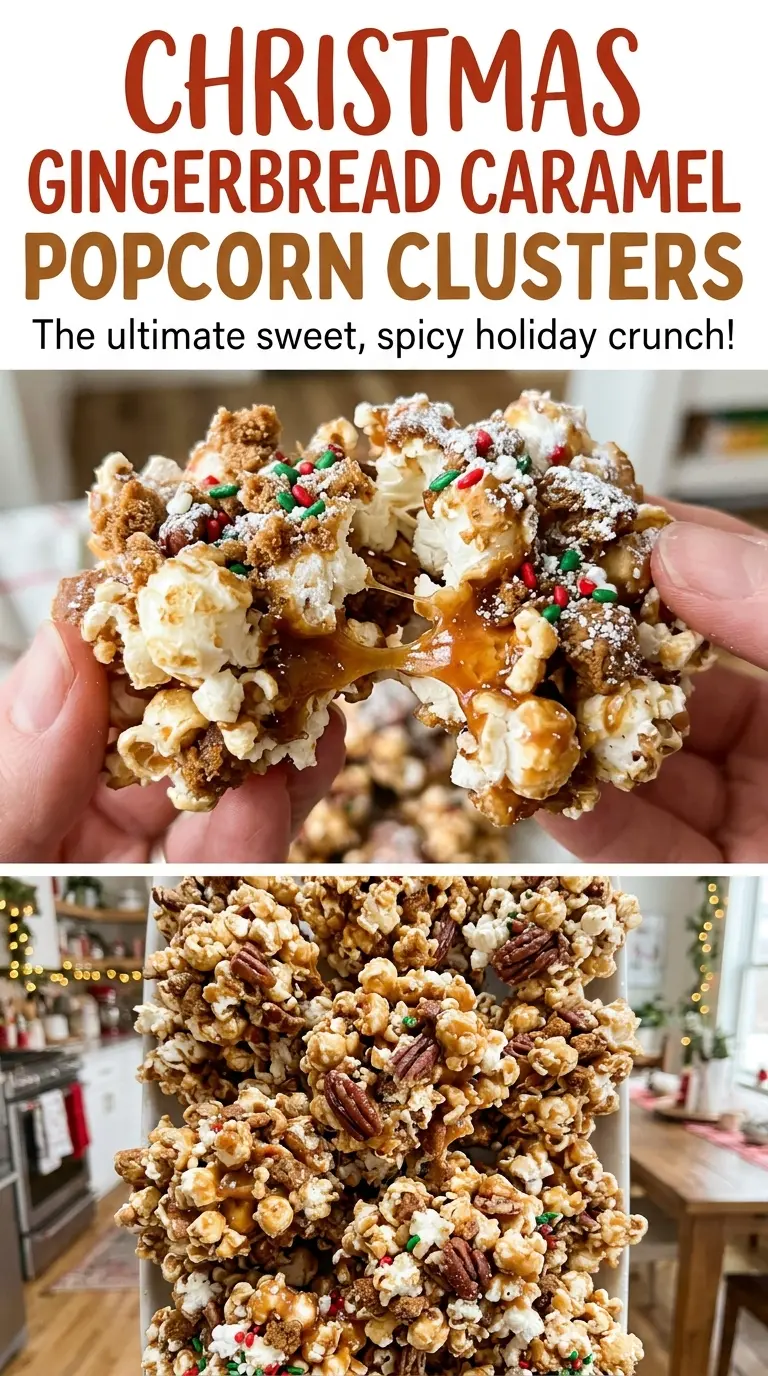
The caramel bubbles steadily in the saucepan, then turns into a cloud of foam the moment the baking soda goes in. That’s expected, and it’s what helps the gingerbread caramel spread over the popcorn instead of setting into one hard sheet. These Christmas Gingerbread Caramel Popcorn Clusters bake low and slow, so the coating gets crisp while the ginger, cinnamon, and molasses settle into every bite.
I spread the popcorn across a rimmed baking sheet before pouring on the caramel; having room to toss it makes a big difference. Then I gather it into clusters while it’s still a little warm and pliable. Once the white chocolate sets, each piece has a crisp caramel shell, a sweet drizzle, and a scatter of holiday sprinkles.

Kitchen Note
Gather the clusters about 5 minutes after the pan comes out of the oven, while the coating is still pliable. Wait much longer and the caramel hardens on the sheet, making it harder to shape neat pieces.
Save these Christmas Gingerbread Caramel Popcorn Clusters for a crisp, warmly spiced treat with white chocolate drizzle and holiday sprinkles.
Why This Caramel Boils Without a Spoon
Once the butter, sugar, corn syrup, molasses, spices, and salt come to a boil, leave the mixture alone for the full 4 minutes. Stirring at that point can encourage sugar crystals to form along the sides of the pan, which may leave the finished coating grainy instead of smooth. The light corn syrup helps keep the caramel cohesive, but it doesn’t mean the boiling stage needs constant attention.
Keep the heat at medium and watch for an even, active boil rather than a few bubbles at the edges. The mixture will darken slightly as it cooks, but it won’t look like a thick candy syrup yet. After the pan comes off the heat, the baking soda and vanilla go in; the mixture will foam up quickly, so use a saucepan with room at the top and stir carefully. That brief foam makes the caramel easier to toss through the popcorn.
The oven does the rest of the work. A low 250°F bake with a stir every 15 minutes spreads the coating around and gives it time to dry onto the kernels. Skipping those stirs leaves more caramel pooled on the pan and less evenly distributed across the popcorn.
What Gives the Gingerbread Caramel Its Warm, Rounded Flavor
- Plain popped popcorn gives the caramel a clean canvas, so choose unseasoned popcorn rather than buttered or salted. Remove the unpopped kernels before coating; they’re easy to miss under the caramel and unpleasant to bite into.
- Unsulphured molasses brings the deep, slightly bittersweet note that makes the coating taste like gingerbread. Robust or blackstrap molasses has a much stronger, more bitter edge, so stick with the mild unsulphured kind for a balanced result.
- Light brown sugar and corn syrup build the caramel’s sweetness and texture. Dark brown sugar can stand in for light brown sugar if you want a deeper, more pronounced molasses note. Keep the light corn syrup; swapping in a different syrup changes how the caramel cooks and sets.
- Ground ginger, cinnamon, and cloves give the coating its familiar gingerbread warmth. Fresh, fragrant spices matter most here because the flavor is carried through a thin caramel layer; spices that have been open in the cupboard for years will taste muted.
- Baking soda is what creates the quick foam after the caramel comes off the heat. Don’t leave it out or replace it with baking powder; they aren’t interchangeable in this step, and the coating won’t have the same light, easy-to-toss texture.
- White chocolate adds a creamy, sweet finish against the spiced caramel. Chopped baking chocolate melts into a smooth drizzle, while white chocolate chips may melt more thickly. Choose chocolate you enjoy eating on its own, since the flavor stays distinct on top.
The Four Stages That Keep the Popcorn Crisp and Coated
Clear the Popcorn and Prepare the Pan
Heat the oven to 250°F and line an 18×13-inch rimmed baking sheet with parchment paper. Remove any unpopped kernels from the 10 cups of plain popped popcorn, then spread the popcorn across the pan. A broad layer gives you room to toss the caramel through without crushing the kernels. Keep the lined pan nearby before you start cooking the caramel.
Boil the Spiced Caramel
Combine the butter, brown sugar, corn syrup, molasses, ginger, cinnamon, cloves, and kosher salt in a 3-quart saucepan over medium heat. Stir until the butter melts and the mixture comes to a boil. Let it boil for 4 minutes without stirring, then take the pan off the heat and stir in the baking soda and vanilla. The caramel will foam; stir until combined, keeping your hands clear of the rising mixture.
Toss and Bake Until the Coating Sets
Pour the hot caramel over the popcorn and toss with a heatproof spatula until the kernels are evenly coated. Work across the whole pan so you don’t leave a thick puddle at the bottom. Bake for 45 minutes, stirring every 15 minutes to redistribute the coating. The low oven heat helps dry the caramel into a crisp shell instead of leaving it sticky in patches.
Shape, Cool, and Decorate
Let the popcorn cool on the baking sheet for 5 minutes, then use a silicone spatula to gather it into 10 to 12 clusters. Cool the clusters completely, about 30 minutes. Microwave the chopped white chocolate in a microwave-safe bowl at 50% power in 20-second intervals, stirring each time until smooth. Drizzle it over the clusters, add the red and green sprinkles, and leave the chocolate to set for about 15 minutes.
Easy Ways to Change the Chocolate or Make It Dairy-Free
Use a Dark Chocolate Drizzle
Replace the white chocolate with chopped semisweet or dark chocolate. The finish will be less sweet and more bittersweet, with a darker contrast against the caramel and holiday sprinkles.
Make the Clusters Dairy-Free
Use dairy-free stick-style butter in place of the unsalted butter and dairy-free white chocolate for the drizzle. Choose a firm baking stick rather than a soft tub spread, which contains more water and can make the caramel harder to set consistently.
Give the Caramel a Deeper Brown-Sugar Note
Swap dark brown sugar for the light brown sugar. The caramel takes on a stronger molasses flavor that pairs well with the ginger and cloves, though it will taste less delicate and more robust.
Storage and Reheating
- Refrigerator: Skip refrigeration; moisture can soften the popcorn and affect the chocolate’s finish.
- Freezer: Freeze the fully set clusters in an airtight container for up to 2 months. Let them come to room temperature while still sealed, so condensation forms on the container instead of the popcorn.
- Reheating: No reheating is needed. Serve at room temperature; warming the clusters will soften the caramel and melt the chocolate.
Questions That Come Up When Making These Popcorn Clusters
Christmas Gingerbread Caramel Popcorn Clusters
Ingredients
Equipment
Method
- Heat the oven to 250°F and line an 18x13-inch rimmed baking sheet with parchment paper.
- Remove any unpopped kernels from the popcorn and spread it on the sheet.
- Combine the butter, brown sugar, corn syrup, molasses, ginger, cinnamon, cloves, and salt in a 3-quart saucepan over medium heat, stirring until the butter melts and the mixture comes to a boil.
- Boil the mixture for 4 minutes without stirring.
- Remove the pan from the heat and stir in the baking soda and vanilla; the caramel will foam.
- Pour the caramel over the popcorn and toss with a heatproof spatula until evenly coated.
- Bake for 45 minutes, stirring every 15 minutes.
- Let the popcorn cool on the baking sheet for 5 minutes.
- Use a silicone spatula to gather it into 10 to 12 clusters.
- Cool completely, about 30 minutes.
- Microwave the white chocolate in a microwave-safe bowl at 50% power in 20-second intervals, stirring each time, until smooth.
- Drizzle the melted chocolate over the clusters.
- Add the sprinkles and let the chocolate set for about 15 minutes.
