
The orange scent comes up first when these rolls hit the oven, then the cinnamon and brown sugar start to bubble around the edges. I like this Christmas Morning Orange Cinnamon Rolls recipe because the dough is shaped the night before, so breakfast doesn’t begin with flour on the counter and a mixing bowl in the sink.
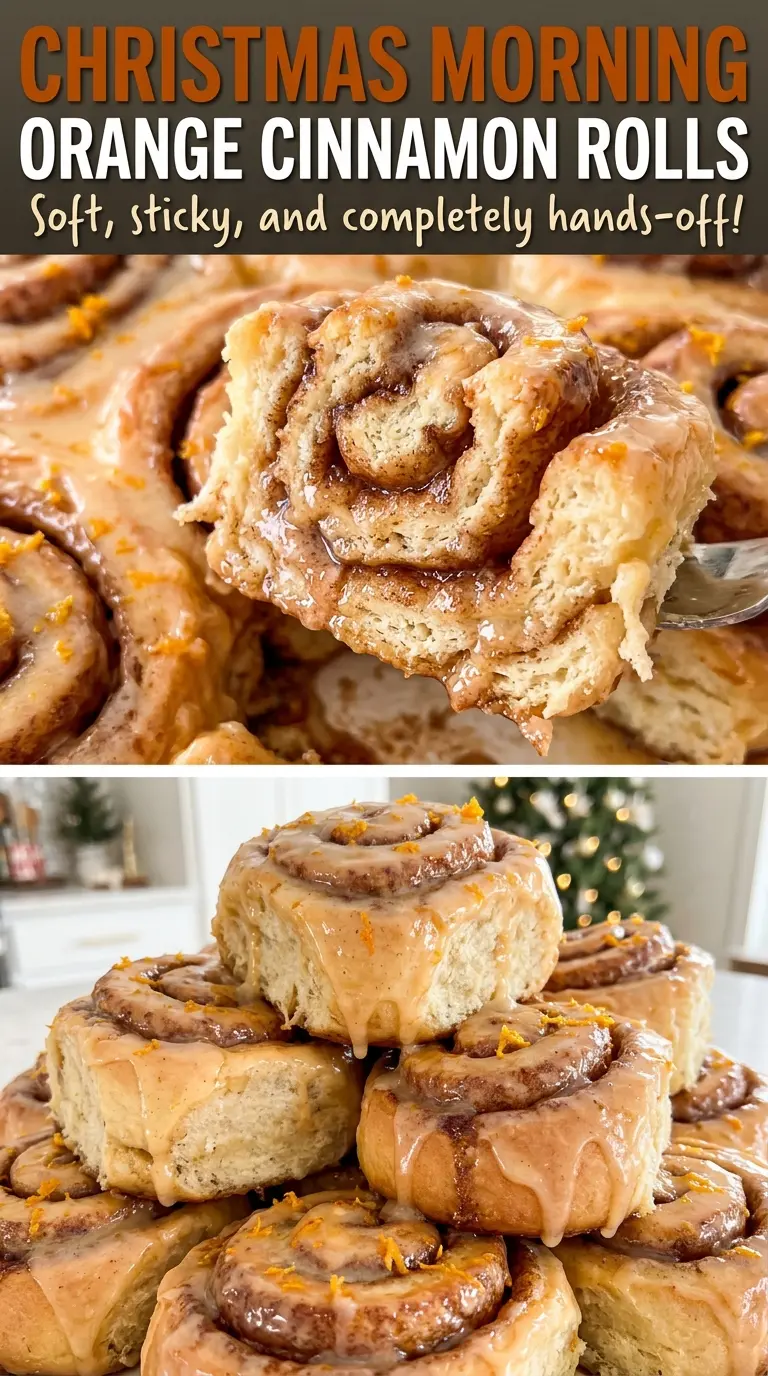
The dough is soft and buttery, with orange zest tucked into the cinnamon-sugar filling and a cream cheese glaze that gets spread over the rolls while they’re still warm. That combination gives you a sweet, citrusy center without letting the orange take over.
There are two rises, and each has a different job: the first builds a light dough, while the overnight rest gives you a head start on the morning. When the rolls come out golden, the centers are tender and the glaze slips into every cinnamon swirl.

Kitchen Note
I check the milk with a thermometer before adding the yeast; it should be 105–110°F, not piping hot. Give the yeast the full 5–10 minutes to turn foamy before moving on, so you know it’s waking up properly.
Save these overnight orange cinnamon rolls for a morning when you want warm, tender spirals and cream cheese glaze without mixing dough at breakfast.
Why the Overnight Chill Comes After Shaping
These rolls get their first rise before they go into the refrigerator. That order matters: the dough needs time in a warm, draft-free place to become light and doubled before you roll it out. Then the shaped rolls rest, covered, in the refrigerator for 8–16 hours. The chilled rest is what shifts most of the hands-on work away from the morning.
Think of the refrigerator time as a pause, not a replacement for the first rise or the final time at room temperature. The rolls still need 60–90 minutes out of the refrigerator before baking, until they look puffy. If you skip that rest and bake them cold, they won’t have the same chance to puff up before the oven sets their shape. I plan backward from serving time: overnight chill first, room-temperature rise next, and then baking. That little bit of timing keeps the make-ahead convenience without asking the oven to do all the work.
What Gives These Rolls Their Orange-Cinnamon Balance
- Whole milk — It gives the dough moisture and richness. Warm it gently; overheating can make it too hot for the yeast.
- Active dry yeast — This is what lifts the dough through both rises. The foamy look after standing is a useful sign that it’s active, so don’t rush past that check.
- Egg and egg yolk — Together they add structure and richness, helping the rolls bake up tender rather than bread-like and lean.
- Unsalted butter — Melted butter enriches the dough, and the remaining melted butter helps the filling cling to the rolled-out dough. Let it cool before mixing it into the dough.
- All-purpose flour — It gives the rolls enough structure to hold their spiral shape. Measure carefully and use the reserved flour to dust the counter for kneading.
- Brown sugar and cinnamon — Packed brown sugar melts into a soft, sweet filling, while ground cinnamon brings the familiar warm spice. Stir them together with the zest so the orange is spread through the filling.
- Finely grated orange zest — Zest contributes fragrant citrus without adding liquid to the filling. Finely grated zest distributes more evenly than large strips.
- Cream cheese and orange juice — Cream cheese gives the glaze its tang and body; orange juice makes it smooth and adds a brighter citrus note. A softened block blends more smoothly than cold cream cheese.
How to Shape the Rolls for an Easy Morning Bake
Wake the Yeast and Mix a Shaggy Dough
Stir the warm milk, yeast, and a teaspoon of the granulated sugar together in a large bowl, then leave it for 5–10 minutes until foamy. Whisk in the egg, egg yolk, remaining sugar, one portion of the melted and cooled butter, and salt. Stir in the flour set aside for the dough until the mixture looks shaggy. It won’t look smooth at this stage, and that’s fine.
Knead Until Smooth, Then Let the Dough Rise
Turn the dough onto a clean counter dusted with the reserved tablespoon of flour. Knead for 8–10 minutes, until it feels smooth and elastic; don’t keep adding flour beyond what’s reserved, since a stiff dough makes less tender rolls. Lightly coat a large bowl with cooking spray, add the dough, and cover it. Let it rise in a warm, draft-free place for 60–90 minutes, until doubled.
Fill, Roll, and Chill the Spirals
Stir the brown sugar, cinnamon, and orange zest together in a small bowl. Coat a 9×13-inch baking dish with cooking spray, then roll the dough into an 18×12-inch rectangle and brush it evenly with the remaining melted butter. Sprinkle the filling over the dough, roll it tightly from a long side into a log, and cut it into 12 equal rolls. Set them cut side up in the dish, cover tightly, and refrigerate for 8–16 hours.
Let Them Puff Before Baking and Glazing
Take the covered dish from the refrigerator and let the rolls stand at room temperature for 60–90 minutes, until puffy. Preheat the oven to 350°F during the last 20 minutes of that rest. Bake for 25–30 minutes, until golden brown and the centers reach about 190°F, then let them rest in the pan for 10 minutes. Beat the softened cream cheese with the powdered sugar, orange juice, and vanilla until smooth, and spread the glaze over the warm rolls.
Two Simple Ways to Change the Orange-Cinnamon Finish
Make them more cinnamon-forward
Leave the orange zest out of the filling and keep the orange juice in the glaze. You’ll still get a light citrus note on top, while the center tastes more like a classic cinnamon roll.
Serve them without the glaze
Skip the cream cheese glaze for a less sweet, more bread-like roll where the cinnamon and brown sugar filling does the talking. This is also a useful option if you’d rather let everyone decide how much glaze to add.
Storage and Reheating
- Refrigerator: Refrigerate leftover glazed rolls in an airtight container within 2 hours. They keep for 3–4 days; the dough will firm up when cold.
- Freezer: Freeze baked rolls without glaze, wrapped individually, for up to 2 months. Thaw them in the refrigerator and add the glaze after warming.
- Reheating: Warm a roll in the microwave in short bursts until heated through. Stop as soon as it’s warm; too much time dries out the soft dough.
Questions That Come Up While Making These Rolls
Christmas Morning Orange Cinnamon Rolls
Ingredients
Equipment
Method
- Stir the warm milk, yeast, and 1 teaspoon of the granulated sugar together in a large bowl, then let stand for 5–10 minutes until foamy.
- Whisk in the egg, egg yolk, remaining granulated sugar, 1/3 cup melted butter, and salt.
- Stir in 4 cups flour until a shaggy dough forms.
- Knead the dough on a clean counter dusted with the reserved 1 tablespoon flour for 8–10 minutes, until smooth and elastic.
- Lightly coat a large bowl with cooking spray and add the dough.
- Cover the bowl and let the dough rise in a warm, draft-free place for 60–90 minutes, until doubled.
- Stir the brown sugar, cinnamon, and orange zest together in a small bowl.
- Lightly coat a 9x13-inch baking dish with cooking spray.
- Roll the dough into an 18x12-inch rectangle.
- Brush the dough evenly with the remaining 1/3 cup melted butter.
- Sprinkle the cinnamon-sugar mixture evenly over the dough.
- Roll the dough tightly from a long side into a log, cut into 12 equal rolls, and arrange them cut side up in the prepared dish.
- Cover the dish tightly and refrigerate for 8–16 hours.
- Remove the covered rolls from the refrigerator and let stand at room temperature for 60–90 minutes, until puffy.
- Preheat the oven to 350°F during the last 20 minutes of the room-temperature rise.
- Bake for 25–30 minutes, until golden brown and the centers reach about 190°F.
- Let the rolls rest in the pan for 10 minutes.
- Beat the cream cheese, powdered sugar, orange juice, and vanilla extract until smooth.
- Spread the glaze over the warm rolls and serve.
