
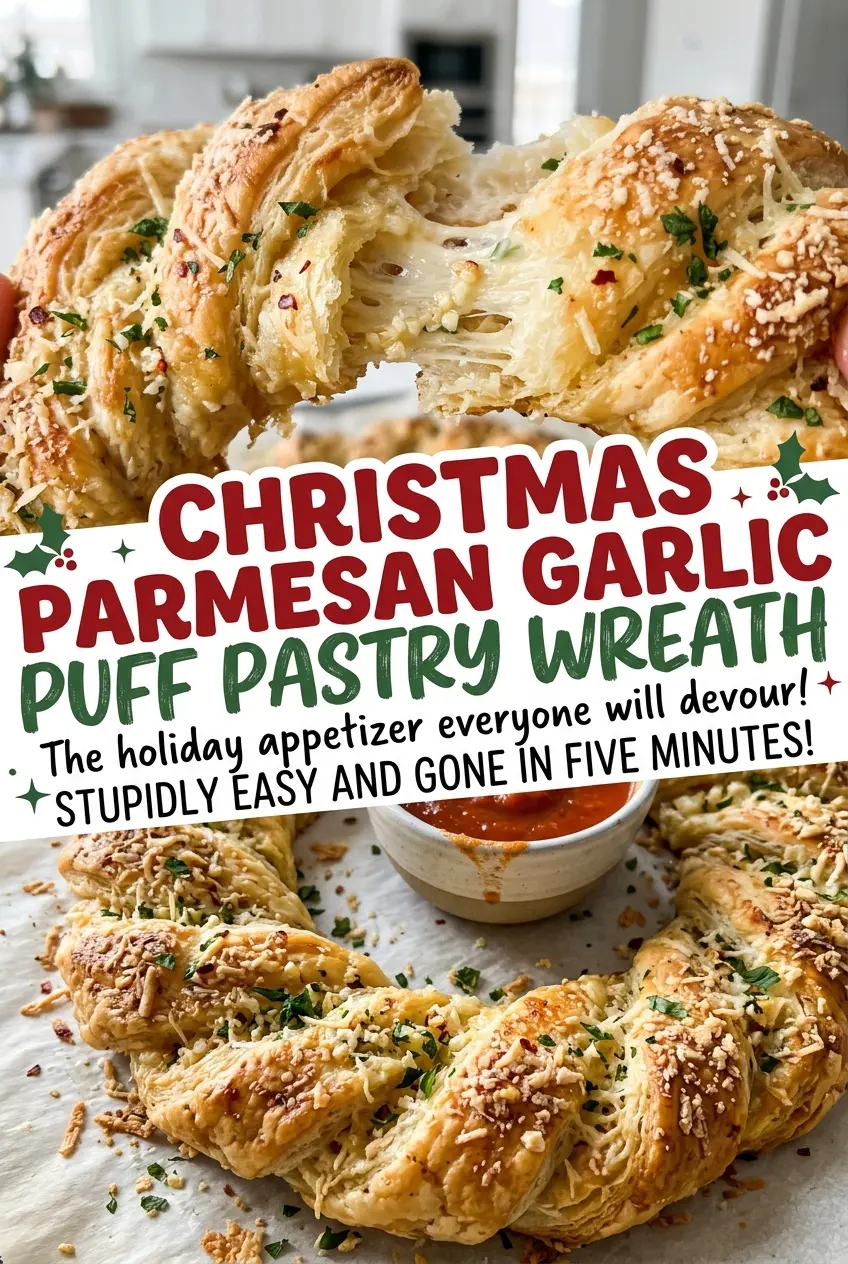
The first time I sliced into the pastry logs, the garlic-Parmesan filling looked a little unruly. Then I turned the cut sides up, twisted the strands together, and the wreath took shape: flaky layers wrapped around a savory ribbon of butter, garlic, and cheese. This Christmas Parmesan Garlic Puff Pastry Wreath brings a festive centerpiece to the table without asking you to make pastry from scratch.
Softened butter makes the filling easy to spread in a thin layer, while keeping the puff pastry cold helps it stay manageable as you roll and shape it. I like the contrast between the crisp, deep-golden outside and the tender, savory layers inside. Serve the wreath warm from the oven, after it has had a short rest on the pan.
Kitchen Note
After rolling, give the logs their full 15 minutes in the refrigerator before cutting. They should feel firm but still bend without cracking, which makes the lengthwise cut much easier to manage.
Save this Christmas Parmesan Garlic Puff Pastry Wreath for a flaky, savory centerpiece with a golden twisted top.
Why the Cut Side Needs to Face Up
The wreath’s braided look comes from how the pastry is cut and twisted, not from complicated shaping. Each filled log is split lengthwise, which exposes the buttery layers and the garlic-Parmesan filling. When those cut faces stay turned upward as you twist the halves together, the filling shows across the top instead of disappearing inside the braid.
That exposed side also gives you a useful visual cue while shaping. Keep the cut edges facing up as you work, and the two twisted lengths will look defined rather than like smooth ropes. When you join them into a ring, pinch the ends together so the circle holds its shape. A little unevenness is fine; the pastry puffs as it bakes, and the finished wreath looks inviting with its naturally irregular twists. Don’t press the strands flat to make them look uniform, because that hides the layers that make this shape special.
The Ingredients That Keep the Filling Savory, Not Greasy

- Puff pastry — Choose sheets made with real butter if you want the fullest buttery taste, though a standard frozen brand works well. Thaw the sheets in the refrigerator and use them while they’re still cold; pastry that gets warm and soft is harder to roll neatly. The sheets should be pliable enough to roll without cracking.
- Unsalted butter — Softened butter blends smoothly with the garlic and cheese and spreads without tearing the pastry. A basic supermarket butter is fine here; it doesn’t need to be a specialty product. Avoid melting it, since a liquid filling is harder to spread in an even layer.
- Parmesan — Finely grated cheese distributes through the butter mixture instead of leaving thick clumps in the filling. A piece you grate yourself gives a fresh, nutty edge, but packaged finely grated Parmesan is a practical option. Coarse shreds won’t spread as evenly.
- Fresh garlic — Minced garlic gives the filling its sharp, savory center. Take the time to mince it finely so each bite gets an even amount; large pieces can bunch up as you spread the butter mixture.
- Fresh parsley — Chopped parsley adds a clean, green note against the rich butter and cheese. Fresh leaves give the filling its brightest taste; dried parsley won’t bring the same fresh flavor or texture.
- Egg — Beating the egg with water makes a light wash that helps the outside bake to a deep golden color. Brush it on lightly so it coats the pastry without pooling in the creases.
How to Roll, Twist, and Bake the Wreath Without Losing the Layers
Mix a Spreadable Garlic-Parmesan Filling
Stir the softened butter, minced garlic, finely grated Parmesan, chopped parsley, kosher salt, and black pepper in a small bowl until evenly combined. The mixture should look cohesive, with the garlic and parsley distributed throughout rather than sitting in one spot. If the butter is too firm to stir, give it a little time to soften before mixing. Keep it soft, not melted, so it stays easy to spread.
Roll and Fill Two Pastry Logs
Heat the oven to 400°F and line an 18×13-inch rimmed baking sheet with parchment paper. Roll one cold pastry sheet on a clean work surface into a 10×12-inch rectangle, then spread half the filling over it. Leave a 1/2-inch border along one long edge so you have a clean strip to seal. Starting at the opposite long edge, roll the pastry into a log and pinch the seam closed; repeat with the second sheet and remaining filling.
Twist the Strands Into a Ring
Set both logs on the prepared baking sheet and refrigerate them for 15 minutes, until firm but still pliable. Cut each log in half lengthwise, then twist its two halves together with the cut sides facing up. Join the twisted lengths end to end into a ring, pinching the ends together to secure them. Refrigerate the shaped wreath for another 15 minutes while you beat the egg and water together in a small bowl.
Bake Until Deep Golden
Brush the wreath lightly with the egg wash, taking care not to leave puddles between the twists. Bake for 25 to 30 minutes, until the pastry is puffed and deep golden brown. If the surface still looks pale, it needs more time; the color is a better cue than a slight puff alone. Let the wreath rest on the baking sheet for 10 minutes before serving so the pastry can settle enough to move cleanly.
Easy Ways to Adapt the Garlic-Parmesan Wreath
Use Chives for a Milder, Oniony Note
Replace the chopped parsley with the same amount of finely chopped fresh chives. The wreath keeps its fresh green lift, with a gentle onion flavor in place of parsley’s clean, herbal taste.
Make a Dairy-Free Wreath
Use dairy-free puff pastry, plant-based butter, and dairy-free Parmesan-style cheese in place of their dairy counterparts. Brush the shaped pastry with unsweetened plant milk instead of egg wash. The filling will be a little less rich, and the top won’t have quite the same glossy finish.
Storage and Reheating
- Refrigerator: Store leftovers in an airtight container for up to 3 days. The pastry softens in the refrigerator, so it won’t be as crisp as it was fresh from the oven.
- Freezer: Freeze cooled leftovers tightly wrapped for up to 1 month. Thaw them in the refrigerator before reheating.
- Reheating: Warm pieces on a baking sheet at 350°F until heated through and crisp again, about 8 to 10 minutes. The microwave is quicker but makes the pastry soft.
Questions That Come Up When Making This Puff Pastry Wreath
Christmas Parmesan Garlic Puff Pastry Wreath
Ingredients
Equipment
Method
- Stir the softened butter, garlic, Parmesan, parsley, salt, and pepper together in a small bowl until evenly combined.
- Heat the oven to 400°F.
- Line an 18x13-inch rimmed baking sheet with parchment paper.
- On a clean work surface, roll one pastry sheet into a 10x12-inch rectangle.
- Spread half the filling over the pastry, leaving a 1/2-inch border along one long edge.
- Starting at the opposite long edge, roll the pastry into a log and pinch the seam closed.
- Repeat with the remaining pastry sheet and filling to make a second log.
- Place the logs on the prepared baking sheet and refrigerate for 15 minutes, until firm but still pliable.
- Cut each log in half lengthwise.
- Twist the two halves of each log together with the cut sides facing up.
- Join the two twisted lengths end to end into a ring, pinching the ends together.
- Refrigerate the wreath for 15 minutes.
- While the wreath chills, beat the egg and water together in a small bowl.
- Brush the wreath lightly with the egg wash.
- Bake for 25 to 30 minutes, until puffed and deep golden brown.
- Let the wreath rest on the baking sheet for 10 minutes before serving.
