
The twists puff up quickly in the oven, and the pesto tucked between those buttery layers starts to smell fragrant before the tops have even browned. When I first made these, I learned that a little care while shaping makes a big difference: squeeze the filling out at the edges and it can make the pastry harder to seal.
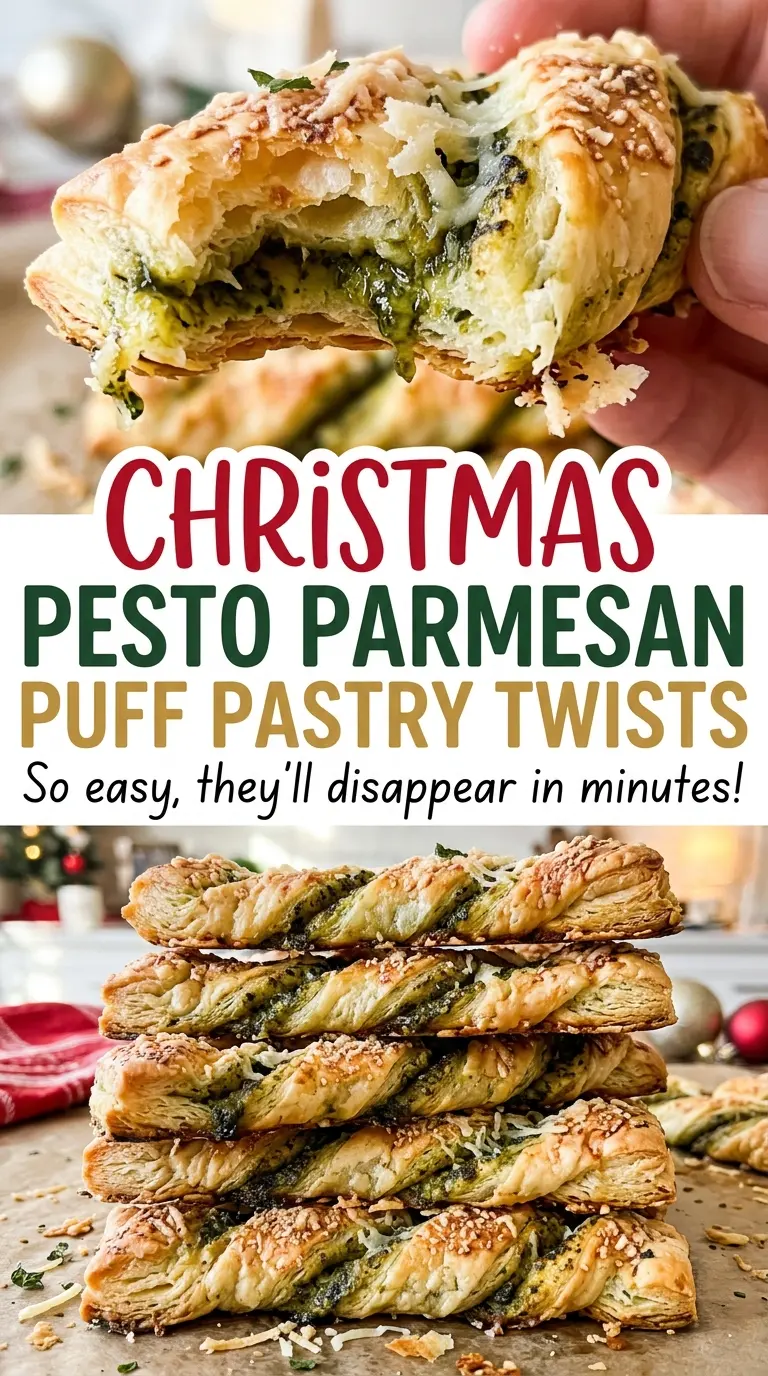
These Christmas Pesto Parmesan Puff Pastry Twists keep the filling simple, with basil pesto and finely grated Parmesan folded inside a sheet of puff pastry. The pastry needs to be thawed enough to unfold, but still cold to the touch; that way, it’s easier to handle and holds its layers as you cut and twist it.
Once they’re puffed and deep golden, the twists are crisp at the edges with savory pesto and Parmesan in every turn. Let them rest on the pan for a few minutes, then serve while the layers are still flaky.

Kitchen Note
Use a sharp knife and cut straight down through the folded pastry instead of sawing back and forth. Clean cuts keep the strips neat and make them easier to twist.
Save these Christmas Pesto Parmesan Puff Pastry Twists for a flaky, savory party bite with golden tops and pesto tucked into every twist.
Why the Pesto Needs a Border Before You Fold the Pastry
Pesto spreads easily, but it also brings oil and moisture into the pastry. If it reaches the edge before you fold the sheet, that filling can make the two sides harder to press together. Leaving a clean border gives the pastry a place to meet, so the folded sheet stays closed while you cut and twist it.
That border also gives you a little room to work without pushing pesto out onto the counter. Spread the filling in a thin, even layer rather than piling it up in the middle. The Parmesan goes over the pesto, where it helps make the filling savory and gives each strip a little cheesy bite. Fold from top to bottom, press the edges gently, and you’ll have a tidy parcel that’s ready to cut.
Some pesto will still peek out along the cut sides; that’s normal. What you want to avoid is a thick ridge of filling at the sealed edge. Too much there can keep the pastry from joining cleanly and leave you with a messy fold before the twists even reach the oven.
What the Puff Pastry, Pesto, and Parmesan Each Bring
- Puff pastry — Use a sheet that’s thawed but still cold, about 8 ounces. It should unfold without cracking, but it shouldn’t feel soft or sticky. There isn’t a direct substitute that gives the same puffed, flaky layers; phyllo needs a different method and won’t bake up the same way. If the pastry has warmed while you work, pause and chill it until it feels cold again.
- Basil pesto — Pesto supplies the herb, garlic, and oil that flavor the filling, so choose one you like the taste of on its own. A smooth, spreadable pesto is easiest to distribute without tearing the pastry. If you’d like a different flavor, another prepared pesto can take the place of the basil version; keep the layer thin so the fold still seals.
- Finely grated Parmesan — Fine shreds scatter over the pesto more evenly than thick pieces and fit neatly inside the folded pastry. Parmesan grated from a block has a fresh, nutty taste, while finely grated packaged Parmesan is convenient and works well here. Pecorino Romano can stand in if you want a sharper, saltier result.
- Egg — Beaten with water, the egg brushes over the pastry to help the surface bake up shiny and golden. Brush a thin coat over the top rather than letting it pool along the edges. You can leave it off, but the finished twists will look paler and more matte.
From a Flat Sheet to Twists With Crisp, Defined Layers
Get the Oven and Pan Ready
Heat the oven to 400°F and line a rimmed baking sheet with parchment paper. Set the pastry out on a clean work surface only once it’s thawed enough to unfold while remaining cold. If it resists opening or starts to crack, give it a little more time to thaw; if it turns sticky, chill it before continuing. A cold, workable sheet is easier to fill without stretching.
Spread the Filling and Seal the Fold
Spread the pesto evenly over the pastry, keeping a 1/2-inch border clear around the edges. Sprinkle the finely grated Parmesan over the pesto, then fold the sheet in half from top to bottom. Press the edges gently to seal without squashing the layers flat. If pesto smears over the edge, wipe away the excess so the pastry can meet pastry.
Cut, Twist, and Anchor Each Strip
Cut across the folded pastry into 8 strips about 1 1/4 inches wide. Twist each strip several times, then set it on the prepared baking sheet with space around it. Press both ends gently onto the parchment so the shape stays in place as the pastry puffs. Leave the twists in a single layer rather than crowding them together.
Brush, Bake, and Let the Layers Set
Beat the egg with the water in a small bowl, then brush it over the twists. Bake for 15 to 18 minutes, until the pastry has puffed and turned deep golden brown; a pale top needs more time. The twists will feel delicate when they first come out, so leave them on the baking sheet for 5 minutes before serving. That short rest gives the layers a chance to settle.
Two Easy Ways to Change These Twists Without Losing Their Shape
Give Them a Different Pesto Flavor
Use another prepared pesto in place of the basil pesto for a different herb or tomato-forward note. Spread it in the same thin layer and keep the border clear; a wetter or oilier pesto can make the fold harder to seal and the pastry less crisp.
Make a Gluten-Free Batch
Use a gluten-free puff pastry sheet in place of the regular pastry and keep the pesto and Parmesan filling. Gluten-free sheets vary in size and handling, so check that you have a similar amount of pastry and work with it while it’s cold. The layers may puff and brown differently, so use the deep-golden color as your cue.
Storage and Reheating
- Refrigerator: Store cooled leftovers in an airtight container for up to 2 days. The pastry will soften as it sits.
- Freezer: Freeze fully cooled, baked twists in an airtight container for up to 1 month. Thaw them in the refrigerator before reheating.
- Reheating: Warm them in a 400°F oven until crisp again. Skip the microwave, which softens the flaky layers.
Questions That Come Up Before the Pastry Goes in the Oven
Christmas Pesto Parmesan Puff Pastry Twists
Ingredients
Equipment
Method
- Heat the oven to 400°F.
- Line a rimmed baking sheet with parchment paper.
- Unfold the puff pastry on a clean work surface.
- Spread the pesto evenly over the pastry, leaving a 1/2-inch border.
- Sprinkle the Parmesan over the pesto.
- Fold the pastry in half from top to bottom.
- Gently press the edges to seal.
- Cut across the folded pastry into 8 strips about 1 1/4 inches wide.
- Twist each strip several times.
- Arrange the twists on the prepared baking sheet with space between.
- Gently press the ends onto the parchment.
- Beat the egg with the water in a small bowl.
- Brush the egg mixture over the twists.
- Bake for 15 to 18 minutes, until puffed and deep golden brown.
- Rest on the baking sheet for 5 minutes before serving.
