
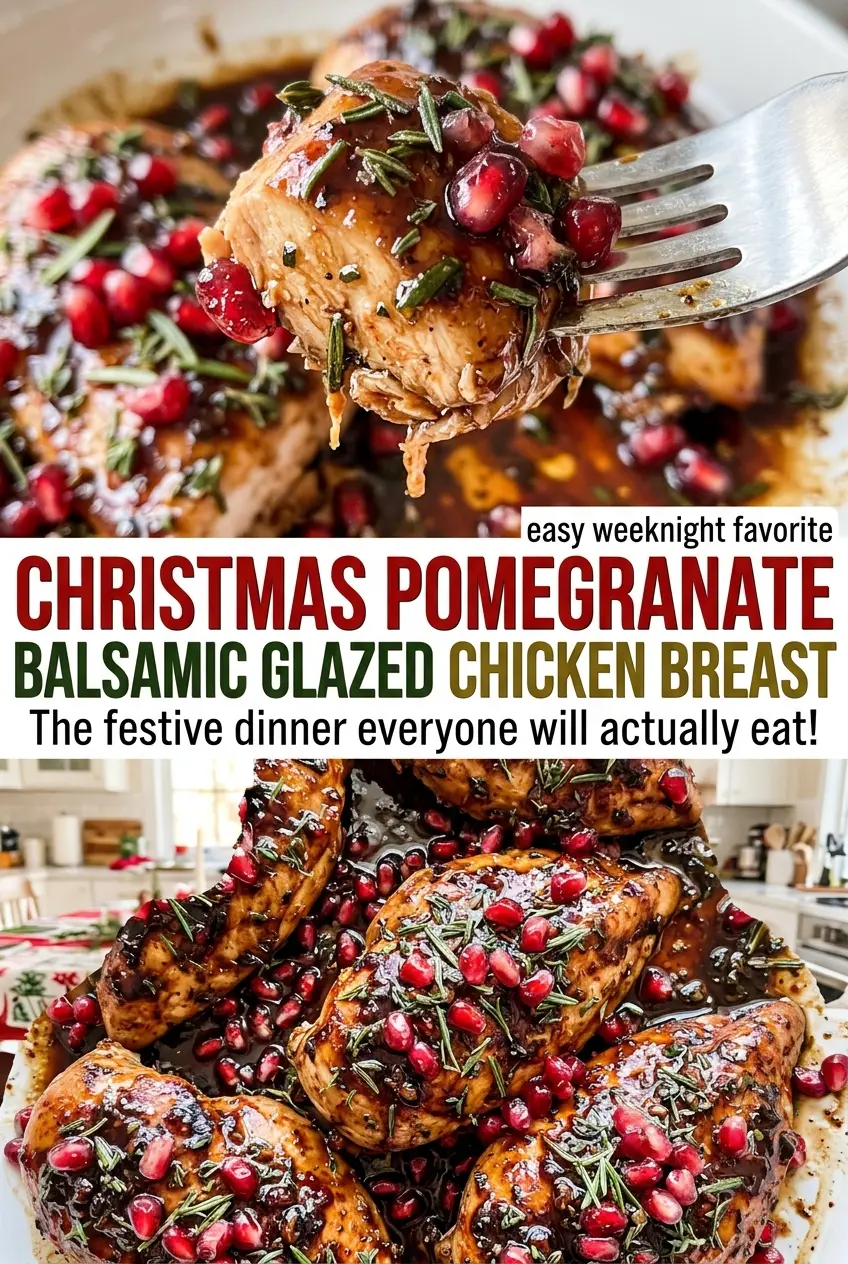
The first sear should leave the chicken with a deep golden surface and little brown bits in the skillet, not a pale, steamed look. That’s the start of this Christmas pomegranate balsamic glazed chicken breast: a quick stovetop sear, a ruby glaze reduced separately, and a short finish in the oven. Pounding the breasts to an even thickness helps them cook at the same pace, so the thinner ends don’t dry out while the centers catch up.
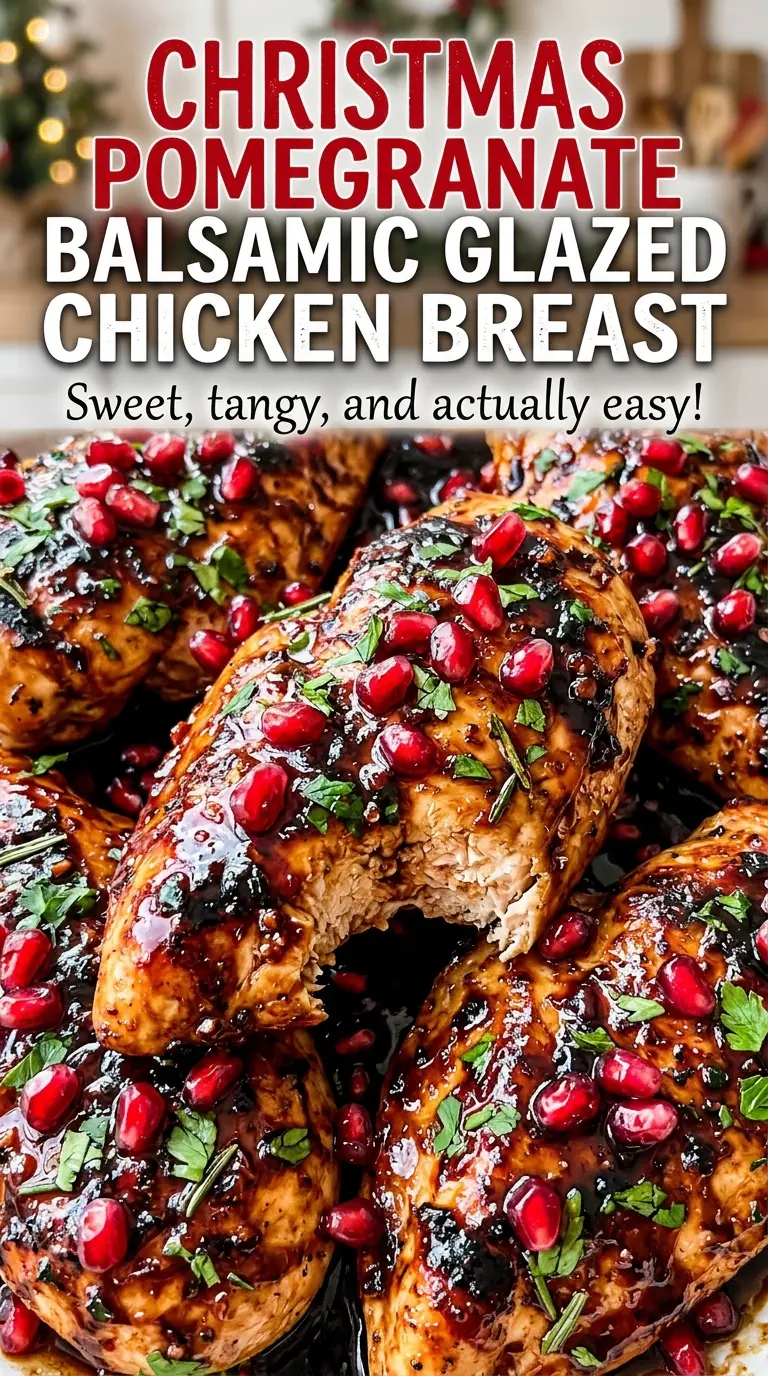
The glaze needs a few minutes on the stove before it goes anywhere near the chicken. Pomegranate juice, balsamic vinegar, honey, Dijon, and garlic simmer until the liquid coats a spoon; then butter goes in off the heat for a smooth finish. Brushing it on near the end lets the glaze cling without spending the whole bake in the oven. The finished chicken is tangy and lightly sweet, with bright pomegranate arils and parsley on top.
Kitchen Note
Stir the butter into the reduced glaze after you take the saucepan off the heat. It melts in smoothly and gives the glaze a rounded finish; continuing to simmer it after the butter goes in can make that finish feel heavier.
Save this Christmas pomegranate balsamic glazed chicken breast for its glossy sweet-tart glaze and bright pomegranate finish.
Why This Pomegranate Glaze Goes on Near the End
A thin glaze poured over raw chicken would run straight across the pan, and a sugary coating left in a hot oven for the entire cook could darken before the meat is ready. Here, the pomegranate juice and balsamic vinegar reduce on the stove first. That concentrates their tart, fruity flavor and gives the honey enough body to help the glaze cling when you brush it on.
There’s a useful contrast in the two cooking stages. The skillet browns the chicken before it bakes, building color on the surface; the oven then cooks it through without asking the glaze to do that job. The first bake brings the thickest part close to done, and the final few minutes in the oven set the coating. Keep the reserved portion separate for serving, so you have fresh glaze to spoon over the sliced chicken instead of relying only on what has baked onto the breasts.
The balance matters more than making the glaze taste sweet on its own. Pomegranate and balsamic bring tartness, while honey rounds the edges and Dijon adds a savory note. Once reduced, the mixture should taste concentrated rather than watery or sharply vinegary.
What Gives the Chicken Its Juicy Center and the Glaze Its Tang
- Chicken breasts — Boneless, skinless breasts are lean, so even thickness does more for a juicy result than chasing extra browning. Choose pieces that are similar in size, then pound them to the specified 3/4-inch thickness. Thighs have a different shape and cook differently, so they aren’t a direct swap for this timing.
- Pomegranate juice — The juice supplies the fruit flavor and the liquid that reduces into the glaze. A pure pomegranate juice gives the most predictable tart-sweet balance; a sweetened juice drink can make the finished glaze noticeably sweeter. There isn’t a substitute that keeps the same pomegranate character.
- Balsamic vinegar — It brings acidity and depth, which keep the honey and fruit from tasting flat. A good everyday balsamic is fine here; save a thick, syrupy balsamic glaze for another use because it has already been reduced and won’t behave like vinegar in the saucepan.
- Honey and Dijon — Honey softens the acidity and helps the reduction coat a spoon, while Dijon adds a gentle savory tang. Maple syrup can stand in for the honey in the same measure, giving the glaze a warmer, less floral sweetness. Whole-grain mustard can replace Dijon in the same measure if you like visible mustard seeds and a more textured finish.
- Butter — Unsalted butter rounds out the sharp edges of the reduced glaze. For a dairy-free finish, use olive oil in its place after removing the saucepan from the heat; the glaze will be a little less rich but still smooth.
- Pomegranate arils and parsley — The arils add juicy pops of tartness and the parsley gives the rich glaze a fresh, herbal counterpoint. Fresh parsley has the cleanest flavor, but the garnish is flexible; you can leave either one off without changing how the chicken cooks.
The Sear, Reduction, and Final Glaze: Timing Each Stage
Brown the Chicken in a Hot Oven-Safe Skillet
Heat the oven to 400°F, pat the chicken dry, and season both sides with kosher salt and black pepper. Warm the olive oil in a 12-inch oven-safe skillet over medium-high heat, then lay in the breasts without crowding them. Sear for 3 to 4 minutes per side, until each side is browned; if the chicken sticks, give the surface another moment instead of tugging at it. Keep the skillet nearby for the oven stage.
Reduce the Pomegranate and Balsamic Mixture
While the chicken sears, combine the pomegranate juice, balsamic vinegar, honey, Dijon mustard, and minced garlic in a small saucepan. Bring the mixture to a simmer over medium heat, then let it simmer for 10 to 14 minutes, stirring occasionally. It’s ready when the liquid has reduced and coats the back of a spoon; a watery glaze needs more time, while a hard boil can reduce it too quickly around the edges. Take the pan off the heat and stir in the butter.
Bake, Brush, and Finish the Chicken
Put the skillet with the browned chicken in the oven and bake for 6 to 10 minutes, until an instant-read thermometer in the thickest part reads 155°F to 160°F. Reserve 1/4 cup of glaze for serving, then brush the remaining glaze over the chicken. Return the skillet to the oven for 3 to 5 minutes, until the chicken reaches 165°F. Use the thermometer rather than color alone; a browned outside doesn’t tell you whether the center is cooked through.
Rest Before Adding the Fresh Garnish
Rest the chicken for 5 minutes before serving so the juices settle instead of spilling out as soon as you cut in. Sprinkle the pomegranate arils and chopped parsley over the top, then bring the reserved glaze to the table. If you slice the breasts for serving, cut across the grain and spoon a little of that reserved glaze over the slices.
Easy Swaps for a Different Glaze or a Dairy-Free Finish
Make the glaze dairy-free
Replace the butter with olive oil, stirring it in after the glaze comes off the heat. The result keeps the pomegranate-balsamic balance, though it won’t have quite the same buttery richness.
Use maple syrup for a deeper sweetness
Swap maple syrup for the honey in the same measure. Its woodsy sweetness shifts the glaze away from honey’s floral note while still balancing the vinegar and fruit.
Choose whole-grain mustard for texture
Use whole-grain mustard in place of Dijon in the same measure. You’ll get little mustard seeds throughout the glaze and a more rustic, savory bite rather than Dijon’s smooth finish.
Storage and Reheating
- Refrigerator: Refrigerate leftovers within 2 hours and keep them for 3 to 4 days. The glaze thickens as it chills, and the chicken won’t be quite as juicy as when freshly cooked.
- Freezer: Freeze the cooked chicken with glaze in an airtight freezer-safe container, leaving the fresh arils and parsley off. For the best texture, use within 2 to 3 months.
- Reheating: Warm gently in a covered skillet with a spoonful of reserved glaze, or microwave in short bursts until steaming hot throughout. High heat can toughen the breast meat and make the glaze scorch at the edges.
Questions That Come Up When Making This Glazed Chicken
Christmas Pomegranate Balsamic Glazed Chicken Breast
Ingredients
Equipment
Method
- Heat the oven to 400°F.
- Pat the chicken dry, then season both sides with the salt and pepper.
- Heat the olive oil in a 12-inch oven-safe skillet over medium-high heat.
- Sear the chicken for 3 to 4 minutes per side, until browned.
- While the chicken sears, combine the pomegranate juice, balsamic vinegar, honey, Dijon mustard, and garlic in a small saucepan.
- Bring the mixture to a simmer over medium heat.
- Simmer for 10 to 14 minutes, stirring occasionally, until the glaze is reduced and coats the back of a spoon.
- Remove the glaze from the heat and stir in the butter.
- Bake the chicken in the skillet for 6 to 10 minutes, until an instant-read thermometer inserted in the thickest part reads 155°F to 160°F.
- Reserve 1/4 cup of the glaze for serving.
- Brush the remaining glaze over the chicken.
- Return the skillet to the oven for 3 to 5 minutes, until the chicken reaches 165°F.
- Rest the chicken for 5 minutes.
- Garnish with the pomegranate arils and parsley, and serve with the reserved glaze.
