
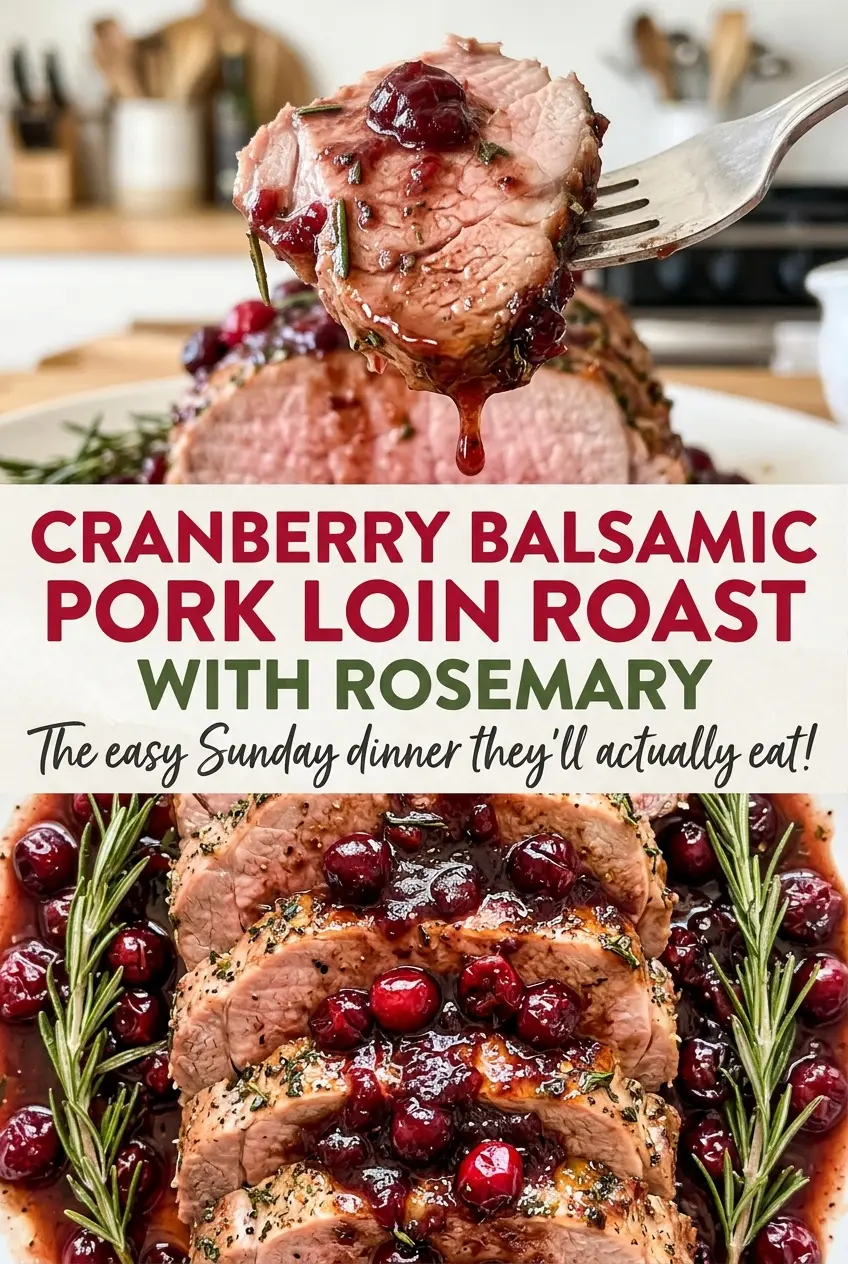
When fresh cranberries hit a simmer, they start popping and softening, and the sharp smell of balsamic turns mellow as the sauce thickens. That’s the moment this roast comes together: savory rosemary-garlic pork with a bright, tangy spoonful of cranberry balsamic on the side. I like this combination because the pork stays the focus while the sauce brings enough sweetness and acidity to make each slice feel complete.
A boneless pork loin roast is a lean cut, so I rely on a thermometer instead of judging it by color or how long it’s been in the oven. The sauce cooks separately in a saucepan while the pork finishes roasting, which gives the cranberries time to burst without letting the sugar and vinegar scorch around the meat. Once the roast has rested, slice it and bring the warm sauce to the table alongside it.
Kitchen Note
Give the pork at least 3 minutes on the cutting board before slicing. Cutting into it right away sends more juices onto the board and makes neat slices harder to manage.
Save this cranberry balsamic pork loin roast for a dinner that pairs tender rosemary pork with a bright, homemade cranberry sauce.
Why the Cranberry Sauce Gets Its Own Pan
Cooking the sauce beside the roast might sound like an easy way to save a dish, but the two need different conditions. The pork needs steady oven heat so it cooks through without lingering in a bubbling, sugary liquid. Cranberries, balsamic vinegar, and brown sugar do better in a saucepan, where you can bring them to a simmer and stir now and then as the berries soften.
Keeping the sauce separate also gives you control over its texture. Cranberries don’t all burst at once, and a saucepan makes it easy to keep cooking until most have popped and the mixture has thickened. Meanwhile, the pork’s rosemary and garlic stay on the roast instead of getting washed into the sauce. The finished plate has clear contrasts: savory slices, tart-sweet sauce, and enough of each to balance a bite without masking the meat.
That separation is especially useful with a lean loin. You can finish the roast on its own schedule, then spoon over the amount of sauce you want at the table. Any extra stays in the saucepan rather than collecting around the meat in the roasting pan.
The Ingredients That Keep the Roast Savory and the Sauce Bright
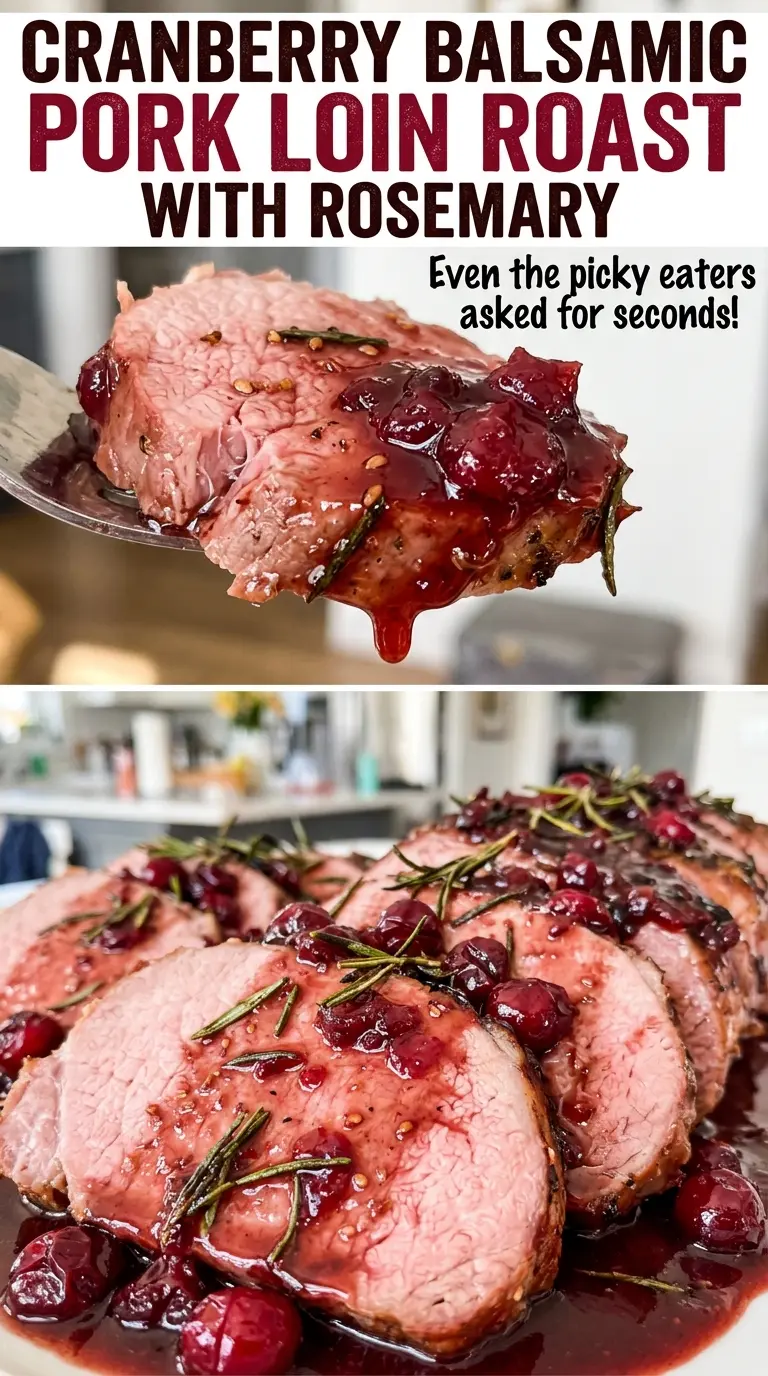
- Boneless pork loin — Choose a roast that’s close to the stated size so the cooking window makes sense. Pork loin is not the same cut as pork tenderloin; it’s a broader roast, and swapping in a smaller, narrower cut changes how quickly it cooks.
- Fresh rosemary — Fresh leaves bring a piney aroma that works well with the tart sauce. Chop them finely so they spread through the olive oil instead of gathering in large pieces. Dried rosemary is more concentrated; if you use it, substitute 1 teaspoon dried for 1 tablespoon fresh.
- Garlic — Freshly minced garlic gives the rub its savory edge. A fine mince helps it distribute evenly with the oil and herbs, rather than leaving a few large pieces on the surface.
- Fresh cranberries — Their tartness keeps the brown sugar and balsamic from tasting flat, and their skins help give the sauce body as they burst. Pick a bag of firm berries without lots of shriveled or soft ones.
- Balsamic vinegar — A standard grocery-store balsamic is right for this sauce; an expensive aged bottle isn’t needed. Its acidity balances the cranberries, while the brown sugar rounds off the sharp edges.
- Packed light brown sugar — Packing it gives the sauce a reliable level of sweetness and helps it thicken as it simmers. Light brown sugar keeps the flavor balanced without bringing as much molasses character as dark brown sugar.
- Chicken broth — Broth gives the cranberries liquid to simmer in without making the sauce as sharp as vinegar alone. For a gluten-free version, use gluten-free chicken broth in the same amount.
Roasting the Loin and Simmering the Cranberries
Coat the Pork with the Rosemary-Garlic Rub
Heat the oven to 375°F and set out a 9×13-inch roasting pan. Stir the olive oil, chopped rosemary, minced garlic, kosher salt, and black pepper together until the herbs and garlic are coated. Rub that mixture over the pork so the seasoning reaches the sides as well as the top. Place the roast in the pan, keeping the rub on the meat rather than scraping it off as you set it down.
Roast to Temperature, Not Just by the Clock
Roast the pork for 60 to 75 minutes, and begin checking after 55 minutes. Insert a thermometer into the thickest part of the roast, avoiding a shallow reading near the edge. Take the pork out when that spot reads 145°F; the exact timing within the window depends on the roast’s shape and your oven. If the thermometer is below temperature, return the roast to the oven and check it again rather than guessing from the outside.
Simmer the Cranberry Balsamic Sauce
During the final 15 minutes of roasting, combine the cranberries, chicken broth, balsamic vinegar, and brown sugar in a 2-quart saucepan. Bring the mixture to a simmer over medium heat, then cook for 10 to 15 minutes, stirring occasionally. You’ll hear berries pop as their skins split; keep the simmer steady instead of letting the sauce boil hard. It’s ready when most of the berries have burst and the sauce has thickened.
Rest, Slice, and Serve
Transfer the pork to a cutting board and let it rest before slicing. The brief pause gives the juices time to settle so the slices are easier to serve. Cut the roast into slices and serve with the cranberry balsamic sauce, either spooned over the pork or passed alongside it.
Two Simple Ways to Adapt the Cranberry and Rosemary Combination
Make the Sauce Gluten-Free
Replace the chicken broth with the same amount of gluten-free chicken broth. The cranberries, balsamic, and brown sugar still make the same tart-sweet sauce, so this change keeps the character of the dish intact.
Give the Sauce a Smoother Texture
As the cranberries simmer, press some of the softened berries against the side of the saucepan with your spoon while stirring. That breaks them down further and makes the sauce less chunky without changing its ingredients or its tart-sweet balance.
Storage and Reheating
- Refrigerator: Refrigerate leftover pork and sauce in covered containers for 3 to 4 days. The sauce will firm up as it chills, while the pork may lose a little of its just-roasted juiciness.
- Freezer: Freeze the sliced pork and sauce separately in airtight containers for up to 2 to 3 months. Thaw them in the refrigerator before reheating; the sauce may be a little softer after thawing.
- Reheating: Warm pork slices covered in a low oven or microwave them in short bursts with a spoonful of sauce to keep them from drying out. Reheat leftovers to 165°F, and avoid repeatedly warming the entire roast when you only need a few slices.
Questions That Come Up When Making This Pork Loin
Cranberry Balsamic Pork Loin Roast with Rosemary
Ingredients
Equipment
Method
- Preheat the oven to 375°F.
- Set out a 9x13-inch roasting pan.
- Stir together the olive oil, rosemary, garlic, salt, and pepper.
- Rub the mixture over the pork.
- Place the pork in the pan and roast for 60 to 75 minutes, until a thermometer inserted in the thickest part reads 145°F; begin checking after 55 minutes.
- During the final 15 minutes of roasting, combine the cranberries, chicken broth, balsamic vinegar, and brown sugar in a 2-quart saucepan.
- Bring the mixture to a simmer over medium heat.
- Cook for 10 to 15 minutes, stirring occasionally, until most of the berries have burst and the sauce has thickened.
- Transfer the pork to a cutting board.
- Rest for at least 3 minutes before slicing.
- Serve the pork with the cranberry balsamic sauce.
