
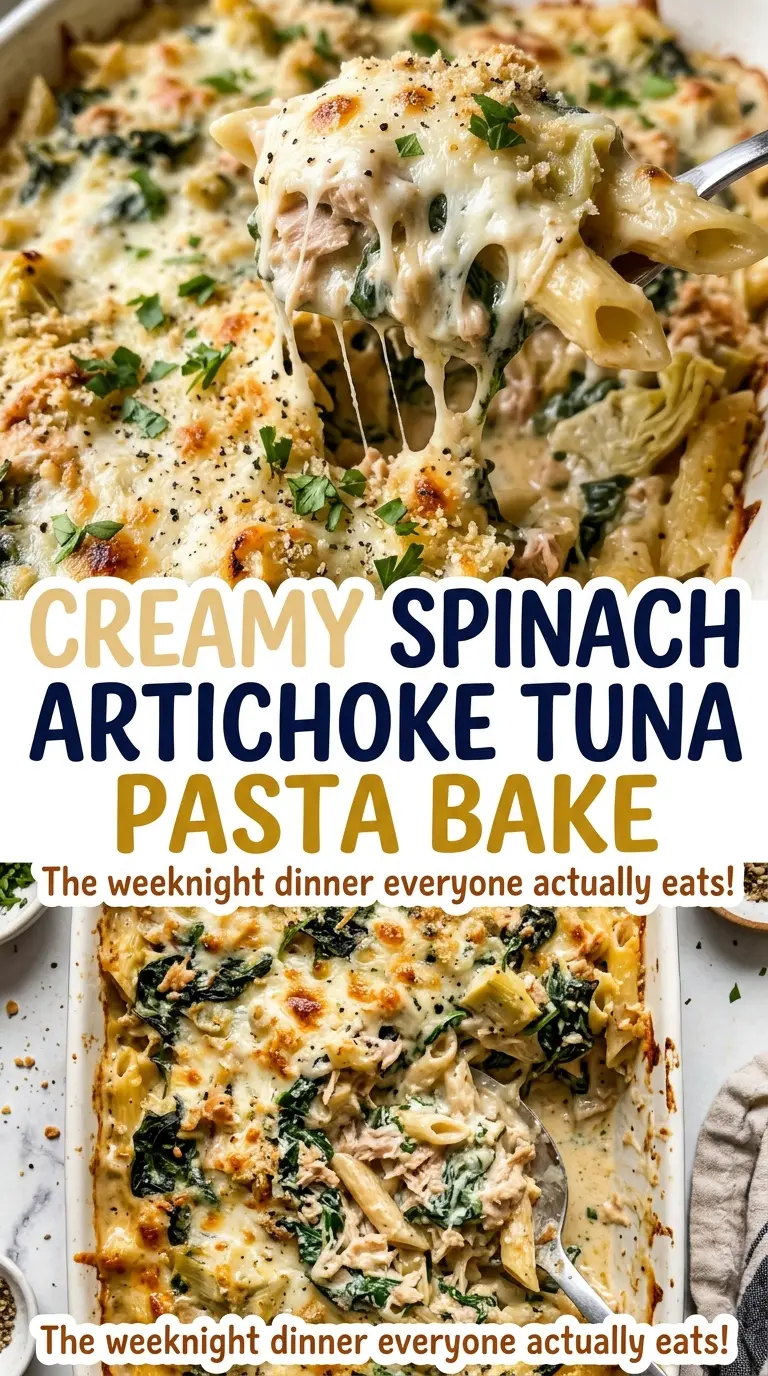
The first thing I notice when this comes out of the oven is the sauce bubbling at the edges while the mozzarella on top has turned golden in a few spots. Underneath, penne, tuna, spinach, and artichokes are tucked into a creamy sauce that holds together without feeling heavy. This Creamy Spinach Artichoke Tuna Pasta Bake gives me the comfort of a baked pasta dinner, with the savory, briny bite of artichokes and tuna in every serving.
I build the sauce on the stovetop before it goes anywhere near the baking dish. Butter, garlic, and flour make a quick base; milk thickens it, and cream cheese and sour cream give it a smooth, tangy finish. Once the cheeses melt into the sauce, it’s ready to coat the pasta and vegetables evenly. The short rest after baking helps the sauce settle around the penne, so each scoop comes out creamy instead of running across the plate.

Kitchen Note
Squeeze the thawed spinach until it stops releasing water, not just until it feels less wet. Any liquid left behind thins the sauce as the casserole bakes, so I press it firmly before adding it to the bowl.
Save this creamy spinach artichoke tuna pasta bake for a cozy dinner with a bubbling cheese top and a tangy, smooth sauce.
Why the Sauce Needs to Be Generous Before the Pasta Goes in the Oven
A baked pasta keeps cooking after it leaves the stovetop. The penne absorbs some of the sauce in the oven, and the uncovered bake loses a little moisture as its top turns golden. If the mixture looks barely coated before baking, it’s likely to come out dry rather than creamy. The sauce should cling to the pasta and vegetables, with enough left in the bowl to coat everything thoroughly.
This is why I make a proper milk-based sauce instead of relying on cream cheese alone. The flour thickens the milk into a spoon-coating base, while the cream cheese and sour cream add body and tang. The mozzarella and Parmesan melt into that base before it gets poured over the filling, so the cheese is already distributed through the casserole—not just sitting in a layer on top. The extra mozzarella over the surface gives the bake its browned, bubbly finish.
There’s also a useful balance in the filling: spinach brings a mellow, earthy bite, while artichoke hearts cut through the richness with their briny flavor. Tuna makes the pasta bake substantial without needing a separate protein. When everything is coated well, a forkful has a little of each without the sauce getting lost beneath a pile of cheese.
What the Tuna, Artichokes, and Cream Cheese Each Bring
- Penne — Its hollow centers and ridged sides catch the sauce, so the filling doesn’t slide off every bite. Cook it just short of tender; it will soften further in the oven.
- Frozen chopped spinach — It’s convenient, evenly chopped, and easy to distribute through the pasta. Thaw it fully and squeeze it dry so its moisture doesn’t loosen the creamy sauce.
- Artichoke hearts — Canned hearts bring a gentle tang and tender texture without extra cooking. Drain them well and chop them so they’re easy to scoop with the penne.
- Canned tuna — Drained tuna flakes through the casserole and adds a savory, hearty bite. Break up any large pieces as you combine the filling, but don’t mash it into a paste.
- Whole milk, cream cheese, and sour cream — Whole milk gives the flour-thickened sauce enough body, while cream cheese helps it turn smooth and sour cream adds a little tang. Cut the cream cheese into small pieces so it melts into the warm sauce without leaving lumps.
- Mozzarella and Parmesan — Mozzarella melts into the sauce and browns on top; Parmesan adds a saltier, sharper note. Shredded mozzarella is divided between the sauce and the surface, so keep those portions separate as you cook.
From Just-Shy Pasta to a Golden, Rested Bake
Par-Cook the Penne and Combine the Filling
Heat the oven to 375°F and grease a 9×13-inch baking dish. Boil the penne in a large pot of water, using the package timing as a guide, and drain it when it’s 2 minutes shy of al dente. It should bend but still have a firm center; fully tender pasta can turn soft during baking. Put the drained pasta in a large bowl with the spinach, chopped artichoke hearts, and drained tuna.
Thicken the Garlic Milk Sauce
Melt the butter in a medium saucepan over medium heat, add the minced garlic, and cook for 30 seconds. Whisk in the flour and cook for 1 minute, stirring so the flour blends into the butter rather than browning in patches. Gradually whisk in the milk, then stir for 4 to 6 minutes as it thickens. It’s ready when it coats the back of a spoon; if it still looks thin, keep stirring until that cue appears.
Melt in the Cheese and Coat the Pasta
Stir the cream cheese, sour cream, kosher salt, and black pepper into the thickened sauce until smooth. Take the saucepan off the heat before stirring in 1 cup of mozzarella and the Parmesan; the residual warmth melts them into the sauce. Pour the sauce over the pasta mixture and stir until the penne and filling are evenly coated. Watch the bottom of the bowl, where sauce can collect while the top pieces look covered.
Bake Until Bubbly, Then Let It Set
Transfer the coated mixture to the prepared dish and spread the remaining mozzarella evenly over the top. Bake uncovered for 20 to 25 minutes, until the sauce bubbles and the cheese has golden spots. If the top is pale at the end of that window, look for bubbling around the edges as the main doneness cue. Let the casserole rest for 10 minutes before serving so the sauce can settle around the pasta.
Two Small Changes That Suit Different Kitchens
Use Gluten-Free Penne
For a gluten-free version, swap in 12 ounces of gluten-free penne and use the package timing as your guide, draining it 2 minutes before it reaches al dente. Gluten-free pasta can soften quickly, so check it carefully before draining. The creamy spinach-artichoke filling stays the same, though the pasta’s texture may be a little less firm after baking.
Make the Artichokes More Evenly Distributed
Chop the drained artichoke hearts into smaller pieces before combining them with the pasta if you’d rather have a little artichoke in nearly every forkful. The flavor stays the same, but the filling feels less chunky and is easier to portion neatly.
Storage and Reheating
- Refrigerator: Refrigerate leftovers within 2 hours and keep them covered for 3 to 4 days. The pasta will continue to absorb sauce, so it’ll be less loose than when freshly baked.
- Freezer: Freeze cooled portions in airtight containers for up to 2 to 3 months. Thaw overnight in the refrigerator for more even reheating; the sauce may look slightly separated until warmed and stirred.
- Reheating: Reheat individual portions in the microwave, stirring partway through, until the center reaches 165°F. Avoid heating it for too long without stirring, which can leave the edges hot and dry while the middle stays cool.
Questions That Come Up When Making This Tuna Pasta Bake
Creamy Spinach Artichoke Tuna Pasta Bake
Ingredients
Equipment
Method
- Preheat the oven to 375°F.
- Grease a 9x13-inch baking dish.
- Cook the pasta in a large pot of boiling water until 2 minutes shy of al dente, following the package timing as a guide.
- Drain the pasta.
- Combine the pasta, spinach, artichoke hearts, and tuna in a large bowl.
- Melt the butter in a medium saucepan over medium heat.
- Add the garlic and cook for 30 seconds.
- Whisk in the flour and cook for 1 minute.
- Gradually whisk in the milk and cook, stirring, for 4 to 6 minutes until thick enough to coat the back of a spoon.
- Stir in the cream cheese, sour cream, salt, and pepper until smooth.
- Remove the sauce from the heat.
- Stir in 1 cup of the mozzarella and the Parmesan until melted.
- Pour the sauce over the pasta mixture and stir to coat.
- Transfer the mixture to the prepared baking dish.
- Sprinkle the remaining 1 cup mozzarella evenly over the top.
- Bake uncovered for 20 to 25 minutes until bubbling and golden in spots.
- Let the bake rest for 10 minutes before serving.
