
Crispy honey garlic salmon bites hit that sweet spot between fast and worth repeating. The salmon stays tender in the center, the edges turn deeply golden in the skillet, and the glaze clings in a sticky sheen that tastes like it took a lot more effort than it did. This is the kind of dinner that disappears the minute it hits the table, especially when you serve it over rice to catch every bit of sauce.
The trick is starting with very dry salmon and a light cornstarch coating. That thin layer helps the fish sear instead of steam, which is what gives you those crisp edges without overcooking the middle. The sauce also needs a quick simmer before the cornstarch slurry goes in; if you rush that part, the honey can taste flat and the garlic won’t mellow into the glaze the way it should.
Below, you’ll find the exact cue for pulling the salmon from the pan before it goes dry, plus a few smart swaps if you need to adjust the sweetness, the soy, or the heat of the glaze.
The salmon got crisp in the pan and the sauce thickened fast without turning gummy. I served it with rice and my husband kept going back for “just one more bite” until the skillet was basically empty.
Crispy Honey Garlic Salmon Bites are made for nights when you want a glossy, sticky glaze and crisp salmon edges without spending all evening at the stove.
The Reason the Salmon Crisps Instead of Steaming
Salmon only gets that browned, lightly crunchy surface when the outside is dry enough to sear. If the cubes go into the pan damp, the first thing they do is release moisture, and that turns the skillet into a steam bath. Cornstarch helps, but it can’t rescue wet fish on its own.
The other mistake is crowding the pan. Salmon needs direct contact with the hot surface, not a pileup of pieces touching each other. Give the cubes space, let them sit long enough to pick up color, and flip only when the underside releases without sticking. If you try to move them too soon, they tear and leave the crust behind.
- Dry the salmon thoroughly before seasoning.
- Use medium-high heat so the outside browns before the center overcooks.
- Cook in batches if your skillet is on the smaller side.
- Don’t stir the pieces constantly; let each side develop a crust.
What Each Ingredient Is Doing in the Glaze and the Pan
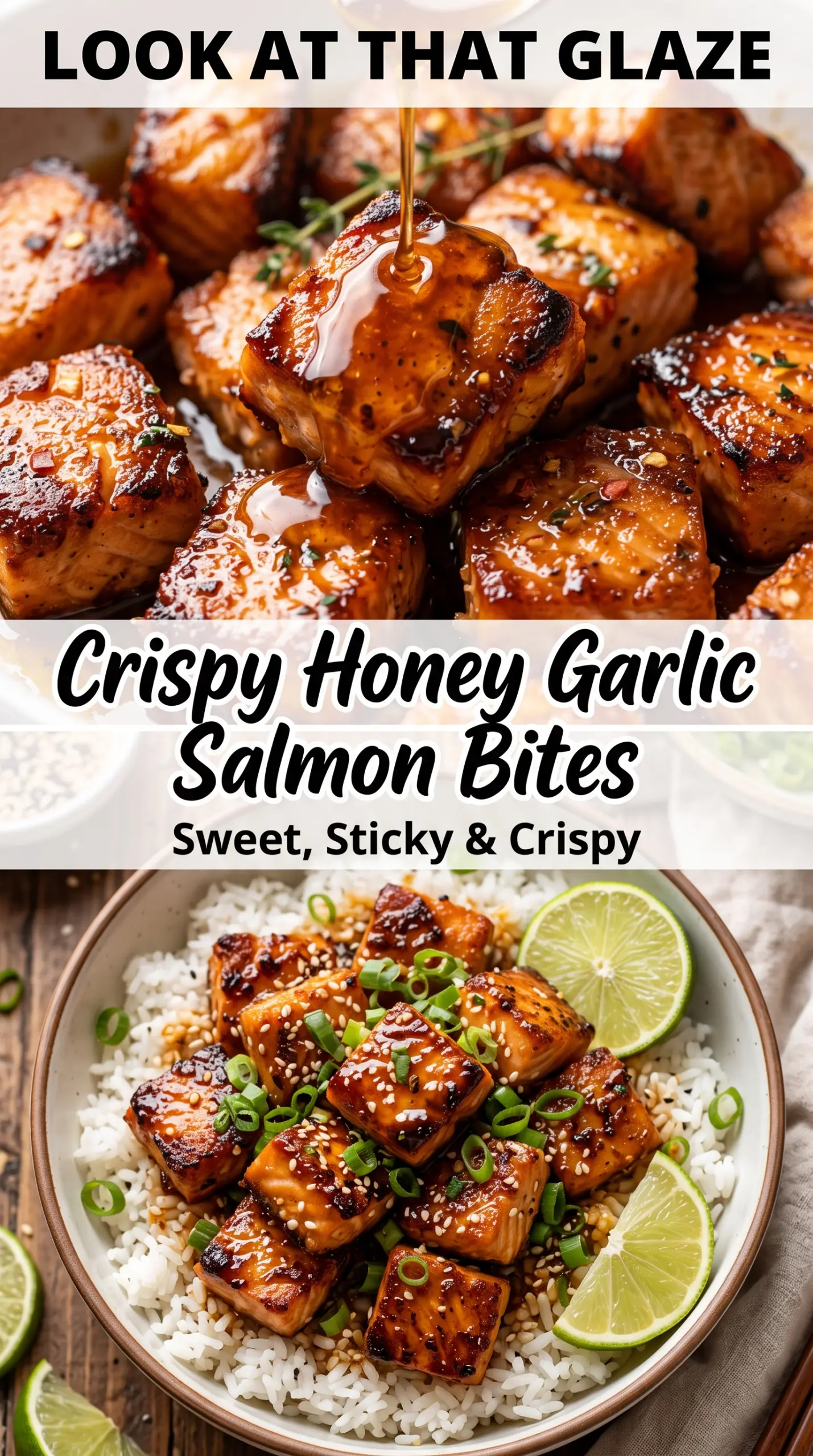
- Salmon: Use fillets with a bit of thickness so the cubes stay juicy after searing. Very thin pieces cook too fast and can turn dry before the glaze goes on.
- Cornstarch: This is what gives the exterior that crisp, almost delicate shell. Flour won’t behave the same way here; it clumps more and leaves the coating heavier.
- Smoked paprika and garlic powder: These season the fish before it ever hits the sauce, so the final dish doesn’t taste one-note. Fresh garlic in the pan is for the glaze; the powder in the seasoning is for the salmon itself.
- Honey: It brings the sticky body the sauce needs. If you reduce the honey too much before adding the slurry, the glaze can turn thick but dull.
- Soy sauce, ginger, and rice vinegar: Soy brings salt and depth, ginger adds warmth, and vinegar keeps the glaze from tasting heavy. Low-sodium soy gives you more control, especially once the sauce starts reducing.
- Sesame oil: A small amount goes a long way. Add it at the end of the sauce base so the aroma stays clear and nutty instead of fading in the heat.
- Cornstarch slurry: This thickens the glaze fast without making it pasty. Stir it in once the sauce has simmered, not at the start, or you can end up with a gluey texture.
Building the Crispy Glaze Without Overcooking the Fish
Drying and Seasoning the Salmon
Pat the salmon cubes dry until the surface feels tacky rather than wet. Toss them with the cornstarch and seasonings just before cooking so the starch doesn’t dissolve before it hits the pan. If the pieces sit around too long after coating, they’ll start to turn gummy and lose the crisp edge you’re after.
Getting Color in the Skillet
Heat the oil until it shimmers, then add the salmon in a single layer. Let it cook undisturbed for 2 to 3 minutes per side, watching for the edges to turn opaque and the bottom to release cleanly. If the salmon sticks hard, it’s not ready yet; forcing it early tears off the crust.
Cooking the Sauce in the Same Pan
Pull the salmon out first, then use the same skillet for the glaze. Those browned bits left behind are flavor, not mess, and they help the sauce taste built rather than poured on. Keep the heat at a gentle simmer when the honey and soy go in; a hard boil can make the garlic taste sharp and push the sauce past sticky into burnt.
Returning the Salmon to the Glaze
Stir in the cornstarch slurry and watch for the sauce to turn glossy and coat the back of a spoon. Add the salmon back only long enough to coat each piece. If it stays in the pan too long, the crisp crust softens, and the whole point of the dish starts to disappear.
Three Ways to Change the Dish Without Losing the Best Part
Gluten-Free Version
Use tamari or a certified gluten-free soy sauce in place of regular soy sauce. The glaze still comes out glossy and balanced, and the flavor stays close to the original. Just check that your cornstarch is labeled gluten-free if cross-contamination matters to you.
Lower-Sugar Glaze
Cut the honey slightly and add a splash more vinegar to keep the sauce bright. The glaze will be less sticky and a little looser, but it still coats the salmon well. Don’t reduce the honey too far or the sauce loses the lacquered finish that makes this dish work.
Spicy Version
Add red pepper flakes or a little chili paste to the sauce when the garlic goes in. That heat lands best when it has a touch of sweetness to sit against, so the honey is doing important work here. Start light; the glaze concentrates as it reduces.
Storage and Reheating
- Refrigerator: Store leftovers in an airtight container for up to 2 days. The coating softens a bit, but the flavor holds up well.
- Freezer: Freezing isn’t ideal once the salmon has been glazed. The texture changes after thawing, and the sauce can separate.
- Reheating: Warm gently in a skillet over low heat or in a 300°F oven until just heated through. High heat dries the fish fast and can make the glaze turn tacky instead of glossy.
Answers to the Questions Worth Asking
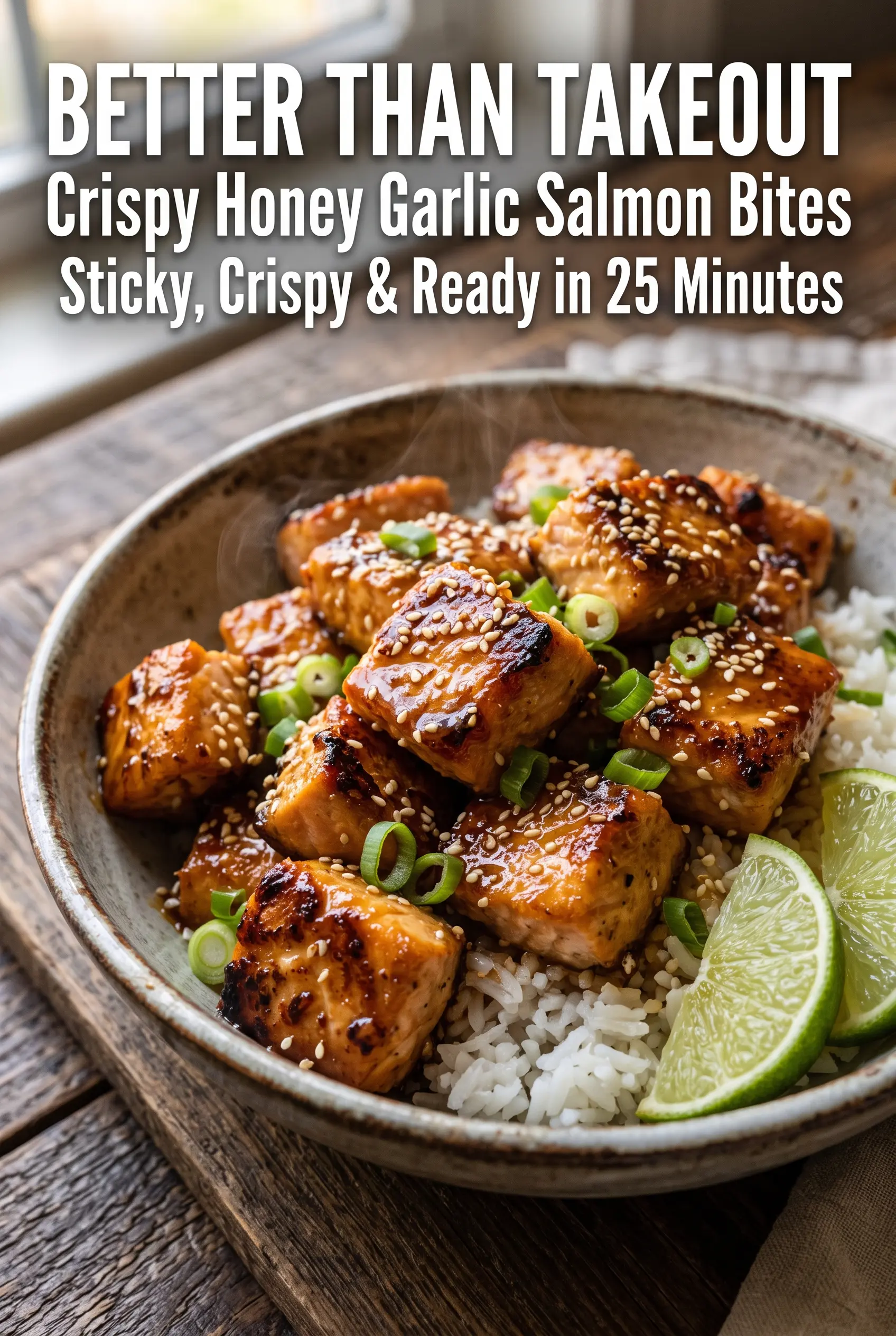
Crispy Honey Garlic Salmon Bites
Ingredients
Equipment
Method
- Pat the salmon cubes dry with paper towels to help them crisp.
- Toss the salmon with cornstarch, garlic powder, smoked paprika, salt, and black pepper until evenly coated.
- Heat the olive oil in a large skillet over medium-high heat until shimmering.
- Cook the salmon for 2–3 minutes per side until crispy and golden.
- Transfer the salmon to a plate while you make the sauce.
- In the same skillet, combine honey, low-sodium soy sauce, minced garlic, grated ginger, rice vinegar, and sesame oil.
- Simmer the sauce for 2 minutes, stirring to combine flavors.
- Mix the cornstarch with the water, then stir it into the sauce.
- Cook until the sauce thickens, then return the salmon to the skillet.
- Gently toss to coat the salmon bites in the sticky glaze.
- Garnish with sesame seeds, sliced green onions, and lime wedges.
- Serve immediately over steamed rice or noodles.
