
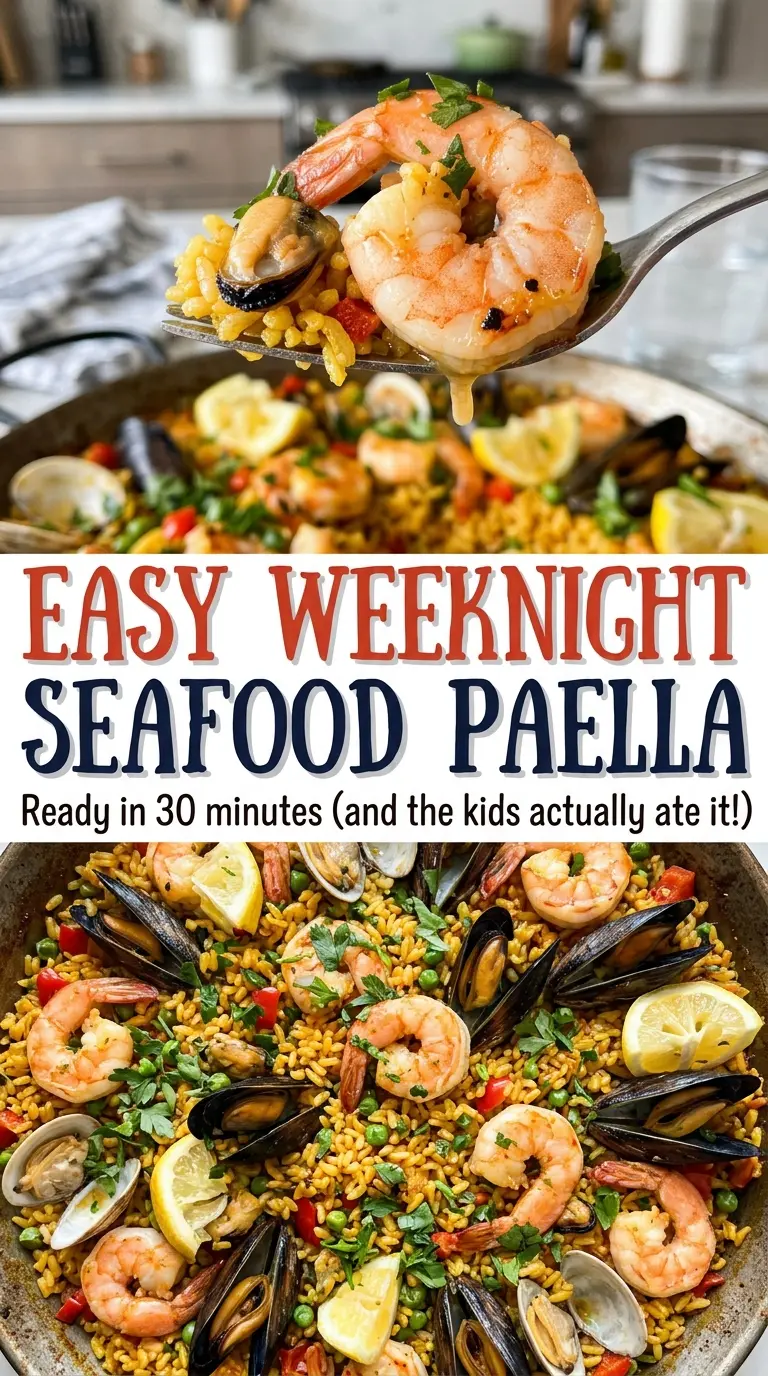
When the saffron broth hits the skillet, the rice starts taking on that warm golden color right away. I used to put the seafood in too early, which left the shrimp tight before the rice was tender. In this Easy Weeknight Seafood Paella, the rice gets its own time to simmer first, then the shrimp and scallops finish gently on top.
Medium-grain rice gives this skillet paella a tender, slightly cohesive texture without needing a special paella pan. The broth is steeped with saffron before it goes in, so its aroma spreads through the whole dish instead of landing in a few scattered grains. Keep the rice uncovered and undisturbed as it simmers, and dinner comes together in one 12-inch skillet: golden rice, sweet seafood, and lemon at the table.

Kitchen Note
Let the skillet rest uncovered for the full five minutes after it comes off the heat. The rice settles without trapping extra steam, so it stays tender instead of turning wet on top.
Save this Easy Weeknight Seafood Paella for a one-skillet dinner with saffron rice, shrimp, and tender scallops.
Why the Seafood Goes In After the Rice Has Had Its Head Start
The rice needs a steady, uninterrupted simmer to absorb the saffron broth. Shrimp and bay scallops cook much faster, so adding them at the beginning would leave them sitting in the pan for the entire rice-cooking stretch. By then, the shrimp could be firm and the scallops less tender.
Instead, let the rice simmer on its own before arranging the seafood across the surface. The covered finish lets the seafood cook in the skillet’s steam while the rice completes its cooking underneath. That separation gives both parts the time they need without asking you to stir or juggle separate pans.
Spread the seafood across the rice rather than piling it into one spot. That gives the shrimp and scallops room to cook evenly, and you can check a piece from the center as well as one near the edge. The timing range allows for small differences in skillet heat and seafood size; use the texture cues alongside the clock.
What Medium-Grain Rice and Saffron Bring to This Skillet
- Medium-grain rice — It absorbs the broth while keeping enough structure to sit beneath the seafood. Calrose is a practical choice; I wouldn’t swap in long-grain rice here because it takes up liquid differently and won’t give the same tender, cohesive bed.
- Saffron threads — A short steep in warm broth releases their color and distinctive aroma before the liquid reaches the rice. Saffron’s character is hard to replicate with another spice, so use the threads if you want the dish’s signature flavor and golden tint.
- Seafood broth — Low-sodium broth lets the saffron, smoked paprika, and seafood stay in balance without making the finished rice too salty. A good-quality broth gives the rice a deeper savory base; a plain, budget-friendly low-sodium option works well too.
- Shrimp and bay scallops — Medium shrimp and small bay scallops are sized to finish in the covered skillet while the rice cooks through. Pat the scallops dry before they go in; excess surface moisture can water down the top of the rice.
- Crushed tomatoes and smoked paprika — Cooking them together until the tomato mixture thickens concentrates the savory, smoky base before the rice is added. Smoked paprika is what brings the smoky note, so sweet paprika would change the flavor rather than reproduce it.
How to Build the Rice Base Before the Seafood Finishes
Steep the Saffron in Warm Broth
Warm the seafood broth until it’s steaming, then take it off the heat before stirring in the saffron threads. Let the mixture steep for 10 minutes so the broth turns fragrant and takes on color. Don’t boil the saffron; the point here is a gentle infusion, not a hard cook. Set the broth aside while you start the vegetables.
Soften the Vegetables and Concentrate the Tomato
Heat the olive oil in a 12-inch skillet over medium heat, then add the finely chopped onion and diced red bell pepper. Cook for 5–7 minutes, stirring occasionally, until both have softened; they should look glossy, not browned at the edges. Stir in the garlic, crushed tomatoes, and smoked paprika, then cook for 2–3 minutes. The mixture should thicken slightly, not remain watery at the bottom of the skillet.
Coat the Rice, Then Let It Simmer Undisturbed
Stir the rice and fine salt into the tomato mixture for 1 minute, until the grains are coated. Pour in the saffron broth and bring it to a boil. Reduce the heat to medium-low and simmer uncovered for 14 minutes without stirring. Stirring at this point disturbs the rice as it absorbs the broth, so leave it alone and keep the heat low enough for a steady simmer.
Cover the Seafood for the Final Cook
Arrange the shrimp and patted-dry scallops over the rice, then cover the skillet. Cook for 6–8 minutes, until the rice is tender and the seafood reaches 145°F; the shrimp should be opaque and the scallops opaque throughout. If the seafood still looks translucent, give it a little more time under the lid rather than stirring it into the rice. Remove the skillet from the heat, scatter the chopped parsley over the top, and let it rest uncovered for 5 minutes before serving with lemon wedges.
Easy Ways to Change the Seafood or Accommodate Gluten-Free Cooking
Make It Shrimp-Only
Replace the bay scallops with 8 ounces of additional medium shrimp. Keep the same covered finish and check that the shrimp are opaque; the skillet will have a sweeter, more uniform seafood flavor and one less texture to manage.
Use a Gluten-Free Seafood Broth
For a gluten-free version, choose a low-sodium seafood broth specifically labeled gluten-free. The swap keeps the same seafood-forward flavor and doesn’t change the cooking method; use plain versions of the other ingredients rather than seasoned blends.
Storage and Reheating
- Refrigerator: Transfer leftovers to a shallow, airtight container within 2 hours and refrigerate for 3–4 days. The rice firms up as it chills.
- Freezer: Freeze in an airtight container for up to 1 month. The rice and scallops soften after thawing, so the texture won’t be quite as good as freshly cooked.
- Reheating: Warm a portion in a covered skillet over low heat with a small splash of seafood broth or water, until it reaches 165°F. High heat can toughen the seafood before the rice warms through.
Questions That Come Up While Making Seafood Paella
Easy Weeknight Seafood Paella
Ingredients
Equipment
Method
- Warm the seafood broth until steaming.
- Remove it from the heat, stir in the saffron, and let it steep for 10 minutes.
- Heat the olive oil in a 12-inch skillet over medium heat.
- Add the onion and bell pepper and cook for 5–7 minutes, stirring occasionally, until softened.
- Stir in the garlic, crushed tomatoes, and smoked paprika and cook for 2–3 minutes, until the tomato mixture thickens slightly.
- Add the rice and salt and stir for 1 minute to coat the grains.
- Pour in the saffron broth and bring it to a boil.
- Reduce the heat to medium-low and simmer uncovered without stirring for 14 minutes.
- Arrange the shrimp and scallops over the rice, cover the skillet, and cook for 6–8 minutes, until the rice is tender and the seafood reaches 145°F; the shrimp should be opaque and the scallops opaque throughout.
- Remove the skillet from the heat, scatter the parsley over the paella, and let it rest uncovered for 5 minutes.
- Serve with the lemon wedges.
