
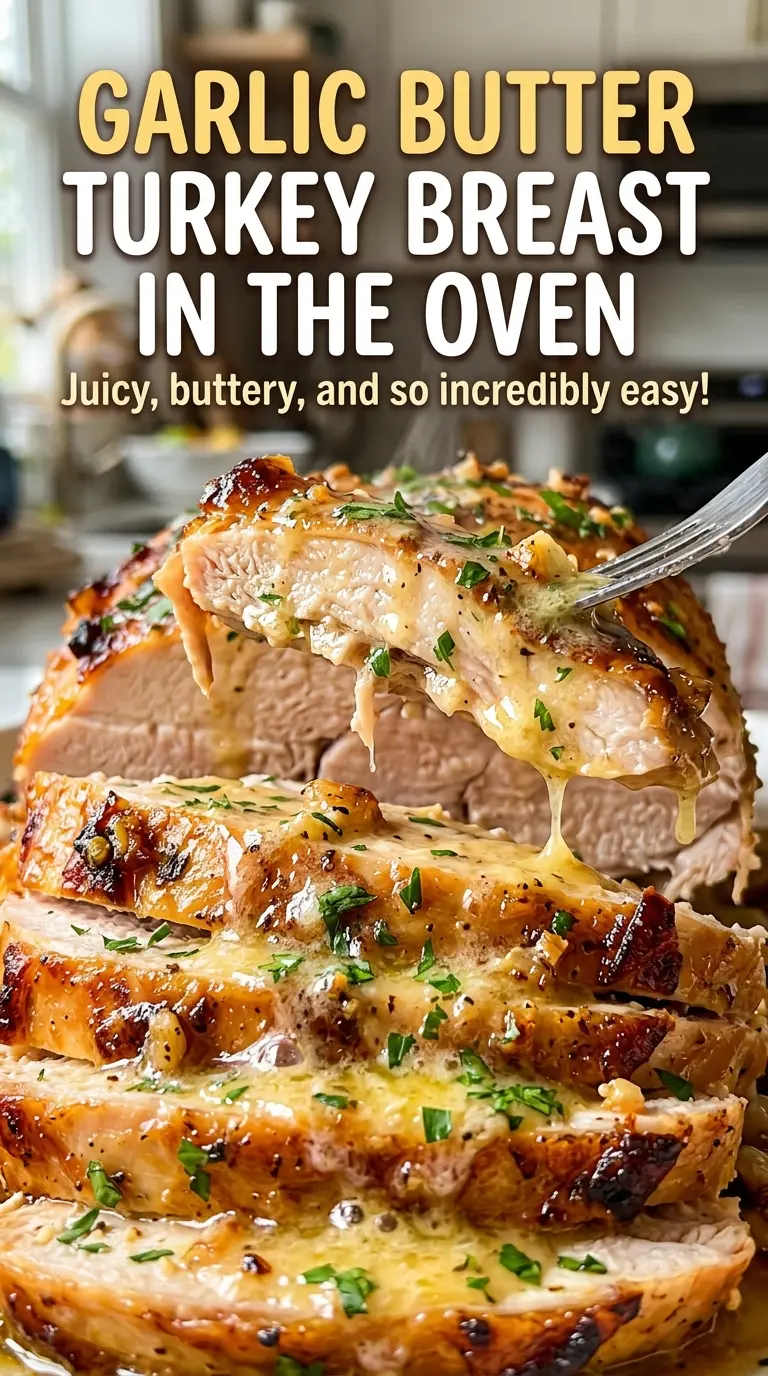
As the turkey roasts, the butter under the skin melts into the breast while the garlic on the outside begins to perfume the kitchen. I used to judge a turkey breast by its roasting time, but a four-pound one and a five-pound one don’t finish on the same schedule. A thermometer takes the guesswork out, and the garlic butter keeps this simple roast from tasting like an afterthought beside a whole holiday bird.
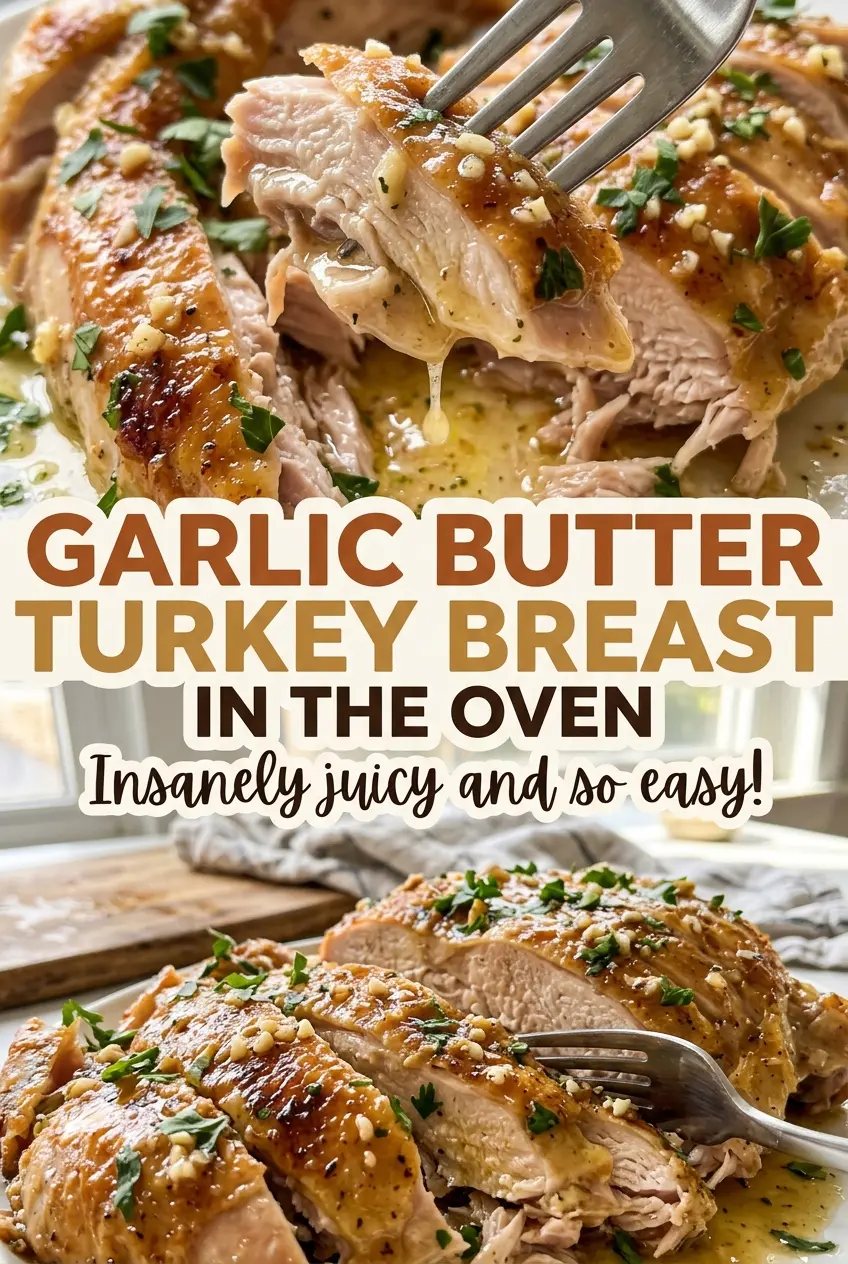
For this garlic butter turkey breast, the seasoning goes in two places: some under the skin, where it can flavor the meat directly, and the rest over the skin, where it helps create a savory finish. Loosen the skin gently rather than pulling hard; it needs to stay intact so the butter stays where you put it. After roasting, give the breast a full 20 minutes to rest before carving. The slices come away tender, with fragrant garlic and thyme in every bite.
Kitchen Note
Give the turkey the full 20-minute rest before carving. I know it’s tempting to get straight to the slices, but that pause makes the breast easier to carve neatly and gives the juices time to settle.
Save this garlic butter turkey breast for a roast with tender slices, thyme, and a generous layer of garlic butter.
Why the roasting time can’t tell you when the breast is done
A 4- to 5-pound turkey breast has a broad time range for a reason: shape and thickness matter as much as weight. The clock gives you a window, not a reliable doneness test. If the thickest part is still underdone, more minutes in the oven are needed even if the outside looks ready. A thermometer gives you a clear answer without relying on color or guesswork.
Placement matters, too. The thickest part of the breast is the slowest area to cook, while the bone can heat the thermometer and give you a misleading reading. Insert the probe into the meat without touching bone. That small detail helps you avoid pulling the turkey too early—or leaving it in the oven longer than necessary and drying the breast out.
The skin also gives you a useful visual cue, but it answers a different question. It tells you how quickly the outside is browning, not whether the center is done. If it gets dark before the meat reaches its target temperature, tent the breast loosely with foil and let the roast continue.
Why softened butter and dried thyme suit this turkey breast
- Bone-in, skin-on turkey breast — The bone helps support the roast, and the skin gives the butter a surface to coat as it cooks. Choose a thawed breast in the specified size range; a different cut won’t follow the same timing. Pat the skin dry before seasoning so excess surface moisture doesn’t get in the way of browning.
- Unsalted butter — Softened butter blends readily with the minced garlic and dried thyme, so it’s easy to spread beneath the skin without tearing it. Unsalted butter also lets the measured kosher salt do the seasoning. Use softened, not melted, butter; melted butter is harder to place evenly.
- Garlic — Minced cloves disperse through the butter and give both the meat beneath the skin and the outside a savory garlic flavor. Mince them finely so you don’t end up with large pieces in one spot. Fresh cloves are worth using here because garlic is one of the main flavors.
- Dried thyme — Dried thyme mixes evenly into softened butter and holds its herbal aroma through the long roast. Keep it in dried form for this version so the butter mixture stays balanced and easy to spread.
- Kosher salt and black pepper — These season the turkey directly through the butter mixture. Measure the kosher salt as listed; different types of salt don’t have the same volume or salinity, so swapping in another kind by the same spoonful can change the seasoning.
From garlic butter to a properly rested roast
Dry the breast and mix the butter
Heat the oven to 350°F and set a rack in a 9×13-inch roasting pan. Pat the thawed turkey breast dry with paper towels, including the skin. Stir the softened butter with the minced garlic, dried thyme, kosher salt, and black pepper until the seasonings are spread throughout. If the butter is cold and stiff, it’ll be difficult to work beneath the skin, so let it soften before mixing.
Get the garlic butter under and over the skin
Carefully loosen the skin over the breast with your fingers, working slowly so it stays attached. Spread about half of the garlic butter underneath the skin, then rub the remaining butter over the outside. Try to distribute the butter rather than leaving one thick clump; even coverage gives the breast a more consistent coating as it roasts.
Roast until the thickest part reaches 165°F
Set the turkey skin-side up on the rack and roast for 1 1/2 to 2 1/4 hours. The skin should take on a browned, roasted look; if it darkens too quickly, tent it loosely with foil while the breast continues to cook. Check the thickest part with a thermometer, keeping the probe away from the bone. The turkey is done when that reading reaches 165°F.
Rest before carving
Transfer the turkey breast to a cutting board and tent it loosely with foil. Let it rest for 20 minutes before carving. Use a sharp knife and cut slices from the breast; if the skin shifts while you carve, hold it in place gently rather than pressing down on the meat. The rested slices are easier to handle and serve.
Two ways to adapt the garlic butter roast
Put more of the garlic butter beneath the skin
Keep the listed ingredients and amounts, but spread a larger share of the prepared butter under the skin and leave a thinner coating on top. The meat gets a stronger garlic-butter presence, while the skin has less butter on its surface and may brown a little differently.
Turn the roast into thin slices for later meals
After the cooked turkey has been chilled, slice it thinly instead of carving the breast into thicker portions. This changes the texture and makes the leftover meat easy to portion for meals. Keep the garlic butter seasoning as written; the thin slices will taste more strongly seasoned in each bite.
Storage and Reheating
- Refrigerator: Store carved turkey in a covered container for 3 to 4 days. The skin softens in storage, and the meat firms as it chills. Refrigerate within 2 hours.
- Freezer: Freeze carved portions in an airtight freezer-safe container or bag for up to 2 to 6 months for best quality. Thaw in the refrigerator before reheating.
- Reheating: Warm slices covered in a baking dish with a little of their own juices, if available, until hot throughout. Reheat only what you plan to serve; uncovered reheating can dry the lean breast meat.
Questions that come up when roasting a turkey breast
Garlic Butter Turkey Breast in the Oven
Ingredients
Equipment
Method
- Heat the oven to 350°F and set a rack in a 9x13-inch roasting pan.
- Pat the turkey breast dry with paper towels.
- Stir together the softened butter, garlic, thyme, salt, and pepper.
- Carefully loosen the skin over the breast and spread about half of the garlic butter underneath.
- Rub the remaining garlic butter over the skin.
- Set the turkey breast skin-side up on the rack and roast for 1 1/2 to 2 1/4 hours, tenting loosely with foil if the skin browns too quickly.
- Check for doneness with a thermometer inserted into the thickest part of the breast without touching bone; it is done when it reads 165°F.
- Transfer the turkey to a cutting board, tent loosely with foil, and rest for 20 minutes before carving.
