
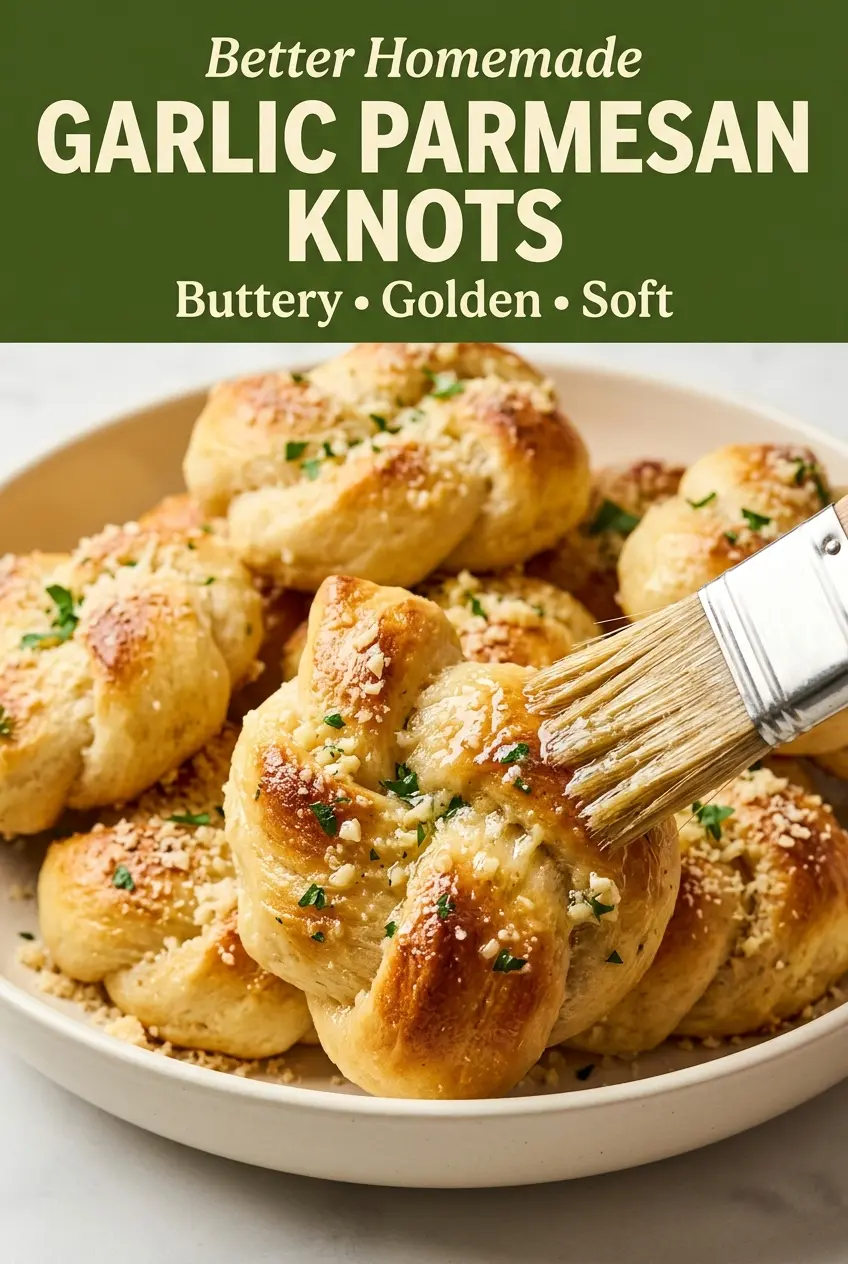
Garlic Parmesan knots bake up with a soft, pull-apart center and a golden, buttery shell that catches every bit of garlic and cheese. The knot shape isn’t just for looks; it gives you extra ridges and edges, which means more surface area for the garlic butter to cling to. That’s the part people remember. The soft dough underneath keeps them from feeling heavy, so they work just as well beside a big bowl of pasta as they do on a snack board.
What makes this version work is the timing. The knots get brushed with garlic butter while they’re still hot from the oven, which lets the butter soak into the bread instead of sliding off. Parmesan goes on right after that so it sticks to the butter and melts just enough to turn a little salty and nutty at the edges. Using refrigerated pizza dough keeps the texture light and gives you a reliable rise without extra fuss.
Below, I’ll walk through the part that matters most: how to tie the knots so they stay neat, how to avoid dense doughy centers, and what to do if you want to change the flavor without losing that soft, garlicky finish.
The knots baked up light and fluffy, and brushing them right out of the oven made the garlic butter soak in instead of pooling on the tray. The Parmesan stuck beautifully and the bottoms stayed soft, not gummy.
Save these garlic Parmesan knots for pasta night, pizza night, or the next time you want warm, buttery bread with crisp edges.
The Reason These Knots Stay Soft Instead of Baking Up Tough
The biggest mistake with bread knots is overhandling the dough after it’s divided. Once you start rolling and tying, the dough can tighten up fast, and if you keep tugging at it, the knots bake dense instead of airy. The other common problem is crowding the pan. These need a little breathing room so the sides can set and brown instead of steaming into each other.
The short rest before baking matters more than it looks like it should. Ten minutes gives the dough time to relax after shaping, which helps the knots puff evenly in the oven. That rest also keeps the knots from snapping back into little tight balls. If you’ve ever had bread knots that looked great raw but baked into chewy little bricks, that’s usually where the problem started.
- Space matters. Two inches between knots helps the edges brown and keeps the bottoms from getting soggy.
- A loose knot is better than a tight one. Tight knots choke off the center and leave you with a dense middle.
- The rest before baking is not optional. It relaxes the dough so the knots can puff instead of shrinking.
What the Butter, Garlic, and Parmesan Each Bring to the Table
- Refrigerated pizza dough — This gives you dependable rise and a soft, bakery-style crumb without mixing a dough from scratch. Let it sit at room temperature long enough to handle easily; cold dough tears and springs back. If you want to use homemade pizza dough, the same shaping and baking times usually work, but the texture may be a little chewier.
- Unsalted butter — Butter is what carries the garlic and helps the Parmesan stick. Unsalted gives you control over the final seasoning, especially since Parmesan already brings salt. Melt it fully, but don’t brown it here; browned butter tastes great, but it can overpower the clean garlic finish this recipe is aiming for.
- Fresh garlic — Fresh minced garlic gives the knots their sharp, aromatic punch. Garlic powder won’t give the same bite or fragrance. If you’re worried about raw garlic tasting too harsh, let the minced garlic sit in the warm butter for a minute or two while the knots bake; that softens the edge without losing the flavor.
- Finely grated Parmesan — Finely grated cheese clings better than coarse shreds and melts into the butter instead of falling off the bread. Use the good stuff if you can, because the flavor is front and center. Pre-grated Parmesan works in a pinch, but it won’t melt as smoothly.
- Fresh parsley — Parsley adds color and a clean finish that keeps the knots from tasting one-note. Dried parsley won’t do much here. Add it at the end so it stays bright and doesn’t darken in the oven.
Tying, Baking, and Brushing at the Right Moment
Shaping the Dough Without Overworking It
Divide the dough into 12 equal pieces, then roll each one into a rope about 7 inches long. If a piece keeps shrinking back, let it rest for a minute before rolling again; that’s the gluten tightening, and forcing it will only make the knots stubborn. Tie each rope into a loose knot and tuck the ends underneath so they don’t unroll in the oven. Don’t pull the knot tight, because it needs room to expand and rise.
Watching for the Right Bake
Bake the knots until they’re puffed and the edges are a deep golden brown. The tops should feel set when you touch them lightly, and the bottoms should be colored but not hard. If they still look pale, give them another minute or two; underbaked knots taste doughy in the center even when the outside looks fine. Pull them before the tops get too dark, because they keep cooking a little after they come off the pan.
Brushing While Hot
Stir the garlic, Italian seasoning, and salt into the melted butter while the knots bake, then brush the butter on the second they leave the oven. Hot bread absorbs the butter and seasoning, which is why this step has to happen right away. If the butter sits too long, the garlic and herbs sink and the mix cools into a layer that won’t coat evenly. Finish with Parmesan and parsley while the surface is still glossy so the cheese sticks instead of sliding off.
Three Ways to Change the Flavor Without Losing the Soft Center
Make Them Dairy-Free
Swap the butter for a good-quality olive oil or a plant-based butter that melts cleanly, and skip the Parmesan or use a dairy-free hard cheese alternative. Olive oil gives a more savory, less rich finish, while vegan butter keeps the same brushed-on texture. The knots will still bake up soft, but the topping will taste a little sharper and less creamy.
Add a Little Heat
Stir a pinch of red pepper flakes into the garlic butter for a sharper finish. That small amount doesn’t change the texture, but it gives the knots a little lift that works well with tomato sauce or soup. Keep it light; too much heat fights with the Parmesan instead of balancing it.
Turn Them Into a Herb Knots Variation
Add a little finely chopped rosemary or basil to the butter mixture and keep the Parmesan on top. Rosemary gives a more savory, bread-shop flavor, while basil leans brighter and softer. Chop herbs very finely so they cling to the knots instead of burning in little bitter bits on the pan.
Use Gluten-Free Dough
Use a gluten-free pizza dough that’s meant for shaping, not one that pours or behaves like batter. Gluten-free dough usually needs a little more flour on the counter and gentler handling because it tears more easily. The knots won’t have the same stretch as wheat dough, but the garlic butter topping still gives you the same satisfying finish.
Storage and Reheating
- Refrigerator: Store in an airtight container for up to 3 days. The crust softens a little as they sit, but they still reheat well.
- Freezer: Freeze baked knots without the parsley for up to 2 months. Thaw at room temperature, then reheat before adding a fresh sprinkle of parsley.
- Reheating: Warm in a 325°F oven for 8 to 10 minutes. The microwave makes the bread rubbery, so use the oven or an air fryer if you want the edges to crisp back up.
Answers to the Questions Worth Asking
Garlic Parmesan Knots
Ingredients
Equipment
Method
- Preheat the oven to 400°F and line a large baking sheet with parchment paper.
- Dust the work surface lightly with all-purpose flour.
- Divide the pizza dough into 12 equal pieces.
- Roll each piece into a rope about 7 inches long, then tie each rope into a loose knot and tuck the ends underneath.
- Arrange the 12 knots on the prepared baking sheet about 2 inches apart, then let them rest for 10 minutes.
- Bake at 400°F for 14–17 minutes until puffed and golden brown around the edges.
- While the knots bake, combine the melted butter, garlic, Italian seasoning, and salt.
- Brush the hot knots generously with the garlic butter immediately after removing them from the oven.
- Sprinkle the Parmesan cheese and fresh parsley over the buttery knots, then toss or brush lightly so the Parmesan adheres to the surface.
- Serve warm so the knots stay soft inside and buttery on the outside.
