
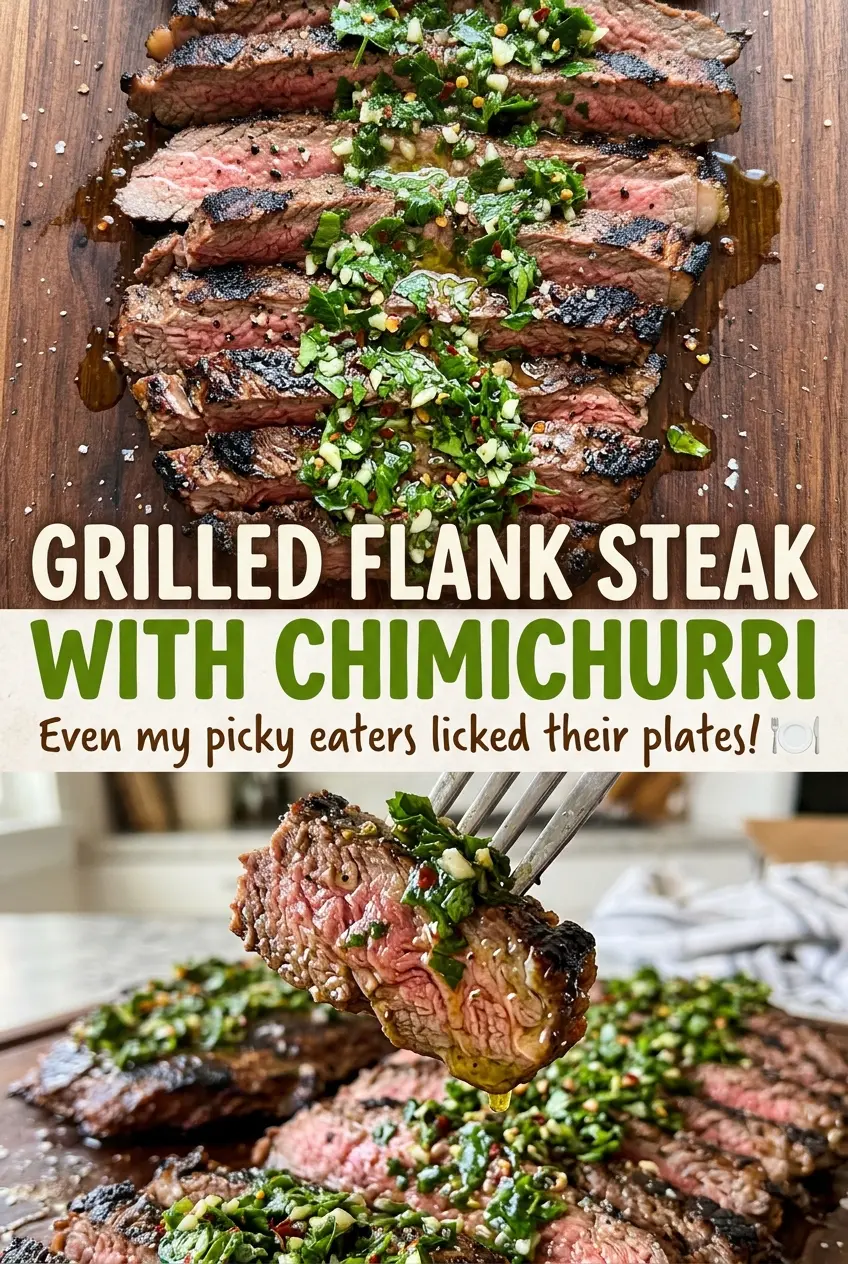
The first thing I watch for when flank steak hits the grill is the sizzle. If the grates are hot and clean, the meat starts searing instead of sticking, and a few minutes later the kitchen smells like charred beef and fresh garlic. That’s the start of this grilled flank steak with chimichurri: a quick, savory dinner with a bright parsley sauce that takes only a few minutes to stir together.
I let the chimichurri sit while the grill heats so the vinegar, garlic, and oregano have time to mingle. The steak gets a simple seasoning, then cooks over medium-high heat until an instant-read thermometer reaches 145°F. After a short rest, slice it thinly across the grain; the pieces stay much easier to chew, and the herb-packed sauce gives every bite a sharp, garlicky lift.
Kitchen Note
Give the chimichurri at least 15 minutes at room temperature before serving. That short rest takes the raw edge off the garlic and gives the vinegar and oregano time to settle into the parsley.
Save this grilled flank steak with chimichurri for a dinner built around smoky beef and a fresh, garlicky parsley sauce.
The Grain Is the Difference Between Tender Flank Steak and Chewy Slices
Flank steak has long muscle fibers running through it. When you cut with those fibers, each slice keeps the strands long, and the meat feels tougher to chew even when it’s cooked properly. Cutting across the grain shortens those fibers, which is why this final detail matters as much as getting the steak off the heat on time.
Look closely at the surface of the steak before you slice. You’ll see lines running in one direction; position your knife so each cut crosses those lines rather than following them. Keep the slices thin, and use a sharp knife so you can cut cleanly instead of pressing down and squeezing the juices out. The grain can be easier to see before the steak is cooked, so take a quick look while you’re seasoning it and remember the direction. That little pause makes serving much smoother once the steak has rested.
What Parsley, Vinegar, and Oil Each Bring to Chimichurri
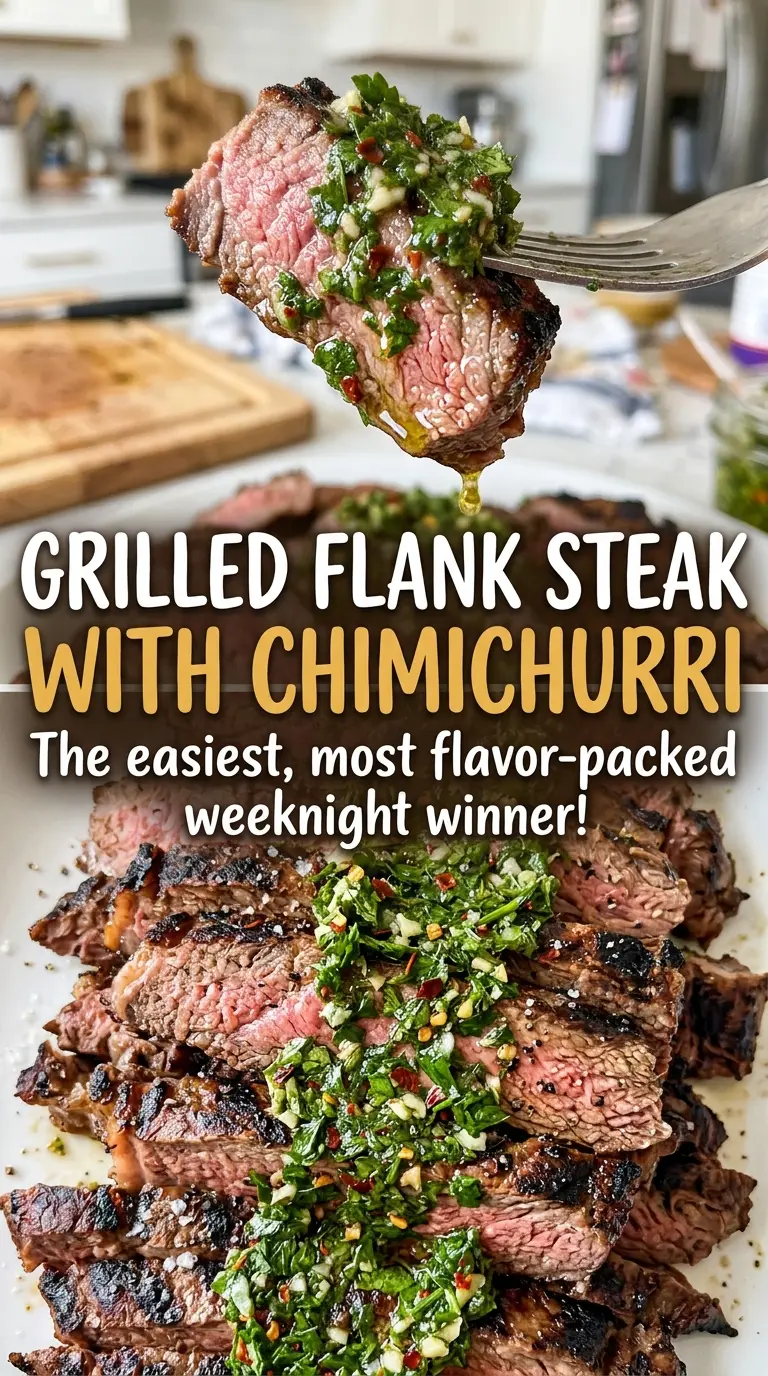
- Flat-leaf parsley — Fresh parsley gives the sauce its leafy texture and clean, green taste. Choose bunches with crisp leaves rather than yellowing or limp ones; finely chop them so they mix evenly with the oil and vinegar. Dried parsley won’t make the same fresh, textured sauce.
- Garlic — Minced garlic adds the pungent center of the chimichurri. Fresh cloves have a brighter bite than jarred minced garlic, and mincing them finely helps keep any one spoonful from tasting overwhelmingly sharp.
- Red wine vinegar — This brings the acidity that cuts through the steak’s richness. It’s worth using red wine vinegar here because its rounded, winey tang complements the parsley and oregano without making the sauce taste like straight citrus.
- Extra-virgin olive oil — The oil carries the herbs and gives the sauce a loose, spoonable texture. A standard extra-virgin olive oil is plenty; save a costly finishing oil for a dish where its delicate nuances won’t be mixed with garlic and vinegar. Regular olive oil can stand in, though the sauce will taste less fruity.
- Flank steak — Look for a piece with a fairly even thickness so it cooks at a more consistent pace. There’s no need to seek out a premium grade for this preparation; good handling at the grill and slicing across the grain do more for tenderness than a fancy label.
- Dried oregano and crushed red pepper flakes — Dried oregano disperses evenly through the sauce, while the flakes bring a gentle heat. Both keep well in the pantry, so freshness matters most if the jars still smell aromatic rather than dusty.
The 15-Minute Chimichurri Rest and the Hot Grill
Let the Parsley and Garlic Sit in Vinegar
Stir the finely chopped parsley, minced garlic, red wine vinegar, dried oregano, crushed red pepper flakes, and part of the kosher salt together in a small bowl. Add the extra-virgin olive oil and stir again until the herbs look evenly coated. Set the bowl aside at room temperature for at least 15 minutes while you prepare the grill. If the parsley is clumped in one spot, stir until the oil and vinegar are distributed throughout.
Season a Dry Steak Before It Hits the Grates
Heat a gas or charcoal grill to medium-high, about 450°F, and clean and oil the grates. Pat the flank steak dry; surface moisture makes it harder to get good contact with the hot grates. Rub the steak with olive oil, then season both sides with the remaining salt and black pepper. Keep the steak ready beside the grill so it can go on as soon as the grates are prepared.
Use the Thermometer to Call the Steak
Lay the steak on the grill and cook it for 5 to 7 minutes per side, turning it once. Check the thickest part with an instant-read thermometer rather than judging the center by color alone. Take it off when that spot reaches 145°F. If the steak hasn’t reached that temperature after the first side, continue grilling and check again after turning; thickness and grill heat affect how quickly it cooks.
Rest First, Then Slice Thinly
Move the steak to a cutting board and let it rest for 3 minutes before cutting. Resting gives the juices a chance to settle instead of running straight onto the board when you slice. Cut thinly across the grain, following the direction you noted before grilling. Serve the slices with the chimichurri so the fresh, acidic sauce can be spooned over the beef at the table.
Small Changes That Keep the Steak-and-Sauce Balance
Make the Chimichurri Milder
Leave out the crushed red pepper flakes for a gentler sauce that keeps the parsley, garlic, and vinegar front and center. The texture and method stay the same, but you lose the little flicker of heat at the end.
Use Regular Olive Oil in the Sauce
Swap regular olive oil for the extra-virgin olive oil if that’s what you have. The chimichurri will still coat the herbs, but its flavor will be milder and less fruity, with the vinegar and garlic coming through more clearly.
Keep the Meal Gluten-Free and Dairy-Free
The listed ingredients contain no wheat or dairy, so this dish needs no flour or dairy replacement to fit those menus. The steak and chimichurri stay unchanged, with the same bright sauce and charred flavor.
Storage and Reheating
- Refrigerator: Refrigerate leftover steak and chimichurri separately within 2 hours. Keep them in airtight containers and use within 3 to 4 days; the steak will lose some of its just-grilled crust, and the parsley sauce may darken slightly.
- Freezer: Freeze cooked steak in a tightly sealed container for up to 2 to 3 months for best quality. The texture softens after thawing. Chimichurri is best fresh, since freezing dulls the parsley and changes the sauce texture.
- Reheating: Warm steak gently in a covered dish in a low oven until heated through, then serve the chimichurri cold or at room temperature. High heat can dry out the lean slices; don’t reheat the sauce with the steak.
Answers to the Flank Steak Questions That Come Up at the Grill
Grilled Flank Steak with Chimichurri
Ingredients
Equipment
Method
- In a small bowl, stir together the parsley, garlic, red wine vinegar, oregano, red pepper flakes and 1/2 teaspoon of the salt.
- Stir in the extra-virgin olive oil.
- Set the chimichurri aside at room temperature for at least 15 minutes while you prepare the grill.
- Preheat a gas or charcoal grill to medium-high, about 450°F.
- Clean and oil the grates.
- Pat the steak dry.
- Rub the steak with the olive oil.
- Season the steak on both sides with the remaining 1 teaspoon salt and the black pepper.
- Grill the steak for 5 to 7 minutes per side, turning once, until the thickest part reaches 145°F on an instant-read thermometer.
- Transfer the steak to a cutting board and rest it for 3 minutes.
- Slice thinly across the grain and serve with the chimichurri.
