
The skin tells you a lot before the turkey even reaches the oven. If it’s damp, it can turn out soft instead of crisp, and the breast can brown long before the thighs are ready. I make this Juicy Roast Turkey with an uncovered salt rest, then tuck herb butter beneath the skin so the meat gets seasoned where it needs it most.
Fresh thyme and sage give the butter a savory, woodsy flavor, while onion, lemon, garlic, and whole thyme sprigs perfume the cavity as the bird roasts. I keep the cavity aromatics loose and let the turkey rest before carving; both choices help the finished bird feel calm and manageable instead of rushed. The result is golden skin, tender slices, and plenty of flavor in every bite.
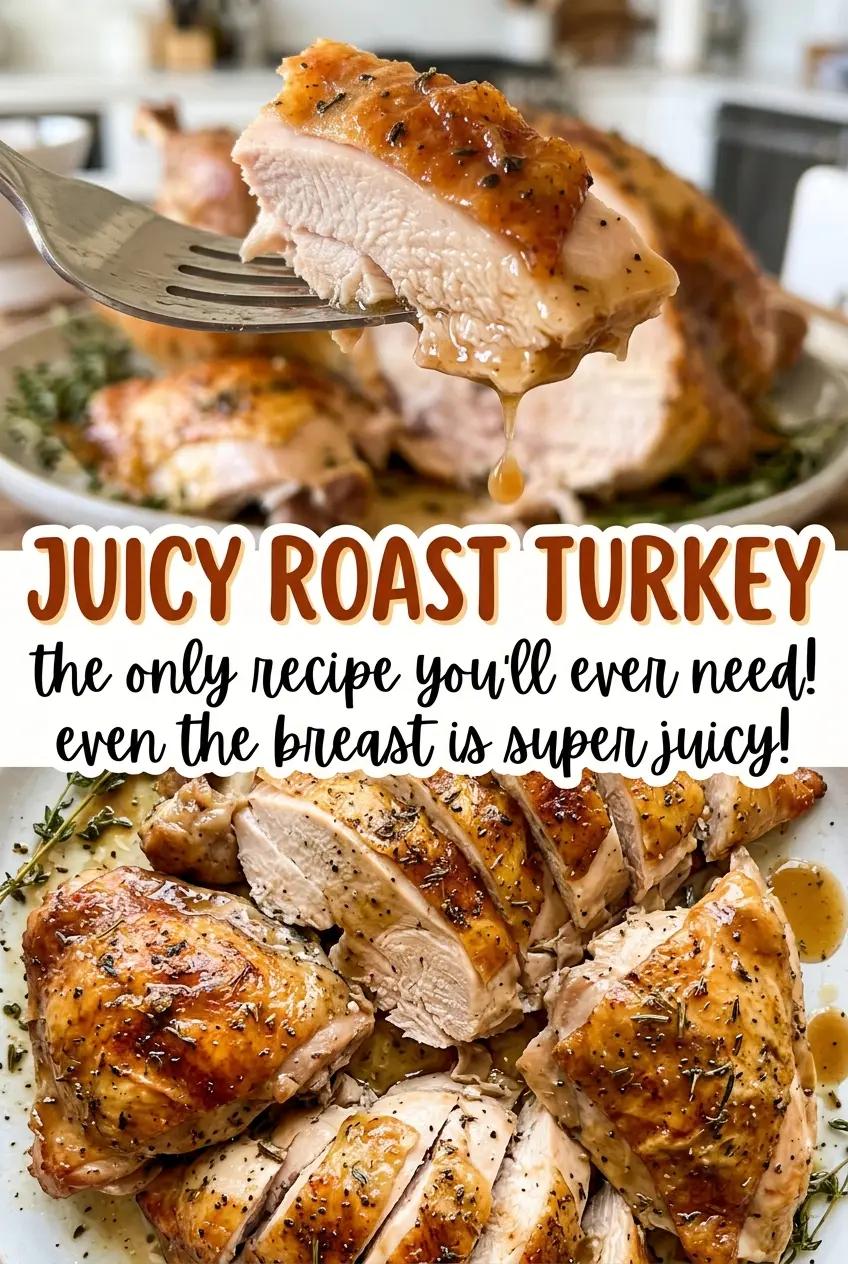
Kitchen Note
Loosen the skin with your fingertips a little at a time rather than tugging from one spot. That gives you room to spread the butter over the breast and thighs without tearing the skin.
Save this Juicy Roast Turkey for golden skin, herb butter under the skin, and a well-seasoned bird from the first slice to the last.
Why This Turkey Needs a Dry Surface Before It Gets Butter
The uncovered salt rest does more than season the meat. Salt draws a little moisture to the surface at first, then that salty moisture has time to work back into the turkey. Meanwhile, the exposed skin dries in the refrigerator, which gives it a better chance to brown instead of steaming under a damp layer.
That’s why the kind of turkey you start with matters. A natural bird that hasn’t been pre-brined or injected gives you control over the salt; a bird that already contains added salt can end up too salty after this treatment. The butter goes on after the uncovered rest, not before it, so it doesn’t block the skin from drying. This small bit of planning pays off in a more evenly seasoned turkey and skin that roasts up beautifully.
Why the Turkey’s Salt, Butter, and Fresh Herbs Each Matter
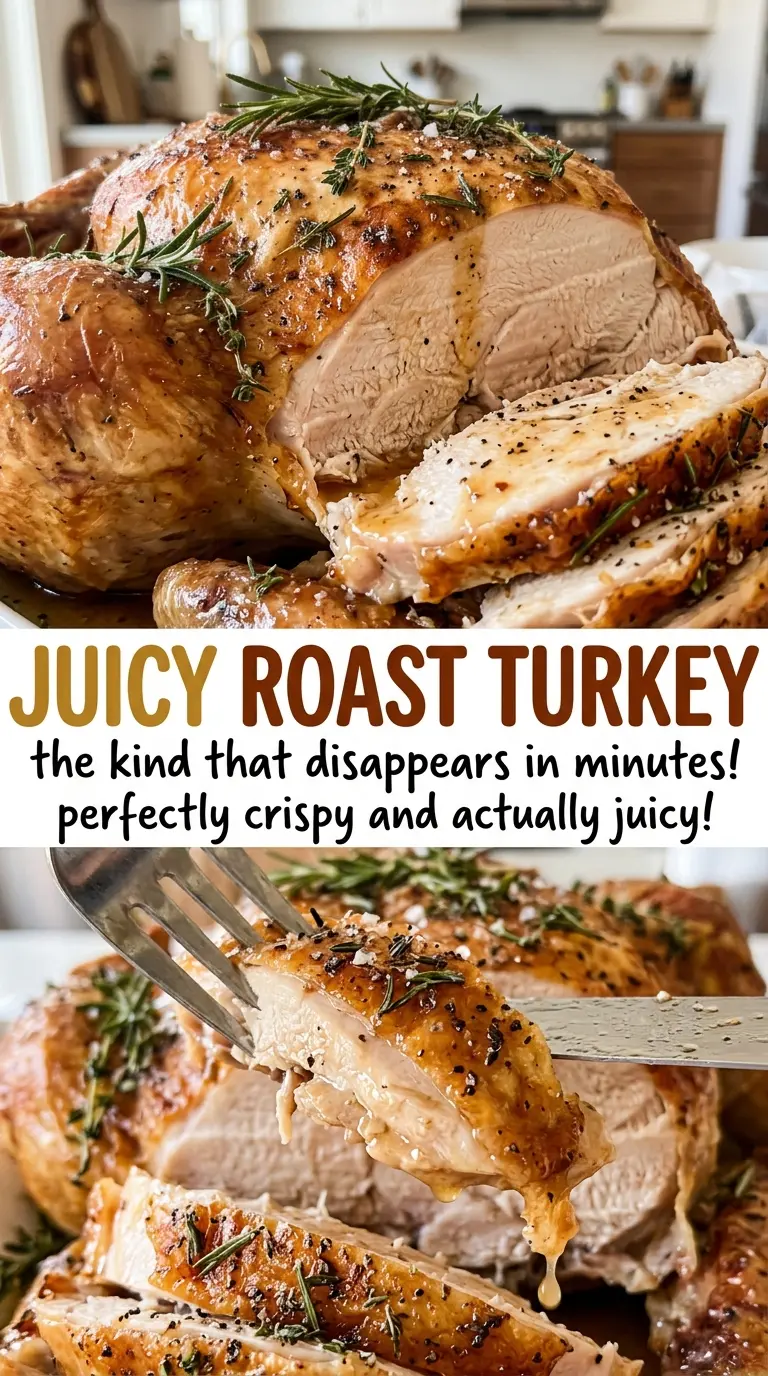
- Natural whole turkey — Choose one that’s fully thawed, natural, and not pre-brined or injected. Those details matter more than brand; a standard grocery-store bird works well when it meets those requirements.
- Diamond Crystal kosher salt — Its broad, light flakes are easy to scatter over the skin and inside the cavity. Fine table salt has a different crystal size, so I don’t swap it measure for measure by volume.
- Unsalted butter — Softened butter carries the pepper and fresh herbs beneath the skin and keeps the salt level in your hands. A basic store-brand butter is fine; it just needs to be soft enough to stir and spread.
- Fresh thyme and sage — Fresh leaves blend into the butter without the dusty texture dried herbs can leave behind. If you don’t have sage, use extra chopped thyme in its place for a brighter, less earthy herb butter.
- Onion, lemon, and garlic — These aromatics lend fragrance inside the cavity as the turkey roasts. Ordinary produce is all you need; cut the onion and lemon into quarters and halve the garlic head crosswise so they can be tucked in loosely.
How the 12-to-14-Pound Turkey Goes From Dry Brine to Carving Board
Salt the Bird and Let the Skin Dry
Remove the neck and giblets, then pat the turkey thoroughly dry with paper towels. Set it on a rack in a 16×13-inch roasting pan and rub the kosher salt over the skin and inside the cavity. Refrigerate the turkey uncovered for 12 to 24 hours; the skin should feel dry to the touch rather than slick when it’s ready for butter.
Mix the Herb Butter and Season Under the Skin
Set an oven rack in the lower third of the oven and heat the oven to 325°F. Stir the softened butter with the black pepper, chopped thyme leaves, and chopped sage until the herbs are spread throughout. Gently loosen the skin over the breast and thighs, then spread the butter evenly underneath it. Rub any butter left in the bowl over the outside of the turkey.
Add the Aromatics and Set the Legs
Place the onion, lemon, halved garlic, and reserved whole thyme sprigs loosely inside the cavity. Don’t pack them tightly; leave them resting naturally inside. Tuck the wing tips under the body, then tie the legs loosely with kitchen twine. A loose tie holds the legs in place without cinching them tightly together.
Roast to Temperature, Then Give It a Rest
Roast for 3 to 3 3/4 hours, tenting the breast loosely with foil if it starts browning too quickly. Check with a thermometer in the thickest part of the breast and the innermost thigh, keeping the tip away from bone; both spots need to read at least 165°F. Transfer the turkey to a carving board, tent it loosely with foil, and let it rest for 30 minutes before carving. Cutting too soon lets the juices run onto the board instead of staying with the meat.
Two Flavor Changes That Keep the Roast Turkey Method Intact
Make the Herb Rub Dairy-Free
Replace the softened butter with an equal volume of mild olive oil, then stir in the pepper, thyme, and sage. The mixture will be looser and have a light olive-oil flavor rather than the creamy richness of butter, but it still works as an herb rub under the skin and over the outside.
Use Thyme in Place of Sage
Leave the sage out of the butter and use extra chopped thyme instead. The flavor turns fresher and more woodsy, with less of sage’s earthy edge; keep the pepper and the cavity aromatics as they are.
Storage and Reheating
- Refrigerator: Refrigerate leftover turkey in shallow, covered containers within 2 hours; it keeps for 3 to 4 days. The skin softens once chilled.
- Freezer: Freeze carved turkey in airtight freezer containers or bags for 2 to 6 months for best quality. Thaw it in the refrigerator before reheating.
- Reheating: Warm portions covered in a low oven or microwave until hot throughout. Reheat only what you’ll serve; repeated warming dries the slices out.
Questions That Come Up While the Turkey Roasts
Juicy Roast Turkey
Ingredients
Equipment
Method
- Remove the neck and giblets from the turkey, then pat the turkey very dry with paper towels.
- Set the turkey on a rack in a 16x13-inch roasting pan and rub the salt over the skin and inside the cavity. Refrigerate uncovered for 12 to 24 hours.
- Set an oven rack in the lower third of the oven and preheat the oven to 325°F.
- Stir the softened butter with the black pepper, chopped thyme leaves, and chopped sage.
- Gently loosen the skin over the breast and thighs, then spread the herb butter evenly under the skin and rub any remaining butter over the outside of the turkey.
- Place the onion, lemon, garlic, and reserved thyme sprigs loosely inside the cavity, tuck the wing tips under the body, and tie the legs loosely with kitchen twine.
- Roast for 3 to 3 3/4 hours, tenting the breast loosely with foil if it browns too quickly, until a thermometer inserted into the thickest part of the breast and innermost thigh without touching bone reads at least 165°F.
- Transfer the turkey to a carving board, tent loosely with foil, and rest for 30 minutes before carving.
