
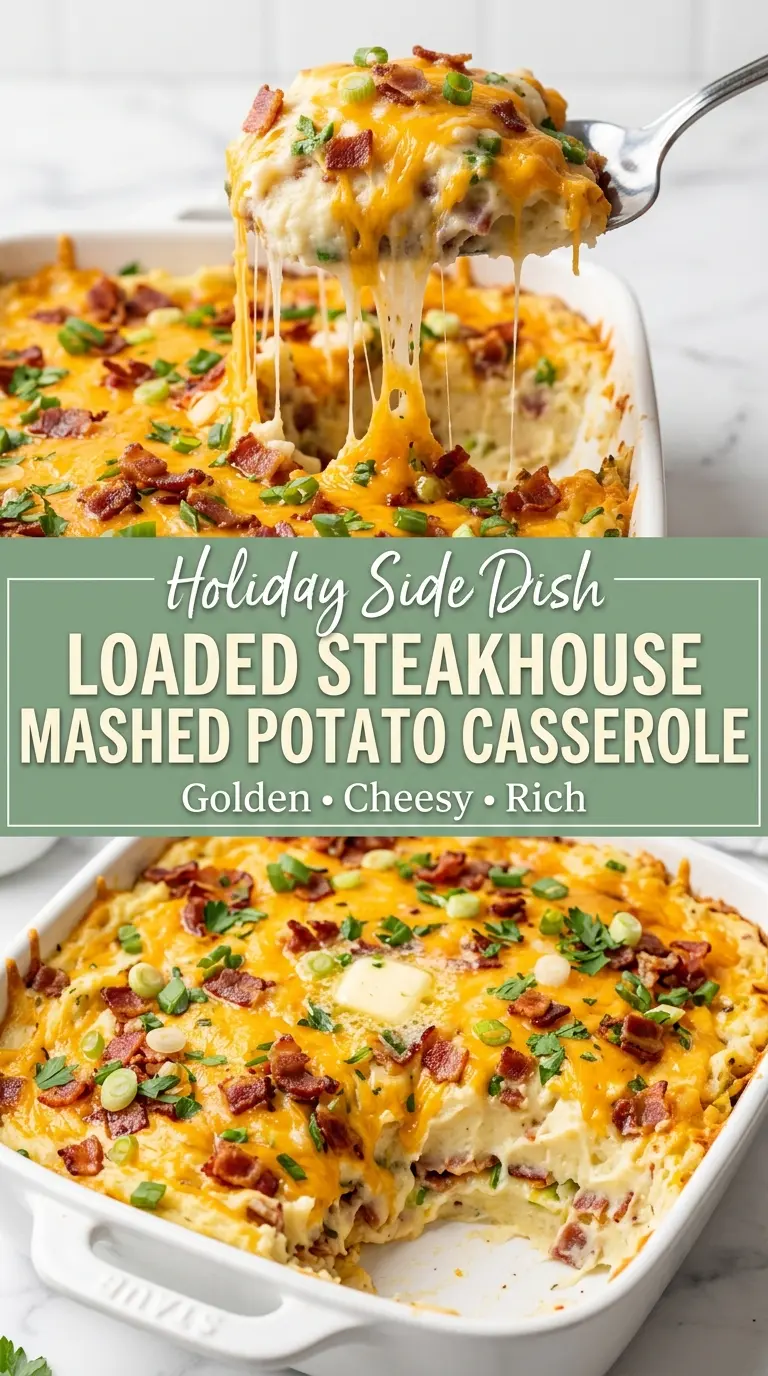
Loaded Steakhouse Mashed Potato Casserole lands on the table with the kind of comfort that makes people stop talking for a second. The potatoes stay creamy and rich, the bacon brings a salty crunch, and the cheddar melts into the top in those browned, bubbling spots that everyone reaches for first. It eats like the best part of a steakhouse side dish, just baked into one easy pan you can serve with almost anything.
The trick is starting with Yukon Golds and drying them well after boiling. That gives you a mash that tastes buttery without turning gluey. Warm milk and softened cream cheese help the potatoes stay smooth, and folding some of the bacon and cheese into the filling means the flavor runs all the way through instead of sitting only on top.
Below, I’ve included the little details that keep the texture right, plus a few ways to adapt this casserole when you need to work around what’s in your fridge. If you’ve ever had a potato bake turn heavy or watery, the notes here will save you from that.
The potatoes stayed fluffy instead of gummy, and the bacon and cheddar in the middle made every scoop taste loaded, not just the top layer. I baked mine 5 minutes longer for extra browning and it came out perfect.
Loaded Steakhouse Mashed Potato Casserole is the side dish to pin when you want creamy potatoes, melted cheddar, and bacon in one bake.
The Secret to Keeping Mashed Potatoes Creamy After Baking
The biggest mistake with a baked potato casserole is starting with potatoes that still hold too much water. If they go into the mash wet, the finished dish turns loose in the oven and the cheese layer can slide instead of settling into a thick, spoonable casserole. Draining them well and returning them to the hot pot for a minute or two lets steam escape before the dairy goes in.
Yukon Gold potatoes earn their place here because they mash into a naturally creamy texture without needing much extra beating. That matters. Overmixing can make even good potatoes turn pasty, so mash until smooth and then stop. The cream cheese also helps stabilize the filling, which keeps the casserole rich instead of greasy when it bakes.
What Each Ingredient Is Actually Doing in This Dish
- Yukon Gold potatoes — These give you a buttery mash with enough body to hold up under cheese and bacon. Russets work in a pinch, but they’re drier and can lean fluffier, so the casserole won’t feel quite as plush.
- Sour cream and cream cheese — This is where the tang and richness come from. Full-fat versions give the best texture, and both should be softened so they melt smoothly into the potatoes instead of leaving small cold bits behind.
- Warm milk — Cold milk cools the potatoes down fast and can make the mash feel stiff before it goes into the oven. Warm it first so the mixture stays loose enough to spread easily.
- Sharp cheddar — Sharp cheddar gives the casserole its steakhouse personality. Mild cheddar melts fine, but it won’t bring the same bite, so use the sharper version if you want the cheese to stand out against the bacon.
- Bacon — Cook it until crisp enough to crumble cleanly. If it’s chewy, it stays soft in the casserole instead of giving you those little salty pops in each bite.
- Green onions and parsley — These don’t just garnish the top. The green onions cut through the richness, and the parsley adds a fresh finish so the casserole tastes complete instead of heavy.
Building the Casserole So It Bakes Thick, Not Dense
Cooking the Potatoes Until They Collapse at the Fork
Start the potatoes in cold salted water so they cook evenly from the outside in. You want them fork tender all the way through, not falling apart in the pot, because waterlogged potatoes are harder to dry out later. As soon as they’re done, drain them well and let the steam escape before you mash. That one pause helps keep the finished casserole from turning loose.
Mashing While the Pot Is Still Warm
Return the drained potatoes to the warm pot and add the butter, sour cream, warm milk, cream cheese, garlic powder, salt, and pepper. The residual heat softens everything and helps the dairy blend in without overworking the potatoes. If your mash starts looking shiny and elastic, stop mashing immediately. That’s the sign you’ve gone too far and started breaking down the starch.
Layering the Bacon and Cheese Through the Middle
Fold in most of the cheddar, half the bacon, and half the green onions before the casserole goes in the oven. That gives you flavor in every bite, not just on the crust. Spread the mixture into the baking dish, then finish with the remaining cheese and bacon on top. The top layer should look crowded before it bakes; that’s what creates the bubbling, golden finish.
Baking Until the Edges Bubble First
Bake uncovered at 375°F until the cheese is melted and the edges are bubbling hard. The top will look glossy before it looks browned, and that’s normal. Let it rest for 5 minutes before serving so the casserole settles and slices cleanly. If you cut it the second it comes out, the filling can slump and look softer than it should.
How to Adapt This for Different Tables and Different Fridges
Make it gluten-free without changing the texture
This casserole is naturally gluten-free as written, as long as your bacon and seasonings are certified gluten-free. The texture doesn’t change at all, which is one reason this dish works so well for mixed tables.
Swap in Greek yogurt for a tangier finish
You can replace the sour cream with full-fat plain Greek yogurt for a brighter tang and a slightly lighter feel. It won’t be quite as lush, but it keeps the casserole creamy and gives the potatoes a cleaner finish.
Use all cheddar and skip the bacon for a vegetarian version
If you want a meatless side, leave out the bacon and add an extra ½ cup of cheddar plus a little more green onion on top. You lose the smoky saltiness, so a pinch of smoked paprika in the potatoes helps bring back some of that steakhouse feel.
Storage and Reheating
- Refrigerator: Store covered for up to 4 days. The potatoes will firm up as they chill, but the flavor stays great.
- Freezer: Freezes well in a tightly wrapped baking dish or airtight container for up to 2 months. Thaw overnight in the fridge before reheating so it warms evenly.
- Reheating: Reheat covered in a 350°F oven until hot in the center, then uncover for the last few minutes if you want the top to crisp back up. The biggest mistake is blasting it in the microwave, which makes the edges dry while the center stays cold.
Answers to the Questions Worth Asking

Loaded Steakhouse Mashed Potato Casserole
Ingredients
Equipment
Method
- Place the potatoes in a large pot and cover with cold salted water. Bring to a boil and cook for 15–18 minutes, or until fork tender, then drain thoroughly.
- Return the potatoes to the warm pot. Add the butter, sour cream, warm milk, cream cheese, garlic powder, salt, and black pepper, then mash until smooth and creamy.
- Fold in 1½ cups shredded cheddar cheese, half of the crumbled bacon, and half of the sliced green onions until evenly combined.
- Preheat the oven to 375°F and lightly grease a 9×13-inch baking dish. Spread the mashed potato mixture evenly into the dish, then sprinkle with the remaining cheddar cheese and remaining bacon.
- Bake uncovered for 20–25 minutes, until the cheese is melted, bubbling, and lightly golden around the edges.
- Remove from the oven and let rest for 5 minutes. Garnish with the remaining green onions and fresh parsley, then serve warm.
