
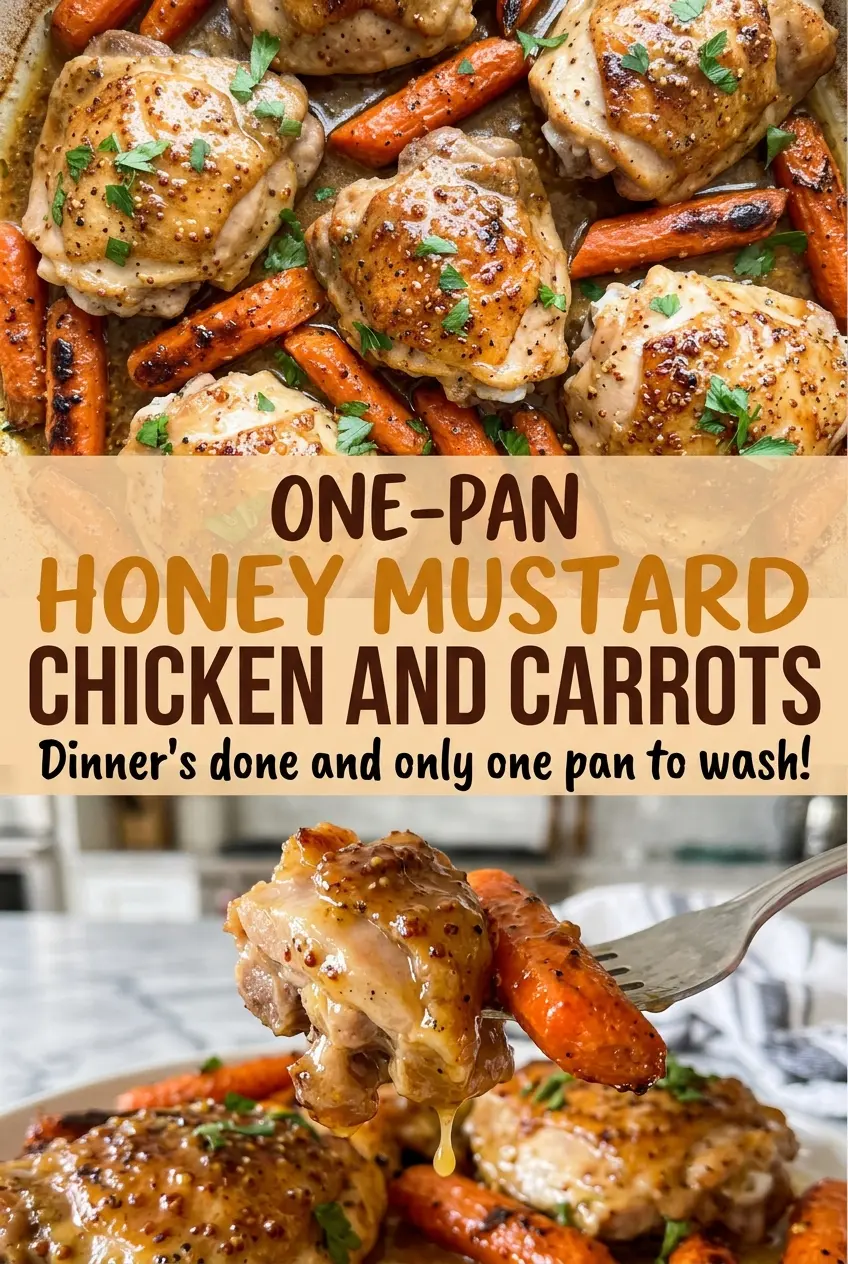
The carrots need a little room on the pan, and that’s the detail I notice first when I make this dinner. When they’re spread out beside the chicken instead of piled underneath it, they roast in the same window and stay easy to turn. The honey mustard glaze goes on the thighs, so the carrots keep their simple olive-oil seasoning while the chicken gets the tangy-sweet finish.
For this one pan honey mustard chicken and carrots, I whisk Dijon with honey, apple cider vinegar, and garlic, then brush it over boneless thighs before roasting. The glaze has enough tang to balance the honey, and the thighs stay tender through the time the carrots need to soften. It’s a straightforward sheet-pan meal with a clear visual cue at every stage: carrots in a single layer, glaze on the chicken, and a thermometer in the thickest thigh.
Kitchen Note
Turn the carrots once at the halfway point, not every few minutes. They brown where they touch the pan, and one turn gives the other side time against the hot surface too.
Save this one pan honey mustard chicken and carrots for a dinner with tender roasted carrots and tangy, honey-glazed thighs.
Why the Glaze Belongs on the Chicken, Not the Carrots
Honey mustard can seem like an obvious coating for everything on the pan, but I keep it on the chicken here. The carrots get olive oil, salt, and pepper; that lets them roast directly against the pan without a sweet coating between the vegetables and the hot metal. Meanwhile, the glaze gives the thighs a savory, tangy layer with a little sweetness.
Keeping the two components separate also helps you read what’s happening as they cook. The carrots need to become tender, while the chicken needs to reach a safe internal temperature. Their surfaces don’t have to look identical, and the glaze’s color isn’t a reliable doneness test. Use the thermometer for the chicken and check a carrot for tenderness. You get a balanced plate without asking one coating to do two different jobs.
The pan layout matters for the same reason. Carrots spread in one layer have room to roast; a heap traps steam and softens unevenly. Set the thighs beside them rather than over the vegetables, so both parts stay accessible for turning and checking.
What the Mustard, Honey, and Vinegar Each Bring

- Carrots — Cut them into sticks about 1/2 inch thick so they roast at a similar pace. Fresh carrots with a firm feel are the best choice; very thin pieces soften sooner than the chicken does.
- Boneless, skinless chicken thighs — Thighs are forgiving in the oven and suit the 25-to-30-minute roast. Keep them similar in size when possible, since a much thicker piece takes longer to cook through.
- Dijon mustard — Dijon gives the glaze its sharp, savory backbone and helps it cling to the chicken. Whole-grain mustard can stand in at the same quantity, though you’ll get a more textured coating and a less smooth finish.
- Honey — Honey rounds out the mustard’s bite and gives the glaze its gentle sweetness. Maple syrup can replace it in the same amount; expect a slightly different, more woodsy sweetness.
- Apple cider vinegar — Its acidity cuts through the honey and mustard so the glaze doesn’t taste heavy. White wine vinegar works in the same amount, with a cleaner, less fruity edge.
- Garlic — Freshly minced garlic brings a sharper savory note than dried garlic. Mince it finely so it disperses through the glaze instead of leaving large pieces on the chicken.
From an Even Pan Setup to Tender Chicken and Carrots
Arrange the Carrots and Thighs on the Sheet Pan
Heat the oven to 425°F and line a rimmed 18×13-inch sheet pan with parchment paper. Toss the carrot sticks right on the pan with the olive oil and half of the salt and pepper, then spread them into a single layer. Arrange the chicken thighs beside the carrots and season them with the remaining salt and pepper. Leave the chicken next to the vegetables rather than laying it on top.
Whisk the Tangy Honey Mustard Glaze
In a small bowl, whisk together the Dijon mustard, honey, apple cider vinegar, and minced garlic. Keep whisking until the honey is blended through and the garlic is evenly distributed; a streaky glaze can leave one thigh sweeter or more mustard-forward than another. The mixture should be easy to brush over the chicken. If honey sits at the bottom of the bowl, whisk again before using it.
Brush the Glaze Over the Chicken
Brush the glaze across the tops of the thighs, covering each piece rather than pouring it over the whole pan. The carrots stay coated with their oil and seasoning, while the chicken gets the mustard-honey mixture. A brush helps you spread the garlic evenly and keeps the glaze from pooling in one spot. There’s no need to add a second coating during roasting.
Roast, Turn the Carrots, and Rest the Chicken
Roast for 25 to 30 minutes, turning the carrots once halfway through. Look for carrots that are tender when pierced and chicken that has cooked through; check the thickest part of each thigh with an instant-read thermometer and cook to 165°F. If a thigh is thicker than the rest, check that one carefully rather than judging all the pieces by the smallest. Let the chicken rest on the pan for 5 minutes before serving.
Three Small Changes for Different Tables
Use Whole-Grain Mustard for Texture
Replace the Dijon with the same amount of whole-grain mustard. Its mustard seeds make the glaze more textured, and the finished chicken will have a less smooth coating while keeping the sweet-tangy balance.
Make the Glaze Less Sweet
Use 1 tablespoon of honey instead of 2. The mustard and vinegar will come through more clearly, and the glaze will taste less sweet without changing the chicken-and-carrot format.
Keep the Glaze Gluten-Free
Choose a Dijon mustard labeled gluten-free and use the same amount. The rest of the dish needs no flour or breadcrumbs, so the glaze remains the only ingredient to verify for this adaptation.
Storage and Reheating
- Refrigerator: Store leftovers in a covered container for 3 to 4 days. The carrots soften after chilling, but the flavor holds up.
- Freezer: Freeze the chicken and carrots in an airtight container for up to 2 to 3 months. The carrots will be softer after thawing, so freeze them with the chicken only if that texture works for you.
- Reheating: Reheat covered in a 325°F oven until hot throughout, or microwave portions in short intervals. For food safety, bring leftovers to 165°F; uncovered high heat can dry the chicken and darken the honey glaze.
Questions That Come Up While Making This Sheet-Pan Dinner
One Pan Honey Mustard Chicken and Carrots
Ingredients
Equipment
Method
- Heat the oven to 425°F and line a rimmed 18x13-inch sheet pan with parchment paper.
- Toss the carrots with the olive oil and half of the salt and pepper on the prepared pan.
- Spread the carrots in a single layer.
- Arrange the chicken thighs beside the carrots and season them with the remaining salt and pepper.
- Whisk the Dijon mustard, honey, apple cider vinegar, and garlic in a small bowl.
- Brush the glaze over the chicken thighs.
- Roast for 25 to 30 minutes, turning the carrots once halfway through.
- Cook until the carrots are tender and the thickest part of each thigh reaches 165°F.
- Let the chicken rest on the pan for 5 minutes before serving.
