
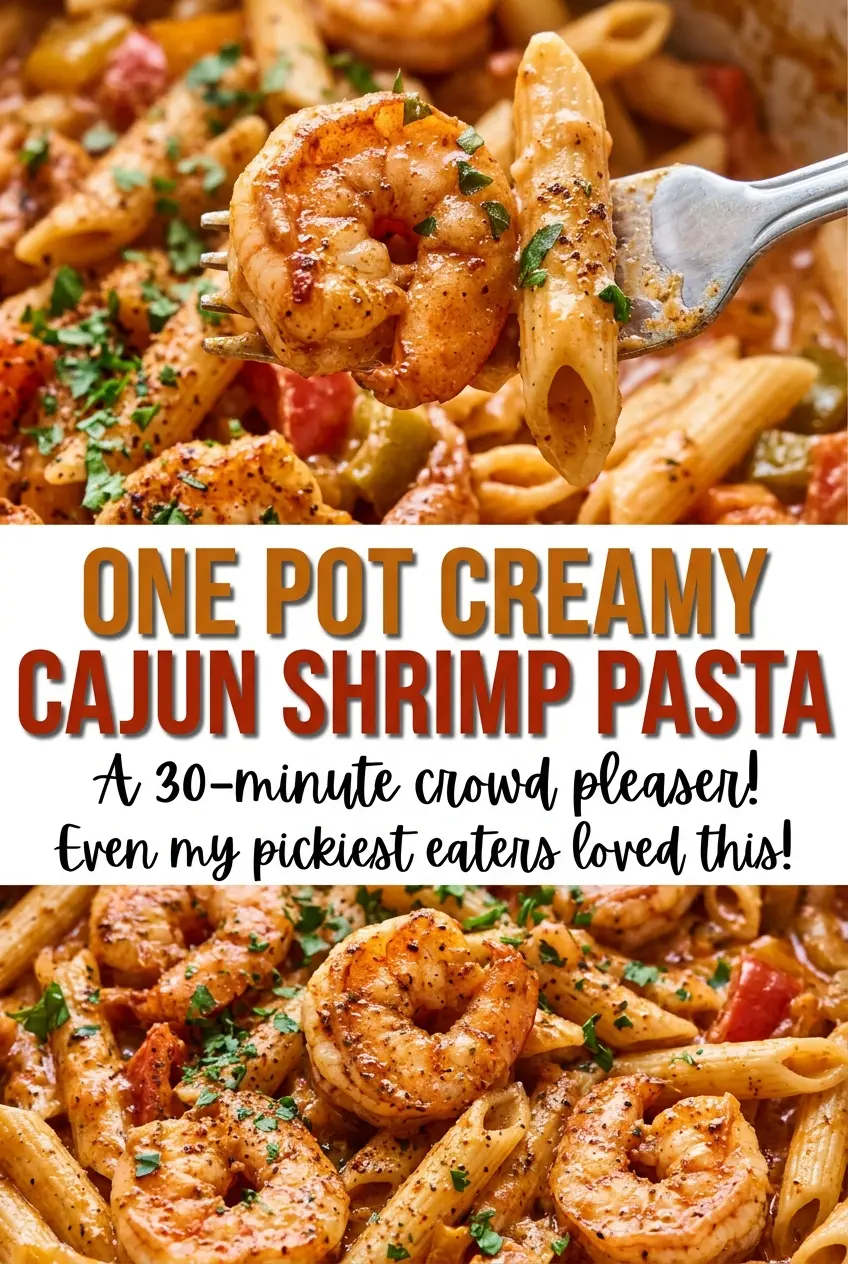
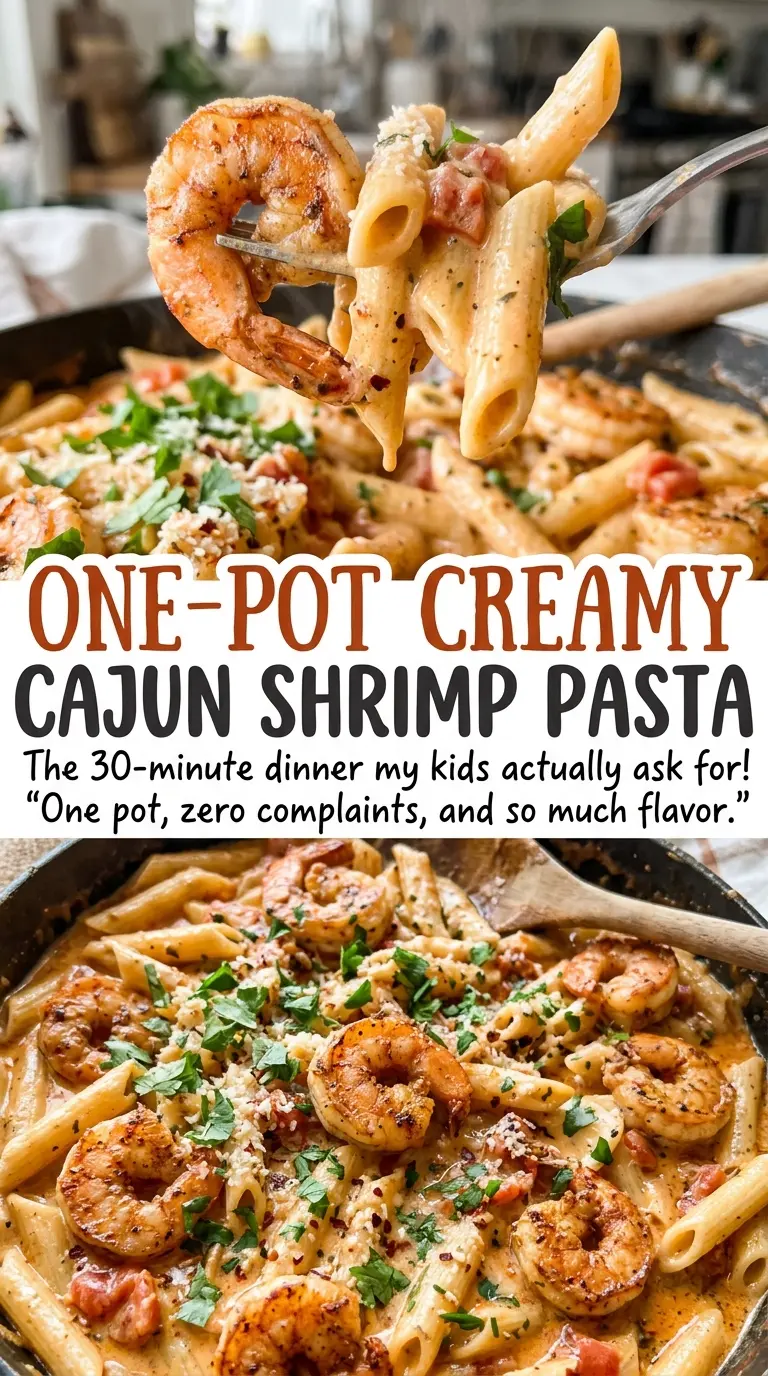
The shrimp cook fast in a hot Dutch oven, and the pasta takes its time in the broth right afterward. Keeping those jobs separate is what lets the shrimp stay tender instead of simmering away while the penne cooks. This One Pot Creamy Cajun Shrimp Pasta brings both together at the end, with a cream sauce that clings to the pasta instead of pooling at the bottom.
I like this method because the pot does the heavy lifting: the onion and pepper soften in the same place the shrimp browned, and the pasta simmers right in the chicken broth and water. Stirring as it cooks keeps the penne from sticking and helps the liquid turn silky. A little lemon juice at the finish cuts through the richness, so each forkful tastes creamy and warmly spiced rather than heavy. The result is saucy penne with plump shrimp in every bowl.
Kitchen Note
Pat the shrimp dry before seasoning them. If they go into the pot damp, they release moisture instead of getting a quick, clean cook in the hot oil.
Save this One Pot Creamy Cajun Shrimp Pasta for a cozy dinner when you want tender shrimp and saucy penne from one pot.
Why This Penne Simmering in Broth Makes a Creamier Sauce
Here, the pasta cooks in the broth and water rather than in a separate pot that gets drained. As the penne softens, it releases starch into the cooking liquid. That gives the finished sauce a little body before the cream and Parmesan go in, so they have a starchy base to coat instead of a thin puddle around the noodles.
The amount of liquid matters because the pasta needs enough to cook through, but you don’t want to discard the flavorful cooking liquid afterward. Keep the pot covered while the pasta simmers, and lift the lid to stir regularly so the pieces cook evenly. Once the penne is al dente, the remaining liquid should look lightly thickened, not completely absorbed. The cream and cheese finish the sauce; they aren’t there to rescue pasta that has cooked dry or gone soft.
This is also why I wait to add the dairy until the pasta is ready. Cream and Parmesan need only a brief, gentle finish with the shrimp. Keeping that final simmer short helps the sauce stay smooth and leaves the shrimp tender.
What Gives the Cajun Shrimp Pasta Its Creamy, Balanced Finish
- Large shrimp — Peeled and deveined shrimp are convenient here, and large ones are easier to cook briefly without losing their tender bite. Freshness matters more than whether they came in a fresh or frozen package; thaw frozen shrimp fully before cooking.
- Cajun seasoning — This is the main source of the dish’s savory heat, and blends vary in how salty and spicy they taste. Start with the measured amount divided between the shrimp and vegetables so the seasoning is spread through the whole pot.
- Penne — Its sturdy tubes hold up to the covered simmer and catch sauce inside as well as on the outside. Stick with penne for the most predictable timing and liquid absorption.
- Low-sodium chicken broth — It builds flavor into the pasta itself, while the low-sodium version leaves room for the Cajun seasoning and Parmesan. The broth doesn’t need to be a premium brand; choose one you like the taste of on its own.
- Heavy cream and finely grated Parmesan — Together they make the sauce rich and cohesive. Finely grated Parmesan melts more readily than coarse shreds, so grate it finely rather than adding large pieces that take longer to disappear.
- Lemon juice — A small amount brightens the cream and cheese without making the pasta taste lemony. Fresh juice has a cleaner, brighter flavor than bottled juice.
- Yellow onion, red bell pepper, and garlic — These soften into the base of the sauce and give the Cajun seasoning something savory and sweet to cling to. Chop the onion and pepper evenly so they soften at about the same rate, and mince the garlic so it cooks quickly.
Four Stages for Tender Shrimp and Pasta That Stays Al Dente
Cook the Shrimp in a Single Layer
Heat the olive oil in a 6-quart Dutch oven over medium-high heat. Toss the shrimp with 1 teaspoon Cajun seasoning, then cook in batches in a single layer for 1–2 minutes per side. They are ready when opaque and 145°F in the thickest part; transfer them to a plate. Crowding the pot makes it harder to cook each batch evenly, so give the shrimp room.
Soften the Vegetables Without Browning the Garlic
Reduce the heat to medium and add the onion and red bell pepper. Cook for 4–5 minutes, stirring occasionally, until the vegetables have softened. Add the garlic and remaining 1 teaspoon Cajun seasoning, then stir for 30 seconds. Garlic can turn bitter if it sits over the heat too long, so keep this part brief.
Simmer the Penne in the Pot
Stir in the penne, chicken broth, and water, then bring the mixture to a boil. Cover the pot, reduce the heat to medium-low, and simmer for 12–15 minutes until the pasta is al dente. Stir every 2–3 minutes, reaching across the bottom of the pot so pasta doesn’t catch there. Check the texture near the shorter end of the cooking time; the center should be tender with a slight bite.
Finish Gently with Cream, Cheese, and Shrimp
Stir in the heavy cream, Parmesan, and lemon juice, then return the shrimp and any juices on the plate to the pot. Simmer gently over low heat for 1–2 minutes, stirring, until the sauce looks creamy and the shrimp are hot. Keep the heat low rather than letting the pot boil hard. The sauce should coat the penne, with no thick clumps of cheese.
Two Small Changes That Shift the Cajun Pasta
Make the seasoning gentler
Use a lighter hand with both portions of Cajun seasoning if you want less heat. The shrimp and sauce will taste milder, while the onion, pepper, cream, and Parmesan still give the pasta plenty of savory depth.
Leave out the red bell pepper
Skip the pepper if you don’t want its sweetness or texture in the pasta. The finished sauce will taste a little more savory and less sweet; the onion still gives the pot a softened vegetable base.
Storage and Reheating
- Refrigerator: Store leftovers in an airtight container for 3–4 days. The penne will continue to absorb sauce, so it will be thicker after chilling.
- Freezer: I don’t recommend freezing this pasta. Cream sauce can separate after thawing, and the shrimp can lose their tender texture.
- Reheating: Warm leftovers in a skillet over low heat with a splash of chicken broth or water, stirring gently, until they reach 165°F. Avoid high heat; it can make the cream sauce separate and the shrimp tough.
Questions That Come Up with One-Pot Cajun Shrimp Pasta
One Pot Creamy Cajun Shrimp Pasta
Ingredients
Equipment
Method
- Heat the olive oil in a 6-quart Dutch oven over medium-high heat.
- Toss the shrimp with 1 teaspoon Cajun seasoning.
- Cook the shrimp in batches in a single layer for 1–2 minutes per side, until opaque and 145°F in the thickest part.
- Transfer the shrimp to a plate.
- Reduce the heat to medium and add the onion and bell pepper; cook for 4–5 minutes, stirring occasionally, until softened.
- Add the garlic and remaining 1 teaspoon Cajun seasoning and cook for 30 seconds.
- Stir in the penne, chicken broth, and water, then bring to a boil.
- Cover, reduce the heat to medium-low, and simmer for 12–15 minutes, stirring every 2–3 minutes, until the pasta is al dente.
- Stir in the heavy cream, Parmesan, and lemon juice.
- Return the shrimp and any accumulated juices to the pot.
- Simmer gently over low heat for 1–2 minutes, stirring, until the sauce is creamy and the shrimp are hot.
