
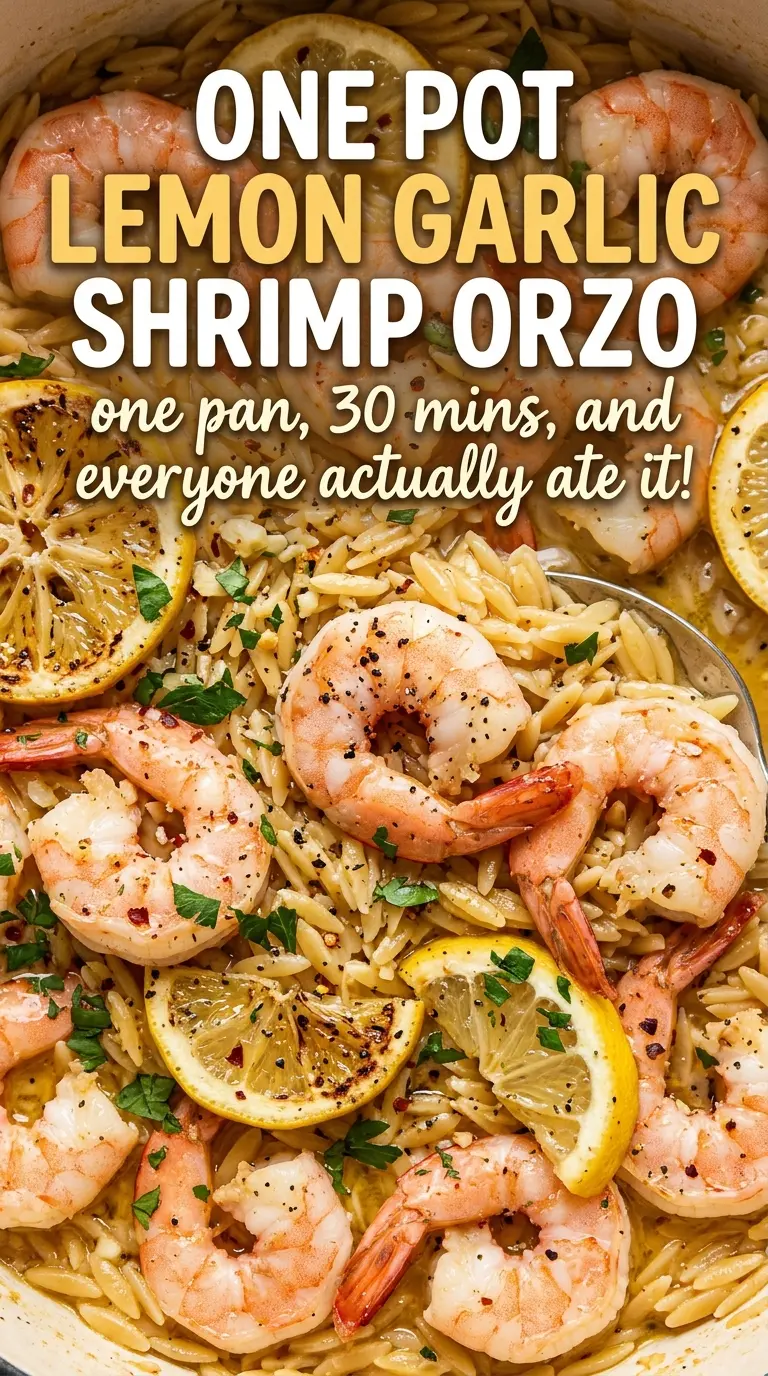
When the shrimp hit the hot skillet, they turn opaque fast—sometimes before I’ve even reached for the plate. Pulling them out at that point is what keeps them tender while the orzo cooks in the same pan. That little bit of timing makes this One Pot Lemon Garlic Shrimp Orzo feel generous and put-together without leaving you with a sink full of dishes.
The orzo simmers in chicken broth, soaking up its savory flavor as it softens. I stir it once or twice while it cooks; that’s enough to keep the pasta moving without losing the gentle simmer under the lid. Fresh lemon, Parmesan, and parsley go in at the end, so their brightness stays clear instead of getting cooked away.
It’s a quick skillet dinner with garlicky broth clinging to the pasta and shrimp tucked through every serving. Bring it straight to the table while the orzo is glossy and the lemon still smells bright.

Kitchen Note
The orzo is ready when it’s tender and most of the broth has disappeared, not when the skillet looks completely dry. Start checking at 10 minutes, since the exact finish depends on your pan and how steadily it’s simmering.
Save this One Pot Lemon Garlic Shrimp Orzo for a night when you want lemony shrimp and tender pasta from one skillet.
Why the Shrimp Can’t Stay in the Skillet While the Orzo Cooks
Shrimp and orzo don’t have the same cooking clock. The shrimp need only a short sear, while the pasta takes time to soften in broth. Leave the shrimp in the skillet for that whole simmer and they’ll keep cooking long after they’re done, turning firm and rubbery by the time the orzo is tender.
Cooking the shrimp first, then transferring them to a plate, gives each part the time it needs. The skillet is still doing the work: the garlic and pepper flakes go into the remaining oil, then the orzo gets a quick toast before the broth goes in. Once the pasta is tender, the shrimp return with any juices that collected on the plate. A brief finish warms them through without asking them to cook all over again.
This order also makes the timing easier to read. You can focus on getting the shrimp opaque, take them out, and then give the orzo your attention while it simmers. The result is tender seafood alongside pasta that has absorbed the lemony, garlicky broth—not shrimp that have been waiting in the pan for the pasta to catch up.
What the Orzo, Lemon, and Parmesan Each Bring to the Skillet
- Large raw shrimp — Raw shrimp are important here because they sear briefly at the start, then finish warming with the pasta. Choose peeled and deveined shrimp to keep prep quick; if yours are smaller, watch them closely because they cook faster.
- Orzo — This small pasta cooks directly in the broth and releases enough starch to give the finished dish a lightly cohesive texture. A standard grocery-store box works well; keep it dry until it goes into the skillet so it can toast in the oil first.
- Low-sodium chicken broth — The broth is both the orzo’s cooking liquid and its main savory seasoning. Low-sodium broth lets the measured salt and Parmesan stay in balance; a cheaper carton is fine as long as it’s low-sodium.
- Fresh lemon — The zest brings fragrant citrus oils, while the juice adds a sharper brightness. Use a fresh lemon so you have both; bottled juice can’t replace the zest’s aroma.
- Finely grated Parmesan — Fine shreds melt into the hot pasta more readily than thick pieces, helping the finish feel unified rather than clumpy. A block grated just before cooking melts nicely, though pre-grated Parmesan is convenient and works here too.
- Garlic and red pepper flakes — Minced garlic perfumes the oil quickly, and the flakes add a gentle heat. Have both ready before they hit the pan; garlic can go from fragrant to scorched in the short time it cooks.
- Fresh parsley — Chopped parsley adds a fresh, grassy note against the lemon and Parmesan. It goes in at the end so its color and flavor stay lively.
Building the Skillet in the Right Order
Sear the Shrimp, Then Get Them Out of the Pan
Pat the shrimp dry, then season them with half the salt and the black pepper. Heat a tablespoon of olive oil in a lidded 12-inch skillet over medium-high heat, and arrange the shrimp in a single layer. Cook for 1 to 2 minutes per side, until opaque and 145°F in the thickest part. Transfer them to a plate; crowding them or leaving them in the skillet while the orzo cooks can make them tough.
Wake Up the Garlic and Toast the Orzo
Reduce the heat to medium and add the remaining olive oil, minced garlic, and red pepper flakes. Stir for about 30 seconds, just until the garlic smells fragrant; if it starts browning, lower the heat rather than letting it darken. Stir in the orzo and cook it for 1 minute so the grains are lightly coated and toasted. Keep stirring during this short stage so the garlic doesn’t sit against the pan and scorch.
Let the Orzo Simmer in the Broth
Add the chicken broth and remaining salt, then bring the liquid to a simmer. Cover the skillet and cook over medium-low heat for 10 to 12 minutes, stirring once or twice. The orzo should be tender, with most of the broth absorbed; if it still feels firm, give it a little more time rather than raising the heat sharply. A hard boil can make the liquid disappear before the pasta has softened.
Finish with Lemon, Parmesan, and Shrimp
Stir in the lemon zest, lemon juice, Parmesan, parsley, and shrimp, including the juices on the plate. Cook for 1 minute, just until the shrimp are hot. Stir gently so the Parmesan distributes through the orzo without breaking up the shrimp. Serve while the pasta is glossy and the parsley still looks fresh.
Small Changes That Suit This Lemon Garlic Orzo
Leave Out the Red Pepper Flakes for a Milder Skillet
Skip the red pepper flakes if you want the lemon and garlic to lead without the background heat. The dish keeps its savory, bright character, just without the gentle peppery bite.
Make It Dairy-Free by Omitting the Parmesan
Leave out the Parmesan for a dairy-free version. The orzo will be less savory and won’t have the same lightly bound finish, but the lemon, garlic, parsley, and shrimp still make a complete skillet meal.
Storage and Reheating
- Refrigerator: Store leftovers in an airtight container for up to 3 days. The orzo will continue absorbing moisture and become firmer as it chills.
- Freezer: Freezing isn’t my pick for this dish; thawed orzo tends to soften unevenly, and shrimp can lose their tender texture.
- Reheating: Warm individual portions in the microwave in short bursts, stirring between them, until steaming hot throughout. Avoid one long blast, which can heat the shrimp past tender before the pasta warms evenly.
Questions That Come Up When Cooking Shrimp Orzo
One Pot Lemon Garlic Shrimp Orzo
Ingredients
Equipment
Method
- Pat the shrimp dry and season with 1/2 teaspoon of the salt and the black pepper.
- Heat 1 tablespoon of the olive oil in a 12-inch skillet with a lid over medium-high heat. Cook the shrimp in a single layer for 1 to 2 minutes per side, until opaque and 145°F in the thickest part, then transfer to a plate.
- Reduce the heat to medium and add the remaining 1 tablespoon olive oil, garlic, and red pepper flakes; cook for about 30 seconds, stirring, until fragrant.
- Stir in the orzo and cook for 1 minute to lightly toast it.
- Add the chicken broth and remaining 1/2 teaspoon salt, bring to a simmer, then cover and cook over medium-low heat for 10 to 12 minutes, stirring once or twice, until the orzo is tender and most of the broth is absorbed.
- Stir in the lemon zest, lemon juice, Parmesan, parsley, and shrimp with any juices on the plate; cook for 1 minute, just until the shrimp is hot, then serve.
