
Oven roasted salmon earns its place in the regular dinner rotation because it gives you tender, flaky fish with a lightly bronzed top and almost no cleanup. The butter and olive oil keep the fillet moist, while garlic, lemon, and herbs build enough flavor that it tastes finished without any sauce on the side. When it comes out of the oven at just the right moment, the flesh lifts into big clean flakes and the lemon slices on top perfume the whole pan.
What makes this version work is the balance between fat, acid, and heat. Butter adds richness and helps the seasonings cling, olive oil keeps the surface from drying out, and the lemon juice brightens the fish without making it taste sharp. The biggest mistake with salmon is overcooking it because people wait for it to look dry all the way through. Pull it when the thickest part is just opaque and still looks a little glossy in the center; carryover heat will finish the job.
Below you’ll find the timing cues that matter, the ingredient swaps that still give you a good result, and the little details that keep the fish from sticking or turning tough.
The salmon came out flaky and buttery, and the lemon-garlic topping kept the edges from drying out. I used the broiler for the last minute and the top got that perfect light golden finish without overcooking the center.
Keep this oven roasted salmon recipe handy for nights when you want flaky fish with garlic, lemon, and almost no cleanup.
The Shortcut to Juicy Salmon Is Stopping the Oven From Steaming It
Salmon turns dry fastest when it sits in a wet pan or goes into an oven that hasn’t fully heated. That’s why this recipe starts with a hot 400°F oven and a parchment-lined tray. The parchment keeps the fish from sticking, but the real win is giving the fillet dry heat so the surface can lightly roast instead of turning soft and gray. Patting the salmon dry before the butter mixture goes on matters more than people think. If the fish is damp, the seasoning slides around and the top never quite takes on that roasted finish.
The other thing that helps is not burying the salmon under a thick blanket of sauce. The butter mixture is just enough to coat the fillet and carry flavor into the top layer of the fish. Too much liquid and the salmon starts to poach in its own juices. That’s how you end up with a bland, mushy center instead of clean flakes.
What the Butter, Lemon, and Herbs Are Doing Here
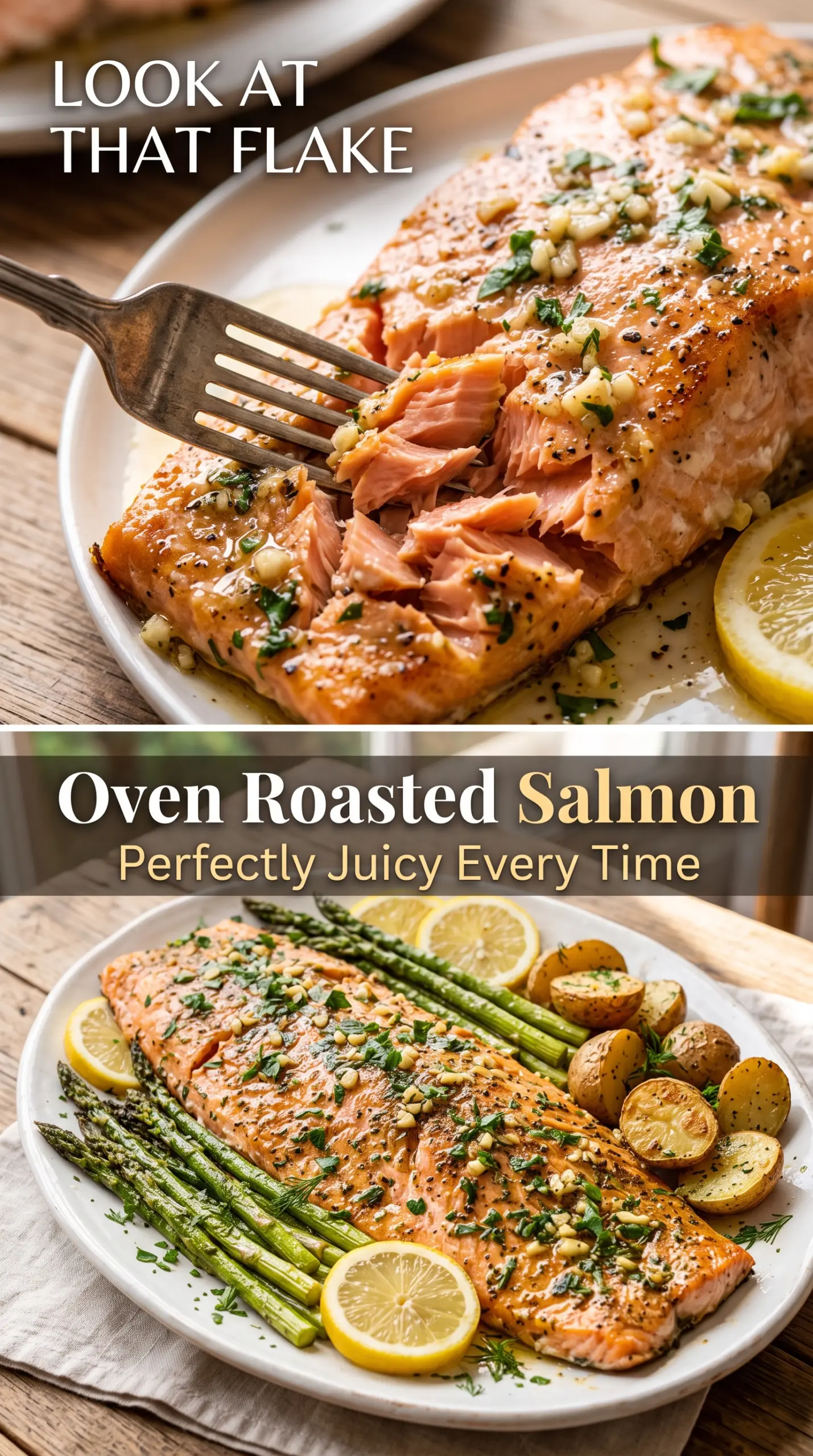
- Salmon fillet — Use a fillet with even thickness if you can. Thin tail ends cook much faster than the center, so a piece that stays fairly uniform gives you fewer overdone edges. Skin-on works well because it protects the bottom and lifts cleanly from the parchment.
- Butter and olive oil — Butter gives you richness and helps the top brown a little, while olive oil keeps the butter from feeling heavy. If you need a dairy-free version, swap the butter for more olive oil and a spoonful of mayonnaise for cling; the result will be a little less lush but still flavorful.
- Garlic, lemon juice, and lemon zest — Fresh garlic brings sharp, savory depth, and the zest matters just as much as the juice because it carries the lemon aroma without extra liquid. Bottled lemon juice works in a pinch, but the flavor is flatter. If you want the brightest result, zest the lemon before you cut it.
- Italian seasoning and paprika — Italian seasoning adds dried herbs that stand up to the oven heat, and paprika gives the surface a warm color without making it spicy. Smoked paprika works if you want a deeper, woodsy note, but keep the amount the same so it doesn’t take over the fish.
- Fresh parsley and dill — These go on at the end, not before roasting. Parsley keeps the dish tasting fresh, and dill is especially good with salmon if you want a more classic pairing. Dried herbs won’t give you the same lift here, so save the fresh garnish if you can.
The 15 Minutes That Matter Most
Coat the Fish Without Drowning It
Whisk the butter, oil, garlic, lemon, and seasonings together until the paprika disappears into the fat. Brush it over the salmon in a thin, even layer so every bite gets flavor without pooling on top. If the fillet is very thick, drag some of the mixture down the sides too. The goal is a glossy coating, not a sauce sitting in puddles around the fish.
Roast Until the Center Is Just Set
Slide the pan into the hot oven and start checking at the 12-minute mark. The fish is done when the thickest part flakes with gentle pressure and the center still looks slightly translucent but not raw. If you cook until the whole fillet looks completely opaque in the oven, it will dry out by the time it reaches the table. For a deeper finish, broil for 1 to 2 minutes at the end, but keep the rack high and watch closely because salmon goes from bronzed to burnt fast.
Let the Residual Heat Finish the Job
Give the salmon a minute or two after it comes out of the oven before moving it. That short rest lets the juices settle and keeps the fillet from breaking apart the second you touch it with a spatula. If you want neat portions, use a thin fish spatula and lift under the widest part first. Finish with parsley, dill, and the roasted lemon slices from the pan.
How to Change This Salmon Without Losing the Plot
Dairy-Free Salmon With the Same Glossy Finish
Swap the butter for an extra tablespoon of olive oil. You lose a little richness and browning power, but the fish still roasts cleanly and the lemon-garlic mixture stays bright. If you want more body, whisk in a teaspoon of Dijon mustard to help the coating cling.
Gluten-Free by Default, With One Thing to Watch
This recipe is naturally gluten-free as written, which is one reason it works for a wide range of dinners. Just check your Italian seasoning blend, since some mixes sneak in fillers or anti-caking agents. The fish itself doesn’t need any flour or breadcrumbs to cook well.
Using Salmon Portions Instead of a Whole Fillet
Individual portions cook faster, so start checking around 9 to 10 minutes. They also brown a little more around the edges because there is more exposed surface area. Keep the coating light or the seasonings can slide off when you transfer them from the tray.
How to Store Leftovers Without Drying Them Out
- Refrigerator: Store in an airtight container for up to 3 days. The texture stays good, though it will be a little firmer after chilling.
- Freezer: It freezes, but the texture softens after thawing, so I only do it when I know the leftovers will be flaked into pasta, grain bowls, or salad later. Wrap tightly and freeze for up to 2 months.
- Reheating: Warm gently in a 275°F oven, covered loosely with foil, until just heated through. High heat dries salmon out fast, and the biggest mistake is reheating it until it feels hot in the center instead of stopping while it is still tender.
Answers to the Questions Worth Asking
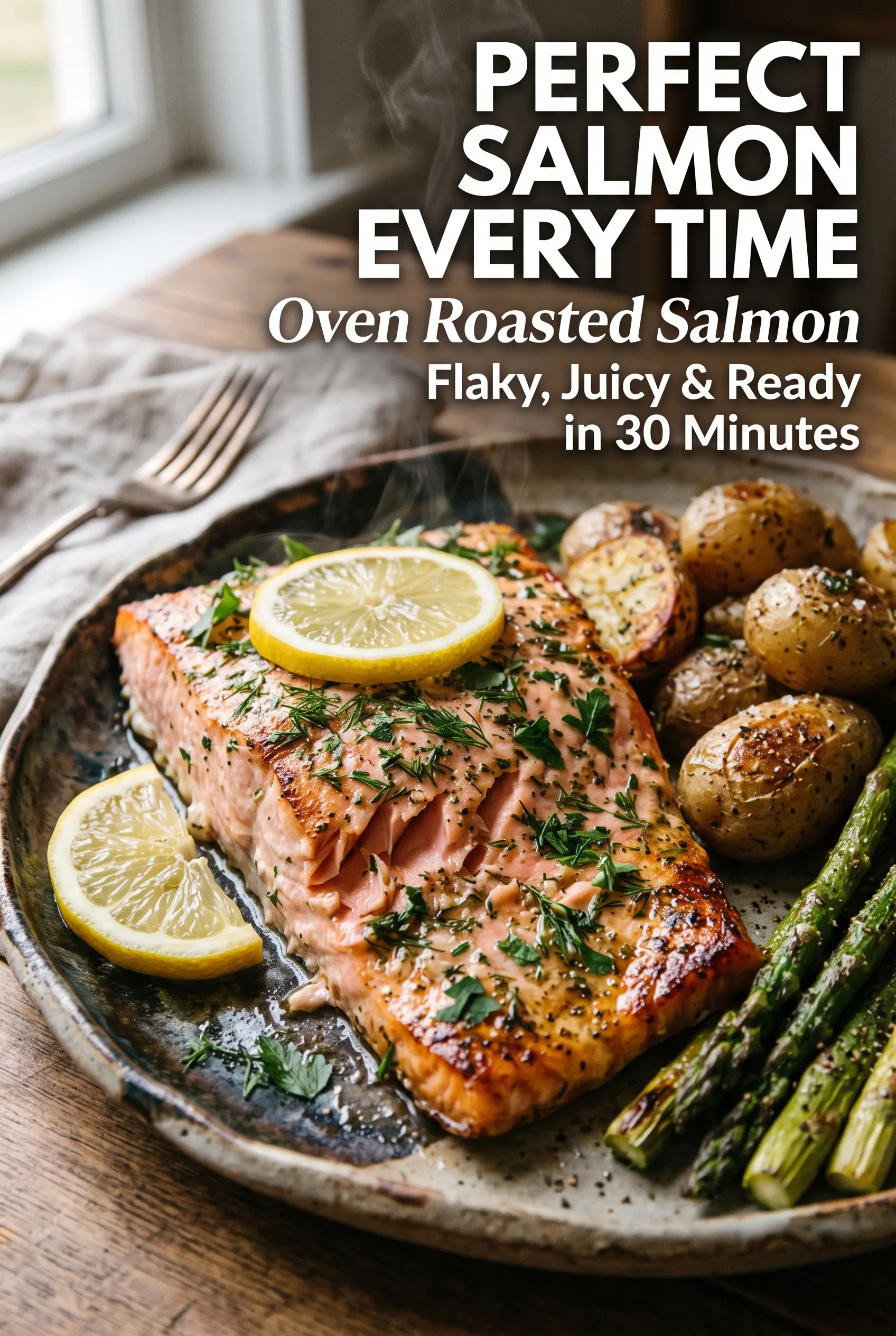
Oven Roasted Salmon
Ingredients
Equipment
Method
- Preheat the oven to 400°F (205°C). Set a rack in the middle position so the salmon roasts evenly.
- Line a baking sheet or baking dish with parchment paper. This prevents sticking and helps with easy cleanup.
- Pat the salmon dry with paper towels. Dry surface helps the seasoning and butter mixture cling better.
- Whisk together the olive oil, melted butter, garlic, lemon juice, lemon zest, Italian seasoning, paprika, salt, and pepper. Mix until the garlic and spices are evenly distributed.
- Brush the mixture evenly over the salmon. Make sure the top is fully coated, especially near the edges.
- Arrange lemon slices over the top. Place them in a single layer for bright flavor as they roast.
- Roast for 12–16 minutes, depending on the thickness of the fillet. The salmon is ready when it flakes easily and looks opaque through the center.
- Broil for 1–2 minutes for a lightly golden finish if desired. Watch closely so the top doesn’t darken too much.
- Garnish with chopped parsley and fresh dill. Serve immediately while the salmon is hot and flaky.
