
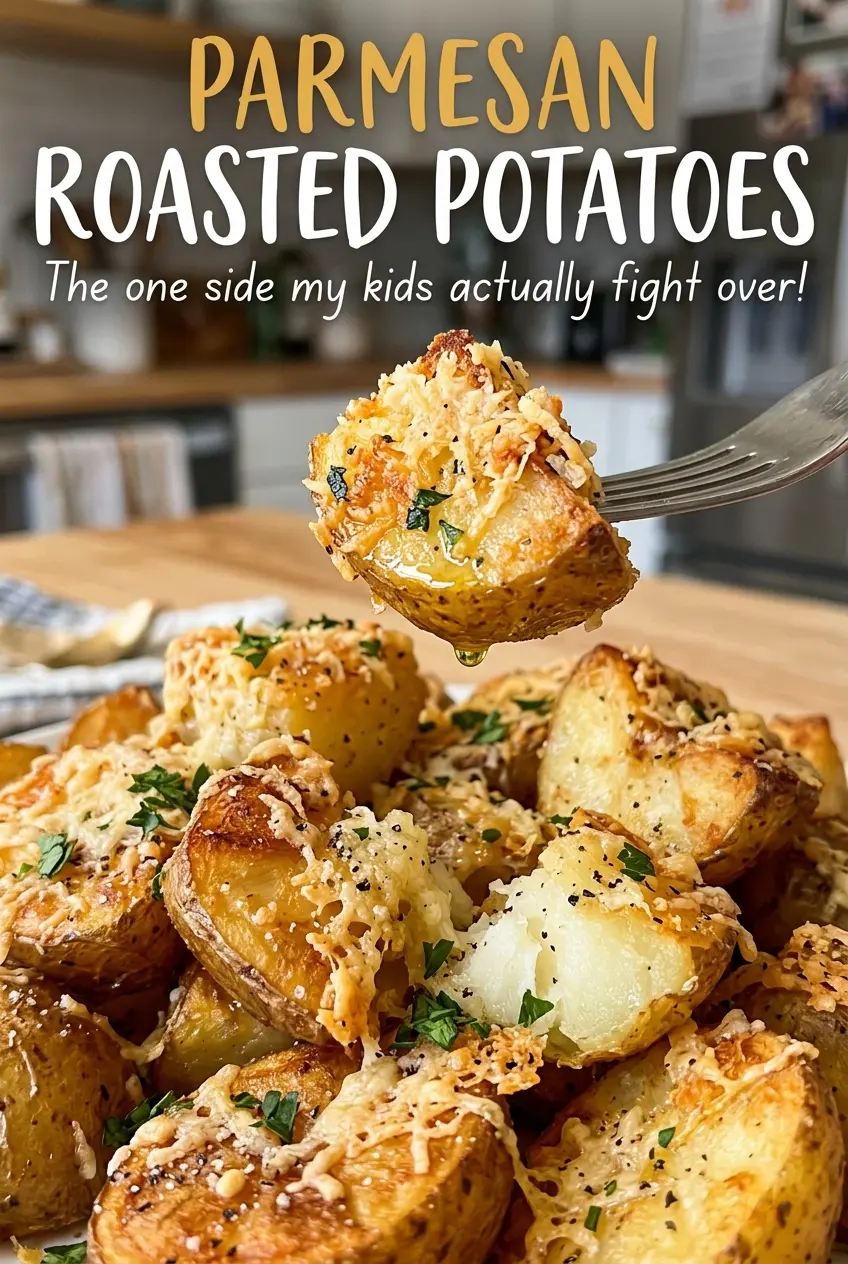
The first thing you notice is the Parmesan turning golden where it touches the hot pan, while the potato sides stay pale until you turn them. Give the pieces room and that contrast becomes the point: browned edges outside, tender centers inside. These Parmesan roasted potatoes use Yukon Golds, which keep a creamy bite beneath the crisp, savory coating.
I toss everything together before the potatoes go onto the baking sheet, so the cheese and garlic powder cling to the oiled surfaces instead of collecting in a pile underneath. Cutting the potatoes into even 1-inch chunks helps them finish at the same time, and turning them once gives another side a chance to brown. After a short rest on the pan, they’re ready with crisp edges and a soft, fork-tender middle.
Kitchen Note
Let the potatoes sit on the baking sheet for the full 5 minutes after roasting. The cheese coating firms as it cools slightly, so the browned bits are less likely to stick when you lift the potatoes to serve.
Save these Parmesan roasted potatoes for a crisp-edged side with tender centers and a golden coating of Parmesan and garlic.
Why a Crowded Pan Keeps Parmesan Potatoes Pale
Roasting depends on the potato surfaces meeting hot, dry air. When the pieces are packed together, the moisture they release has nowhere to go; instead of browning, the potatoes soften in the damp space between them. The Parmesan can turn soft and cling in clumps rather than forming those browned patches on the potato.
Use the rimmed 18×13-inch baking sheet and spread the chunks in one layer, with a little space between them. If they’re touching here and there, that’s fine; a tightly packed layer is the problem. Parchment keeps the cheese from bonding to the pan, but it doesn’t replace the need for space. Turning the potatoes once halfway through helps expose another side to the hot surface and air.
Watch the color as they roast rather than expecting every piece to brown identically. Yukon Golds have different shapes and flat sides, so a few pieces will pick up more color than others. That’s normal. The useful finish cue is browned surfaces plus a fork that slides into the center without resistance.
Why Yukon Golds and Finely Grated Parmesan Suit This Pan
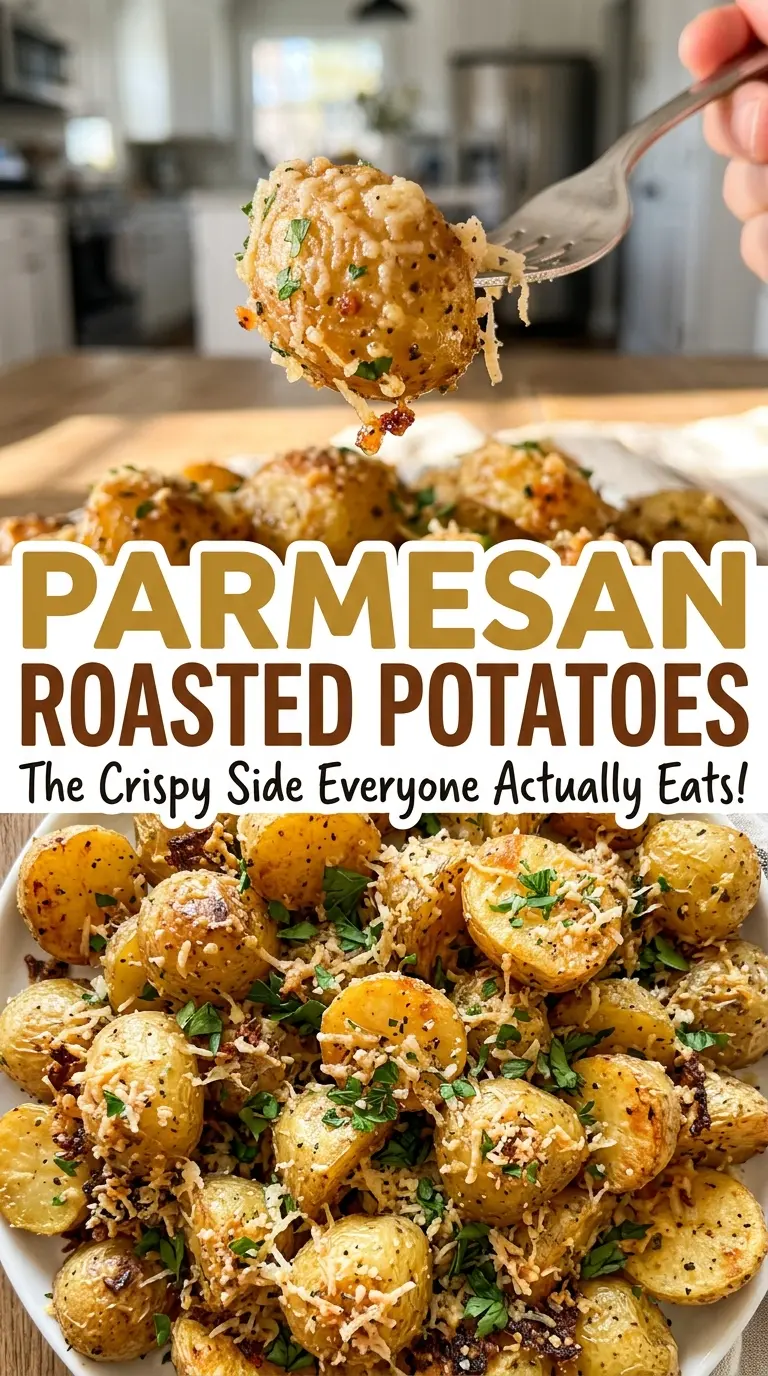
- Yukon Gold potatoes — Their creamy, relatively firm flesh stays intact as the chunks roast, while the cut sides develop color. Scrub them well and leave the skin on for a little more texture. Red potatoes can stand in, cut to the same size; they’ll have a firmer, waxier bite.
- Parmesan — Finely grated cheese spreads across the oiled potato surfaces and makes a thin, savory crust. A block grated finely at home melts and clings especially well, but finely grated packaged Parmesan is convenient and works here. For a dairy-free pan, leave it out; the potatoes will still roast, though they’ll lose the cheesy crust and some savory depth.
- Olive oil — The oil helps the seasonings adhere and encourages the cut surfaces to brown. A regular everyday olive oil is enough; there’s no need to use a premium finishing oil because it goes into the oven with the potatoes.
- Garlic powder — Powder distributes more evenly over the chunks than fresh chopped garlic, which can scorch during a long roast. Keep it well mixed with the oil and cheese so one area doesn’t get a heavy clump.
- Kosher salt and black pepper — They season the potato itself, not just the Parmesan coating. Finely grated cheese is already salty, so measure the salt rather than adding extra by eye.
From Evenly Coated Chunks to Golden Edges
Prepare the hot, parchment-lined pan
Heat the oven to 425°F and line a rimmed 18×13-inch baking sheet with parchment paper. Get the pan ready before tossing the potatoes so the coated chunks can go straight onto it. Cut the scrubbed Yukon Golds into even 1-inch pieces; uneven chunks won’t soften at the same pace. Keep the rimmed sheet level as you arrange them so the oil stays with the potatoes.
Coat each piece before spreading them out
Toss the chunks with the olive oil, finely grated Parmesan, garlic powder, kosher salt, and black pepper until the surfaces look evenly coated. If you see dry patches or a pile of cheese at the bottom of the bowl, keep tossing so the coating is distributed. Spread the potatoes in a single layer on the prepared baking sheet. Don’t stack them to fit; crowded pieces are more likely to soften than brown.
Roast, turn once, and check the center
Roast for 35 to 40 minutes, turning the potatoes once halfway through. The browned sides should look golden, and a fork should pierce the center of a chunk easily. If a few pieces are paler, judge doneness by tenderness as well as color, since potato shapes and oven browning can vary. Keep the pieces in a single layer after turning so their surfaces continue to roast.
Let the coating settle before serving
Take the pan from the oven and let the potatoes rest on it for 5 minutes. The cheese will firm slightly as the potatoes cool, making the browned coating easier to lift from the parchment. Use a thin spatula to loosen any spots that are still attached. Serve them while the edges are crisp and the centers are hot.
Simple Changes for Different Tables and Batch Sizes
A dairy-free, cheeseless version
Leave out the Parmesan and toss the potatoes with the olive oil and seasonings before roasting. They’ll still brown at the cut edges, but won’t have the crisp cheese coating or the same savory finish. Keep the pieces spread out so they roast rather than steam.
Use red potatoes for a firmer bite
Swap in scrubbed red potatoes and cut them into the same 1-inch chunks. Their flesh is waxier, so the centers will feel firmer than Yukon Gold centers while still taking on the Parmesan coating. Roast at the same temperature and use fork tenderness to judge when they’re ready.
Make half a batch
For three servings, use 1 pound of potatoes, 1 1/2 tablespoons olive oil, 1/4 cup finely grated Parmesan, 1/2 teaspoon garlic powder, 1/4 teaspoon kosher salt, and 1/8 teaspoon black pepper. Keep the same oven temperature and spread the potatoes across the same lined baking sheet. Start checking near the lower end of the roasting window; fewer pieces may brown sooner, but tenderness is the deciding cue.
Storage and Reheating
- Refrigerator: Store leftovers in a covered container for 3 to 4 days. The potatoes will soften in the refrigerator, and the Parmesan coating won’t stay crisp.
- Freezer: Freezing isn’t the best choice for texture; thawed potatoes tend to turn soft and mealy, and the cheese coating can lose its crispness.
- Reheating: Spread leftovers on a baking sheet and warm them in a 400°F oven until hot, turning once. Avoid the microwave if you want the edges to regain some crispness; it heats the potatoes but leaves them soft.
Questions That Come Up While Roasting Parmesan Potatoes
Parmesan Roasted Potatoes
Ingredients
Equipment
Method
- Preheat the oven to 425°F.
- Line a rimmed 18x13-inch baking sheet with parchment paper.
- Toss the potatoes with the olive oil, Parmesan, garlic powder, salt, and pepper until evenly coated.
- Spread the potatoes in a single layer on the baking sheet.
- Roast for 35 to 40 minutes, turning the potatoes once halfway through, until browned and tender when pierced with a fork.
- Let the potatoes rest on the baking sheet for 5 minutes before serving.
