
Salmon sushi bake lands in the exact spot where comfort food and sushi cravings overlap. You get seasoned rice on the bottom, a creamy salmon layer on top, and just enough heat and saltiness to keep every bite interesting. The best versions don’t taste like a shortcut; they taste like someone paid attention to the balance, and that’s what makes this one worth putting on repeat.
The trick is keeping the rice lightly seasoned instead of aggressively vinegary, then mixing the salmon filling until it turns smooth and spoonable without getting loose. Cream cheese gives the topping body, mayonnaise keeps it rich, and a little sriracha plus soy sauce brings the same punch you’d expect from a spicy roll. Furikake and nori finish the dish with that unmistakable sushi-bar flavor, while avocado and cucumber keep the whole pan from feeling heavy.
Below you’ll find the small details that matter, including how to keep the rice from drying out and the topping from turning greasy in the oven. Once you’ve made it once, the method is easy to scale up for a crowd or adjust for the heat level you like.
The rice stayed fluffy under the salmon layer and the furikake on top gave it that real sushi flavor. I baked it just until hot, and the spicy mayo drizzle was the part everyone went back for.
Love the creamy salmon, seasoned rice, and spicy mayo finish? Save this salmon sushi bake for an easy seafood dinner that still feels fun.
The Rice Layer Needs Less Moisture Than You Think
The most common mistake with sushi bake is treating the rice like a casserole base instead of the star texture in the dish. If the rice is too wet, it turns dense under the salmon and loses the sticky, distinct grains that make each bite work. Seasoned sushi rice should be glossy and cohesive, not soupy, before it ever hits the pan.
That’s why the vinegar, sugar, and salt go into warm rice, not raw grains. Warm rice absorbs the seasoning evenly, and the sugar dissolves without leaving sharp pockets. If your rice has already cooled and feels tight, loosen it with a damp rice paddle or spoon before spreading it in the dish.
What Each Ingredient Is Doing in This Dish
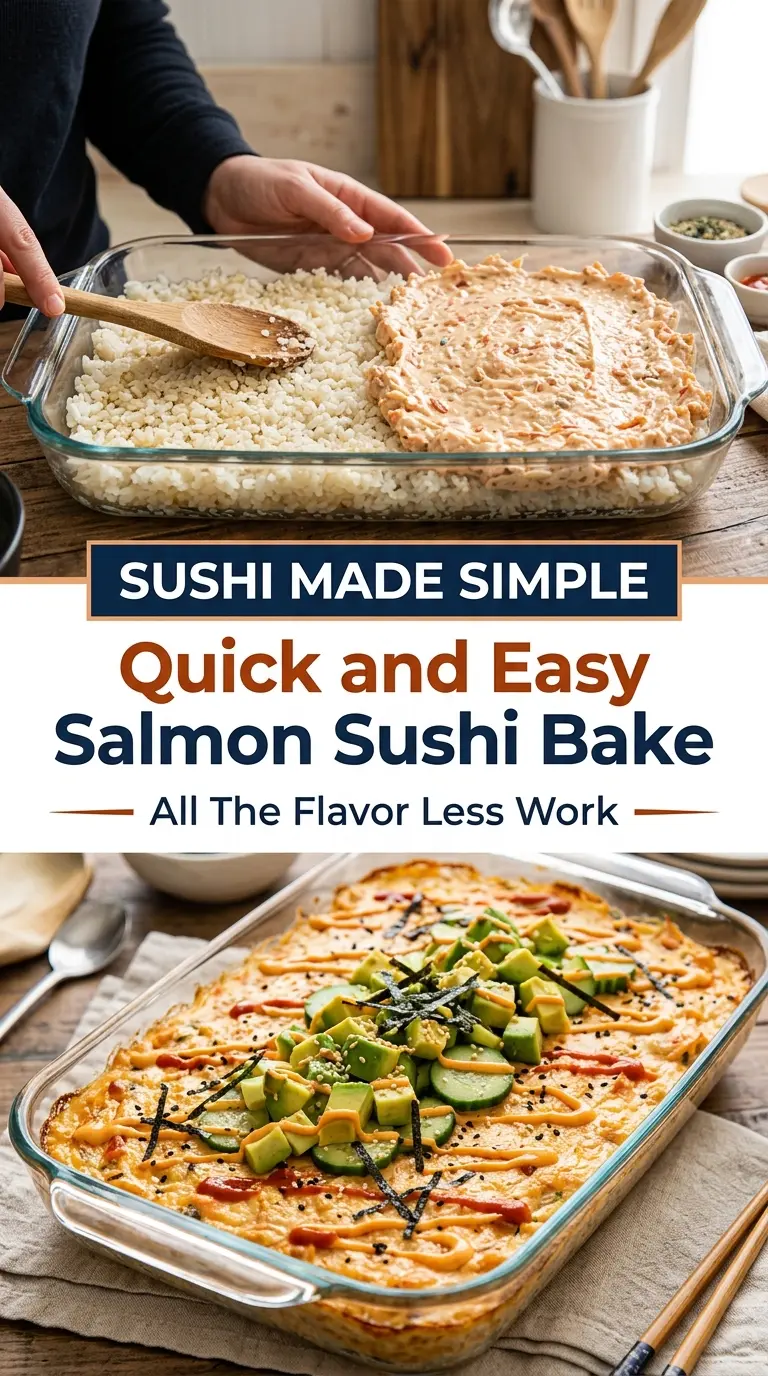
- Sushi rice — This is the backbone of the bake. Short-grain rice clings together and gives you that sushi texture; long-grain rice stays too separate and won’t hold the topping the same way.
- Rice vinegar, sugar, and salt — This seasoning turns plain rice into something that tastes like sushi without needing a full roll. Don’t skip the sugar; it softens the vinegar sharpness and helps the rice taste balanced.
- Cooked salmon — Flaked salmon gives the bake structure and a clean seafood flavor. Leftover roasted salmon works well here, and even salmon from a previous dinner can be folded in if it’s not heavily seasoned.
- Cream cheese and mayonnaise — These create the creamy layer that stays spreadable and bakes into a lush topping. The cream cheese matters for body; mayo alone can turn oily in the oven.
- Sriracha and soy sauce — Sriracha brings heat, soy sauce brings salt and depth. If you want less spice, cut the sriracha in half rather than dropping it completely, because the heat keeps the dish from tasting flat.
- Furikake, avocado, cucumber, and nori — These finish the dish with crunch, freshness, and that unmistakable sushi flavor. Furikake is the one ingredient I wouldn’t replace if you can help it; it pulls the whole pan back toward sushi instead of just creamy salmon rice.
Building the Bake So the Topping Stays Creamy
Season the Rice While It’s Still Warm
Mix the vinegar, sugar, and salt into the cooked rice while it’s warm enough to absorb the seasoning evenly. The grains should look shiny and slightly sticky when you spread them into the baking dish, not wet or clumpy. Pressing the rice down too firmly packs it into a dense layer, so use a light hand and level it just enough to cover the pan.
Mix the Salmon Until It’s Spreadable
Stir the salmon, softened cream cheese, mayonnaise, sriracha, soy sauce, and green onions until the mixture looks smooth and cohesive. If the cream cheese is cold, you’ll end up with lumps that don’t melt out well, so let it soften first. The filling should hold together on a spoon but still spread easily over the rice.
Bake Just Until Hot Through
Slide the pan into the oven and bake until the top is heated through and the edges look slightly puffed, about 15 to 18 minutes. You’re not trying to brown the salmon layer; overbaking dries out the fish and can make the mayonnaise separate. Pull it when the center is hot and the top still looks creamy.
Finish with the Fresh Toppings Last
Drizzle on extra sriracha mayo after the bake comes out, then add avocado, cucumber, and nori strips. Putting the fresh toppings on after baking keeps the avocado bright and the cucumber crisp. If you add them before the oven, they soften and lose the contrast that makes the dish work.
How to Adapt This for a Smaller Pan, Less Heat, or No Dairy
Make It Milder for Kids or Heat-Sensitive Eaters
Cut the sriracha in half, then add more at the table for the people who want it. That keeps the salmon layer creamy and savory without pushing the whole pan into spicy territory. The soy sauce still gives the filling enough depth, so the dish won’t taste bland.
Dairy-Free Version
Use a dairy-free cream cheese and a mayo made without dairy. The texture will still be creamy, though the filling may set a little less firmly than the original. Let the bake rest for a few minutes after baking so the topping settles before serving.
Use Leftover Rice Without Drying It Out
Leftover sushi rice works, but warm it gently with a damp paper towel or a splash of water before seasoning it. Cold rice spreads poorly and can bake up tough in the oven. Once it loosens, it behaves almost like freshly cooked rice and gives you a better bottom layer.
Storage and Reheating
- Refrigerator: Store leftovers covered for up to 3 days. The rice firms up as it chills, but the flavors stay good.
- Freezer: I don’t recommend freezing this one. The rice turns mealy and the creamy salmon layer can separate after thawing.
- Reheating: Warm individual portions in a 300°F oven or toaster oven until just heated through. Microwaving works in a pinch, but do it in short bursts so the salmon doesn’t dry out and the rice doesn’t turn rubbery.
Answers to the Questions Worth Asking
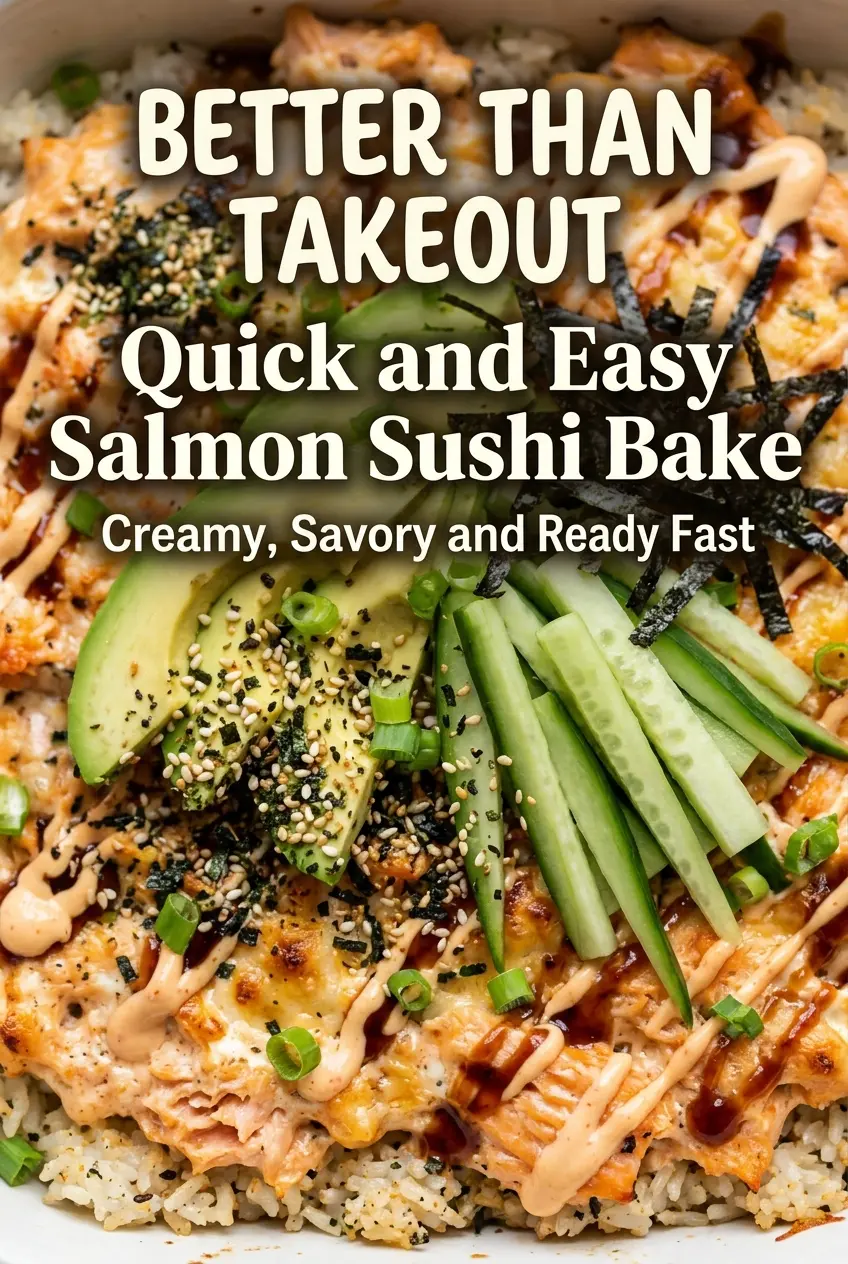
Quick and Easy Salmon Sushi Bake
Ingredients
Equipment
Method
- Preheat oven to 375°F (190°C).
- Mix rice vinegar, sugar, and salt into the cooked sushi rice.
- Spread rice evenly into a greased 8×8-inch baking dish.
- In a bowl, combine salmon, cream cheese, mayonnaise, sriracha, soy sauce, and green onions.
- Spread salmon mixture evenly over the rice layer.
- Sprinkle furikake over the top.
- Bake for 15–18 minutes until heated through, with the edges bubbling slightly.
- Remove from oven and drizzle with extra sriracha mayo.
- Top with avocado, cucumber, and nori strips.
- Serve warm with additional nori sheets if desired.
