
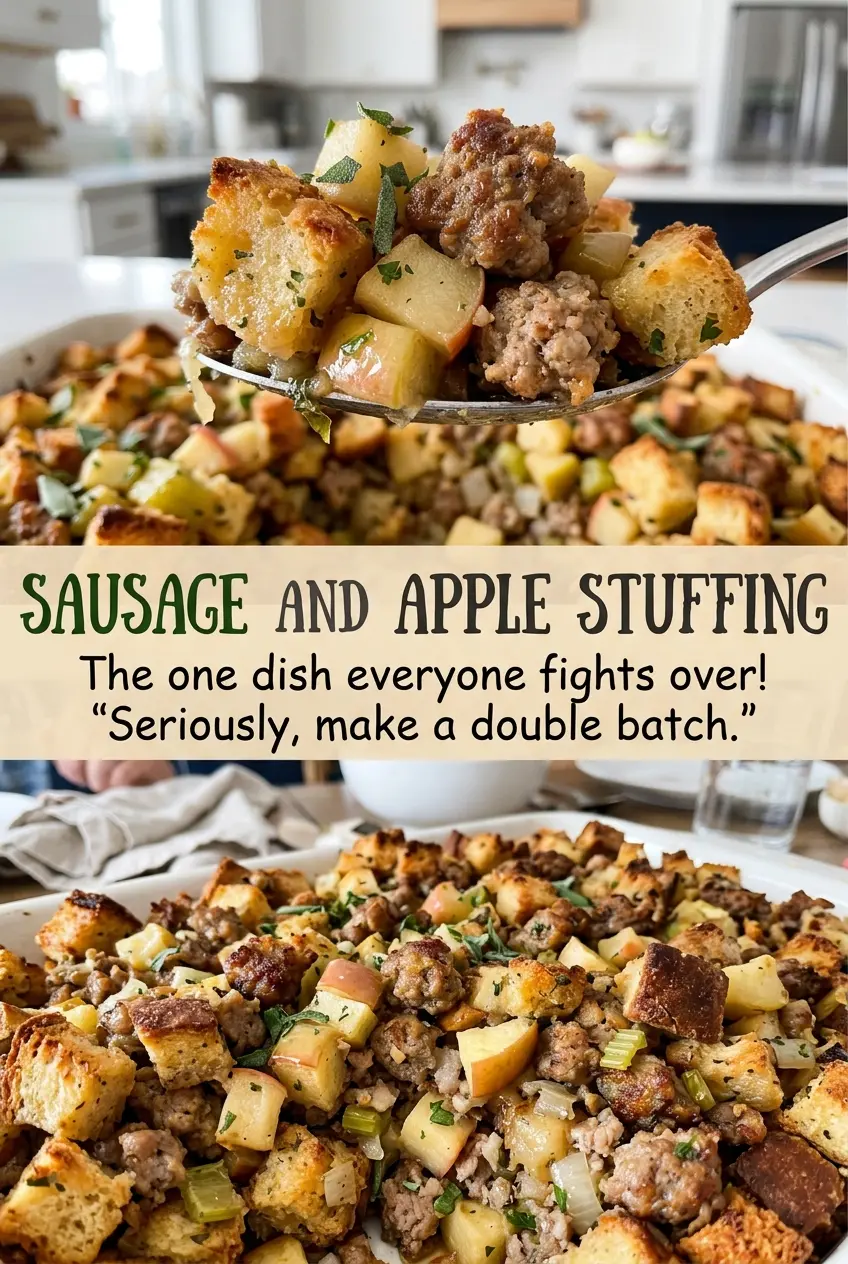
The sausage starts to brown in the skillet, and the onion, celery, and apples soften right after it in the same pan. That’s where the savory-sweet smell begins. I make this sausage and apple stuffing with dried bread cubes because they soak up the broth without turning to paste, while the pork gives each scoop a hearty, savory bite.
The broth and eggs bring everything together, but the texture depends on getting that liquid across the bread evenly. Once it’s baked, the covered first stretch keeps the middle tender; uncovering the dish lets the top turn golden. You get soft, well-seasoned stuffing underneath and a crisp top that’s worth reaching for first.
Kitchen Note
Peel the apples before dicing them. Without the skins, those small pieces soften into the stuffing instead of staying chewy against the bread.
Save this sausage and apple stuffing for a holiday table or Sunday dinner, with savory pork, tender apples, and a golden bread-cube top.
Why the Bread Needs an Even Coat, Not a Puddle of Broth
Dried bread cubes absorb liquid at different rates depending on their size and how dry they are. If broth collects at the bottom of the bowl while the cubes on top still feel dry, the finished dish can turn out uneven: soggy in spots, crumbly in others. The goal isn’t to drown the bread. It’s to coat the cubes all over so they soften together as they bake.
The eggs help hold that softened bread in a sliceable scoop, while the broth brings moisture through the center. Whisking them together first distributes the egg through the liquid, and tossing the mixture after you pour gives the cubes a chance to pick it up. Take a moment to reach the bread at the bottom of the bowl, too. When the mixture looks evenly moistened instead of wet in one corner, it’s ready for the baking dish.
What the Sausage, Apples, and Dried Bread Each Bring
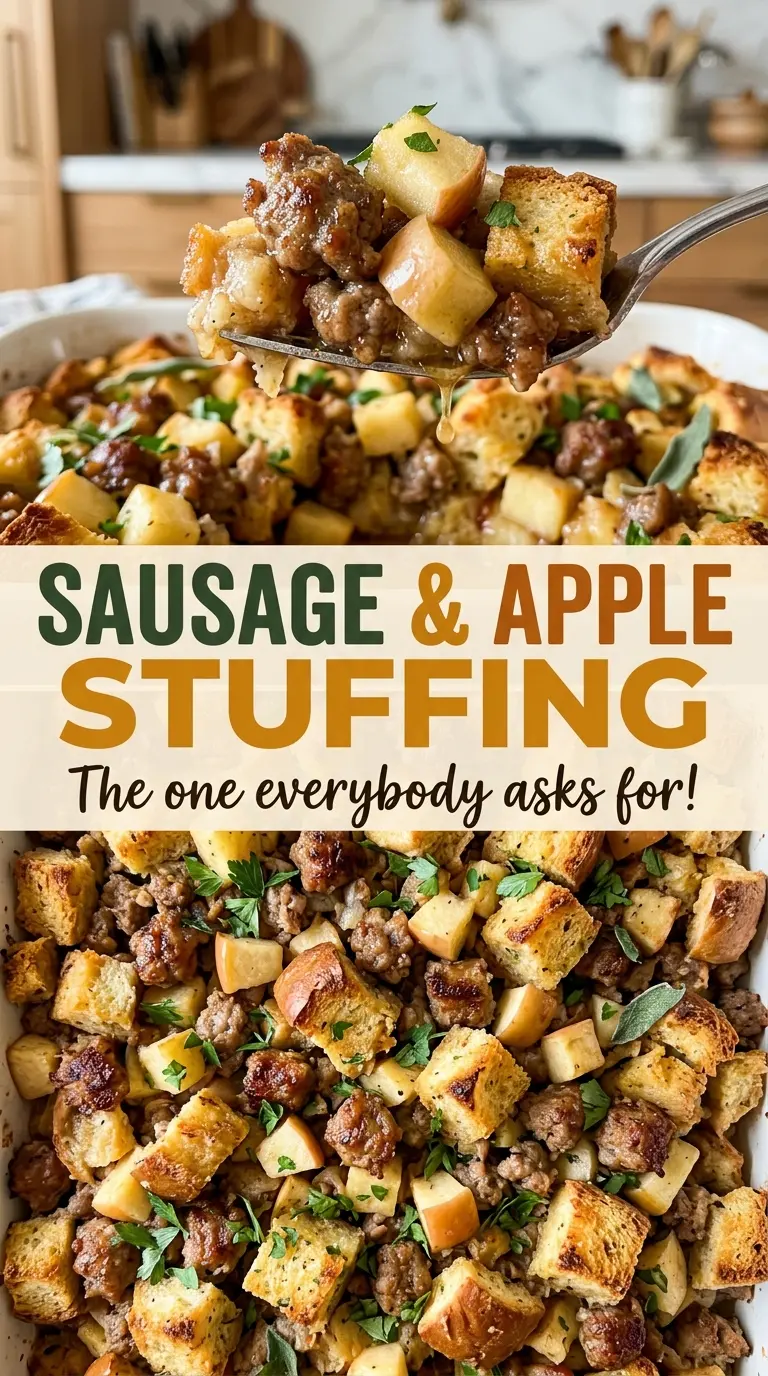
- Dried bread cubes — Their dry, sturdy texture gives the broth somewhere to go and helps the baked stuffing hold its shape. Plain packaged cubes are a practical choice here; soft fresh bread has more moisture and won’t behave the same way.
- Bulk pork sausage — Bulk sausage breaks into the small pieces that distribute through the dish, and its savory seasoning gives the bread a flavorful base. A basic package works well; sausage already formed into links isn’t as convenient for this method.
- Apples — Peeled, cored, and diced apples add a gentle sweetness and soften alongside the onion and celery. Use apples that are firm enough to dice neatly; there’s no need to seek out an expensive specialty variety.
- Yellow onion and celery — These soften in the butter and make a mellow vegetable base. Dice them evenly so they become tender in the same skillet time rather than leaving larger, firm pieces.
- Unsalted butter — Butter carries the herbs as the vegetables cook and rounds out the pork’s savory flavor. Unsalted butter is useful because the sausage and broth already contribute seasoning.
- Dried sage and thyme — These give the stuffing its familiar herbal note without adding moisture. Dried herbs are well suited to the skillet; stir them in with the vegetables so their flavor spreads through the mixture.
- Low-sodium chicken broth and eggs — The broth moistens the cubes, and the eggs help the baked mixture hold together. Whisk the eggs thoroughly with the broth before pouring so you don’t end up with concentrated patches of egg.
From Browning the Pork to a Golden, Set Center
Brown the sausage in a wide skillet
Heat the oven to 350°F and grease a 9×13-inch baking dish before you start assembling. Cook the bulk pork sausage in a 12-inch skillet over medium heat for 8 to 10 minutes, breaking it into small pieces as it browns. Check that the pork reaches 160°F, then transfer it to a large bowl. Small crumbles distribute more evenly through the bread than a few large chunks.
Soften the vegetables and apples in the same pan
Melt the butter in the skillet, then add the diced onion, celery, and peeled apples with the sage, thyme, salt, and pepper. Cook for 6 to 8 minutes, stirring occasionally, until the vegetables are tender. The mixture should smell fragrant and look softened, not browned hard around the edges. Keep the heat at medium so the butter and vegetables don’t scorch while the apples are still firm.
Coat the bread cubes evenly
Add the vegetable mixture and dried bread cubes to the sausage in the large bowl, then toss to combine. Whisk the chicken broth and eggs together in a medium bowl before pouring them over the bread mixture. Toss again until the cubes are evenly moistened, turning the mixture up from the bottom rather than only stirring across the surface. If you spot dry cubes, keep tossing until they’re coated instead of leaving them tucked underneath.
Bake covered first, then uncover to brown
Transfer the mixture to the prepared dish and cover it with foil. Bake for 30 minutes, then uncover and bake for 15 to 20 minutes more, until the top is golden and the center reaches 165°F. The foil protects the middle while it heats; the uncovered finish gives the top time to color. Let the stuffing rest for 10 minutes before serving so the portions settle.
Three Small Changes That Make a Noticeable Difference
A lower-sodium take
Leave out the added kosher salt and keep the low-sodium chicken broth. The sausage still brings savory seasoning, so the result won’t taste unseasoned, though it won’t be salt-free. This is a simple adjustment if you’re watching sodium without changing the texture of the stuffing.
A more savory, apple-free pan
Leave out the apples if you prefer stuffing without a sweet note. The pork, celery, onion, and herbs still make a savory casserole, but the mixture will have less fruit sweetness and a slightly less tender bite. Keep the rest of the ingredients and baking method the same.
Sage-forward, without thyme
Skip the dried thyme and use the dried sage as listed for a more direct sage flavor. This keeps the dish’s familiar savory character while simplifying the herb mix. It’s a good adjustment if thyme isn’t your favorite, not a reason to change the bread or broth.
Storage and Reheating
- Refrigerator: Store leftovers covered for 3 to 4 days. The bread softens as it sits, so the top won’t stay crisp.
- Freezer: Freeze cooled portions in an airtight container for up to 2 to 3 months. Thaw overnight in the refrigerator for more even reheating.
- Reheating: Reheat covered in a 350°F oven until hot throughout. Keep the foil on while warming; reheating uncovered can dry the edges before the center is warm.
Questions That Come Up Before This Stuffing Goes in the Oven
Sausage and Apple Stuffing
Ingredients
Equipment
Method
- Heat the oven to 350°F.
- Grease a 9x13-inch baking dish.
- Cook the sausage in a 12-inch skillet over medium heat for 8 to 10 minutes, breaking it into small pieces, until browned and cooked to 160°F; transfer it to a large bowl.
- Melt the butter in the skillet, then add the onion, celery, apples, sage, thyme, salt, and pepper and cook for 6 to 8 minutes, stirring occasionally, until the vegetables are tender.
- Add the vegetable mixture and bread cubes to the sausage and toss to combine.
- Whisk the broth and eggs in a medium bowl, pour over the bread mixture, and toss until evenly moistened.
- Transfer the mixture to the prepared baking dish and cover with foil.
- Bake for 30 minutes.
- Uncover and bake for 15 to 20 minutes more, until golden on top and 165°F in the center.
- Let the stuffing rest for 10 minutes before serving.
