
Hashbrown casserole gets a lot better when the filling stays creamy instead of turning dry and dense. This version bakes up with crispy edges, a soft middle, and enough sausage and cheddar in every bite that you don’t need much else on the plate. The cream cheese and sour cream keep the eggs tender, while the thawed hash browns give the whole dish the right structure without becoming mushy.
What makes this one work is the layering. The sausage goes in fully cooked so it can season the casserole without releasing extra grease into the eggs. The cream cheese gets whisked with the egg mixture until smooth, which keeps little pockets of tangy richness from getting lost in the bake. A little smoked paprika and garlic round out the flavor so it tastes savory and complete, not just heavy.
If you’ve made breakfast casseroles that came out watery or rubbery, the details below will help. I’ve included the key texture cues, the swaps that hold up, and the one resting step that keeps clean slices from falling apart.
The cream cheese melted into the eggs so the casserole sliced cleanly, and the hash browns on the bottom stayed tender instead of soggy. My husband went back for seconds before I even sat down.
Save this sausage, egg, and cream cheese hashbrown casserole for a brunch bake with a creamy center and crisp golden edges.
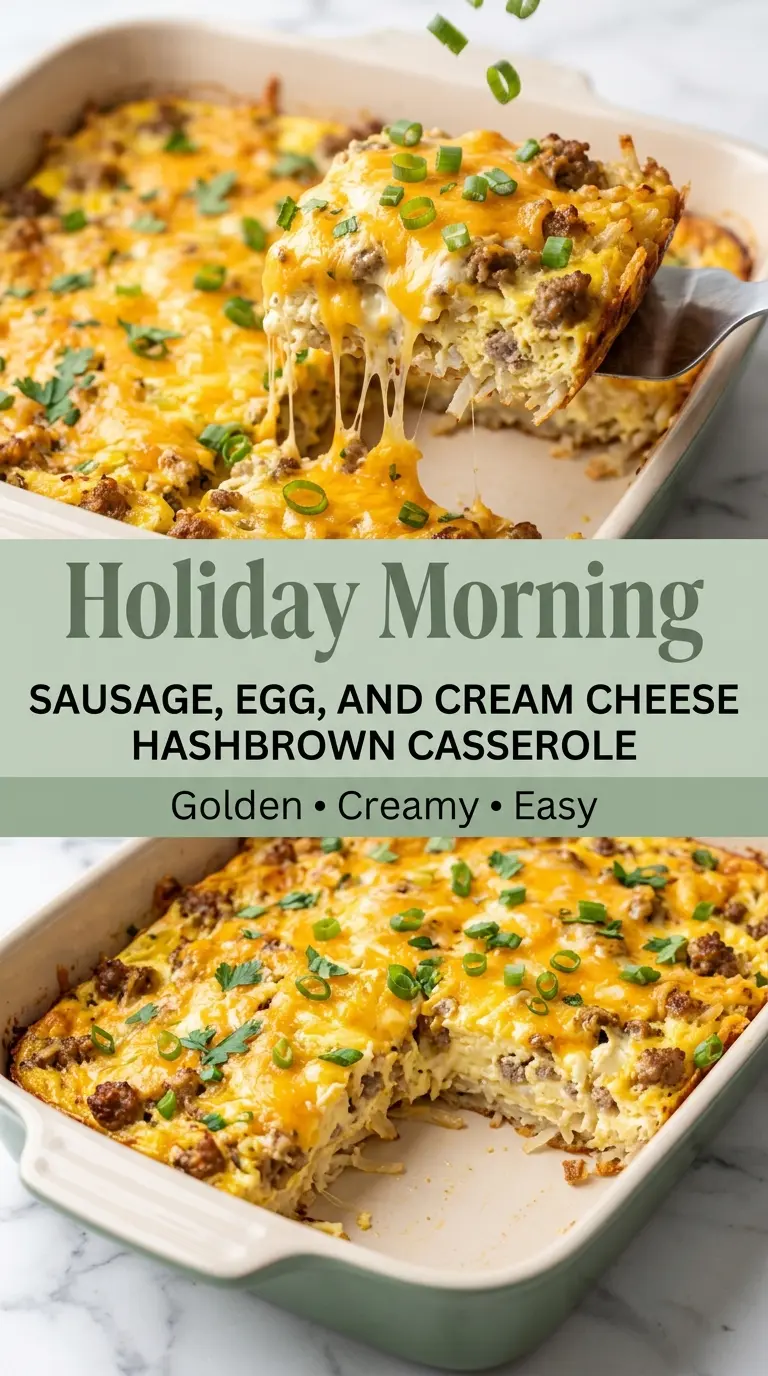
The Part That Keeps This Casserole Creamy Instead of Dry
Breakfast casseroles often go wrong because the eggs overcook before the center sets, which leaves the top rubbery and the middle dry. The fix here is the cream cheese and sour cream in the egg base. They add body and moisture, so the casserole finishes rich and sliceable even after a full bake.
Thawed hash browns matter too. Frozen potatoes can dump water into the dish and turn the bottom soft if they go in icy. Once they’re thawed, they bake into a tender layer that still holds the sausage and cheese instead of collapsing under them.
- Breakfast sausage — Use a good-quality sausage with enough seasoning to carry the dish. If yours is very lean, the casserole can taste flat, so add an extra pinch of salt and smoked paprika.
- Hash browns — Thawed shredded hash browns give the casserole its structure. If you use them straight from frozen, the texture turns watery and the bake takes longer to set.
- Cream cheese — This is what gives the egg mixture its silky texture. Soften it first, then whisk it thoroughly so you don’t end up with little cream cheese lumps in the finished casserole.
- Sour cream — It adds tang and keeps the eggs tender. Plain Greek yogurt can work in a pinch, but the result will be slightly sharper and less rich.
- Sharp cheddar — Sharp cheese gives the casserole a stronger finish than mild cheddar. You can use pre-shredded cheese, but freshly shredded melts more smoothly.
- Mozzarella — This mellows the cheddar and helps the top melt into a cohesive layer. It’s not there for strong flavor, just for that soft pull when you slice in.
How to Layer It So the Center Bakes Through
Cook the sausage until the pan is dry
Brown the sausage until there’s no pink left and the crumbles are deeply seasoned at the edges. Drain off extra grease, because too much fat will pool around the potatoes and make the casserole feel heavy. Stir in the garlic for just 30 seconds at the end so it smells fragrant without burning.
Whisk the custard until it turns smooth
The eggs, milk, sour cream, cream cheese, and spices need to be whisked into a thick, even mixture. If the cream cheese stays in soft chunks, those spots won’t distribute evenly through the bake. A few seconds of extra whisking here saves you from a lumpy center later.
Assemble without pressing the potatoes down
Spread the hash browns in an even layer, then add the sausage, cheese, and egg mixture. Don’t pack it down hard. The casserole needs a little air between the layers so the heat can move through and set the eggs all the way to the middle.
Bake until the center is just set
Pull the casserole when the top is melted and lightly golden and the middle no longer sloshes when you gently shake the pan. A knife inserted in the center should come out mostly clean, with only a little moist custard clinging to it. Let it rest for 10 minutes before cutting, or it’ll fall apart on the first slice.
How to Adapt This for Different Mornings
Make-ahead breakfast for holidays
Assemble the casserole the night before, cover it tightly, and refrigerate it unbaked. In the morning, let it sit on the counter while the oven preheats so the center isn’t ice-cold going in. It may need a few extra minutes in the oven, but the texture stays the same.
Gluten-free version
This casserole is naturally gluten-free as long as your sausage and seasonings are certified gluten-free. That’s one reason it works so well for feeding a group, because you don’t have to rebuild the recipe to suit different diets.
Dairy-free swap
Use a dairy-free cream cheese, unsweetened dairy-free yogurt, and a good melting dairy-free cheddar. The casserole will still set, but the filling will be a little less rich and a bit firmer than the original.
More heat, less sweetness
If you like a spicier breakfast bake, use hot sausage and add a pinch of cayenne or crushed red pepper. That keeps the casserole savory and bold without changing the texture of the filling.
Storage and Reheating
- Refrigerator: Store leftovers covered for up to 4 days. The potatoes soften a little, but the flavor stays strong.
- Freezer: This freezes well in squares. Wrap portions tightly and freeze for up to 2 months; thaw overnight in the fridge before reheating.
- Reheating: Warm slices in a 325°F oven, covered with foil, until heated through. The microwave works for a quick lunch, but short bursts are better than one long run or the eggs can turn rubbery.
Answers to the Questions Worth Asking

Sausage, Egg, and Cream Cheese Hashbrown Casserole
Ingredients
Equipment
Method
- Preheat the oven to 375°F (190°C) and lightly grease a 9×13-inch baking dish, so the casserole can bake evenly right away.
- Heat a large skillet over medium-high heat and cook the breakfast sausage for 6–8 minutes, breaking it into crumbles, until browned and fully cooked.
- Drain excess grease, then stir in the minced garlic and cook for 30 seconds.
- In a large bowl, whisk together the eggs, whole milk, sour cream, softened cream cheese, onion powder, garlic powder, kosher salt, black pepper, and smoked paprika until smooth and creamy.
- Spread the hash browns evenly into the prepared baking dish, creating an even base layer.
- Top the hash browns with the cooked sausage, half of the green onions, 2 cups of the shredded sharp cheddar cheese, and the mozzarella cheese.
- Pour the egg mixture evenly over everything and gently stir to distribute the creamy base through the layers.
- Sprinkle the remaining ½ cup cheddar cheese over the top for a browned, bubbly finish.
- Bake uncovered for 45–50 minutes at 375°F (190°C), until the eggs are fully set and the cheese is melted, bubbly, and lightly golden.
- Rest the casserole for 10 minutes before slicing so the layers hold together.
- Garnish with chopped parsley and the remaining green onions, then serve warm.
