
Roasted eggplant turns silky in the center and a little sticky at the edges, which is exactly what you want here. The glaze clings instead of sliding off, and every bite gets that deep savory-sweet hit from soy, garlic, ginger, and sesame. It eats like a takeout favorite, but the ingredients stay grounded and familiar.
The trick is roasting the eggplant first until it’s browned and tender enough to absorb the sauce without collapsing into mush. Eggplant carries a lot of water, so a hot oven and enough space on the pan matter more than people think. The glaze also needs just a short simmer — long enough to thicken with the cornstarch, but not so long that the honey and brown sugar start tasting heavy or burnt.
Below, you’ll find the timing that keeps the eggplant from going soggy, plus a few smart swaps if you need this to work with what’s already in your kitchen.
The glaze thickened up beautifully and coated every piece without making the eggplant soggy. I served it over jasmine rice, and my husband kept saying it tasted like a really good restaurant side.
Save this savory glazed eggplant for the nights when you want sticky roasted eggplant with a garlicky sesame soy glaze and almost no cleanup.
The Reason Roasted Eggplant Stays Creamy Instead of Collapsing
Eggplant can go wrong in two opposite ways: undercooked and spongy, or overcooked and watery. The sweet spot is a hot oven, enough oil to help the edges brown, and pieces cut in a size that lets the outside caramelize before the inside turns to paste. If the cubes are crowded on the pan, they steam. If they’re spread out, the surface dries and browns in the right way.
The glaze matters just as much. A thin sauce slips off roasted eggplant and leaves a puddle on the plate, but a quick cornstarch slurry turns it glossy enough to cling without becoming gummy. That’s the difference between a dish that tastes seasoned and one that tastes coated.
What the Soy, Honey, and Sesame Are Really Doing Here
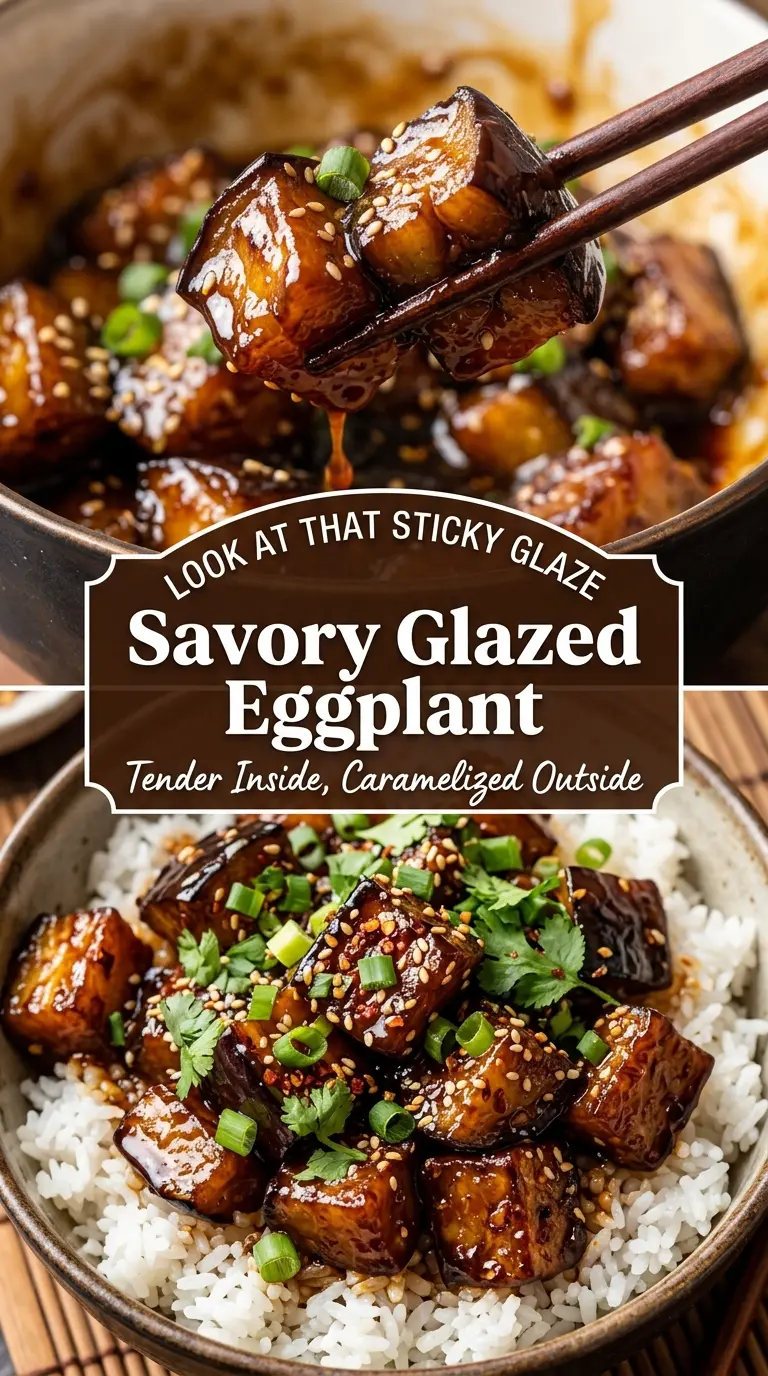
- Eggplant — Medium eggplants hold their shape well and roast into tender cubes with enough surface area for browning. Globe eggplant works best here. If you use smaller varieties, keep the pieces similar in size so they finish together.
- Low-sodium soy sauce — This gives the glaze its savory backbone. Regular soy sauce works, but the dish gets saltier fast, especially once the sauce reduces, so low-sodium leaves you more control.
- Honey and brown sugar — Honey brings shine and a round sweetness, while brown sugar deepens the glaze and gives it a slight molasses note. You need both for the sticky finish, though you can reduce the brown sugar a little if you want the sauce less sweet.
- Rice vinegar — This keeps the glaze from tasting flat. Apple cider vinegar can stand in, but use a touch less because it reads sharper.
- Sesame oil — A small amount goes a long way. It’s not just a cooking oil here; it’s the nutty aroma that makes the glaze taste complete. Don’t swap it for neutral oil unless you’re fine losing that toasted sesame finish.
- Garlic and ginger — Fresh is worth it. Garlic powder and ground ginger won’t give the same bright punch in the sauce. If you’re in a pinch, use them sparingly, but the glaze will taste flatter.
- Cornstarch — This is what makes the sauce cling. Mix it with water first so it disperses evenly; dumping dry cornstarch straight into hot liquid almost always leaves little lumps.
The 20 Minutes That Make the Eggplant Worth Eating
Roasting Until the Edges Brown
Heat the oven to 425°F and spread the eggplant out in a single layer. You’re looking for browned edges and a tender center that gives easily when pierced, not collapsed cubes that look wet. Turn the pieces once halfway through so two sides get color. If the pan looks crowded, use two pans; crowding is the fastest way to lose that roasted texture.
Building the Glaze on the Stove
Whisk the soy sauce, honey, brown sugar, rice vinegar, sesame oil, garlic, and ginger together in a small saucepan and bring it to a gentle simmer. The goal is a glossy sauce with small bubbles around the edge, not a hard boil. Stir in the cornstarch slurry and keep whisking until the glaze turns shiny and thick enough to coat a spoon. If it goes past that point, pull it off the heat right away so it doesn’t turn pasty.
Tossing and Finishing Quickly
Add the roasted eggplant to the warm glaze and fold it gently until every piece is coated. The eggplant should look lacquered, not drowned. Top with green onions, sesame seeds, and cilantro if you like a fresh finish, then serve it right away over rice, quinoa, or on its own as a side. If you let it sit too long in the bowl, the glaze sinks and the edges soften.
How to Adapt This for a Lighter Side Dish or a Full Meal
Make It Gluten-Free
Use tamari or a certified gluten-free soy sauce in place of standard soy sauce. The flavor stays deep and savory, and the glaze still reduces the same way. Nothing else in the recipe needs to change.
Make It Vegan
Swap the honey for maple syrup or agave. Maple gives the glaze a slightly deeper taste, while agave keeps the sweetness cleaner and lighter. The sauce still thickens well, but maple will read a little more pronounced in the finished dish.
Turn It Into a Bigger Meal
Serve the glazed eggplant over jasmine rice, brown rice, or quinoa, then add crisp cucumber, shredded carrots, or edamame for more structure. The rice soaks up the extra glaze, which is exactly what you want. A fried or soft-boiled egg on top turns it into dinner without changing the base recipe.
Storage and Reheating
- Refrigerator: Store leftovers in an airtight container for up to 3 days. The eggplant softens a bit, but the flavor holds well.
- Freezer: Freezing isn’t ideal. Eggplant turns softer and can get watery after thawing, so this dish is best made fresh.
- Reheating: Warm it in a skillet over low heat or in the microwave in short bursts. High heat can make the glaze separate and the eggplant break apart, so gentle heat is the safer move.
Answers to the Questions Worth Asking
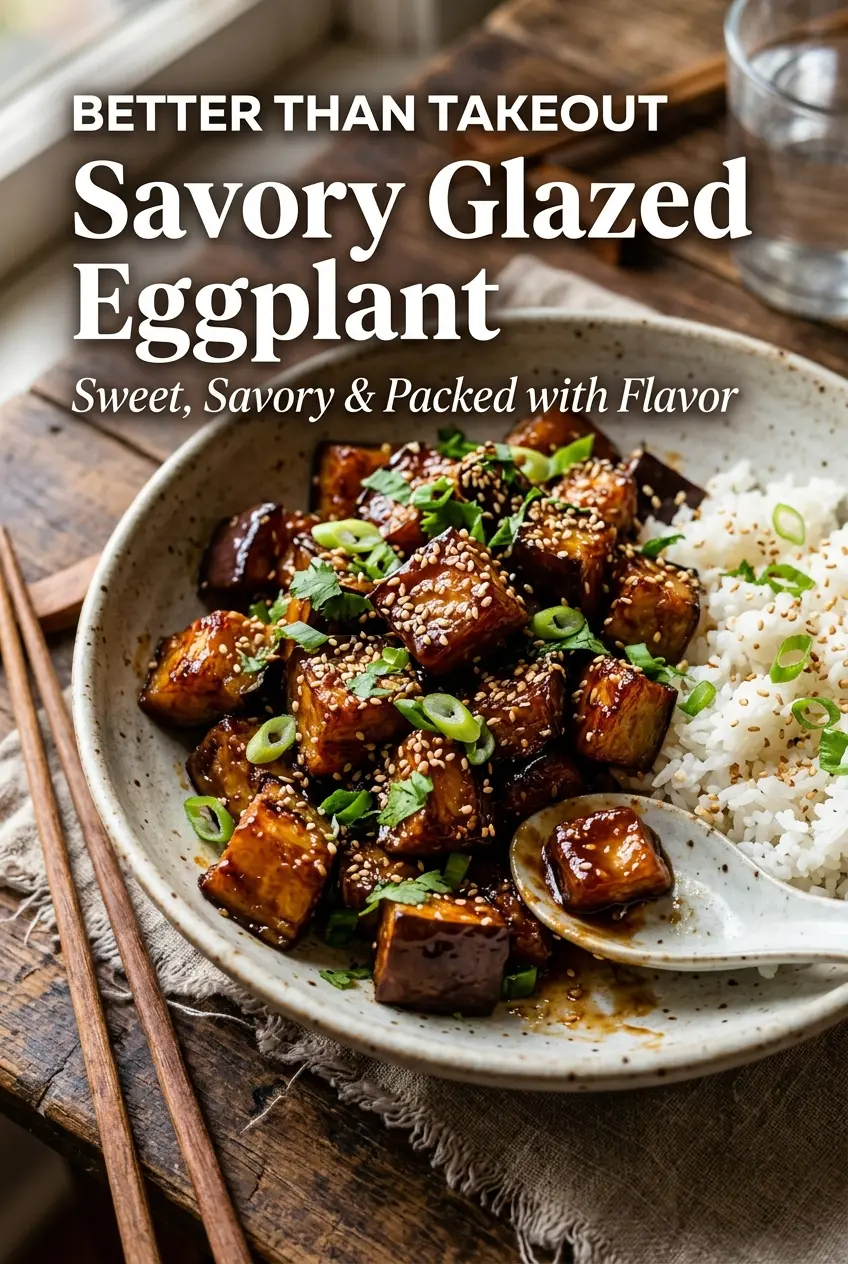
Savory Glazed Eggplant
Ingredients
Equipment
Method
- Preheat the oven to 425°F (220°C). Heat a sheet pan in the oven while it comes to temperature so the cubes roast quickly.
- Toss the eggplant cubes with olive oil, kosher salt, black pepper, and garlic powder until evenly coated. Spread into a single layer on a parchment-lined sheet pan.
- Roast for 25–30 minutes, turning halfway through, until golden and tender. Keep an eye on the edges so they caramelize without drying out.
- Whisk together low-sodium soy sauce, honey, brown sugar, rice vinegar, sesame oil, garlic, and grated fresh ginger in a saucepan. This should look glossy and well combined before heating.
- Bring the sauce to a gentle simmer. Let it bubble lightly for 1–2 minutes to meld the flavors.
- Stir together cornstarch and water, then whisk into the sauce until thickened. When it coats the back of a spoon, it’s ready for the eggplant.
- Toss the roasted eggplant with the warm glaze until the cubes look evenly coated. Work quickly so the glaze clings while still glossy.
- Garnish with sliced green onions and toasted sesame seeds. Add fresh cilantro and red pepper flakes if using.
- Serve immediately over rice if desired. Choose steamed jasmine rice, brown rice, or quinoa to finish the meal.
