
At the ten-minute mark, the apples and onion have started to soften, but they still have enough structure to hold their shape beside the pork. Giving them that head start is what makes this sheet pan meal work: the fruit and onion get time in the oven without asking lean boneless chops to roast for too long. The Dijon rub also brings a little tang to the pork without needing a separate sauce.
I like that the pan does the timing for you. The apples and onion go in first, then the chops take the center while the vegetables finish around them. Cut everything into even wedges, keep the chops dry before adding the rub, and you’ll have tender pork with soft, savory-sweet apples and onion on the same pan.

Kitchen Note
Pat the pork chops dry before rubbing them with Dijon and oil. If the surface is damp, the rub slips around instead of coating the meat evenly.
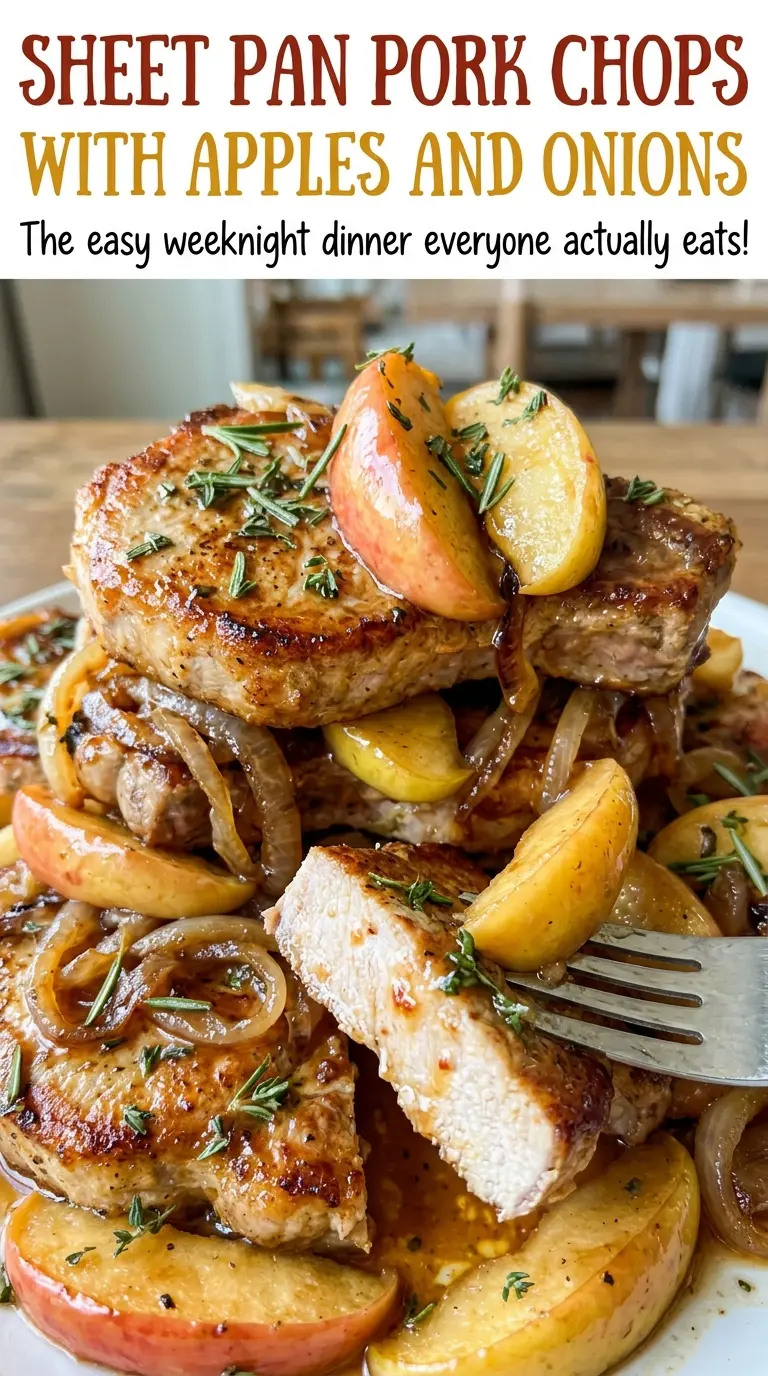
Save these sheet pan pork chops with apples and onions for a cozy one-pan dinner with tender pork and sweet roasted edges.
Why the Apples Go Into the Oven Before the Pork
Apples and onion need more time to soften than a one-inch boneless pork chop needs to cook through. Put everything on the pan at once and the chops have to stay in the oven while the vegetables catch up. That’s a long wait for a lean cut of pork, and it raises the odds of dry meat.
The short first roast gives the fruit and onion a head start, then the chops finish cooking in the middle of the same pan. The vegetables continue to soften around the edges while the pork cooks, so neither part has to wait on the other. It’s a small timing change, but it’s the difference between pork that reaches its doneness without a drawn-out roast and apples that aren’t still firm when dinner is ready. Keep the vegetables spread out rather than piled together, so they roast instead of sitting in a crowded heap.
Firm Apples, Dijon, and the Ingredients That Set the Pan Up
- Apples — Firm apples keep their shape better through roasting than soft, mealy ones. Choose the variety you enjoy eating; a tart apple gives a sharper contrast to the onion, while a sweeter one makes the pan taste mellower. Cut the wedges evenly so they soften at roughly the same pace.
- Yellow onion — It turns sweeter and more mellow in the oven, giving the apples a savory partner. Red onion is the closest simple swap; it brings a sharper flavor and a little more color after roasting. Cut it into wedges of similar thickness to the apples.
- Boneless pork chops — Chops close to the stated thickness give you a workable window between the vegetables’ roast and the pork’s finish. A thinner chop cooks faster, while a thicker one takes longer, so the thickness matters more than choosing a premium brand. Patting the surface dry helps the rub stay put.
- Dijon mustard and olive oil — Dijon adds a tangy note and helps the seasoning cling to the chops. Whole-grain Dijon works in its place and leaves a little texture from the mustard seeds. Ordinary olive oil is a good choice here; a neutral cooking oil can stand in, though it won’t add the same olive flavor.
- Dried thyme — Dried thyme holds up well through the full roast and gives both the fruit and pork a savory, woodsy note. Keep the seasoning divided between the vegetables and chops so each part is seasoned on its own.
Roasting the Apples, Onion, and Chops in the Right Order
Give the fruit and onion their head start
Heat the oven to 425°F and line an 18×13-inch rimmed sheet pan with parchment paper. Toss the apple and onion wedges with their portion of olive oil, salt, pepper, and dried thyme, then spread them across the pan. Roast for 10 minutes. The wedges should be starting to soften, not collapsing or turning to mush.
Coat the chops evenly
While the vegetables roast, pat the pork chops dry. Rub them with the Dijon mustard and olive oil, then season with the remaining salt, pepper, and thyme. Work the coating over both sides so each chop has an even layer. If the rub is patchy, the seasoning will be patchy too.
Finish the roast in the center of the pan
Move the apples and onion toward the edges, leaving the center open for the pork chops. Arrange the chops in the middle and return the pan to the oven. Roast for 10 to 15 minutes, checking the thickest part of each chop with a thermometer; it should reach 145°F. Start checking toward the earlier end of the range, since ovens and chops can vary.
Rest the pork before serving
Transfer the chops to a plate and let them rest for 3 minutes. That brief pause gives the juices a chance to settle instead of running straight onto the plate when you cut into the meat. Serve the pork with the apples and onion from the pan. The fruit should be tender, with enough shape left to sit alongside each chop.
Simple Swaps for a Different Take on This Sheet Pan
Choose a tart apple
Use a firm, tart apple instead of a sweeter variety. The sharper fruit cuts through the mellow onion and mustard, while a firm texture helps the wedges hold their shape in the oven.
Trade yellow onion for red
Cut a red onion into the same thickness of wedges and roast it in place of the yellow onion. It keeps the sweet-savory balance but tastes a bit sharper and adds deeper color to the finished pan.
Use whole-grain Dijon
Swap smooth Dijon for whole-grain Dijon in the pork rub. The mustard seeds add a little texture, while the tangy flavor still works with the apples and onion.
Storage and Reheating
- Refrigerator: Refrigerate leftovers within 2 hours and keep them covered for 3 to 4 days. The apples and onion soften more, and the pork can lose some moisture.
- Freezer: Freeze the pork and vegetables in an airtight container for up to 2 to 3 months. The apples and onion will be softer after thawing, but the leftovers are still useful for a quick meal.
- Reheating: Reheat covered in the oven or in the microwave until the leftovers reach 165°F. Avoid heating the pork uncovered for too long; it dries out before the vegetables need much more warmth.
Questions That Come Up With Pork Chops and Roasted Apples
Sheet Pan Pork Chops with Apples and Onions
Ingredients
Equipment
Method
- Heat the oven to 425°F.
- Line an 18x13-inch rimmed sheet pan with parchment paper.
- Toss the apples and onion with 1 tablespoon olive oil, 1/2 teaspoon salt, 1/4 teaspoon pepper, and 1/2 teaspoon thyme.
- Spread the apples and onion on the sheet pan.
- Roast for 10 minutes.
- Pat the pork chops dry.
- Rub them with the Dijon mustard and remaining 1 tablespoon olive oil.
- Season with the remaining 1/2 teaspoon salt, 1/4 teaspoon pepper, and 1/2 teaspoon thyme.
- Move the apples and onion toward the edges of the pan.
- Arrange the chops in the center.
- Roast for 10 to 15 minutes, until the thickest part of each chop reaches 145°F.
- Transfer the pork chops to a plate.
- Let them rest for 3 minutes.
- Serve with the apples and onion.
