
Smoked kielbasa and sauerkraut belong together in a skillet that knows how to use heat properly. The sausage gets a deep, browned edge first, then the sauerkraut picks up every bit of that savory drippings and turns into something far better than a plain warm-up. The result is tangy, smoky, and just rich enough to feel complete without needing a pile of side dishes.
What makes this version work is the order. The kielbasa sears before anything else, which builds the best flavor in the pan, and the onion cooks in those same drippings so nothing goes to waste. A little broth loosens the sauerkraut and keeps it from tasting sharp or dry, while caraway seeds and smoked paprika give the dish that old-school deli character without making it heavy.
Below, I’ll show you the small timing details that keep the sausage caramelized and the sauerkraut from turning mushy. There’s also a straightforward swap if you want to make it lighter or adjust it for what you already have on hand.
The kielbasa got that browned crust I was hoping for, and the sauerkraut soaked up all the flavor from the pan without getting soggy. The mustard on top was perfect with the caramelized onions.
Save this smoked kielbasa and sauerkraut skillet for the nights when you want a smoky, tangy dinner with one pan and almost no cleanup.
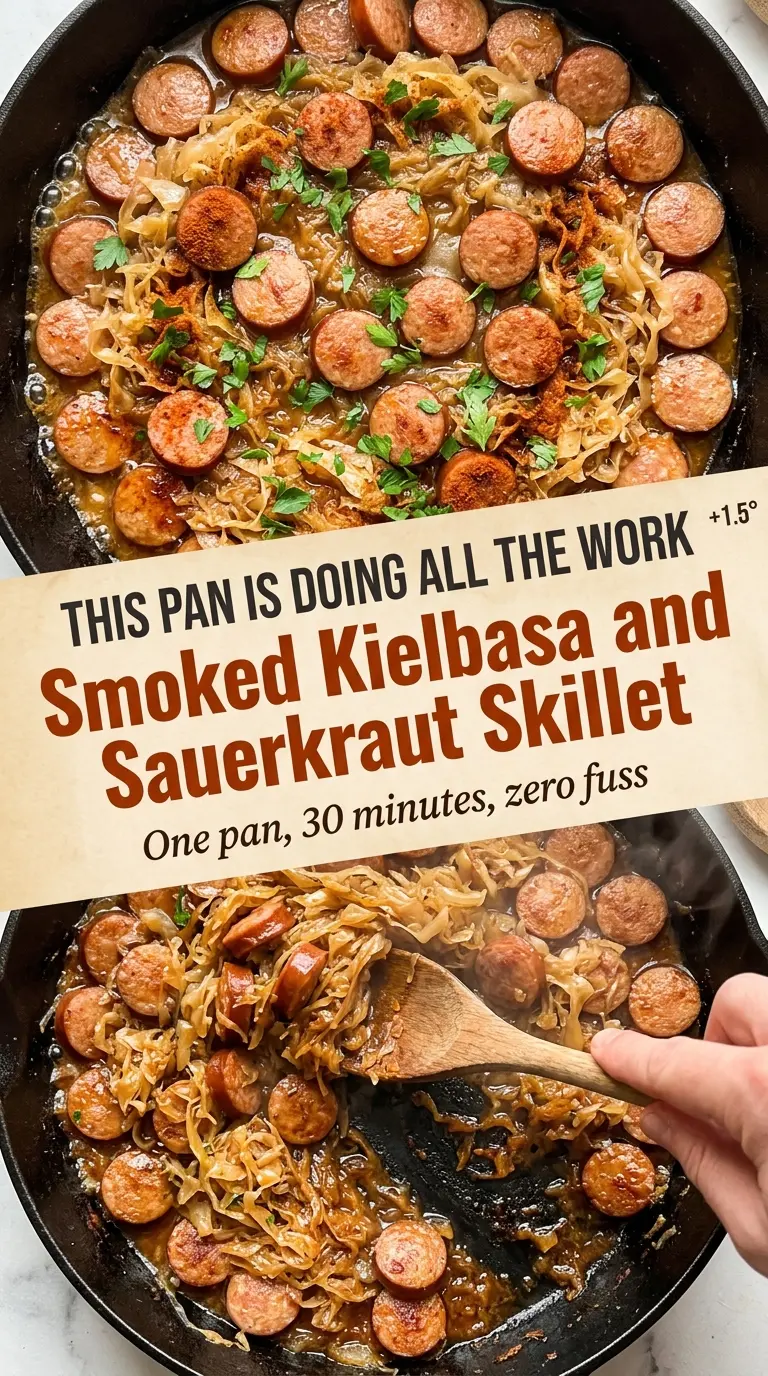
The Sear Comes First, or the Whole Skillet Tastes Flat
If the kielbasa goes in and just steams in its own fat, you lose the best part of the dish. You want those rounds in a single layer so the cut sides can pick up color and the edges can crisp. That browning is what carries the whole skillet, because sauerkraut on its own is bright and sharp, not deep.
The other mistake is crowding the pan with the sauerkraut too early. Once the sausage comes out, the onion needs room to soften and pick up a little color before the garlic and spices go in. That short window is where the flavor builds, and it only takes a few minutes. After that, the broth loosens everything just enough to keep the sauerkraut from tasting harsh.
- Kielbasa — Use a fully cooked smoked kielbasa, not fresh sausage. The point here is browning and flavor, not long cooking. Slice it into 1/2-inch rounds so it can sear without falling apart.
- Sauerkraut — Drain it well so the skillet doesn’t turn watery. If yours is extremely sharp, a quick rinse and thorough drain will soften the bite. Don’t skip the draining step unless you want a sour, briny pan.
- Onion — Yellow onion gives the best balance of sweetness and structure. Slice it thin so it softens in the same time it takes the garlic to become fragrant.
- Chicken broth — This is there to deglaze the pan and mellow the kraut. Vegetable broth works if that’s what you have, but water leaves the skillet tasting thinner.
- Caraway seeds — Optional, but they give the dish that unmistakable classic flavor. If you don’t have them, a tiny pinch of fennel seed will lean in the same direction.
- Brown sugar — Just enough to round out the sauerkraut without making it sweet. If your kraut already tastes mild, you can cut this back a little.
- Smoked paprika — Adds a little extra woodsmoke and depth. Regular paprika works, but it won’t give the same savory edge.
Building the Skillet in the Right Order
Get the Sausage Brown Before Anything Else
Heat the oil until it shimmers, then lay the kielbasa in a single layer. You should hear a steady sizzle right away. Let each side go until it’s deeply golden and the edges look crisp rather than pale. If you stir too soon, the sausage loses contact with the pan and never develops that caramelized crust.
Cook the Onion in the Drippings
Once the sausage is out, drop the heat to medium and add the onion to the same skillet. The pan will look a little dark in spots, and that’s fine — those browned bits are part of the sauce. Stir occasionally until the onion turns soft and lightly golden. If the heat is too high, the onion burns before it has time to sweeten.
Wake Up the Garlic and Spices
Add the garlic, smoked paprika, and caraway seeds and stir for about 30 seconds. You’re looking for fragrance, not color. Garlic turns bitter fast once it starts to brown, so this is a quick step that only needs enough heat to bloom the spices and take the raw edge off the garlic.
Let the Sauerkraut Simmer, Not Boil
Add the drained sauerkraut, brown sugar, and broth, then stir and scrape up the bottom of the pan. Return the sausage and let everything simmer uncovered until the broth mostly absorbs and the skillet looks glossy, not wet. If it starts boiling hard, the kraut can turn stringy and the sausage can tighten up. A gentle simmer keeps the texture balanced.
How to Tweak It Without Losing What Makes It Good
Make It Dairy-Free as Written
This skillet is naturally dairy-free, so you don’t need to change much at all. Keep the broth, sausage, and seasonings the same, and serve it with mustard for a sharp finish. The only thing to watch is the sausage label, since a few brands add milk powder or cheese-based fillers.
Use Smoked Turkey Kielbasa for a Lighter Pan
Smoked turkey kielbasa works if you want something lighter, but it won’t render as much fat or brown as aggressively. Add a touch more oil before searing so the sausage still develops color. The finished skillet will be a little leaner and less rich, but the sauerkraut and mustard still carry the same tangy punch.
Swap the Broth for Beer
A light lager or pilsner can replace part or all of the broth if you want a deeper, slightly malty skillet. Use less than you think you need and let it reduce so the dish doesn’t turn bitter or foamy. The beer gives the sauerkraut a pub-style edge that works especially well with stone-ground mustard.
Storage and Reheating
- Refrigerator: Keep in an airtight container for up to 4 days. The sauerkraut softens a bit more as it sits, but the flavor stays strong.
- Freezer: It freezes well for about 2 months. Cool it completely first and store it in a flat, tightly sealed container for easier thawing.
- Reheating: Warm it gently in a skillet over medium-low heat with a splash of broth or water. Microwaving works, but it can make the sausage rubbery if you blast it too long.
Answers to the Questions Worth Asking
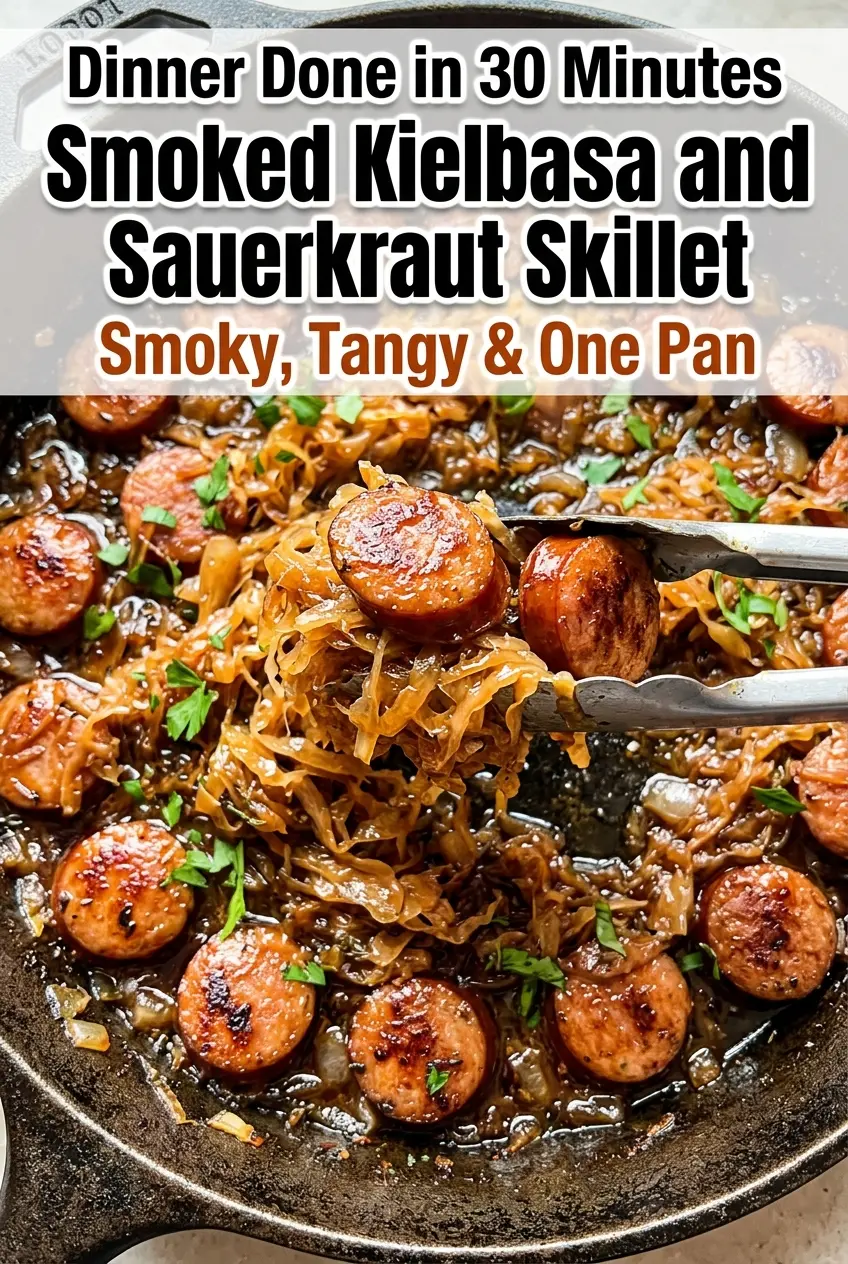
Smoked Kielbasa and Sauerkraut Skillet
Ingredients
Equipment
Method
- Heat 1 tbsp olive oil in a large cast iron skillet over medium-high heat until shimmering.
- Add the smoked kielbasa slices in a single layer and sear for 2–3 minutes per side until deeply golden and caramelized, then remove to a plate and set aside.
- Reduce heat to medium, add the sliced onion to the same skillet, and cook for 4–5 minutes, stirring occasionally, until softened and lightly golden.
- Add the minced garlic, smoked paprika, and caraway seeds, then stir and cook for 30 seconds until fragrant.
- Add the drained sauerkraut and brown sugar, then stir everything together and scrape up browned bits from the bottom of the pan.
- Pour in the chicken broth and stir to combine, then bring to a gentle simmer.
- Return the seared kielbasa to the skillet and nestle the slices into the sauerkraut mixture.
- Cook uncovered for 5–7 minutes, stirring occasionally, until the broth mostly absorbs and the flavors meld together.
- Taste and adjust seasoning with black pepper, then scatter fresh parsley over the top.
- Serve hot directly from the skillet with stone-ground mustard on the side.
