
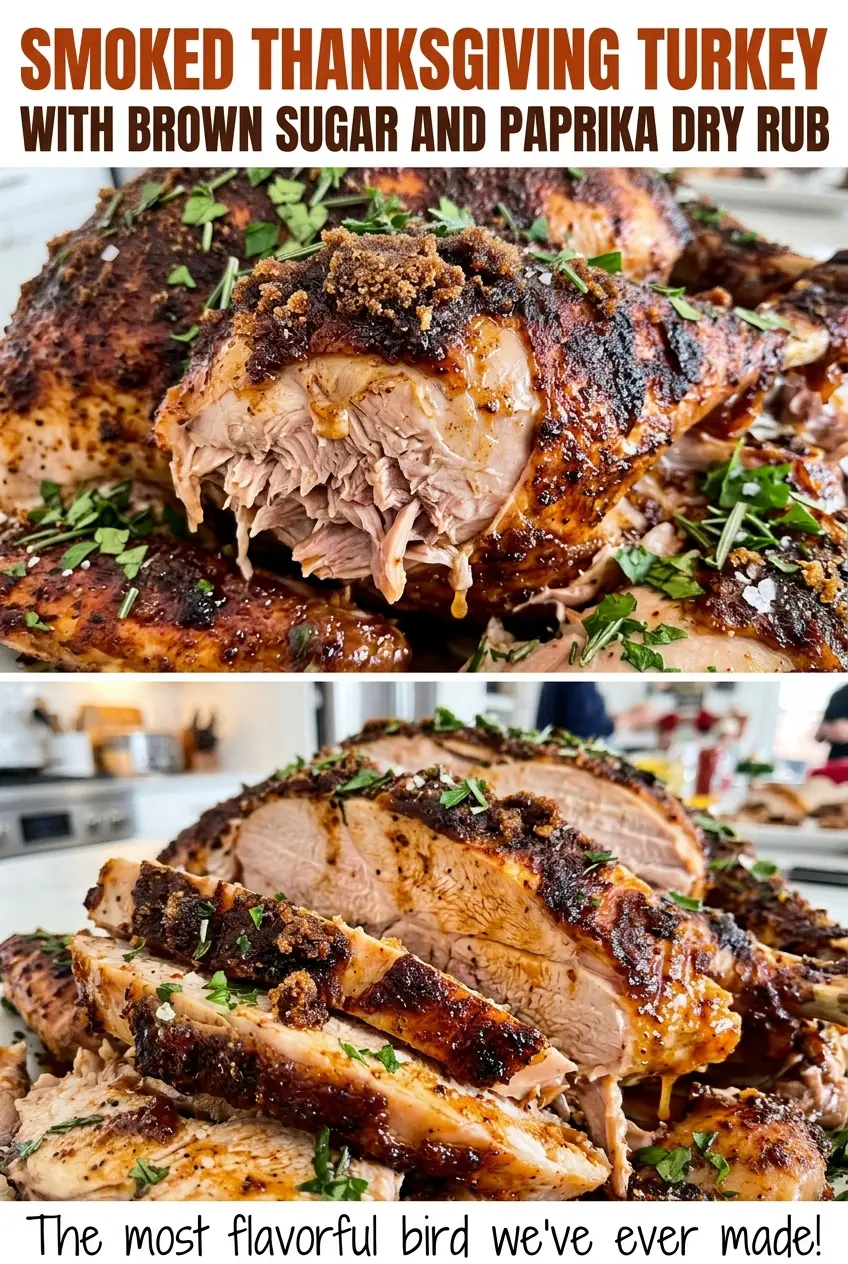
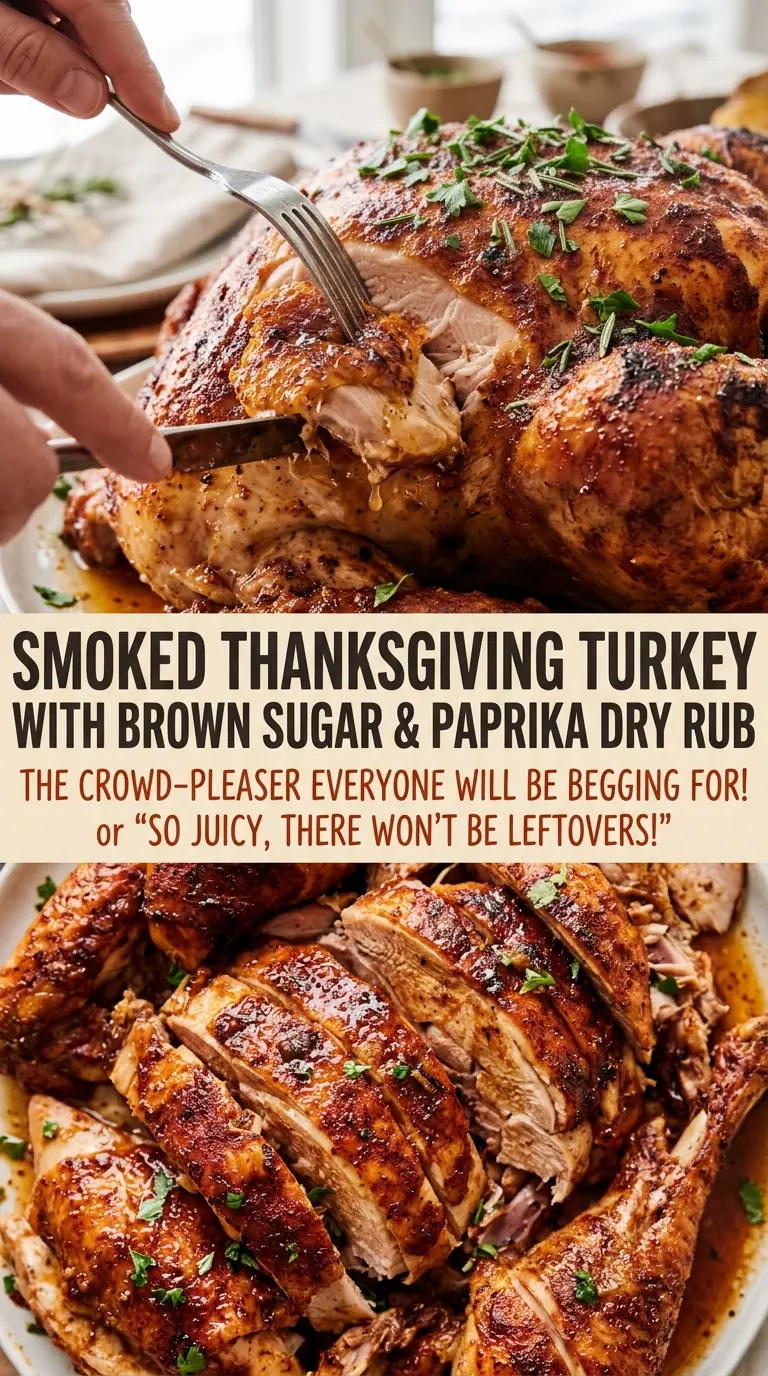
The skin is the first thing I check when a smoked turkey comes off the smoker: it should be deeply colored, with the paprika and brown sugar clinging in a savory crust. My first attempt at seasoning a whole bird stayed mostly on the surface, so the breast tasted much less seasoned than the skin. Now I work some of the rub beneath the breast skin, where it can season the meat directly.
This smoked Thanksgiving turkey starts with a fully thawed, unbrined bird, which lets the measured salt do its job without a head start from a brine. A short list of pantry spices gives the skin a sweet, peppery edge, while the overnight uncovered rest in the refrigerator lets the surface dry before smoking.
The method is straightforward, but the size of the bird and the thermometer readings matter more than the clock. For a 12- to 14-pound turkey, the result is tender meat with a browned, paprika-rich exterior and a gentle sweetness from the rub.
Kitchen Note
The rack keeps the turkey lifted while it chills, so the underside isn’t pressed against a flat pan. Set the rack inside the rimmed baking sheet to catch any drips, then leave the bird uncovered in the refrigerator for the full chilling time.
Save this smoked Thanksgiving turkey for its brown sugar and paprika crust, plus an overnight rest that makes the big-day timing easier.
Why the Rub Belongs Under the Breast Skin, Too
A whole turkey gives you two very different seasoning surfaces. The outside needs oil so the dry rub can cling to the skin, but seasoning only the outside leaves the thick breast meat separated from much of that flavor by the skin itself. Pressing some of the sugar-and-spice mixture beneath the breast skin puts it in direct contact with the meat.
Lift the skin gently rather than pulling hard; it should loosen enough to slide the rub underneath without tearing. Spread the mixture as evenly as you can across the breast area, then press the rest over the outside of the bird. This approach gives the breast a more even savory-sweet flavor while keeping the paprika visible on the skin.
The unbrined turkey matters here, too. The kosher salt in the rub is measured for an unbrined bird, so starting with a turkey that has already been salted can leave the finished meat too salty. Check the package before you buy, especially if the label mentions a solution or self-basting.
What the Sugar, Paprika, and Salt Each Bring to the Rub
- Whole turkey — Choose a fully thawed, unbrined bird in the specified size range, with the neck and giblets removed. Those details keep the seasoning and timing in line with the method; a larger bird isn’t a simple swap because it won’t follow the same cooking window.
- Canola oil — The neutral oil helps the rub stick without competing with the spices. Avocado oil works in the same amount if you need an alternative; its mild taste won’t pull the rub in a different direction.
- Light brown sugar — Packed light brown sugar gives the rub a gentle molasses note and helps create the sweet edge on the skin. Dark brown sugar is a workable swap if you want a deeper molasses flavor, though it will make the rub taste a little richer.
- Paprika — Regular paprika brings color and a rounded pepper flavor without making the rub hot. Smoked paprika can replace it measure-for-measure for a more pronounced smoky note; choose a fresh, fragrant jar rather than one that’s been open in the cupboard for years.
- Diamond Crystal kosher salt — Keep this specific salt if you can. Kosher salt brands have different crystal sizes, and a spoonful of fine table salt doesn’t measure the same way, so swapping it by volume can make the turkey too salty.
- Black pepper, garlic powder, and onion powder — These dry seasonings spread evenly through the rub and cling to the oiled skin. Fresh garlic or onion isn’t a direct replacement here: it adds moisture and won’t distribute like the powders.
From Dry Skin to a Thermometer-Checked Turkey
Dry the Bird and Mix the Seasoning
Remove the neck and giblets if needed, then pat the fully thawed turkey dry all over with paper towels. Don’t rinse it; rinsing can spread raw poultry juices around the sink and counter. In a small bowl, stir together the brown sugar, paprika, kosher salt, black pepper, garlic powder, and onion powder until the color looks even.
Oil, Season, and Chill Uncovered
Rub the canola oil over the turkey, including the sides, then press the spice mixture onto the skin and beneath the skin covering the breast. Set the bird breast-side up on a rack in an 18×13-inch rimmed baking sheet. Refrigerate it uncovered for 8 to 12 hours so the seasoning has time to settle onto the bird.
Set the Smoker for Indirect Cooking
Preheat the smoker to 300°F for indirect cooking before the turkey goes on. Keeping the setup indirect lets the whole bird cook without placing it directly over the heat source. Have an instant-read or probe thermometer ready; the center of the thickest breast section and the innermost thigh are the places to check.
Smoke Until Both Checks Are Ready, Then Rest
Smoke the turkey breast-side up for about 3 1/2 to 4 1/2 hours. Check the thickest part of the breast and the innermost part of the thigh, keeping the thermometer away from bone; both readings need to reach at least 165°F. If one spot is lower, continue cooking and check again rather than relying on the estimated time. Transfer the turkey to a cutting board and rest it uncovered for 30 minutes before carving.
Three Simple Ways to Change the Rub
Use dark brown sugar for a deeper edge
Replace the light brown sugar with the same amount of packed dark brown sugar. Its stronger molasses taste makes the crust more caramel-like and a little less delicately sweet.
Lean into the smoke with smoked paprika
Swap smoked paprika for the regular paprika in the rub, keeping the same measure. It adds a stronger smokehouse aroma and a more assertive paprika flavor without changing the cooking method.
Make the finish more peppery
Add a little extra black pepper to the dry mixture if you like a sharper bite against the brown sugar. Keep the salt unchanged; increasing both together can push the rub too far toward salty.
Storage and Reheating
- Refrigerator: Store carved turkey in a covered container for 3 to 4 days. The skin softens in storage, while the meat stays good for sandwiches and reheated meals.
- Freezer: Freeze sliced or pulled turkey in airtight portions for up to 3 months for best quality. Thaw it in the refrigerator before reheating.
- Reheating: Warm portions covered in the microwave in short intervals, turning the pieces for even heating, until they reach 165°F. Long, uncovered heating dries out the breast meat.
Questions That Come Up When Smoking a Thanksgiving Turkey
Smoked Thanksgiving Turkey with Brown Sugar and Paprika Dry Rub
Ingredients
Equipment
Method
- Pat the turkey dry with paper towels; do not rinse it.
- Combine the brown sugar, paprika, kosher salt, black pepper, garlic powder, and onion powder in a small bowl.
- Rub the turkey all over with the oil, then press the spice mixture over the skin and beneath the skin covering the breast.
- Set the turkey breast-side up on a rack in an 18x13-inch rimmed baking sheet and refrigerate uncovered for 8 to 12 hours.
- Preheat a smoker for indirect cooking at 300°F.
- Smoke the turkey breast-side up for about 3 1/2 to 4 1/2 hours, until a thermometer in the thickest part of the breast and the innermost part of the thigh, away from bone, reads at least 165°F.
- Transfer the turkey to a cutting board and rest uncovered for 30 minutes before carving.
