
Soft sour cream sugar cookies bake up with a tender crumb and just enough tang to keep every bite from tasting flat or overly sweet. The texture lands somewhere between a classic sugar cookie and a soft bakery-style cookie: pillowy in the center, lightly set at the edges, and sturdy enough to hold a generous swipe of frosting without turning dry. That cream cheese frosting finishes the whole thing with a cool, tangy layer that makes the cookies taste richer than the ingredient list suggests.
The sour cream is doing more than adding flavor. It brings moisture and a subtle acidity that softens the crumb and helps the cookies stay tender for days. A little baking soda works with that acidity, while the combination of butter and sugar creates enough structure for the cookies to bake up thick instead of spreading into thin rounds. The key is not overbaking them; these are best when the centers still look slightly underdone as they come out of the oven, because they set as they cool.
Below, I’ve included the timing cues that keep these cookies soft, the frosting texture you want before you spread it on, and a few smart swaps if you need to adjust for what’s in your kitchen.
The cookies stayed soft for days and the frosting set up just enough that they stacked without smearing. I used full-fat sour cream and the texture came out exactly like the bakery cookies I grew up with.
Save these soft sour cream sugar cookies with cream cheese frosting for the times you want a tender cookie that stays moist and frosts like a dream.
The Reason These Cookies Stay Soft Instead of Turning Cakey or Dry
The biggest mistake with sour cream sugar cookies is treating them like plain cutout cookies and overworking the dough. Once the flour goes in, the dough only needs to come together. Too much mixing builds gluten and takes away that tender bite you’re after. The dough should look thick and a little sticky, not stiff and dry.
These also depend on the right bake time. If the tops look fully set in the oven, they’re probably already past the point of peak softness. Pull them when the edges are just barely set and the centers still look pale. They’ll finish cooking on the pan, and that’s what keeps the middle plush instead of crumbly.
- Sour cream — Full-fat sour cream gives the richest texture and the best tenderness. Low-fat will work in a pinch, but the cookies won’t be quite as soft or rich.
- Butter — Softened butter creams with the sugar to create lift and structure. If it’s too warm and greasy, the dough spreads more in the oven.
- Flour — Measure it carefully. Too much flour is the fastest way to lose that melt-in-your-mouth texture, so spoon and level instead of scooping straight from the bag.
- Cream cheese — Use block-style cream cheese for frosting, not the spreadable tub kind. The tub version is looser and can make the frosting runny.
What Each Bowl Is Doing Before These Cookies Hit the Oven
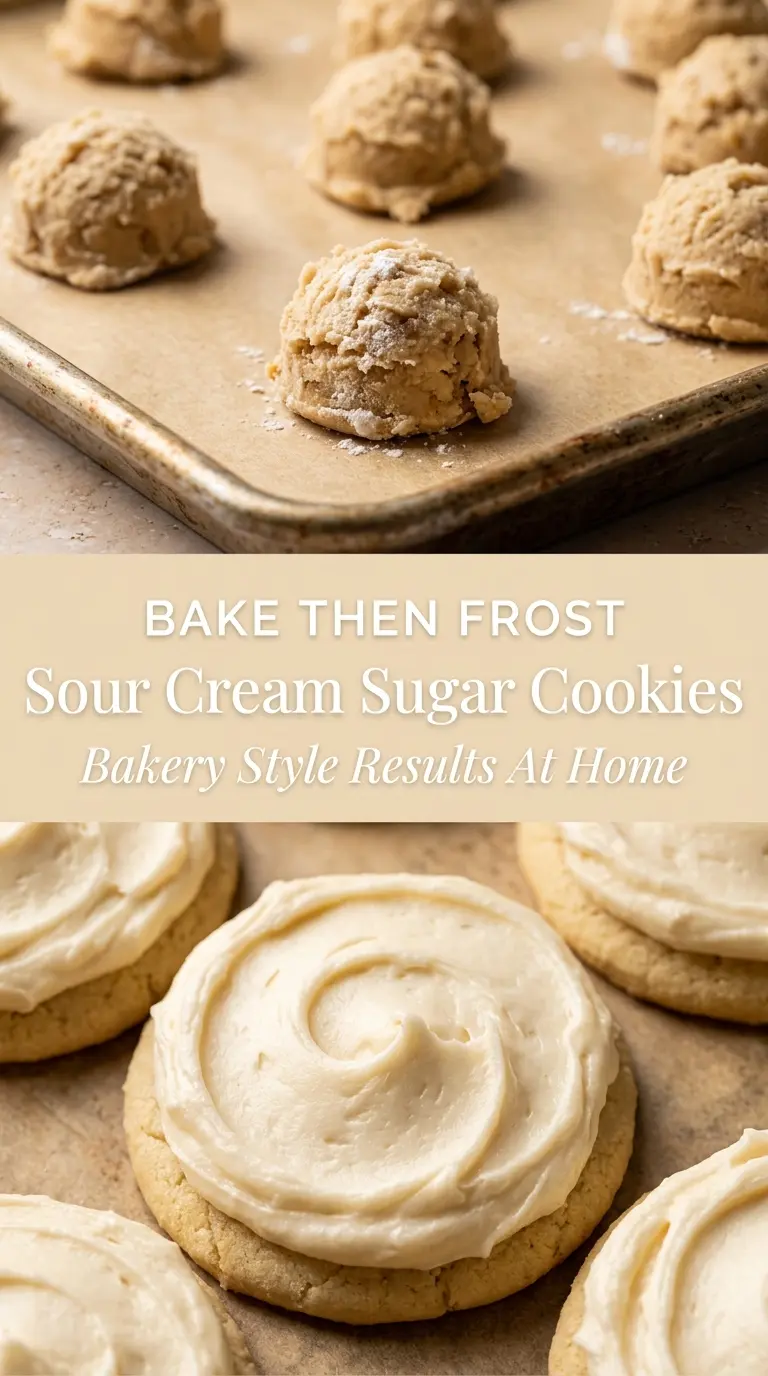
- Butter and sugar — Cream them until the mixture looks pale and fluffy. That step traps air, which helps the cookies bake up tender instead of dense.
- Eggs — Add them one at a time so the dough stays smooth and emulsified. If you dump them in together, the batter can look curdled before it comes back together.
- Sour cream and vanilla — Stir these in after the eggs. The sour cream loosens the mixture and adds moisture, while the vanilla rounds out the flavor so the cookies taste like more than straight sugar.
- Baking powder and baking soda — The baking powder gives lift, and the baking soda reacts with the sour cream’s acidity to help the cookies brown lightly and stay soft.
- Powdered sugar for the frosting — Add it gradually so the frosting stays smooth instead of dusty or lumpy. If it gets too thick, a teaspoon of milk at a time loosens it without making it run.
How to Mix, Bake, and Frost Them Without Losing That Tender Crumb
Cream the Base Until It Looks Light
Beat the butter and sugar until the mixture turns pale and fluffy, not just combined. That usually takes a few minutes, and the color change matters more than the clock. Once the eggs go in, the mixture should look glossy and smooth. If the butter was too cold, the sugar won’t cut in properly and the cookies can bake up heavy.
Build the Dough Without Overmixing It
Mix in the sour cream and vanilla, then add the dry ingredients gradually. Stop as soon as you no longer see streaks of flour. The dough will be soft and thick, and that’s exactly what you want. If you keep mixing to chase a perfectly smooth texture, the cookies lose tenderness.
Bake Until the Edges Set and the Centers Still Look Soft
Scoop the dough onto parchment-lined baking sheets and leave enough space for gentle spreading. Bake just until the edges look set and the tops no longer look wet. The centers may still appear a little underdone, and that’s the right cue. If you wait for deep golden color, they’ll cool down drier than you want.
Frost Only After the Cookies Are Completely Cool
Beat the cream cheese and butter until smooth before adding the powdered sugar. If you frost warm cookies, the topping melts and slides right off. Spread a generous layer over fully cooled cookies, then let them sit so the frosting can settle. The cookies are soft enough that they still taste fresh even after chilling.
Three Ways to Work This Recipe Around What You Have
Make Them Into Unfrosted Tea Cookies
Skip the frosting and dust the cooled cookies with a little powdered sugar instead. The cookies are sweet enough on their own, and this version gives you a softer, less rich finish that works well for afternoon coffee or a cookie tray.
Use Greek Yogurt in Place of Sour Cream
Plain full-fat Greek yogurt can stand in for sour cream if that’s what you have. The cookies will still be tender, but the tang is a little sharper and the dough may feel slightly looser, so don’t add extra yogurt beyond the measured amount.
Make Them Gluten-Free
A good 1:1 gluten-free baking blend can replace the all-purpose flour here. The cookies may spread a touch more and won’t have quite the same chew, but they’ll still stay soft if you avoid overbaking them.
Change the Frosting Flavor
Add a little lemon zest, almond extract, or a pinch of cinnamon to the frosting for a different finish. Keep the changes modest so the frosting stays balanced and doesn’t overpower the soft vanilla cookie underneath.
Storage and Reheating
- Refrigerator: Store frosted cookies in an airtight container for 4 to 5 days. The frosting firms up in the fridge, but the cookies stay soft.
- Freezer: These freeze well unfrosted or frosted. Freeze in a single layer first, then transfer to a container with parchment between layers. Thaw in the refrigerator so the frosting doesn’t sweat.
- Reheating: If you want a softer cookie, let it sit at room temperature for 20 to 30 minutes. Don’t microwave frosted cookies; the frosting can melt and the cookie can turn gummy.
Answers to the Questions Worth Asking
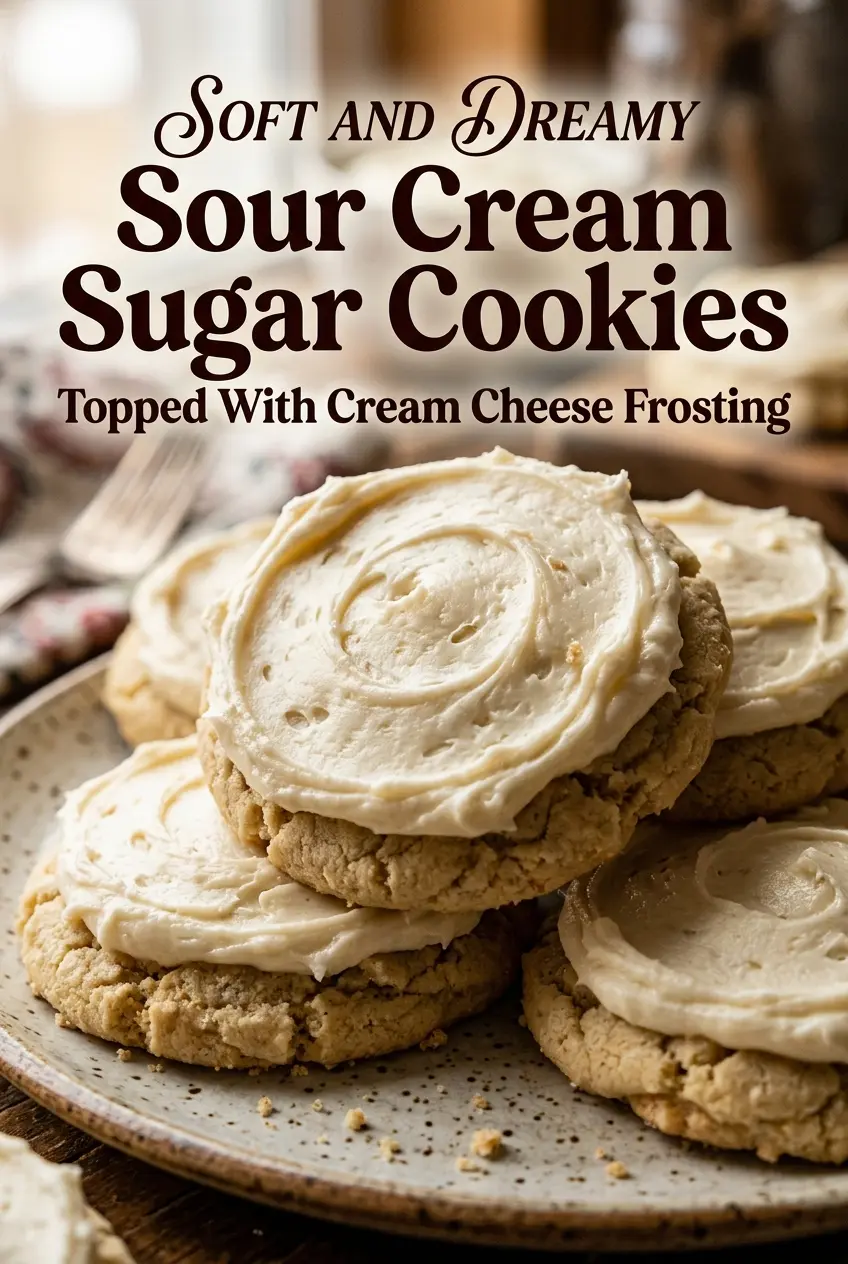
Soft Sour Cream Sugar Cookies with Cream Cheese Frosting
Ingredients
Equipment
Method
- Preheat the oven to 350°F (175°C). Place parchment on sheet pans so the cookies release easily.
- Line baking sheets with parchment paper. Keep the parchment smooth so dough spreads evenly when scooped.
- Cream butter and granulated sugar until light and fluffy. You should see the mixture turn paler and become airy.
- Beat in eggs one at a time. Mix until each egg is fully incorporated before adding the next.
- Mix in sour cream and vanilla extract. Stop once the batter looks smooth and evenly combined.
- Whisk all-purpose flour, baking powder, baking soda, and salt in a separate bowl. Break up any clumps so the cookies bake evenly.
- Gradually combine the dry ingredients with the wet ingredients. Mix just until no dry streaks remain to keep the cookies tender.
- Scoop the dough onto the prepared baking sheets. Space dough portions so they have room to spread slightly.
- Bake for 10–12 minutes until edges are lightly set. The centers should look set but still soft, not dry.
- Cool cookies completely on wire racks. Let them cool fully before frosting so the frosting doesn’t melt.
- Beat cream cheese and unsalted butter until smooth. Scrape the bowl as needed for an even, lump-free frosting.
- Add powdered sugar gradually. Mix until thick and creamy with no dry powder visible.
- Mix in vanilla extract and 1–2 tablespoons milk if needed. Stop when the frosting is spreadable but holds its shape.
- Frost cooled cookies generously. Spread to the edges while the frosting is smooth and uniform.
- Serve immediately or refrigerate until ready to enjoy. Chill only as long as needed for frosting to firm up.
