
The oil starts to shimmer just before the first shrimp goes in, and that’s the moment to keep the batches small. Too many shrimp at once cool the skillet, leaving the cornstarch coating soft instead of giving it a quick fry. I cook these Sticky Orange Sesame Shrimp in two batches, then use the same skillet for the orange sauce so none of the flavor gets left behind.
The sauce gets its glossy finish from a little cornstarch stirred with cold water before it ever reaches the pan. That small bit of prep matters: starch added dry would clump, while a smooth slurry thickens the simmering orange juice mixture evenly. Toss the shrimp in at the end, just long enough for the sticky glaze to cling, and finish with sesame seeds and scallions.

Kitchen Note
Stir the sesame oil in after you take the skillet off the heat. It keeps its toasted aroma that way instead of simmering away in the sauce.
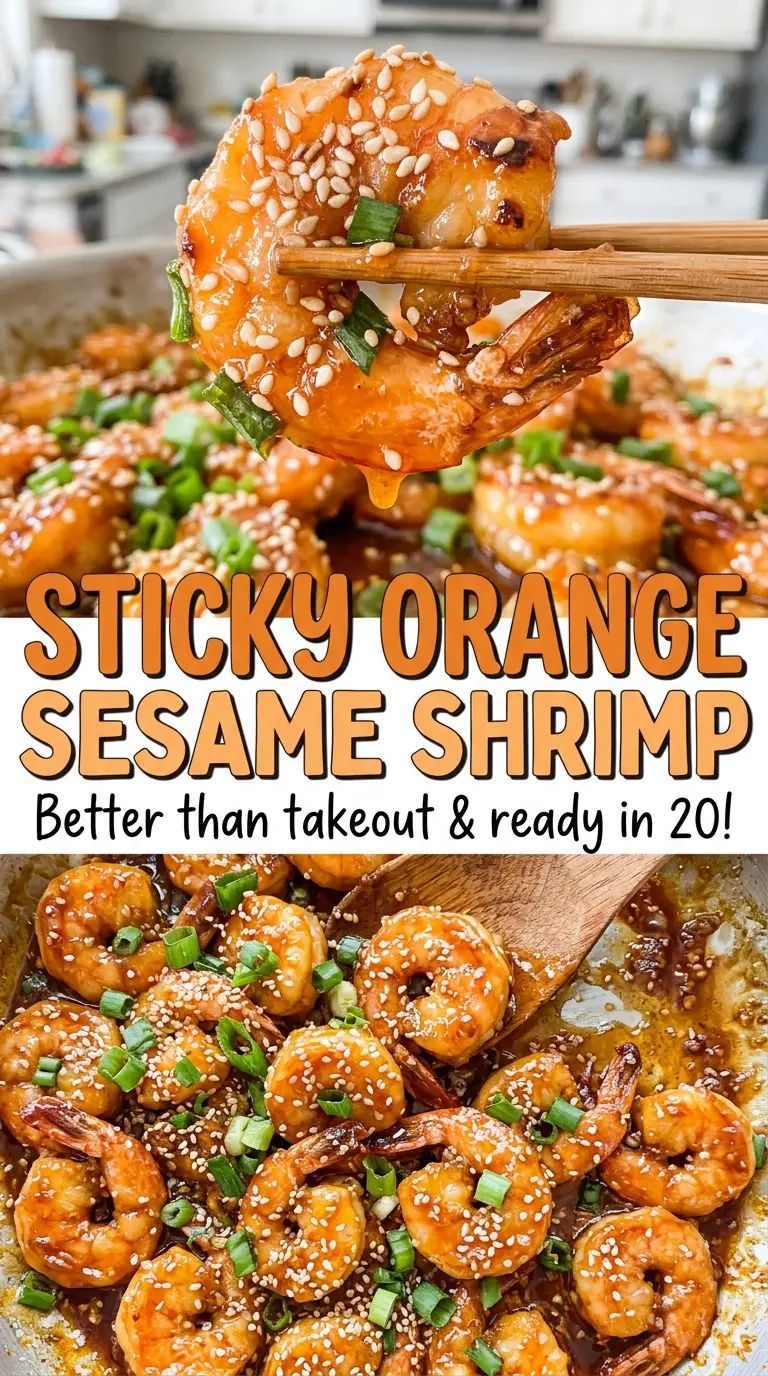
Save Sticky Orange Sesame Shrimp for a fast skillet dinner with a glossy orange glaze and tender, sesame-finished shrimp.
Why the Shrimp Gets Fried Before the Orange Glaze Goes In
These shrimp don’t simmer in the sauce from the start. They get a quick fry first, which gives the cornstarch coating a chance to set around each piece before the orange glaze is added. Once coated, the shrimp are tender and the outside has a light, delicate texture; they aren’t meant to stay crunchy under a sticky sauce.
That order also keeps the sauce from turning oily. The shrimp cook in vegetable oil, but the oil is poured off and the skillet is wiped clean before the orange juice mixture goes in. Leaving a pool of frying oil behind would make the glaze feel heavy and keep it from clinging neatly. A clean skillet gives the sauce a fresh start, and the shrimp only go back in once it has thickened.
Think of the final toss as a coating step, not another cooking stage. The shrimp are already cooked before they meet the sauce, so they need only enough time in the skillet to pick up that glossy finish.
What the Orange Juice, Cornstarch, and Shrimp Each Bring
- Orange juice — It supplies the sauce’s citrus flavor and much of its liquid, so use juice that tastes pleasantly bright rather than flat. Fresh-squeezed juice works in place of bottled juice; keep the amount the same. The sauce is meant to taste like orange, not just sweet soy.
- Cornstarch — It does two separate jobs: a dry coating on the shrimp and a slurry to thicken the sauce. The cold water makes the sauce thickener smooth before it hits the hot liquid. Flour won’t give the same light coating or clear, glossy finish, so cornstarch is worth keeping for this dish.
- Large shrimp — The 21–25 count size gives you pieces substantial enough to turn in the skillet and coat without getting lost in the glaze. Peeled and deveined shrimp save prep time; if you’re cleaning them yourself, remove the shells and vein before cooking, then pat the shrimp dry.
- Soy sauce and rice vinegar — Soy sauce brings savory depth, while rice vinegar keeps the orange and honey from tasting one-note. Tamari is the most useful swap for soy sauce when you need a gluten-free option; it keeps a similar savory character. If rice vinegar isn’t available, apple cider vinegar works in the same amount, though its sharper tang will come through more clearly.
- Honey and fresh ginger — Honey rounds the sauce and helps it taste balanced against the vinegar. Maple syrup can replace it in the same amount for a deeper, less floral sweetness. Finely grate fresh ginger so it disperses through the sauce instead of leaving larger, fibrous bits.
- Toasted sesame oil — A small amount gives the sauce its nutty finish, so a fresh bottle with a clear toasted aroma matters more than buying an expensive brand. It’s a finishing oil here, not the oil for frying the shrimp.
The Skillet Sequence That Keeps the Shrimp Tender
Whisk the Sauce and Slurry Separately
In a small bowl, whisk together the orange juice, soy sauce, honey, rice vinegar, minced garlic, and finely grated ginger. In a separate small cup, stir the cornstarch and cold water until the mixture looks smooth, with no dry pockets at the bottom. Keeping the slurry separate prevents it from settling into the sauce before it has a chance to thicken it. Set both near the stove so they’re ready when the shrimp come out.
Coat and Fry in Two Batches
Pat the peeled and deveined shrimp dry, then toss them with the cornstarch and kosher salt until each piece is evenly coated. Heat the vegetable oil in a 12-inch skillet over medium-high heat until it shimmers. Cook the shrimp in two batches for 1–2 minutes per side, until opaque and cooked to 145°F, then transfer each batch to a plate. If the shrimp overlap or the skillet looks crowded, keep the batches separate rather than piling them in.
Thicken the Orange Sauce
Carefully pour off the oil and wipe the skillet clean before adding the orange juice mixture. Bring it to a simmer over medium heat, then whisk in the cornstarch slurry. Stir as the sauce simmers for 1–2 minutes; it should turn glossy and thicken enough to coat a spoon rather than look watery. Don’t walk away during this short simmer, since the change from thin to thick happens quickly.
Toss and Finish Off the Heat
Remove the skillet from the heat and stir in the toasted sesame oil. Return the cooked shrimp and toss until the glaze coats them all over. Sprinkle with sesame seeds and thinly sliced scallions just before serving. The shrimp should look shiny, with sauce gathered on the surface rather than pooling in a thin puddle at the bottom of the pan.
Easy Ways to Adapt the Orange-Sesame Sauce
Make It Gluten-Free With Tamari
Replace the soy sauce with the same amount of tamari. The savory sauce stays balanced, and the cornstarch coating and slurry remain unchanged. The result may taste a little different from brand to brand, so choose a tamari you already like.
Skip Sesame for a Sesame-Free Version
Leave out both the toasted sesame oil and sesame seeds. The orange, ginger, and scallion flavors still work together, but you’ll lose the nutty sesame finish that defines the original. This change addresses sesame only; the soy sauce remains in the dish.
Use Maple Syrup for a Deeper Sweetness
Swap maple syrup for the honey in the same amount. It blends into the sauce without changing the skillet method, but brings a deeper, less floral sweetness. Keep the orange juice and rice vinegar as they are so the glaze doesn’t become overly sweet.
Storage and Reheating
- Refrigerator: Store leftovers in a covered container for 3–4 days. The coating softens as it sits in the sauce.
- Freezer: Freeze the cooked shrimp and sauce in an airtight container for up to 3 months. Thaw overnight in the refrigerator; the shrimp may be softer after freezing.
- Reheating: Warm gently in a skillet over low heat, stirring until hot throughout, or microwave in short bursts. Reheat leftovers to 165°F, and don’t leave the shrimp heating longer than needed or they’ll turn tough.
Questions That Come Up When Cooking Sticky Orange Sesame Shrimp
Sticky Orange Sesame Shrimp
Ingredients
Equipment
Method
- Whisk the orange juice, soy sauce, honey, rice vinegar, garlic, and ginger in a small bowl.
- In a separate small cup, stir the cornstarch and cold water until smooth.
- Pat the shrimp dry.
- Toss the shrimp with the cornstarch and salt until evenly coated.
- Heat the vegetable oil in a 12-inch skillet over medium-high heat until shimmering.
- Cook the shrimp in two batches for 1–2 minutes per side, until opaque and cooked to 145°F.
- Transfer each batch to a plate.
- Carefully pour off the oil and wipe the skillet clean.
- Add the orange juice mixture and bring it to a simmer over medium heat.
- Whisk in the cornstarch slurry and simmer for 1–2 minutes, stirring, until the sauce is glossy and thickened.
- Remove the skillet from the heat.
- Stir in the sesame oil.
- Return the shrimp to the skillet and toss to coat.
- Sprinkle with the sesame seeds and scallions.
