
When the broth settles into a gentle simmer, wild rice takes its time: the grains slowly open, but they don’t turn soft and uniform like white rice. I like that bit of chew, especially with the sweet-tart cranberries and pecans in this wild rice pilaf. It’s a cozy side dish that feels special without asking you to juggle a lot of pans.
The order matters more than it might seem. The rice gets a head start in the broth, then the cranberries go in for the final stretch so they soften while the grains finish cooking. I toast the pecans first in the same saucepan, which means their warm, nutty aroma is already there before the onion and celery hit the butter. Fold them in at the end, and they keep their crunch against the tender rice.

Kitchen Note
Let the pilaf rest, covered, for the full 5 minutes after it comes off the heat. That brief pause lets the grains settle before you fluff them, so they’re less likely to break up under the fork.
Save this wild rice pilaf with cranberries and toasted pecans for a side dish with chewy grains, sweet-tart fruit, and plenty of crunch.
Why the Cranberries Shouldn’t Simmer from the Start
Wild rice needs a longer, steady simmer than dried cranberries do. If they go into the pot at the beginning, they spend the whole cooking time softening in the broth; adding them later gives the grains time to cook before the fruit joins in. That staggered timing is what lets each part keep its own character.
The rice gets 40 minutes covered at a low simmer before the cranberries are stirred in. They then cook with the rice for another 10 to 20 minutes, which softens them without asking them to withstand the entire simmer. Wild rice is ready by its texture, not by every single grain looking identical: most grains should have split, and the centers should still have a pleasant chew. Some intact grains alongside split ones are normal. The result should be tender and pleasantly toothsome, not a uniform, soft mound.
What Makes the Rice, Fruit, and Nuts Work Together
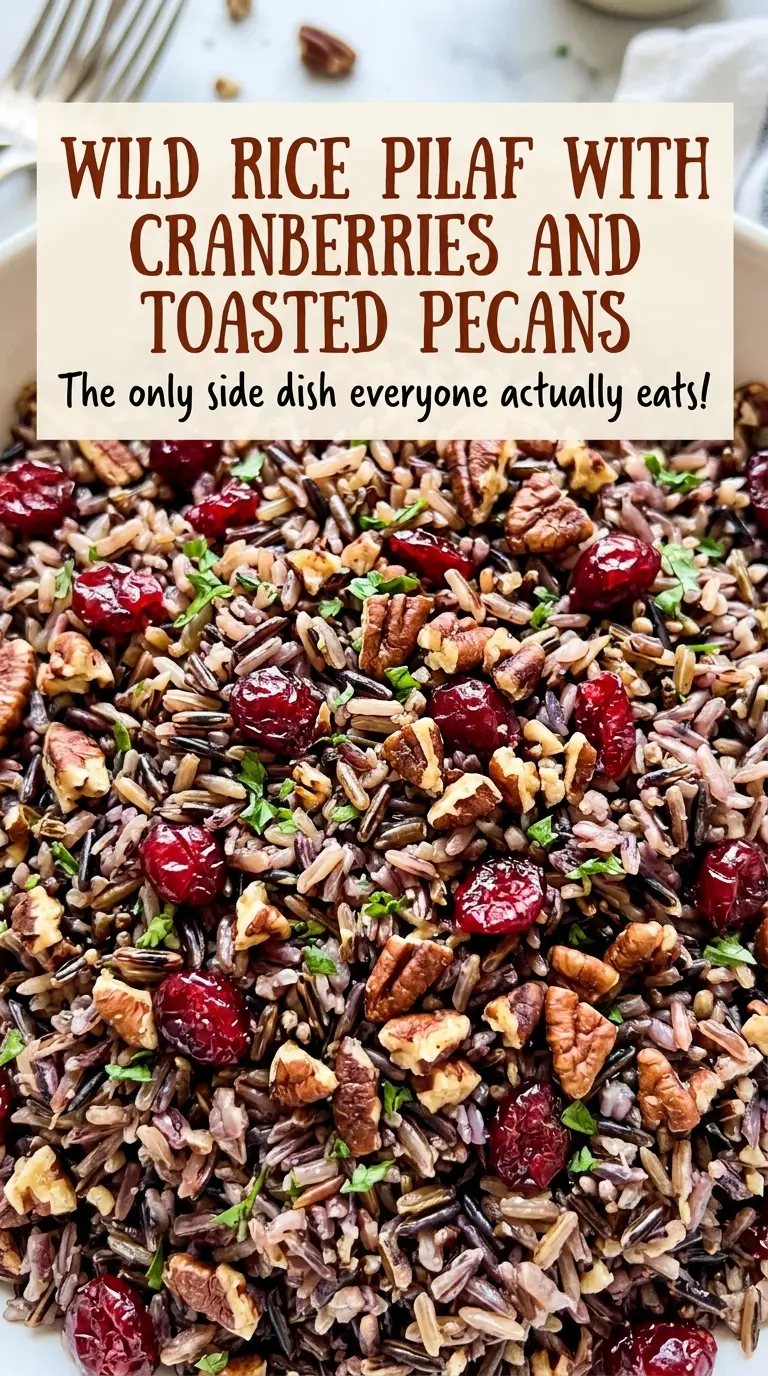
- Wild rice — Use uncooked whole wild rice rather than assuming a wild rice blend will cook on the same schedule. Rinsing and draining it before it goes into the saucepan is part of the prep; the whole grains are what give the pilaf its distinctive chewy bite.
- Low-sodium chicken broth — Broth gives the rice a savory base as it simmers, while the low-sodium kind leaves room for the measured kosher salt. A basic store-brand broth works well here; a vegetable broth is the useful swap if you want a vegetarian version.
- Dried cranberries — Their concentrated sweet-tart flavor balances the earthy rice and buttery pecans. Choose the texture you enjoy, since softer dried cranberries will finish softer in the pot. Dried cherries work in their place and bring a deeper, less tangy fruit note.
- Pecan halves — Pecans bring a buttery crunch that stands out against the chewy grains. Fresh-tasting pecans matter more than buying a premium brand; if they smell stale or bitter, they’ll bring that flavor to the whole dish. Walnuts are the closest straightforward swap, with a slightly more robust taste.
- Butter, onion, and celery — These make the aromatic base that gives the rice more depth than broth alone. Finely chopping the onion and celery helps them soften evenly in the short cooking time; unsalted butter keeps the seasoning easier to control.
How to Cook the Rice Without Losing Its Chewy Bite
Toast the Pecans Before Building the Base
Set a dry 3-quart saucepan over medium heat and add the pecan halves. Stir often for 3 to 5 minutes, until they smell fragrant, then transfer them to a plate. Keeping the saucepan for the next step means the nuts don’t need a separate pan. Don’t leave them sitting over the heat while you prep the vegetables; move them out as soon as they’re toasted.
Soften the Vegetables and Coat the Rice
Melt the butter in that same saucepan over medium heat, then add the finely chopped onion and celery. Cook for 4 to 5 minutes, stirring occasionally, until both are softened rather than browned. Stir in the rinsed, drained wild rice and cook it for 1 minute. That quick turn in the buttery vegetables gets the grains coated before the broth goes in.
Give the Wild Rice Its First Simmer
Add the chicken broth, kosher salt, and black pepper, then bring the pot to a boil. Cover the saucepan, reduce the heat to low, and simmer for 40 minutes. Keep the lid on during this stretch so the rice cooks in the broth instead of losing steam. The simmer should be gentle, not a vigorous boil that rattles the lid.
Add the Cranberries and Finish the Pilaf
Stir in the dried cranberries, cover the pot again, and simmer for 10 to 20 minutes. Check for grains that have mostly split and are tender but still chewy; don’t wait for every grain to open. Remove the saucepan from the heat and leave it covered for 5 minutes, then fluff the rice with a fork. Fold in the toasted pecans last to keep their texture distinct.
Easy Changes for Different Tables and Tastes
Make It Vegetarian with Vegetable Broth
Replace the chicken broth with vegetable broth, using the same amount. The pilaf keeps its savory base and remains just as hearty, though the broth’s flavor will be a little different.
Make It Dairy-Free with Olive Oil
Use olive oil in place of the butter when softening the onion and celery. It keeps the vegetables from sticking and makes the base dairy-free, with a less buttery and slightly fruitier finish.
Trade the Cranberries for Dried Cherries
Use the same amount of dried cherries and stir them in at the same point as the cranberries. They bring a deeper fruit flavor and a little less tang, while still softening during the final simmer.
Storage and Reheating
- Refrigerator: Cool and refrigerate leftovers within 2 hours in an airtight container; they keep for 3 to 4 days. The rice will firm up as it chills.
- Freezer: Freeze cooled portions in airtight freezer-safe containers for up to 1 month for best texture. Thaw overnight in the refrigerator.
- Reheating: Warm on the stovetop over low heat or in the microwave, stirring in a splash of broth or water to loosen the grains. Heat leftovers to 165°F; reheating without a little added moisture can leave the rice dry.
Questions That Come Up While Making This Wild Rice Pilaf
Wild Rice Pilaf with Cranberries and Toasted Pecans
Ingredients
Equipment
Method
- In a dry 3-quart saucepan over medium heat, toast the pecans, stirring often, for 3 to 5 minutes until fragrant.
- Transfer the pecans to a plate.
- Melt the butter in the same saucepan over medium heat.
- Add the onion and celery and cook for 4 to 5 minutes, stirring occasionally, until softened.
- Stir in the wild rice and cook for 1 minute.
- Add the broth, salt, and pepper and bring to a boil.
- Cover, reduce the heat to low, and simmer for 40 minutes.
- Stir in the cranberries.
- Cover and simmer for 10 to 20 minutes, until most of the rice grains have split and are tender but still chewy.
- Remove the saucepan from the heat and let the pilaf rest, covered, for 5 minutes.
- Fluff with a fork and fold in the toasted pecans.
