
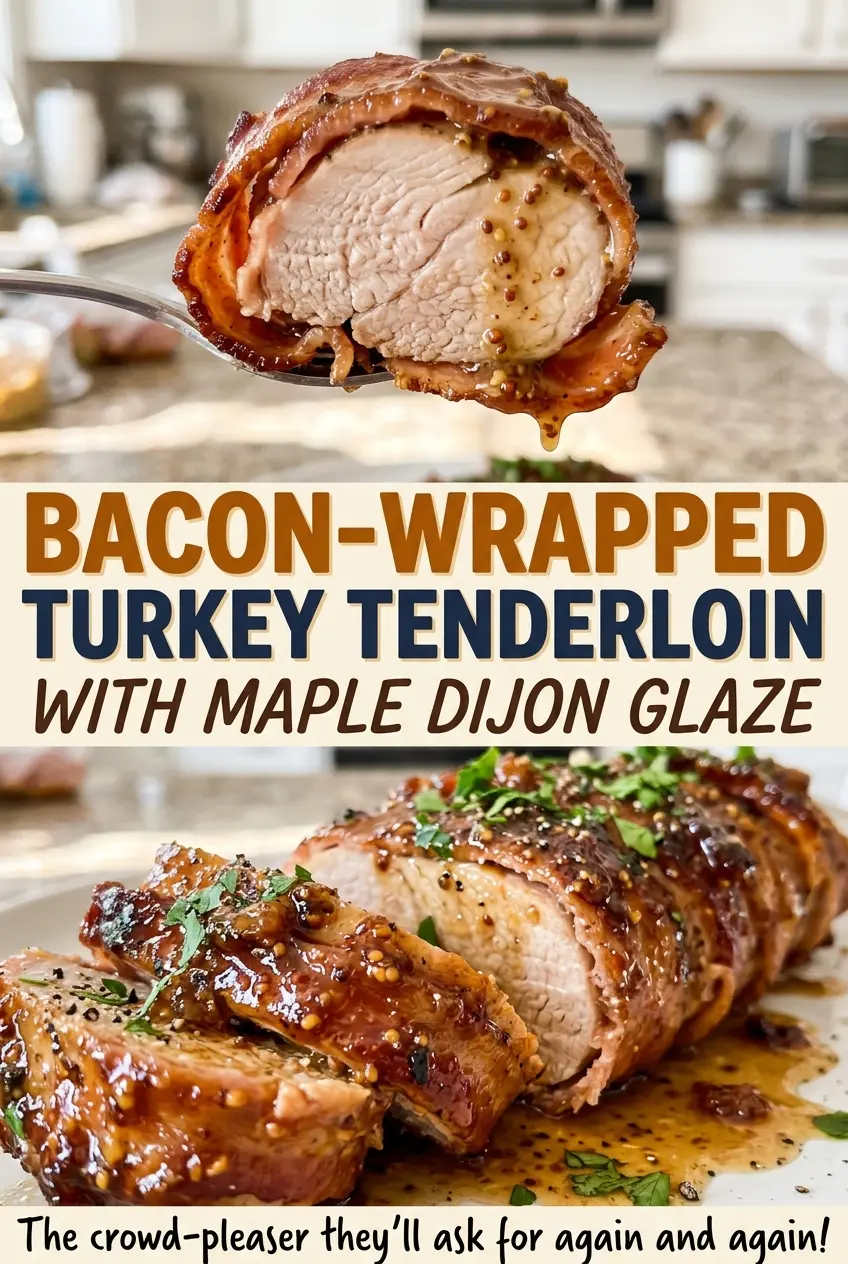
That first slice shows why I like wrapping turkey tenderloin in bacon: the outside is savory and smoky, while the meat stays mild enough for the maple-Dijon glaze to come through. The long strips give you a little bacon in each slice, and the glaze adds tang so the sweetness doesn’t take over. This bacon wrapped turkey tenderloin with maple Dijon glaze makes two lean tenderloins feel like a proper centerpiece without a complicated prep.
I keep the glaze to three ingredients and brush it on after the turkey has started roasting. That timing gives the bacon a head start, then lets the maple and mustard coat the outside without spending the entire cook in the oven. Once the tenderloins have rested, the bacon stays wrapped around the meat as you slice, with a glossy, sweet-savory edge on every piece.
Kitchen Note
Only broil if the bacon needs more color after roasting. High heat works quickly here, so stay beside the oven and watch the glaze closely during those final minutes.
Save this bacon wrapped turkey tenderloin with maple Dijon glaze for a roast with a sweet-tangy finish and bacon in every slice.
Why the Maple Glaze Waits Until the Turkey Has Started Roasting
Maple syrup brings natural sugars to the outside of the turkey, and those sugars brown faster than the center of a tenderloin cooks. If the glaze went on at the start, it would be exposed to the full roasting time and could darken too much before the meat was ready. Giving the bacon-wrapped tenderloins their first stretch in the oven keeps the glaze’s job focused: it coats and colors the outside near the end instead of sitting in the heat from the beginning.
That timing also makes the glaze easier to apply. After the first roast, the bacon has warmed and settled around the tenderloins, so you can brush the maple, Dijon, and vinegar mixture over the tops and sides without fussing with the wrap. Use all of it, spreading it across both pieces. The glaze will be thin in the bowl; it thickens as it heats and clings to the bacon. If the bacon needs a deeper brown after the turkey is cooked, a brief broil is the finishing touch, not a reason to leave the glaze under high heat unattended.
Why Pure Maple Syrup and Dijon Need Each Other in This Glaze
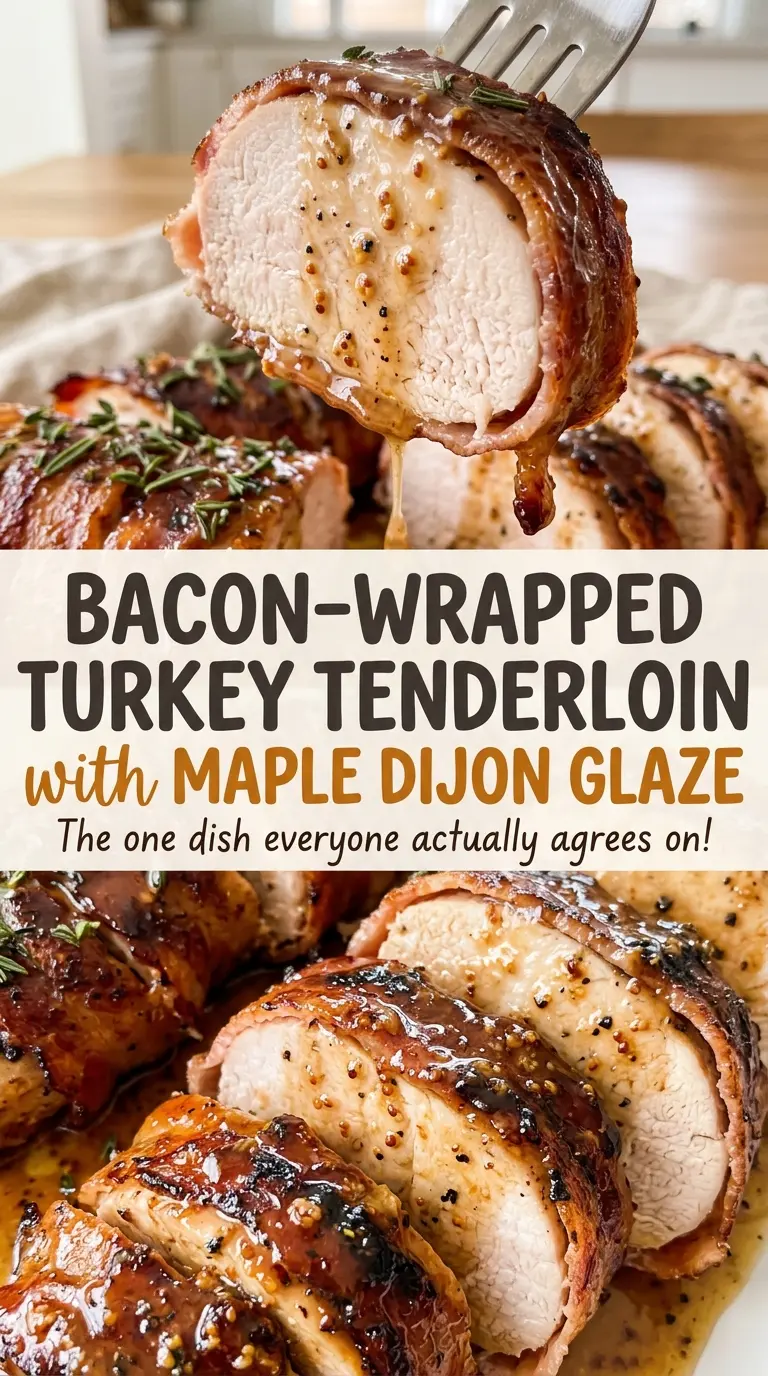
- Turkey tenderloins — Their long, narrow shape makes them easy to wrap with bacon and slice for serving. Pat the surface dry before seasoning; damp turkey is harder to handle neatly.
- Bacon — It adds the salty, smoky outside that balances the mild turkey. Flexible slices are easiest to overlap along the length without tearing; a standard grocery-store package works well.
- Pure maple syrup — It gives the glaze its distinct maple flavor and helps it coat the bacon. Use pure maple syrup rather than pancake syrup, which has a different sweetness and won’t give the same maple taste.
- Dijon mustard — Dijon contributes sharpness and helps the glaze hold together as you brush it on. A regular smooth Dijon from the grocery store is all you need.
- Apple cider vinegar — Its acidity keeps the glaze from tasting one-note sweet and gives the mustard a brighter edge. A standard bottle is fine; there’s no need to seek out a specialty vinegar.
- Kosher salt and black pepper — They season the turkey beneath the bacon, so the meat itself isn’t relying on the glaze for all its seasoning. Freshly ground pepper gives a more pronounced bite, though ordinary ground black pepper works too.
The Roast, Glaze, and Finish That Bring It Together
Whisk the Glaze and Set Up the Pan
Heat the oven to 400°F, line a 13×18-inch rimmed baking sheet with foil, and set an oven-safe wire rack on top. The rack keeps the tenderloins raised above the sheet while they roast. Whisk the maple syrup, Dijon mustard, and apple cider vinegar in a small bowl until the mixture looks even. Keep the glaze nearby for the point when the first roast is finished.
Season and Wrap Each Tenderloin
Pat the turkey tenderloins dry, then season them all over with kosher salt and black pepper. Wrap each piece with four slices of bacon, overlapping the strips slightly as you work along the length. Tuck the bacon ends underneath so the wrap stays in place. Put each tenderloin seam side down on the rack, leaving a little room between the pieces.
Glaze, Roast to Temperature, and Rest
Roast the wrapped tenderloins for 20 minutes, then brush the tops and sides with all of the glaze. Return the pan to the oven for another 10–20 minutes, checking the thickest part of each tenderloin with an instant-read thermometer; it should reach 165°F. If the bacon needs extra browning, broil on high for 1–2 minutes and watch it closely. Rest the turkey on the rack for 5 minutes before slicing.
Three Useful Ways to Adapt the Maple-Dijon Turkey
Make the Glaze More Tangy
Shift the balance of the same maple syrup and Dijon toward more mustard and less maple, keeping the apple cider vinegar in the mix. The glaze will taste sharper and less sweet, though it won’t have quite the same syrupy finish. Brush it on at the same point in the roast so the mustard isn’t exposed to the oven for the full cooking time.
Leave Off the Bacon for a Leaner Version
Season the tenderloins and roast them on the rack without wrapping them, then brush on the maple-Dijon glaze after the first 20 minutes. Continue roasting until the thickest part reaches the recipe’s doneness temperature. Without bacon, the outside won’t have the same smoky, salty layer, and the glaze will be the main source of color and flavor.
Reduce the Added Salt
For less added sodium, leave the kosher salt off the turkey and keep the black pepper. The bacon still brings salt to the finished dish, so this is a reduction in added salt rather than a low-sodium version. The turkey will taste less seasoned beneath the bacon.
Storage and Reheating
- Refrigerator: Store leftover turkey in an airtight container for 3–4 days. The bacon softens after chilling, but the meat stays easy to slice.
- Freezer: Freeze sliced or whole portions in an airtight freezer-safe container for up to 3 months for best quality. Thaw in the refrigerator before reheating.
- Reheating: Reheat in the oven until steaming hot throughout. Cover loosely at first to keep the turkey from drying, then uncover near the end if you’d like the bacon to regain some texture; reheating uncovered the whole time can dry the meat.
Questions That Come Up With Bacon Wrapped Turkey Tenderloin
Bacon Wrapped Turkey Tenderloin with Maple Dijon Glaze
Ingredients
Equipment
Method
- Heat the oven to 400°F and line a 13x18-inch rimmed baking sheet with foil; set an oven-safe wire rack on the sheet.
- Whisk the maple syrup, Dijon mustard, and apple cider vinegar in a small bowl.
- Pat the turkey tenderloins dry and season all over with the salt and pepper.
- Wrap each tenderloin with 4 slices of bacon, slightly overlapping the slices along the length and tucking the ends underneath; place seam side down on the rack.
- Roast for 20 minutes, then brush the tops and sides of the bacon-wrapped tenderloins with all of the glaze.
- Roast for 10–20 minutes more, until the thickest part of each tenderloin reaches 165°F; if the bacon needs more browning, broil on high for 1–2 minutes, watching closely.
- Rest the turkey on the rack for 5 minutes before slicing.
