
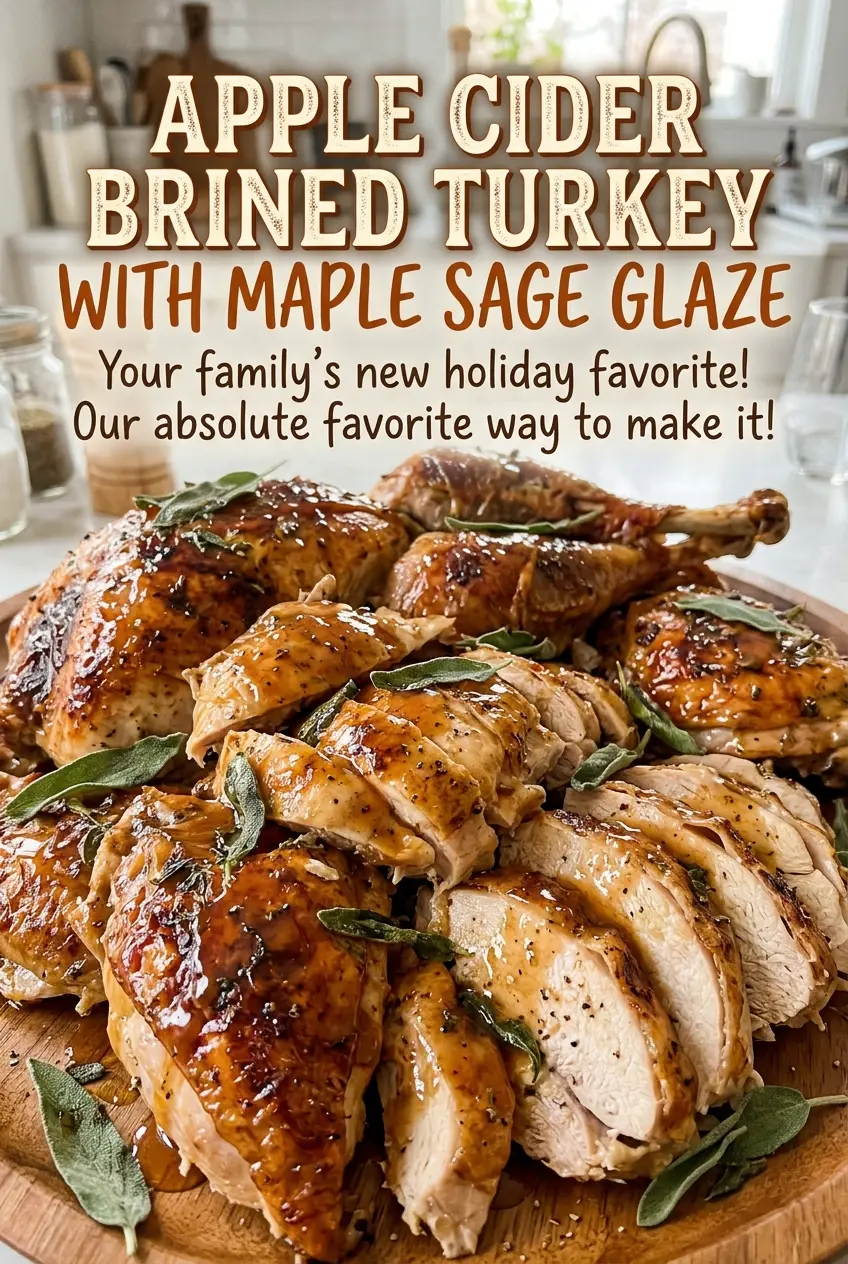
The brine bag always looks a little precarious before it goes into the refrigerator, which is why I set it in a rimmed baking sheet first. Once the turkey is tucked into apple cider, salt, and aromatics, the waiting does most of the work. This apple cider brined turkey with maple sage glaze comes out seasoned throughout, with a sweet-savory coating that turns glossy as it roasts.
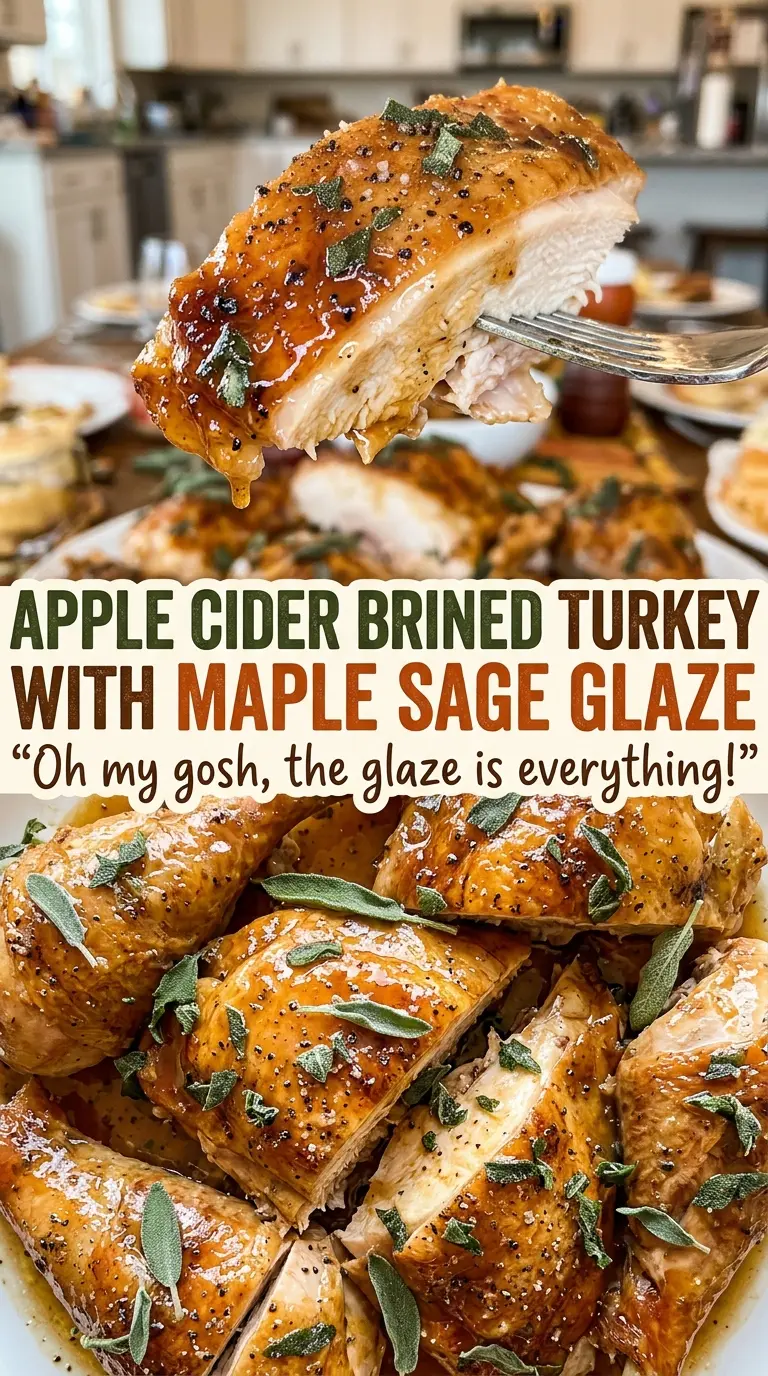
I simmer just enough water to dissolve the salt and brown sugar, then cool that concentrated mixture before adding the cider and the rest of the water. It’s an easier way to chill the brine than heating the full batch, and it keeps the turkey’s long brining time firmly in the refrigerator. A final brush of maple, butter, Dijon, and sage gives the skin a fragrant finish without masking the turkey. On the carving board, the meat is juicy and the glaze has just enough sharpness to keep the sweetness in check.
Kitchen Note
I don’t rinse the turkey after brining. Rinsing won’t pull salt back out of the meat, and it splashes raw poultry liquid around the sink; I discard the brine and go straight to patting the bird dry.
Save this apple cider brined turkey with maple sage glaze for a holiday bird with juicy meat and a buttery, sweet-savory finish.
Why Only Four Cups of the Cider Brine Get Heated
The salt and brown sugar need warmth to dissolve, but the entire brine doesn’t need to go on the stove. I simmer a small portion of the water with the seasonings, then stir in the remaining water and apple cider after the mixture has cooled. That makes a concentrated base that’s easy to work with and faster to chill than a full pot of hot liquid.
Don’t shortcut the cooling step by putting the turkey into warm brine. The brine needs to be cold before the bird goes in, and it stays refrigerated throughout the brining time. I wait until the mixed brine has reached 40°F or colder, then add the fully thawed turkey. This small bit of planning matters most on a day when the refrigerator is already crowded: prepare the brine early enough that it has time to cool completely, rather than trying to rush it when dinner prep is underway.
What the Cider, Salt, and Maple Each Bring to This Turkey
- The turkey — Start with a fully thawed, plain 12- to 14-pound bird with the giblets and neck removed. A turkey that’s already brined or injected has extra salt in it, so it isn’t a good match for this brine.
- Diamond Crystal kosher salt — The brine is measured for this specific salt. Its crystals are less dense than many other kosher salts, so don’t replace it with the same volume of a denser brand; the brine could end up too salty. If you only have another brand, use a reliable weight conversion for that brand rather than guessing by volume.
- Apple cider — Cider gives the brine an apple note that’s deeper and less one-dimensional than plain sweetness. If cider isn’t available, use the same volume of apple juice; the result will taste sweeter and less rounded.
- Pure maple syrup — Pure maple syrup brings a woodsy sweetness that works especially well with sage. Pancake syrup has a different flavor and consistency, so it won’t give the glaze the same character. Honey can replace the maple syrup in an equal amount for a more floral finish.
- Dijon mustard and fresh sage — Dijon keeps the buttery glaze from tasting flat, while fresh sage ties it to the aromatics tucked into the cavity. Keep the sage divided as written: whole sprigs flavor the turkey from inside, and finely chopped leaves spread through the glaze.
- Butter — Butter gives the glaze a smooth, rich body. For a dairy-free version, use the same amount of plant-based butter; the maple and sage will still come through, though the glaze may taste a little less buttery.
How to Brine, Dry, and Glaze the Turkey Without Rushing It
Make a concentrated brine, then chill it fully
Bring the measured portion of water, salt, brown sugar, peppercorns, bay leaves, and smashed garlic to a simmer in a 3-quart saucepan. Stir until the salt and sugar dissolve, then let the mixture cool completely. Pour it into the brining bag set inside an 18×13-inch rimmed baking sheet, add the remaining water and cider, and stir. Refrigerate until the mixed brine is 40°F or colder before adding the turkey.
Keep the turkey submerged and cold
Lower the fully thawed turkey into the chilled brine, press out excess air, and seal the bag. Refrigerate it at 40°F or colder for 12 to 18 hours, turning the bag once halfway through so the bird sits evenly in the liquid. The baking sheet catches any drips and gives you a firm base for moving the bag. Don’t leave the brining turkey on the counter.
Dry the skin before roasting
Lift the turkey out and discard the brine, then pat the bird very dry. Set it breast-side up on a rack in a 16×13-inch roasting pan and refrigerate uncovered for 8 to 12 hours. That uncovered rest gives surface moisture time to evaporate, so the skin has a better chance of roasting rather than staying damp. Keep the turkey on the rack; don’t set it directly into the pan.
Roast first, then build the glaze in coats
Heat the oven to 325°F with a rack in the lower third. While it heats, let the turkey sit out for no more than 30 minutes; rub vegetable oil over the skin and beneath the breast skin, then loosely fill the cavity with the quartered onion, lemon, and sage sprigs. Roast for 2 1/2 hours. Melt the maple syrup, butter, Dijon, chopped sage, and black pepper together over medium-low heat, then brush on about one-third of the glaze and add the remaining glaze in two more coats, 15 minutes apart.
Check both parts of the bird, then let it rest
Continue roasting for 45 to 75 minutes after the first glaze coat, until an instant-read thermometer reads 165°F in the thickest part of the breast and the innermost part of the thigh. If the skin gets too dark before the turkey is ready, tent it loosely with foil. Transfer the cooked turkey to a cutting board and tent it loosely with foil. Rest for 30 minutes before carving so the juices settle instead of running onto the board.
Three Useful Swaps for the Brine and Maple Sage Glaze
Use apple juice when cider is hard to find
Replace the apple cider with the same volume of apple juice. It makes the finished turkey a little sweeter and less tart, but still pairs well with the sage and maple glaze.
Make the glaze dairy-free
Swap the butter for an equal amount of plant-based butter. The glaze keeps its maple, Dijon, and sage notes, with a slightly different richness depending on the butter you use.
Trade maple for honey
Use the same amount of honey in place of the maple syrup for a more floral sweetness. Keep the butter, Dijon, sage, and pepper in the glaze so it still has the savory balance that suits the turkey.
Storage and Reheating
- Refrigerator: Store carved turkey in a covered container for 3 to 4 days. The skin softens as it sits, but the meat stays good for sandwiches and reheated meals.
- Freezer: Freeze sliced or pulled turkey in airtight portions for up to 2 to 6 months for best quality. Let it thaw in the refrigerator before reheating.
- Reheating: Add a little broth to the turkey, cover it, and warm it in a 325°F oven until it reaches 165°F. Reheating uncovered can dry out the slices before the center gets hot.
Questions That Come Up When Brining a Whole Turkey
Apple Cider Brined Turkey with Maple Sage Glaze
Ingredients
Equipment
Method
- In a 3-quart saucepan, bring 4 cups of the water, salt, brown sugar, peppercorns, bay leaves, and garlic to a simmer, stirring until the salt and sugar dissolve.
- Cool the mixture completely.
- Set a large turkey brining bag in an 18x13-inch rimmed baking sheet and pour in the cooled mixture.
- Add the remaining 20 cups water and the apple cider, then stir.
- Refrigerate until the brine is 40°F or colder.
- Place the turkey in the chilled brine, press out excess air, and seal the bag.
- Refrigerate at 40°F or colder for 12 to 18 hours, turning the bag once halfway through.
- Remove the turkey and discard the brine without rinsing the turkey.
- Pat the turkey very dry, then set it breast-side up on a rack in a 16x13-inch roasting pan.
- Refrigerate uncovered for 8 to 12 hours.
- Preheat the oven to 325°F with a rack in the lower third.
- Let the turkey sit out for no more than 30 minutes while the oven heats.
- Rub the vegetable oil over the turkey skin and under the breast skin.
- Loosely fill the cavity with the onion, lemon, and sage sprigs.
- Roast for 2 1/2 hours.
- In a small saucepan, melt the maple syrup, butter, Dijon mustard, chopped sage, and black pepper over medium-low heat, stirring until combined.
- Brush about one-third of the glaze over the turkey.
- Apply the remaining glaze in two more coats 15 minutes apart.
- Roast for 45 to 75 minutes longer, until an instant-read thermometer reads 165°F in the thickest part of the breast and the innermost part of the thigh, tenting loosely with foil if the skin gets too dark.
- Transfer the turkey to a cutting board and tent loosely with foil.
- Rest for 30 minutes before carving.
