
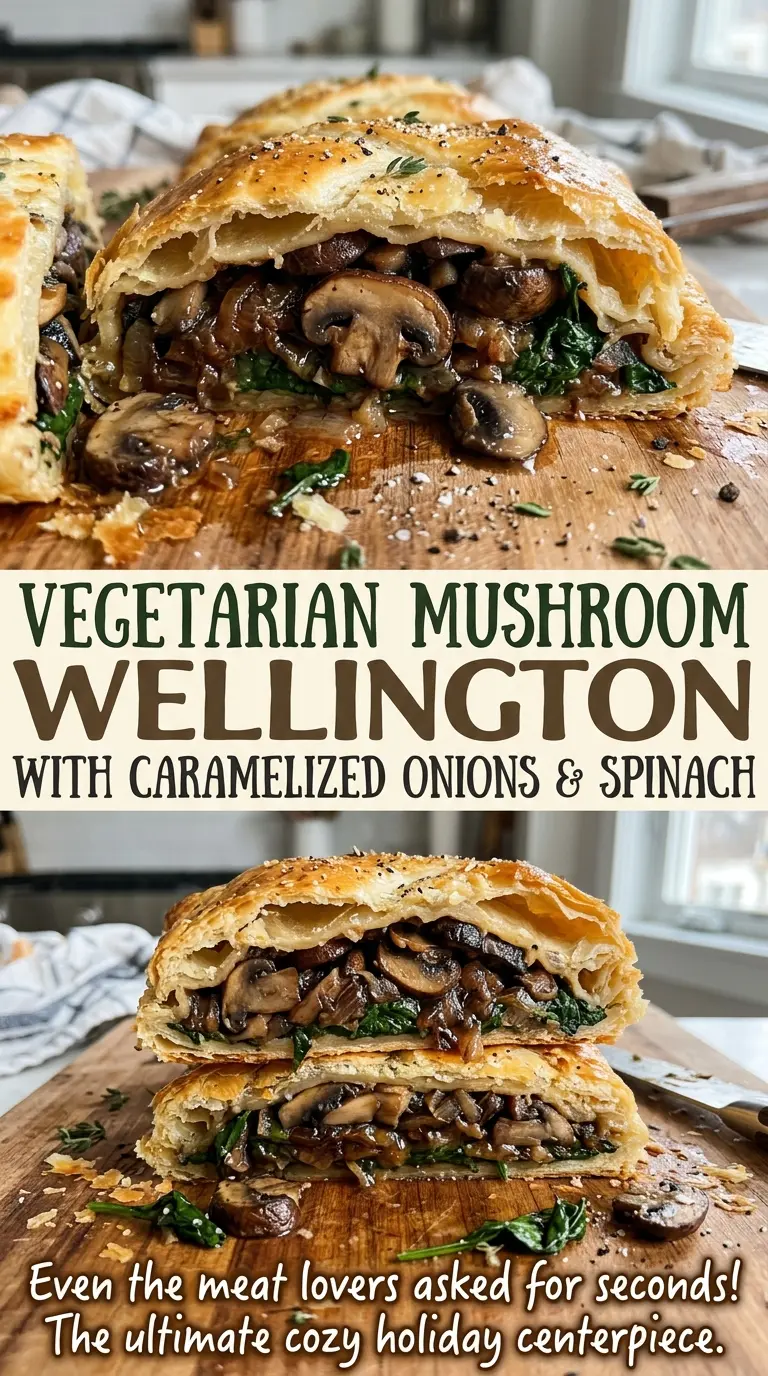
The onions start out piled high in the skillet, then slowly collapse as they soften and turn a deep golden brown. That long, gentle cook gives this vegetarian mushroom Wellington its sweet, savory center without relying on cheese or a heavy sauce. When I make it, I give the onions their time and let the mushrooms cook in batches instead of crowding the pan.
Cremini mushrooms release plenty of liquid, and that moisture needs to cook off before the filling goes anywhere near the pastry. Once the spinach wilts and the pan is dry, panko and Dijon help bring the filling together. Wrapped in puff pastry and baked until crisp, it slices into a flaky shell around a rich, earthy middle.

Kitchen Note
Brush the pastry edge with egg wash before you fold it over the filling. It gives the seam something to grip, so set the Wellington seam-side down on the baking sheet before brushing the top.
Save this vegetarian mushroom Wellington for a dinner centerpiece with sweet caramelized onions, spinach, and a crisp puff pastry shell.
Why the Mushrooms Need Their Own Turns in the Skillet
Putting all the mushrooms into the skillet at once seems faster, but they release enough liquid to crowd the pan. Instead of browning, they steam in their own moisture and leave the filling wet. Cooking half at a time gives each batch more contact with the hot skillet, so the liquid can evaporate and the mushrooms can begin to brown.
That browning matters in a Wellington because the filling is sealed inside pastry. There’s no chance for excess moisture to escape while it bakes, and a damp filling can leave the pastry soft underneath. I transfer each browned batch to the bowl with the onions, then bring everything back together after the garlic and thyme have had a minute in the skillet. You’re looking for mushrooms that have lost their watery sheen and started to take on color, not pale pieces sitting in liquid.
What the Onions, Panko, and Dijon Bring to the Filling
- Yellow onions — Their slow-cooked sweetness balances the earthy mushrooms. Slice them thinly and as evenly as you can so they soften at the same pace; ordinary yellow onions work well here.
- Cremini mushrooms — Cremini bring a deeper, earthier taste than white button mushrooms. Button mushrooms are a workable same-amount substitute, though the filling will taste a little milder.
- Baby spinach — It softens quickly and adds a tender, leafy layer. Add it by handfuls so it wilts down into the hot filling rather than sitting in a mound on top.
- Panko breadcrumbs — The coarse crumbs help absorb the last bit of moisture and keep the filling from slumping when sliced. Plain dry breadcrumbs work in the same amount, but give the center a tighter, less textured feel.
- Dijon mustard — Dijon adds a sharp note that cuts through the sweetness of the onions and helps the filling hold together. A smooth, standard Dijon is all you need; a specialty mustard isn’t necessary.
- Puff pastry — Use a single sheet thawed from a 17.3-ounce package. A sheet that has thawed enough to roll without cracking is easier to shape and seal than pastry that’s still stiff from the freezer.
Build a Dry Filling Before Wrapping the Pastry
Set Up the Oven and Baking Sheet
Heat the oven to 400°F and line a large rimmed baking sheet with parchment paper. A rimmed sheet gives you a stable surface for the Wellington and catches any filling that escapes. Have the pan ready before you start rolling the pastry.
Soften the Onions Until Deeply Golden
Heat two tablespoons of olive oil with the butter in a 12-inch skillet over medium heat, then add the onions and a quarter teaspoon of the salt. Cook over medium-low heat for 30 to 35 minutes, stirring often. They should become very soft and deeply golden, not just translucent. If the edges darken before the centers soften, lower the heat and keep stirring.
Brown the Mushrooms Without Crowding
Transfer the onions to a bowl, then add a tablespoon of the remaining oil to the skillet and cook half the mushrooms for 8 to 10 minutes. Season that batch with some of the remaining salt and pepper, and transfer it to the bowl when its liquid has evaporated and the mushrooms begin to brown. Add the last tablespoon of oil and repeat with the rest of the mushrooms, seasoning that batch as well. A pool of liquid in the skillet means they need more time.
Wilt the Spinach and Bring the Filling Together
Add the garlic and thyme to the skillet and cook for one minute. Return the onions and mushrooms, then stir in the spinach by handfuls until it wilts; keep cooking until the pan is dry, about 2 to 3 minutes. Take the skillet off the heat and stir in the panko and Dijon. Spread the filling in a shallow bowl and let it cool completely.
Shape the Log and Bake Until Crisp
Beat the egg with the water in a small bowl. Dust the work surface with flour and roll the thawed pastry into a 12×14-inch rectangle, then spoon the cooled filling into a 10×3-inch log down the center. Fold the long sides over, brush the edge with egg wash to seal, fold the ends under, and place the Wellington seam-side down on the baking sheet. Brush the top with egg wash and cut a few shallow slits in the pastry. Bake for 35 to 40 minutes, until deeply golden and crisp, then rest on the baking sheet for 10 minutes before slicing.
Three Practical Ways to Adapt This Mushroom Wellington
Leave Out the Spinach for a Mushroom-Forward Center
Omit the spinach and keep the rest of the filling the same. The center will taste more intensely of mushrooms and onions, and the finished Wellington will have a little less filling. Cook the mushrooms until their liquid has evaporated before adding the panko and Dijon.
Make It Dairy-Free with Olive Oil
Replace the butter with one tablespoon of olive oil, and use a dairy-free puff pastry. The onions will still soften and brown, though the filling will have a little less buttery richness. Check that the pastry itself is dairy-free, since ingredients vary by brand.
Skip the Egg Wash for an Egg-Free Finish
Use water in place of the egg wash to seal the pastry and brush the top. The Wellington will still bake, but the crust won’t have the same sheen or deep golden color. Choose a puff pastry that doesn’t contain egg if you need the whole dish to be egg-free.
Storage and Reheating
- Refrigerator: Store covered for up to 4 days. The pastry softens as it sits, but the filling keeps well.
- Freezer: Freeze cooled slices individually wrapped, then place them in an airtight container for up to 2 months. Thaw overnight in the refrigerator.
- Reheating: Warm slices on a baking sheet at 350°F for 10 to 15 minutes, until heated through and crisp at the edges. Skip the microwave if you want the pastry to stay crisp.
Questions That Come Up When Making Mushroom Wellington
Vegetarian Mushroom Wellington with Caramelized Onions and Spinach
Ingredients
Equipment
Method
- Heat the oven to 400°F.
- Line a large rimmed baking sheet with parchment paper.
- Heat 2 tablespoons of the olive oil and the butter in a 12-inch skillet over medium heat.
- Add the onions and 1/4 teaspoon of the salt; cook over medium-low heat for 30-35 minutes, stirring often, until deeply golden and very soft.
- Transfer the onions to a bowl.
- Add 1 tablespoon of the remaining oil to the skillet and cook half the mushrooms for 8-10 minutes, until their released liquid evaporates and they begin to brown.
- Transfer the mushrooms to the bowl.
- Add the last tablespoon of oil and cook the remaining mushrooms the same way, seasoning both batches with the remaining salt and the pepper.
- Add the garlic and thyme to the skillet and cook for 1 minute.
- Return the onions and mushrooms to the skillet.
- Stir in the spinach in handfuls and cook until wilted and the pan is dry, about 2-3 minutes.
- Remove the skillet from the heat and stir in the panko and Dijon.
- Spread the filling in a shallow bowl and cool completely.
- Beat the egg and water together in a small bowl to make an egg wash.
- Dust the work surface with the flour and roll the pastry into a 12x14-inch rectangle.
- Spoon the cooled filling into a 10x3-inch log down the center.
- Fold the long sides over the filling and brush the edge with egg wash to seal.
- Fold the ends under and place seam-side down on the prepared baking sheet.
- Brush the top with egg wash and cut a few shallow slits in the pastry.
- Bake for 35-40 minutes, until the pastry is deeply golden and crisp.
- Rest on the baking sheet for 10 minutes before slicing.
