
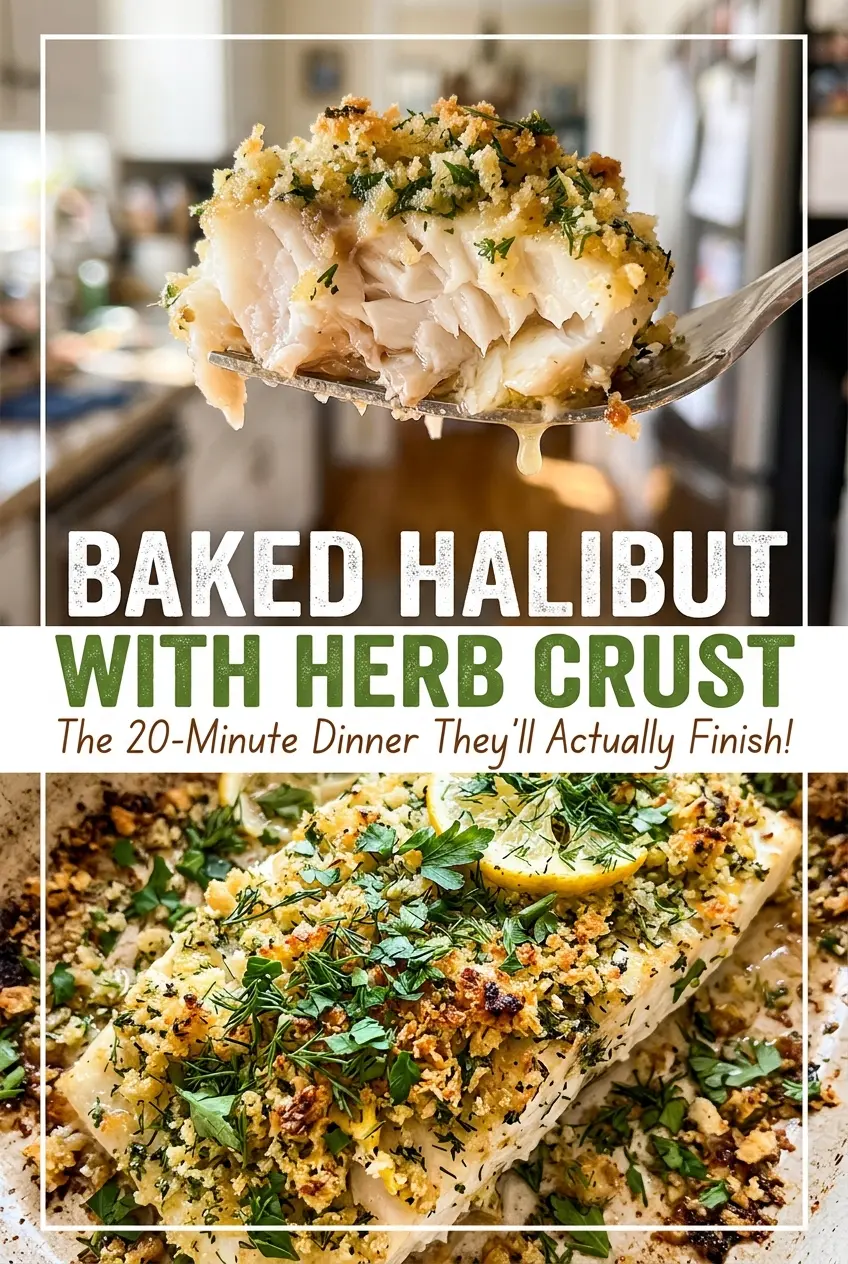
The panko should feel damp and loose when you stir it, not packed into a paste. That small texture cue matters: dry crumbs slide off, while a heavy handful can bake up dense instead of crisp. I use that lightly buttered mixture for this baked halibut with herb crust, pressing it onto a thin layer of Dijon so it stays put through the oven’s heat.
Halibut is mild and lean, which makes it a good match for a topping with fresh herbs, garlic, and lemon zest. The fish cooks quickly, so I keep the portions in one layer and watch the thickest piece rather than relying on the clock alone. Once the crust is golden and the center is cooked through, a short rest gives the fish a moment to settle before it reaches the table.
Kitchen Note
When the crumbs are mixed, they should clump lightly if you pinch them, then fall apart when you loosen your fingers. If they look dry and powdery, the butter hasn’t coated them evenly; keep stirring before they go on the fish.
Save this baked halibut with herb crust for a dinner that pairs tender fish with a crisp, garlicky panko topping.
Why the Dijon Layer Matters More Than It Looks
Halibut doesn’t have the sticky surface you get with a fattier cut of fish, so a mound of crumbs pressed straight onto it is prone to slipping. Dijon solves that without turning the topping into a thick coating. Spread a thin, even layer across the top of each portion, then press the crumbs gently into it; the mustard holds the panko in place as the butter helps it brown.
The mustard also brings a mild tang that keeps the buttery topping from tasting heavy beside the delicate fish. It shouldn’t form a thick blanket or run down the sides of the fillet. Too much can make the crust taste sharp and soften the crumbs underneath, while a thin coat gives each bite a little savory lift. Keep the topping on the upper surface, where the oven can brown it instead of letting it sit in the fish juices.
This is a useful distinction when a crust seems to disappear during baking: more crumbs won’t fix a weak bond. A consistent mustard layer and a gentle press do more to keep the topping in place than piling it high. You’re aiming for an even cover, not a compacted shell.
What Panko, Fresh Herbs, and Halibut Each Bring to the Crust
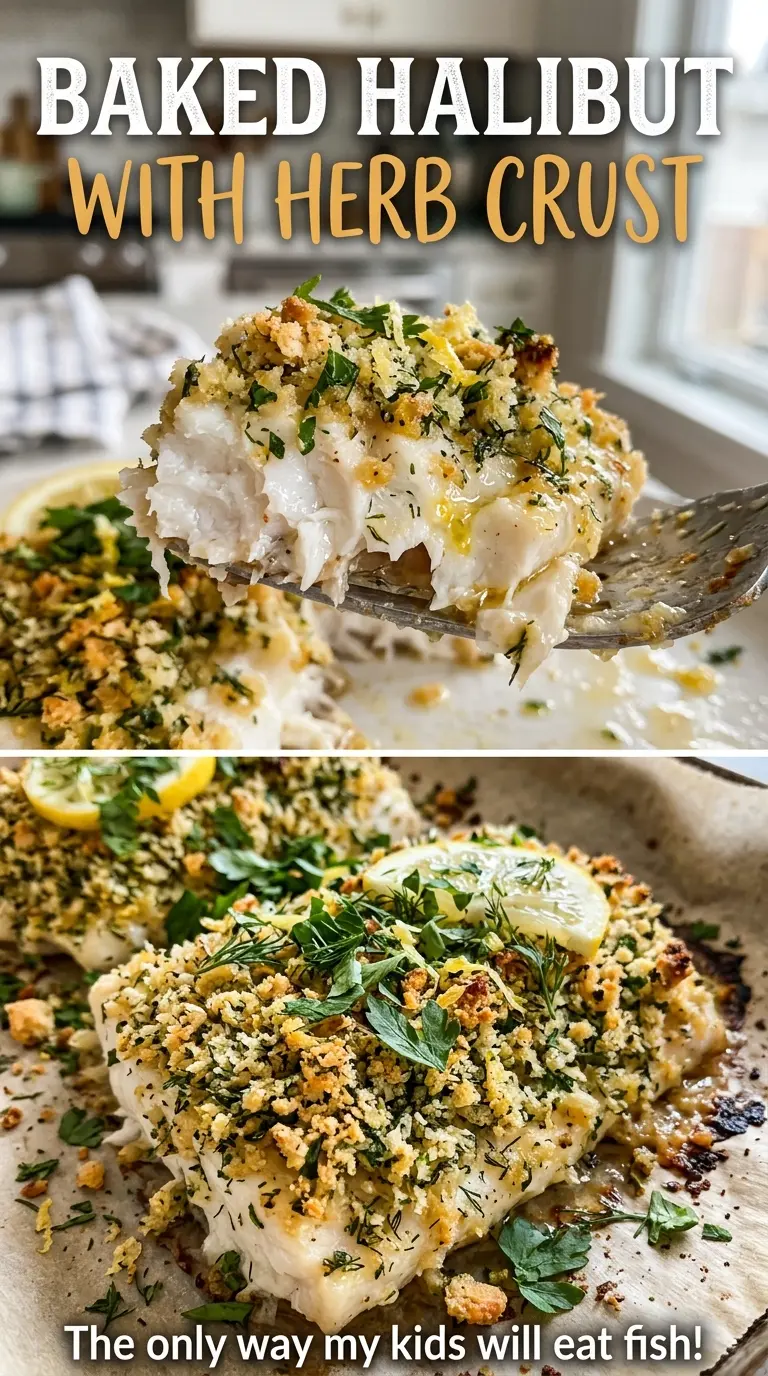
- Panko breadcrumbs — Their larger, airy flakes give the topping a lighter crunch than fine breadcrumbs. Plain breadcrumbs can stand in at the same volume, but the crust will be tighter and less crisp. For a gluten-free version, use gluten-free panko in the same amount; the texture stays close to the original.
- Unsalted butter — Melted butter coats the crumbs and brings a rounded, savory flavor as they brown. There’s no need for a specialty brand here; fresh butter matters more than its label. For a dairy-free adaptation, use olive oil in place of the melted butter, knowing the crumbs will taste less rich and brown a little differently.
- Parsley, dill, garlic, and lemon zest — Fresh herbs give the crust its clean, green aroma, and finely grated zest distributes lemon fragrance without adding juice that would wet the crumbs. Choose herbs with lively color and no wilted or slimy leaves. If you don’t have dill, leave it out for a simpler parsley-and-garlic topping rather than using dried dill, which tastes more concentrated and lacks the same fresh lift.
- Halibut fillets — Look for firm, moist portions with a mild smell and similar thickness so they cook at roughly the same pace. If halibut isn’t available, thick cod portions are a practical alternative; their timing can vary, so judge doneness by the thickest part of the fish. Patting the fish dry gives the mustard a better surface to cling to.
- Dijon mustard — Dijon spreads easily and gives the crumb layer a reliable grip, with enough acidity to balance the buttery topping. A smooth, standard Dijon is all you need; a premium jar won’t make a major difference here. Whole-grain mustard is a less tidy swap because its seeds make an even coating harder to spread.
Build the Herb Crust Before the Halibut Goes in the Oven
Coat the Panko Evenly
Stir the melted butter, panko, parsley, dill, garlic, lemon zest, kosher salt, and black pepper together in a medium bowl. Keep stirring until the crumbs look evenly moistened, with no dry patches sitting at the bottom. They should stay loose rather than compressing into a paste. If you see a few buttery clumps, break them up with the spoon before topping the fish.
Dry and Coat the Portions
Heat the oven to 425°F and lightly coat a 9×13-inch baking dish with the olive oil. Pat the halibut dry, then arrange the four portions in the dish without overlapping them. Spread the top of each portion with Dijon mustard in a thin, even layer. If the fish is wet, the mustard and topping can slide around instead of settling neatly on top.
Press on the Crumbs and Bake
Spoon the herb mixture over the mustard-coated tops and press gently so the crumbs make contact without being packed hard. Bake for 10 to 15 minutes, checking the thickest portion as the end of that window approaches. The crust should be golden, and the fish should reach 145°F at its thickest part. Thicker portions take longer than thin ones, so the color of the topping alone isn’t a reliable doneness check.
Give the Fish a Brief Rest
Take the baking dish out and let the halibut rest for 3 minutes before serving. The topping stays crispest when you leave the portions in the dish rather than covering them tightly with foil. Lift each piece carefully so the crust stays on top. The fish should flake easily while still looking moist inside.
Two Useful Ways to Adapt the Herb Crust
Make the topping gluten-free
Replace the regular panko with gluten-free panko, keeping the same volume and mixing method. It gives you a similar flaky crunch, though brands vary in how quickly their crumbs brown, so use the golden crust and fish temperature as your cues rather than expecting an identical finish.
Make it dairy-free with olive oil
Use olive oil instead of the melted butter to moisten the panko. The result is less buttery and has a cleaner olive-oil note, while still giving the crumbs enough coating to bake into a crisp topping. Stir well so the oil is distributed instead of pooling at the bottom of the bowl.
Storage and Reheating
- Refrigerator: Store leftovers in an airtight container for up to 3 to 4 days. The crust softens in the refrigerator, though the fish stays tender.
- Freezer: Cooked halibut can be frozen in an airtight container for up to 2 to 3 months, but the crumb topping loses much of its crispness after thawing.
- Reheating: Warm portions in a 325°F oven until heated through, loosely covered if the crust is browning too quickly. Avoid the microwave when you can; it heats fish unevenly and leaves the topping soft.
Questions That Come Up When Baking Halibut
Baked Halibut with Herb Crust
Ingredients
Equipment
Method
- Stir the melted butter, panko, parsley, dill, garlic, lemon zest, salt, and pepper together in a medium bowl until the crumbs are evenly moistened.
- Heat the oven to 425°F.
- Lightly coat a 9x13-inch baking dish with the olive oil.
- Pat the halibut dry and arrange the portions in the prepared dish.
- Spread the top of each portion with Dijon mustard.
- Press the herb crumbs onto the mustard-coated tops.
- Bake for 10 to 15 minutes, until the crust is golden and the thickest part of the fish reaches 145°F.
- Let the halibut rest for 3 minutes before serving.
