
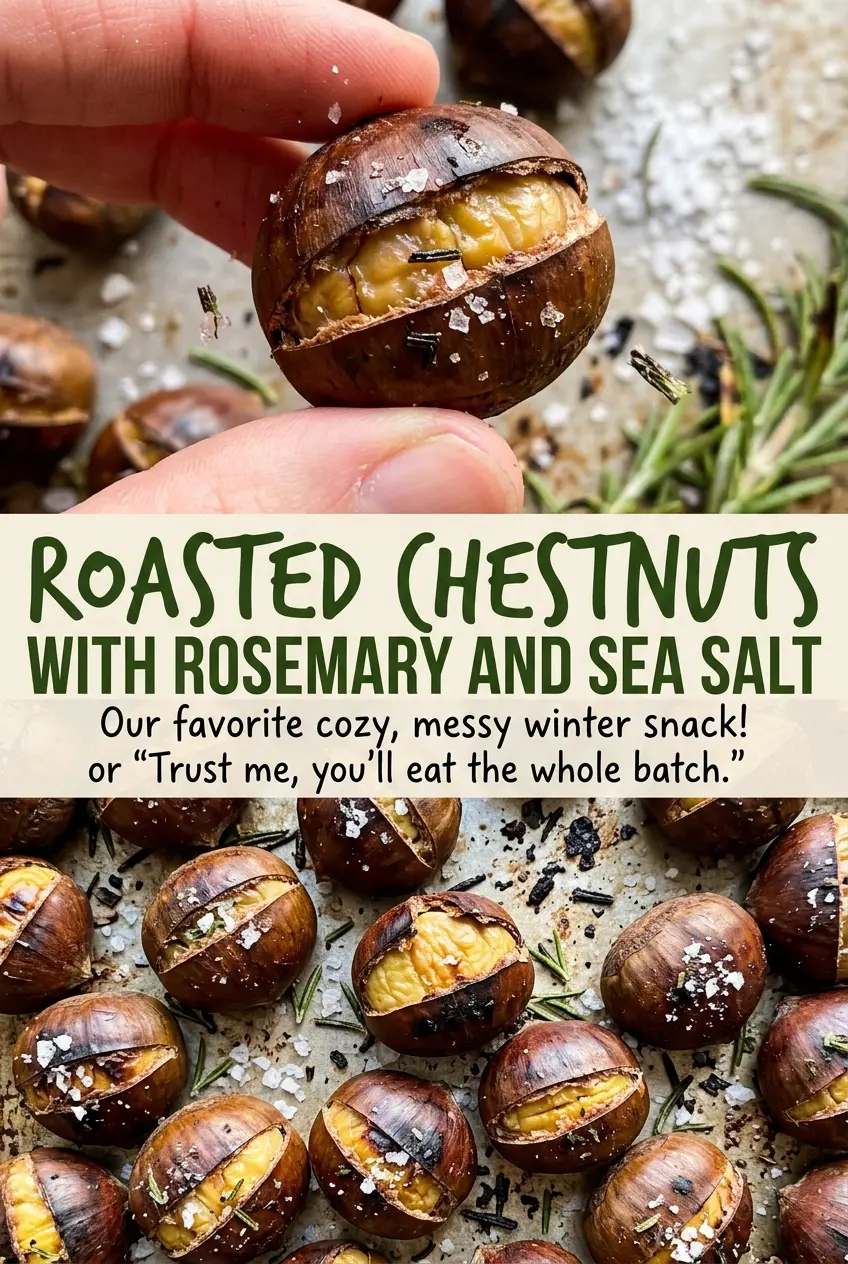
The shells start to curl back at the cuts, and that’s when the kitchen gets its first warm, earthy hint of chestnuts. Roasting them at high heat brings out a gently sweet, soft center; a little olive oil, fresh rosemary, and flaky salt finish the nuts without covering their flavor. These roasted chestnuts are best served warm, when the shells have just come off and the seasoning still clings to each piece.
Cutting an X in every shell takes a few minutes, but it’s the step that makes the roasting and peeling work. I keep the cuts on the rounded side and make sure they go through the shell. Once the chestnuts are roasted, peel both the hard shell and the thin inner skin before tossing them with the rosemary and salt. The result is tender chestnuts with a fragrant, savory finish.
Kitchen Note
Start peeling as soon as the chestnuts are cool enough to handle. The shells and thin inner skins come away more readily while the nuts are still warm, so don’t wait until they’ve cooled completely.
Save these roasted chestnuts with rosemary and sea salt for a warm, savory snack with a tender center and fragrant finish.
That Little X Is What Keeps Chestnuts From Turning Into a Peeling Job
The cut does two jobs: it gives the hot chestnut room to release steam, and it creates an edge you can catch when you start peeling. Without a cut through the shell, heat builds inside and the shell stays stubbornly closed. A small, sharp knife is easier to control than a large one when you’re working on a rounded surface.
Make the X on the rounded side of each chestnut, rather than trying to slice through the nut itself. Keep the cuts visible and open enough to curl back during roasting. If you cut too timidly and barely break the shell, the opening may not help much when it’s time to peel. Take your time with each one; this is careful knife work, not a job to rush.
Roasting them in a single layer, cut side up, keeps the cuts exposed to the oven’s heat. It also gives you a clear visual cue: the shells curl back at the X as the chestnuts roast. That cue matters more than guessing from color alone, since chestnut shells don’t brown like a piece of toast. When the shells have opened and the nuts are tender, they’re ready for the next step.
What Fresh Chestnuts, Rosemary, and Flaky Salt Each Bring
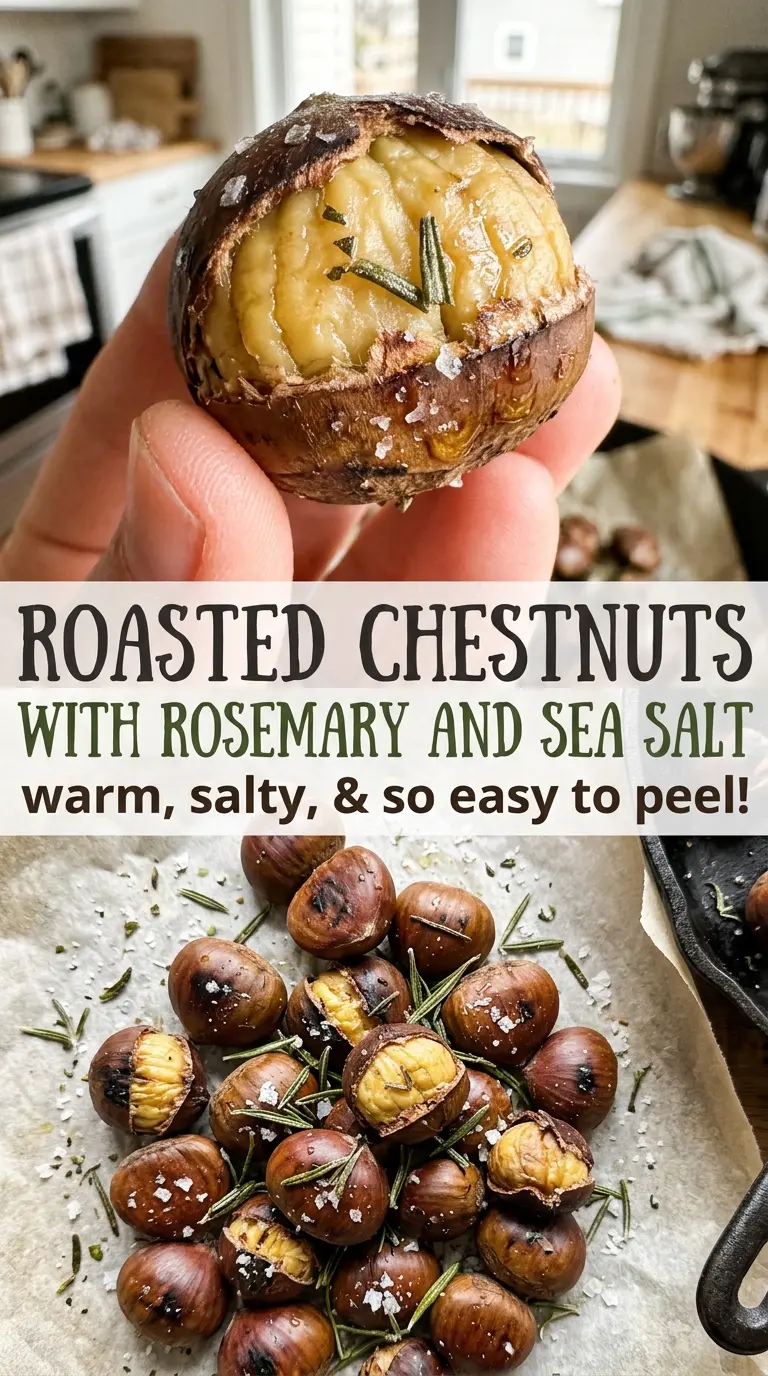
- Fresh chestnuts — Buy whole chestnuts with firm shells and a solid feel; skip any that are soft, cracked, or visibly moldy. Fresh whole nuts are the right choice for this method because they roast in their shells and are peeled afterward. Packaged peeled chestnuts aren’t a direct stand-in: they’re already cooked and won’t follow the same roasting and peeling process.
- Olive oil — It lightly coats the peeled chestnuts and helps the chopped rosemary and salt cling. An everyday olive oil works well here; there’s no need to use a special finishing oil. Leaving it out is possible, but the seasonings won’t coat the nuts as evenly.
- Fresh rosemary — Finely chopped fresh leaves give the chestnuts a clean, fragrant herbal note. Strip the leaves from the woody stems before chopping so you don’t end up with tough pieces in the finished bowl. Dried rosemary isn’t a direct replacement for the fresh herb’s texture or intensity.
- Flaky sea salt — The flakes add little crisp, salty hits that suit the soft chestnuts. Use flaky salt for the intended finishing texture; finer salt disperses differently, and there isn’t a one-for-one amount to swap in here. You can leave it off for a less salty version.
The Roasting Cues That Tell You When Chestnuts Are Ready
Score Each Shell Without Rushing
Heat the oven to 425°F, then use a small, sharp knife to cut an X through the shell on the rounded side of each chestnut. Keep your fingers clear of the blade and work slowly; the round shape can shift under the knife. The goal is to open the shell, not to cut deeply into the nut. Set each scored chestnut aside as you go, then arrange them in one layer on a rimmed baking sheet with the cuts facing up.
Roast Until the Cuts Curl Back
Roast the chestnuts for 25 to 30 minutes. Look for the shells to curl back at the X, and check that the nuts are tender rather than firm in the center. Keep the chestnuts in a single layer so they roast evenly and the cuts stay exposed. If a shell hasn’t opened much, give the chestnuts the time they need within that roasting window and check tenderness before taking them out.
Peel, Then Season While Warm
Let the chestnuts cool only until they’re comfortable to handle, then peel away both the hard shells and the thin inner skins. The inner skin can cling to the nut, so work around the surface rather than pulling hard and breaking the chestnut. Toss the peeled nuts with the olive oil, finely chopped rosemary, and flaky sea salt. Serve them warm, when their soft texture and fresh rosemary aroma are at their best.
Two Easy Ways to Adjust the Rosemary and Salt
A rosemary-free batch for a simpler chestnut flavor
Leave out the chopped rosemary and toss the warm peeled chestnuts with the olive oil and flaky salt. The chestnuts’ natural sweetness comes through more clearly, though the bowl loses the fresh herbal aroma. This is the simplest adjustment if rosemary isn’t your favorite.
A lower-sodium finish without the flaky salt
Skip the sea salt and keep the olive oil and rosemary. The chestnuts will taste less savory and the rosemary will stand out more, but the warm, tender texture stays the same. This version is useful when you want to limit added salt.
Storage and Reheating
- Refrigerator: Refrigerate peeled leftovers in an airtight container within 2 hours and use them within 3 to 4 days. They’ll be less tender after chilling.
- Freezer: Freeze peeled, cooled chestnuts in an airtight freezer-safe container for up to 2 months for best quality. Thaw them in the refrigerator before warming.
- Reheating: Warm them gently in the microwave in short bursts, stopping as soon as they’re warm. Long heating can dry out the chestnuts; don’t leave them running until they’re piping hot.
Questions That Come Up While Roasting Chestnuts
Roasted Chestnuts with Rosemary and Sea Salt
Ingredients
Equipment
Method
- Heat the oven to 425°F.
- Use a small, sharp knife to cut an X through the shell on the rounded side of each chestnut, taking care not to cut yourself.
- Arrange the chestnuts in a single layer on a rimmed baking sheet, cut side up.
- Roast for 25 to 30 minutes, until the shells curl back at the cuts and the chestnuts are tender.
- Let the chestnuts cool just until you can handle them.
- Peel off the shells and the thin inner skins while they are still warm.
- Toss the peeled chestnuts with the olive oil, rosemary, and sea salt, and serve warm.
