
Beef taco pasta hits the table with the kind of comfort that makes people hover near the stove waiting for a bowl. The pasta turns glossy with taco-seasoned sauce, the beef brings a savory base, and the cheese melts into everything so each bite tastes creamy, hearty, and just a little smoky. It’s the sort of skillet dinner that disappears fast because it manages to feel both familiar and fun.
What makes this version work is the balance of liquid and heat. Rotel adds tomatoes and chiles without extra chopping, beef broth loosens the sauce enough to coat the pasta, and sour cream goes in at the end so the sauce stays smooth instead of breaking. The pasta finishes right in the skillet with the beef and sauce, which lets it soak up flavor instead of tasting like a separate component you tossed in at the last minute.
Below you’ll find the small details that keep the sauce creamy, plus a few easy swaps if you want to stretch it, lighten it up, or make it work with what’s already in your kitchen.
The sauce coated the rotini perfectly and the sour cream kept it creamy without tasting heavy. My kids went back for seconds and the skillet was almost gone by the time I sat down.
Save this beef taco pasta for a creamy skillet dinner with bold Tex-Mex flavor and one-pan cleanup.
The Reason Taco Pasta Turns Soupy — and How to Keep It Creamy
The biggest mistake with taco pasta is treating the sauce like a soup base instead of a coating. Once the pasta goes in, it keeps absorbing liquid, so the skillet needs enough broth to finish the noodles but not so much that the final dish pools at the bottom of the pan. That’s why the pasta should be cooked just to tender, then finished in the sauce long enough to pick up flavor without going limp.
Sour cream is another place where people run into trouble. If it goes into a fiercely bubbling pan, it can turn grainy or separate. Pull the skillet off the heat for the final creamy finish, stir it in with half the cheese, and let the residual heat do the work. The texture stays smooth, and the sauce clings to the rotini instead of sliding off.
- Rotel tomatoes — These do more than add flavor; they bring the right amount of acidity and moisture in one can. Regular diced tomatoes work in a pinch, but they won’t give the same gentle heat.
- Beef broth — This is the cooking liquid that helps the pasta finish in the skillet. Water will work, but the sauce tastes flatter.
- Sour cream — It softens the taco seasoning and makes the sauce creamy. Full-fat sour cream holds up best, but plain Greek yogurt can stand in if you add it off the heat.
- Shredded cheese — Freshly shredded melts more smoothly than the pre-bagged kind, which often has anti-caking starch on it. If pre-shredded is what you have, add it gradually so it melts evenly.
Building the Skillet So the Pasta Absorbs Flavor, Not Just Liquid
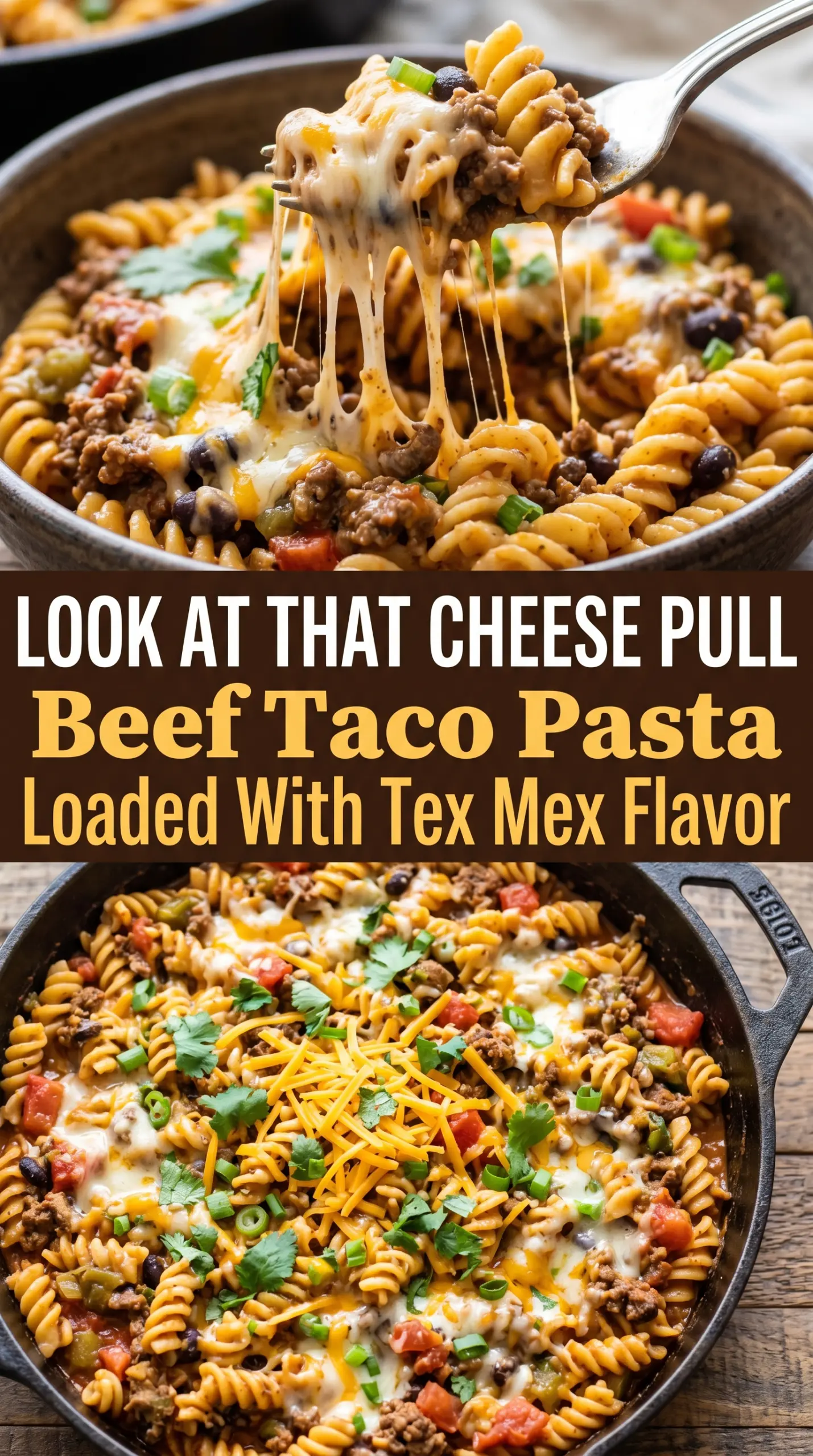
Lean ground beef and onion — The onion softens in the beef drippings and gives the skillet a sweeter, rounder base. Lean beef keeps the dish from turning greasy, but if you use something fattier, drain off most of the excess before adding the garlic.
Taco seasoning — A packet gives you the right blend of chile, cumin, garlic, and salt without having to measure a dozen spices. If your seasoning is very salty, hold back a little and taste before adding more.
Corn — This adds little pops of sweetness that balance the tomato and spice. Frozen corn can go straight in; canned corn should be drained first so it doesn’t water down the sauce.
Cheddar and Monterey Jack — Cheddar adds sharpness, while Monterey Jack melts into a smoother, softer sauce. Use both if you can, because the combination gives you better flavor and texture than either cheese alone.
The 20 Minutes That Matter Most
Browning the Beef and Softening the Onion
Cook the beef and onion together over medium heat until the meat loses its pink color and the onion turns translucent with a little edge of gold. If the pan is crowded, the beef steams instead of browns, and you lose the savory depth that makes the whole skillet taste finished. Break the meat up as it cooks so you don’t end up with large clumps that never fully coat with sauce later.
Blooming the Seasoning
Stir in the taco seasoning and let it hit the hot pan for a short moment before adding the liquids. That quick contact with heat wakes up the spices and keeps the final dish from tasting flat. Add the garlic for just 30 seconds so it smells fragrant; if it goes much longer, it can turn bitter.
Finishing the Pasta in the Sauce
After the Rotel, broth, and tomato sauce go in, the mixture should simmer steadily, not boil hard. Once the pasta is added, stir often so the rotini doesn’t stick and the bottom of the pan doesn’t scorch. When the pasta is tender and the sauce looks slightly looser than you want, that’s the right time to add the sour cream and cheese, because the cheese will tighten the sauce as it melts.
The Creamy Finish
Take the pan off the heat before adding the sour cream so the sauce stays silky. Stir in half the cheese first, then scatter the rest over the top and cover the pan just long enough for it to melt into a blanket. If the sauce looks thick after resting, a splash of broth brings it back without thinning the flavor.
How to Make Beef Taco Pasta Fit What’s in Your Kitchen
Make It Gluten-Free
Use your favorite gluten-free rotini and cook it just to al dente before adding it to the skillet. Gluten-free pasta can soften fast in the sauce, so pull the pan off the heat as soon as it’s tender enough and serve right away.
Swap the Ground Beef
Ground turkey or ground chicken works well if you want a lighter skillet. Add a small drizzle of oil at the start because lean poultry needs a little help getting color, and expect a milder flavor that leans more on the taco seasoning and cheese.
Stretch It for a Bigger Crowd
Add an extra cup of corn or a drained can of black beans to bulk up the skillet without changing the method. Beans add more body and make the dish a little heartier, while corn keeps the sweetness that balances the spice.
Storage and Reheating
- Refrigerator: Store in an airtight container for up to 4 days. The pasta absorbs more sauce as it sits, so expect it to thicken.
- Freezer: It freezes fairly well for up to 2 months, though the sour cream can soften the texture slightly after thawing. Freeze in portions for the best results.
- Reheating: Warm gently on the stove or in the microwave with a splash of broth or water. High heat can make the cheese oily and the sauce grainy, so reheat in short bursts and stir often.
Questions I Get Asked About This Recipe
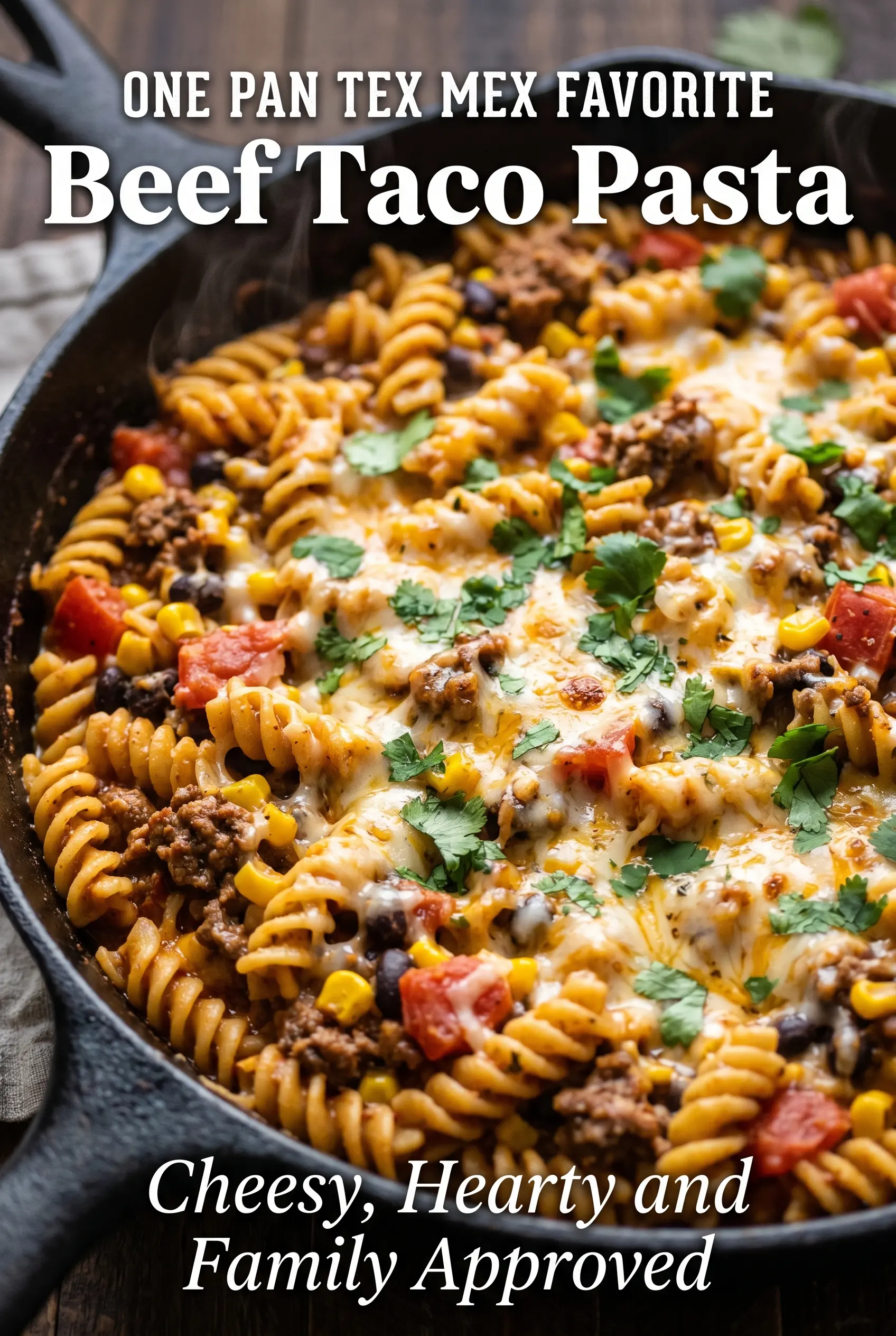
Beef Taco Pasta
Ingredients
Equipment
Method
- Cook rotini pasta according to package directions until tender. Drain and set aside.
- Heat a large skillet over medium heat, then cook lean ground beef and diced small onion until browned. Stir occasionally so the beef cooks evenly and no pink remains.
- Add minced garlic and cook for 30 seconds. Keep it moving until fragrant, but not browned.
- Stir in taco seasoning and let it coat the beef for 30 seconds. The mixture should smell toasted and evenly speckled.
- Add Rotel tomatoes, beef broth, and tomato sauce to the skillet. Stir well and bring to a simmer.
- Simmer for 5 minutes. You should see steady bubbling around the edges and a lightly thickened sauce.
- Stir in corn kernels and the cooked pasta. Mix until the pasta is fully coated.
- Add sour cream and half of the cheese, then mix until creamy and heated through. The sauce should look smooth and glossy.
- Sprinkle the remaining cheese over the top. Cover and cook until the cheese melts, about 3-5 minutes, keeping the skillet over medium-low heat.
- Garnish with chopped cilantro and serve right away. The surface should be melty with visible cheese pooling around the pasta.
