
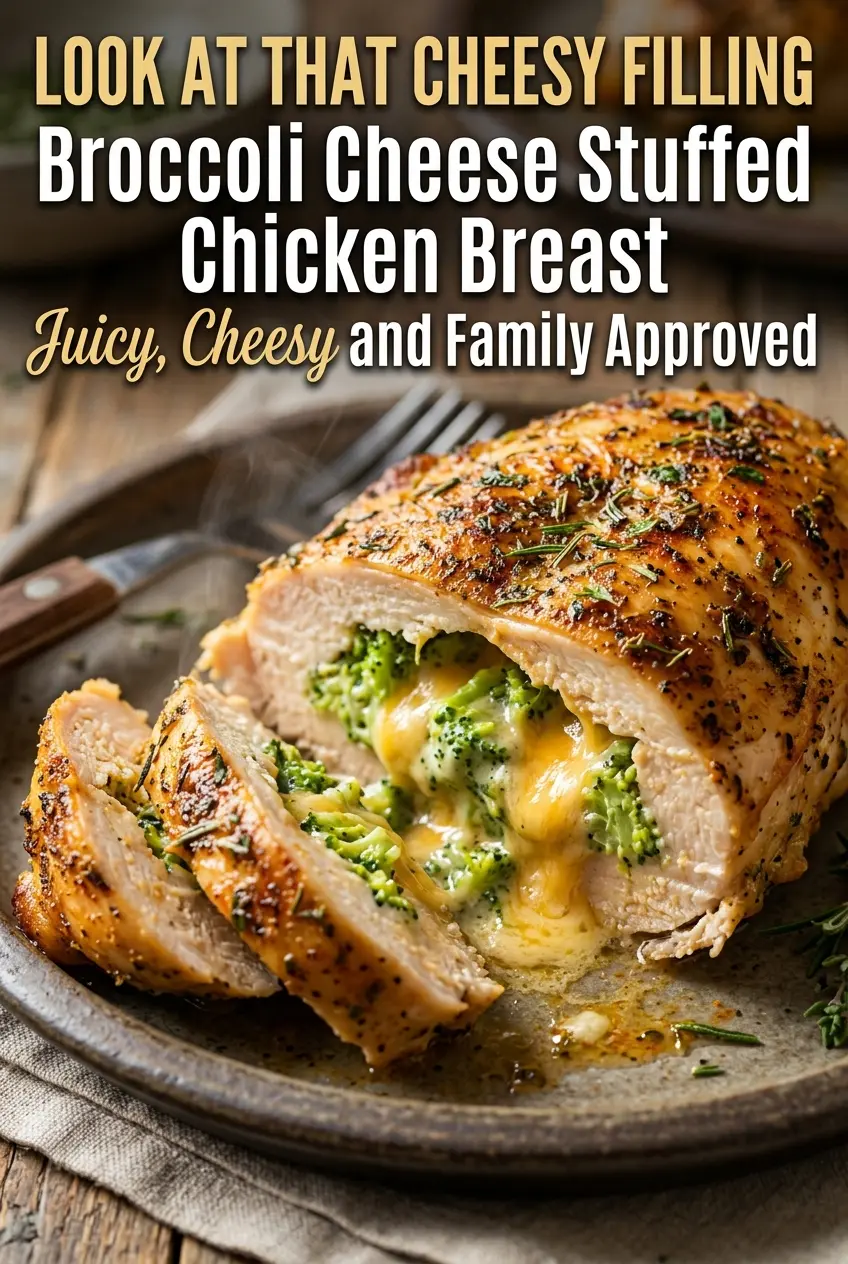
Broccoli cheese stuffed chicken breast lands on the plate with a juicy center, a melty cheddar pocket, and just enough seasoning on the outside to keep every bite interesting. The best part is that it looks like you worked a lot harder than you did. Once the chicken is sliced into pockets and filled, the oven does the rest of the work while the broccoli softens and the cream cheese and cheddar turn into a rich, savory filling that stays put instead of leaking all over the pan.
What makes this version work is the balance. The broccoli gets chopped small enough to tuck neatly into the chicken, so you don’t end up fighting big florets when you cut into it. The cream cheese keeps the filling smooth and helps it bind, while the cheddar brings the sharp, familiar flavor people expect from a stuffed chicken dinner. A quick seasoning rub on the outside keeps the chicken from tasting plain, which is where a lot of stuffed chicken recipes fall short.
Below you’ll find the detail that matters most: how to cut the pockets without going through the chicken, how to keep the filling inside, and what to look for so the chicken stays juicy instead of drying out in the oven.
The filling stayed inside the chicken and the broccoli softened up just enough without turning mushy. I added a little extra cheddar on top for the last 5 minutes and it came out golden and bubbling.
Broccoli cheese stuffed chicken breast is the kind of dinner that comes out juicy, cheesy, and just a little bit special.
The Pocket Is the Whole Trick Here
The biggest mistake with stuffed chicken is cutting straight through the breast and turning it into two thin cutlets. That leaves you with no pocket to hold the filling and a much bigger chance of everything spilling out before the chicken finishes cooking. A proper pocket goes deep enough to hold a generous filling, but it still leaves the breast intact so the cheese has somewhere to melt instead of escape.
Thickness matters too. If the chicken breasts are wildly uneven, the thinner side will overcook while the thicker side is still working toward 165°F. Pounding the thick end lightly or trimming the breast into a more even shape gives you a cleaner bake and a juicier result. The filling is also part of the structure here — cream cheese helps it stay thick, which matters more than people think when the chicken starts to shrink in the oven.
What Each Ingredient Is Actually Doing in This Dish

- Chicken breasts — Large boneless, skinless breasts hold the filling best because you can cut a substantial pocket into them. Smaller breasts work, but they fill up fast and are easier to split open in the oven.
- Broccoli florets — Chop them finely so they soften inside the filling and don’t poke holes through the chicken. Fresh broccoli gives the best texture, but thawed frozen broccoli works if you squeeze out the water first.
- Cream cheese — This is the glue. It keeps the filling creamy and helps the cheddar cling to the broccoli instead of melting into a loose pile. Let it soften before mixing or you’ll end up with lumps.
- Cheddar cheese — Sharp cheddar gives the filling enough flavor to stand up to the chicken. Pre-shredded cheese is fine here, though freshly shredded melts a little smoother.
- Paprika, garlic powder, and onion powder — These season the outside of the chicken and keep the whole dish from tasting flat. Smoked paprika changes the mood a bit, adding a deeper, roastier edge.
Build the Filling, Seal the Pocket, and Bake to Juicy
Mix the filling until it holds together
Stir the chopped broccoli, cheddar, cream cheese, minced garlic, salt, and pepper in a bowl until the mixture looks thick and evenly coated. The goal is not a fluffy filling; it should mound on a spoon and stay together when you scoop it. If the cream cheese is still cold, the mixture will look patchy and won’t pack into the chicken cleanly.
Cut the chicken without opening the whole breast
Use a sharp knife and cut a deep pocket into the side of each breast, stopping before you slice through the other edge. A thin, controlled cut matters more than speed here. If you go too far, the filling will leak out and the chicken will cook unevenly around the opening.
Season the outside and bake until the juices run clear
Rub the chicken with olive oil, then coat it with the paprika, garlic powder, onion powder, salt, and pepper. Bake in a greased dish at 375°F until the thickest part reaches 165°F, usually 30 to 35 minutes depending on size. If the top browns before the center is done, tent it loosely with foil and keep baking; pulling it too early gives you safe-looking chicken that still cuts dry.
Rest before slicing
Let the chicken sit for 5 minutes after baking so the juices settle back into the meat. If you slice immediately, the filling will run and the chicken will lose moisture on the cutting board. A short rest keeps the filling creamy and the meat cleaner when you cut into it.
How to Adapt This for a Different Pantry or a Lighter Dinner
Make It Gluten-Free Without Changing the Texture
This recipe is naturally gluten-free as written, so the only thing to watch is hidden fillers in the cheese or seasoning blends. Stick with plain spices and regular cheese, and the filling stays creamy and intact.
Use Mozzarella for a Milder, Stretchier Filling
Swap part or all of the cheddar for mozzarella if you want a softer, less sharp flavor. The filling will be stretchier and a little less bold, so add an extra pinch of salt to keep it from tasting flat.
Add Bacon for a Smokier, Heavier Version
A spoonful of crisp chopped bacon folded into the filling adds salt and smoke, which pairs well with the broccoli and cheddar. It makes the dish richer and a little heavier, so you can skip extra cheese on top if you want to keep the filling from getting greasy.
Storage and Reheating
- Refrigerator: Store leftovers in an airtight container for up to 3 days. The chicken stays tender, though the filling firms up a bit when chilled.
- Freezer: This freezes well after baking. Wrap portions tightly and freeze for up to 2 months; thaw overnight in the fridge before reheating.
- Reheating: Warm in a 325°F oven, covered, until heated through. The common mistake is blasting it in the microwave, which makes the chicken tough and can cause the cheese to separate.
The Things That Trip People Up With This Dish
Broccoli Cheese Stuffed Chicken Breast
Ingredients
Equipment
Method
- Preheat the oven to 375°F (190°C). Place a greased baking dish ready for the chicken.
- Cut a pocket into each chicken breast without slicing all the way through. Keep the opening intact so the filling can stay inside.
- In a bowl, combine broccoli, cheddar cheese, cream cheese, garlic, salt, and pepper. Mix until the filling is thick and evenly combined.
- Stuff each chicken breast with the broccoli cheese mixture. Fill each pocket and avoid overstuffing so it seals as it bakes.
- Secure with toothpicks if needed. Tuck the ends so the pocket stays closed during baking.
- Rub the chicken with olive oil. This helps the seasoning adhere and promotes browning.
- Season the chicken with paprika, garlic powder, onion powder, salt, and pepper. Coat all sides evenly, including near the sealed pocket.
- Place the chicken in a greased baking dish. Arrange in a single layer so they bake evenly.
- Bake for 30–35 minutes, until the chicken reaches 165°F internally. You should see lightly browned surfaces and hot, set filling.
- Rest the chicken for 5 minutes before serving. This helps juices redistribute for a moist bite.
- Garnish with parsley if desired. Serve warm with any pan juices.
