
Bourbon glazed salmon lands on the plate with crisp edges, a silky center, and a sticky glaze that clings instead of sliding off. The sweet brown sugar and bourbon deepen into something caramel-like, while soy sauce, garlic, and ginger keep the whole thing from tasting flat or sugary. It’s the kind of dinner that looks like you fussed, even though it comes together in under 30 minutes.
What makes this version work is the order. The salmon gets a hard sear first, then finishes in the glaze just long enough to pick up flavor without overcooking. The sauce simmers separately for a few minutes so the bourbon cooks down and the sugar can thicken properly; if you rush that part, you end up with a thin pan sauce instead of a glossy glaze.
Below, I’ll walk you through the exact visual cues that tell you when the salmon is ready, how to keep the glaze smooth, and a few smart swaps if you need to adjust the dish for what’s in your kitchen.
The glaze reduced into this shiny, spoon-coating sauce and the salmon stayed flaky instead of drying out. I served it with rice and my husband went back for seconds before I even sat down.
Save this bourbon glazed salmon for the nights when you want a glossy, savory-sweet seafood dinner that comes together fast.
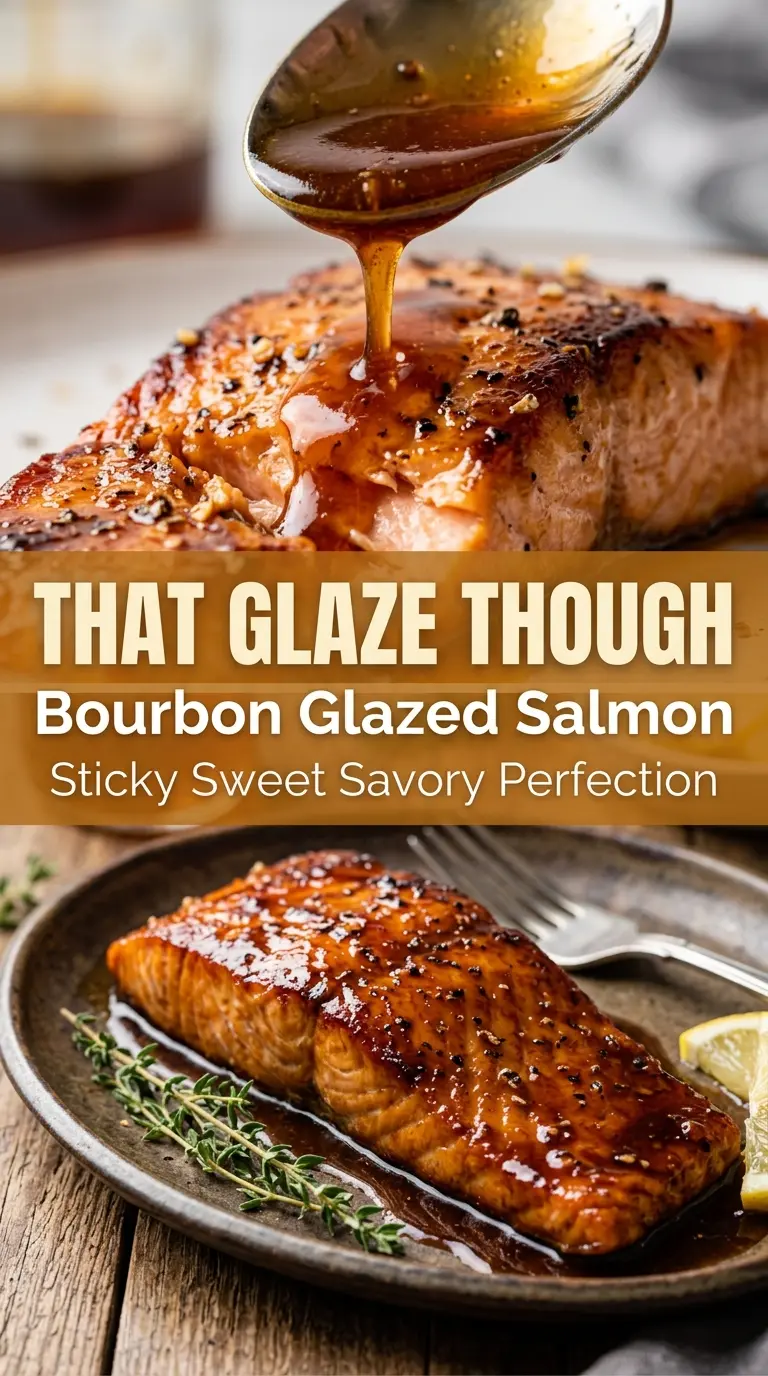
The Glaze Needs a Real Simmer, Not a Quick Stir
A bourbon glaze can go wrong in two different ways: it can taste sharp if the alcohol doesn’t cook off, or it can turn thin and slick if the sugar never gets a chance to reduce. The simmer is what changes it from a mixture of ingredients into an actual glaze. You want small, steady bubbles and a sauce that starts to coat the back of a spoon.
The salmon also needs its own space in the pan. If you crowd the fillets, they steam and shed moisture into the skillet, which works against that sticky finish. A hot pan and dry salmon give you better color on the outside, and the brief return to the glaze keeps the fish tender instead of overdone.
- Bourbon — Use a bourbon you’d actually drink. You don’t need top-shelf, but the flavor comes through, so a harsh bottle will stay harsh in the sauce.
- Brown sugar — This is what gives the glaze its body and that soft caramel note. Light brown sugar works fine; dark brown sugar makes the sauce deeper and a little more molasses-heavy.
- Soy sauce — It brings salt and balance, and it’s what keeps the glaze from reading like candy. Low-sodium soy sauce is the easiest swap if you’re watching salt, since the sauce reduces and concentrates fast.
- Dijon mustard — Dijon helps the glaze emulsify and adds just enough sharpness to cut the sweetness. Don’t replace it with yellow mustard unless that’s all you have; the flavor will shift in a more abrasive direction.
- Fresh ginger and garlic — Fresh is worth using here because both ingredients need only a few minutes to bloom. Pre-minced garlic can work in a pinch, but it tends to taste flatter once the glaze is reduced.
- Salmon fillets — Skin-on fillets hold together better in the skillet, but skinless works too. If your pieces are much thicker than 1 inch, add an extra minute or two to the sear before the glaze goes in.
Getting the Sear Before the Glaze Goes in
Dry the salmon and season lightly
Pat the fillets dry with paper towels until the surface looks matte, then season them lightly with salt and pepper. Moisture on the outside is what keeps salmon from searing cleanly, so this first minute matters more than it looks like it should. If the fish is wet, it will stick and pale instead of browning.
Build color in the hot skillet
Heat the olive oil over medium-high until it shimmers, then lay the salmon in the pan and leave it alone long enough for a crust to form. You’re listening for a steady sizzle, not aggressive popping. If the fish resists when you try to flip it too soon, give it another 30 seconds; once it releases cleanly, the surface is ready.
Reduce the glaze until it coats
Take the salmon out and simmer the bourbon, brown sugar, soy sauce, Dijon, garlic, ginger, and lemon juice together. The alcohol smell should soften and the liquid should tighten into something glossy, not watery. If the heat is too high, the sugar can get overly sharp or even catch on the pan, so keep the simmer controlled and watch for a syrupy sheen.
Finish the fish in the sauce
Stir in the butter off the hottest part of the burner, then return the salmon and spoon the glaze over the top. The butter gives the sauce a smoother finish and helps it cling to the fish. Those final 2 to 3 minutes are just enough to warm everything through; any longer and the salmon starts to lose its silky texture.
Three Ways to Make This Bourbon Glazed Salmon Fit Your Table
Gluten-Free Version
Swap the soy sauce for tamari or a certified gluten-free soy sauce. The glaze keeps the same salty-sweet balance, and the texture doesn’t change at all, so this is an easy switch that doesn’t cost you anything in the final dish.
Dairy-Free Finish
Skip the butter and let the glaze reduce a minute longer, then whisk in a teaspoon of olive oil at the end if you want a little shine. You lose some of the round, silky finish, but the sauce still clings well and stays fully dairy-free.
Lower-Sugar Balance
Cut the brown sugar back to 2 tablespoons and add an extra splash of lemon juice to keep the glaze from tasting flat. The sauce will be a little thinner and less sticky, but the bourbon and mustard still carry enough weight to make it work.
Using Frozen Salmon
Thaw the salmon completely and blot it dry before it ever hits the pan. Frozen-and-wet fish steams in the skillet, which gives you weak browning and dilutes the glaze with extra moisture.
Storage and Reheating
- Refrigerator: Store leftovers in an airtight container for up to 2 days. The glaze will thicken more as it chills, and the salmon texture will be a little firmer the next day.
- Freezer: Freezing isn’t my first choice for this dish. Salmon can turn a bit dry after thawing, and the glaze loses some of its glossy finish.
- Reheating: Warm it gently in a covered skillet over low heat with a spoonful of water to loosen the glaze. High heat dries out the fish fast and can make the sugar in the sauce tighten up too much.
Answers to the Questions Worth Asking
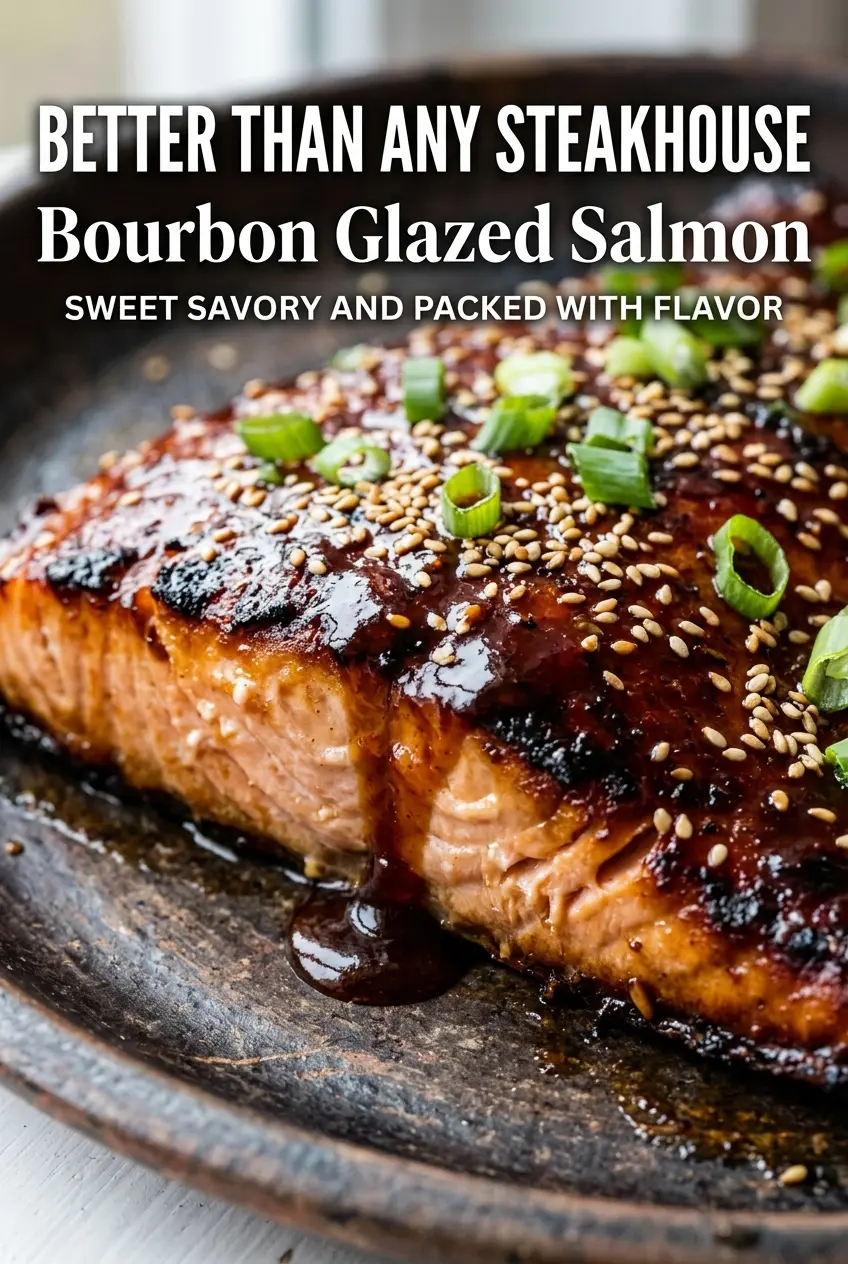
Bourbon Glazed Salmon
Ingredients
Equipment
Method
- Pat the salmon fillets dry and season lightly with salt and black pepper.
- Heat the olive oil in a large skillet over medium-high heat.
- Cook the salmon for 4–5 minutes per side until nearly cooked through.
- Remove the salmon and set it aside.
- In the same skillet, add bourbon, brown sugar, soy sauce, Dijon mustard, garlic, fresh ginger, and lemon juice.
- Simmer for 3–4 minutes until slightly thickened, stirring as needed.
- Stir in the butter until the glaze looks glossy.
- Return the salmon to the skillet and spoon the glaze over the top.
- Cook for 2–3 minutes until the glaze clings to the salmon.
- Garnish with sesame seeds and sliced green onions, then serve immediately.
